


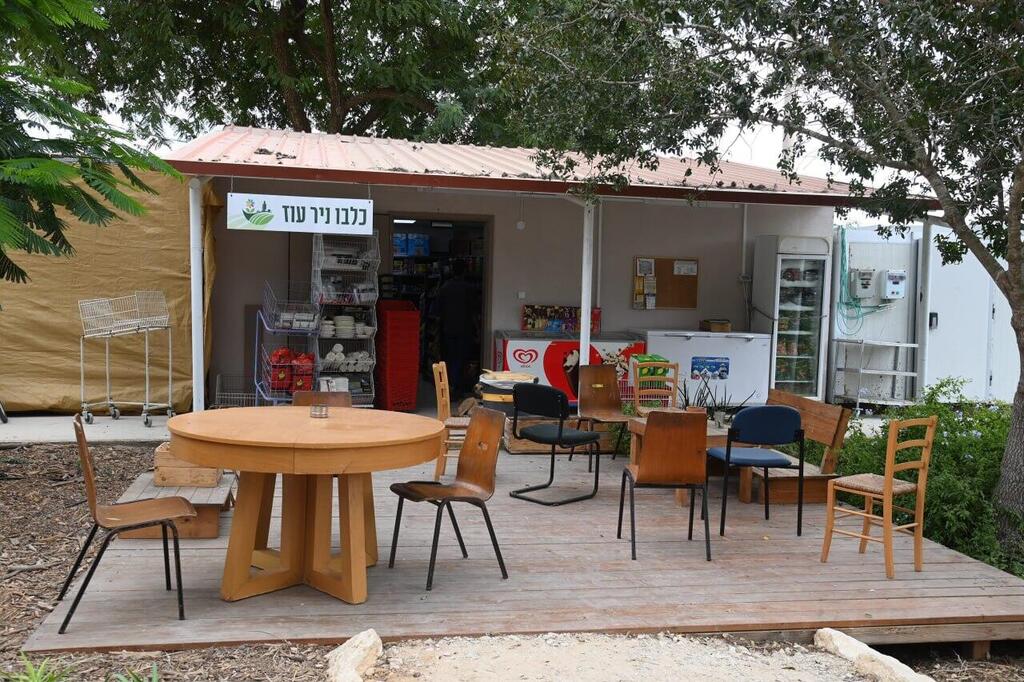
Three years after the Oct. 7 massacre, a woman walks along a path in Kibbutz Nir Oz. Leaving the local grocery store, she passes a construction site, a burned-out house, thick vegetation, a memorial and another building site before reaching home. She is carrying a shopping bag over one shoulder and another in her hand.
Telma Atzili returned to live in the kibbutz about four months ago. Her son, Aviv, was a member of the local community security squad and was killed in the fighting.
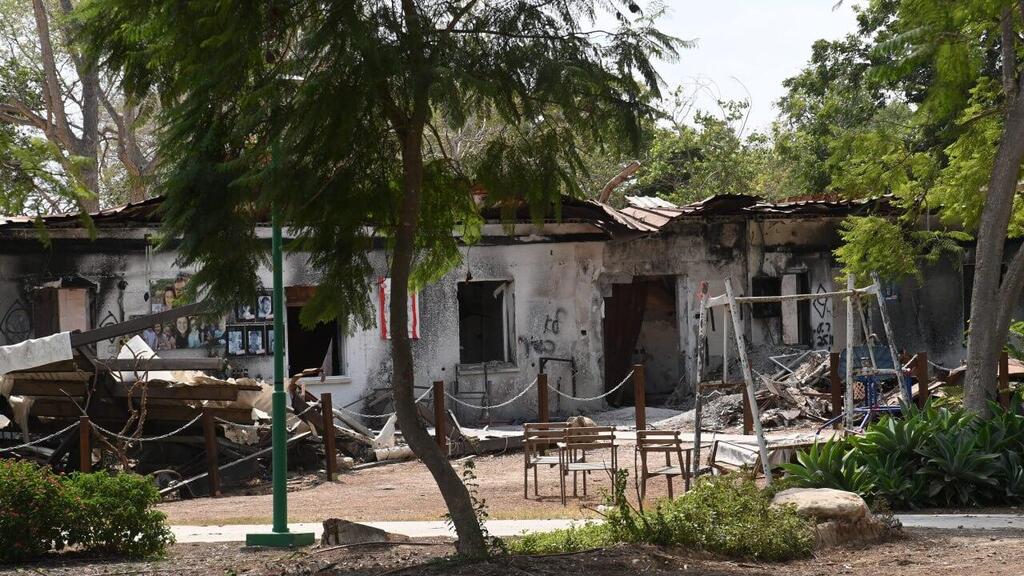
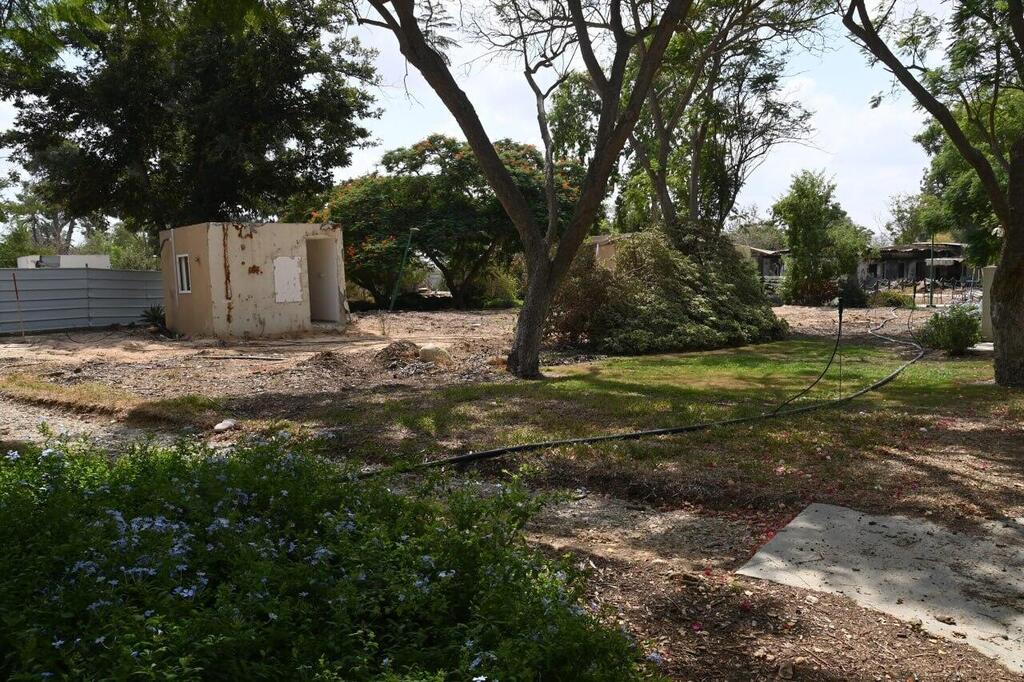
The kibbutz that became a symbol: Nir Oz
(Photo: Herzl Yosef)
She captures the mood in a sentence: “Coming back is complicated. It’s not simple at all. On the one hand, there is good energy, growth, young people and a lot of green. At the same time, the loss is everywhere. The new construction makes me happy, but I also know it is happening in places where people were massacred.”
The kibbutz, which became a symbol of the failures surrounding the massacre, is now being rebuilt at extraordinary speed. Six residential complexes are going up at the same time, with enhanced protected areas and bullet-resistant doors added to new homes.
The old sewing workshop has become a temporary grocery store. The former boiler room is now a Pilates studio, the laundry has been converted into a dining hall, and beer barrels at the pub are emptied quickly.
But alongside the construction boom are far more difficult questions: How many residents will return? What should happen to the homes where people were murdered? What about those who have decided never to come back? And how do you rebuild a community in a place where nearly everyone was touched by the disaster?
It would be an exaggeration to say Nir Oz is bustling, but movement is clearly returning. About 120 people now sleep there every night, roughly a third of the population living in the kibbutz on the morning of Oct. 7. They include returning kibbutz members, participants in pre-military programs, volunteers, members of the Hashomer HaTzair youth movement and families who have come for varying periods to take part in the rebuilding.
Alongside the physical reconstruction, Nir Oz is also trying to create something no contractor can provide: routine.
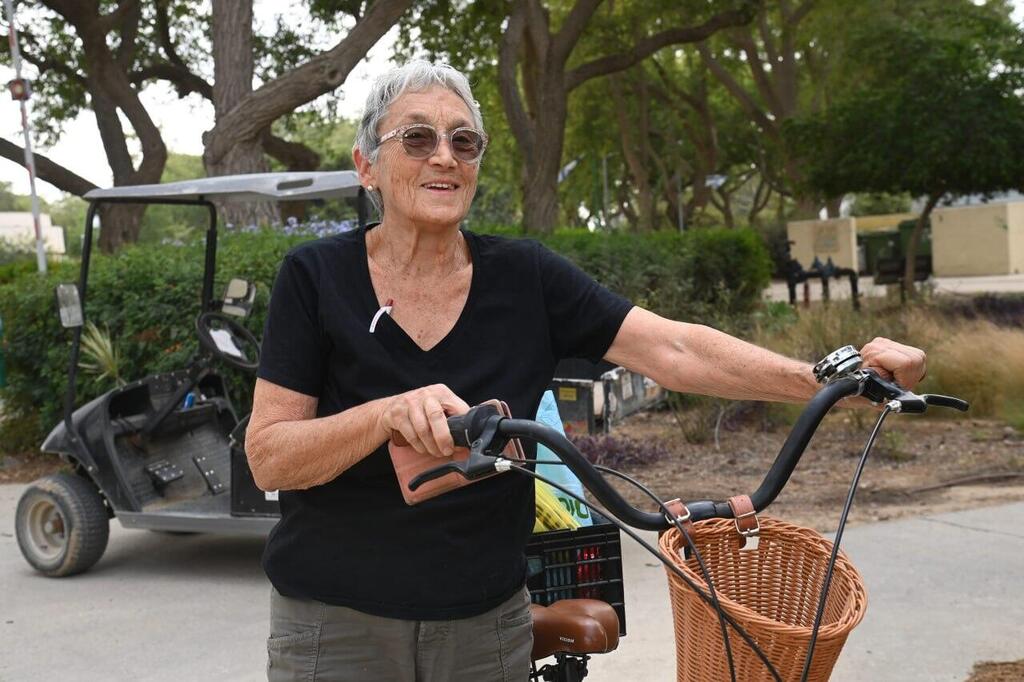
Telma Atzili
(Photo: Herzl Yosef)
“We are beginning to see life again, carefully and gradually, people riding bicycles, a pub drawing people from the whole area,” said Emi Palmor, Project Manager for the Nir Oz Rehabilitation. “All of that exists alongside burned houses that have not yet been demolished and all the construction. Veteran residents who have returned tell me, ‘You created everyday life here that makes it possible to come back.’ There is something to come back to, and that is far from obvious.”
It may be the clearest picture of Nir Oz today: new life taking shape inside a place that still carries signs of destruction almost everywhere.
‘My heart called me back’
On Oct. 7, Nir Oz had about 400 residents. Sixty-five were murdered and 76 were kidnapped. Roughly one in three residents was either killed or abducted. Terrorists entered more than 90% of the homes, and many buildings were severely damaged.
Most of the burned and destroyed houses have since been demolished, and the kibbutz is now undergoing a dramatic transformation.
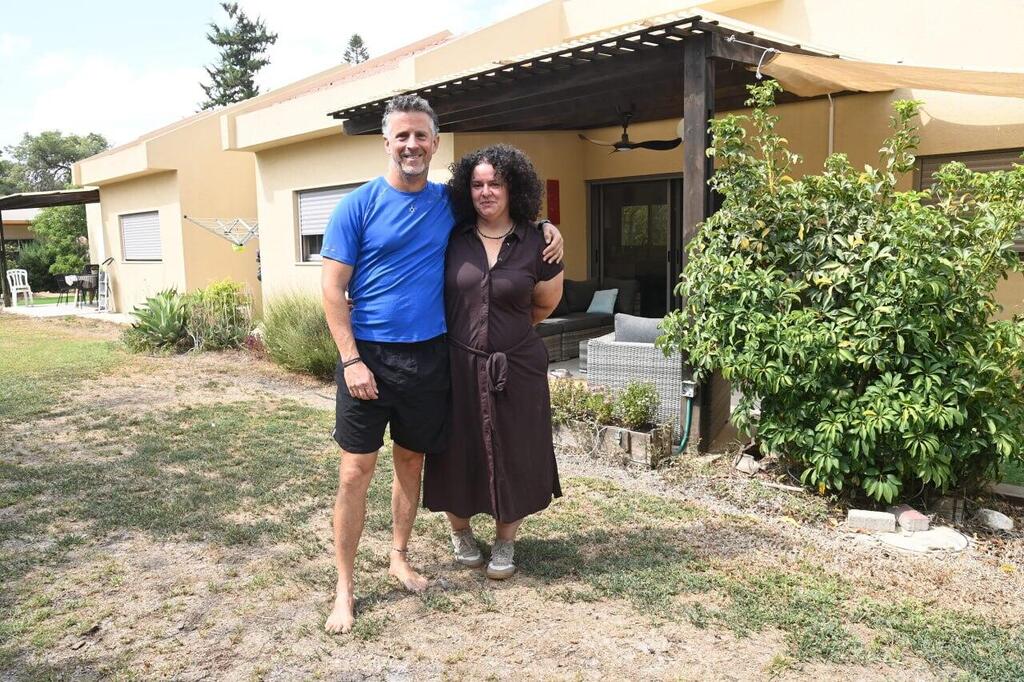
Galia Tzur and Arnon Einhar
(Photo: Herzl Yosef)
Ron Bahat, who is responsible for the physical rehabilitation, is usually the first person people meet when they want to understand what is happening in Nir Oz. Walking through the kibbutz, he points out different areas and enthusiastically explains what will be built next.
A year ago, Bahat said: “By November, we’ll have 100 people in the kibbutz. By the end of 2026, more families will return, and by mid-2027 Nir Oz will be full again.” So far, the first two targets have been met. The third remains uncertain.
Bahat estimates that about 60% of the original residents will eventually return. The kibbutz plans to fill the remaining space with new families, initially by approaching people already connected to the community and later opening the process to entirely new candidates.
The construction itself is extensive. Six complexes are being built simultaneously. Seventy-six housing units are under construction, with another 106 larger units planned for the eastern side of the kibbutz on land where chicken coops once stood.
Eventually, Nir Oz is expected to have more than 220 housing units. “People talk to us about rehabilitation, but the story here is different,” Bahat said not long after the massacre. “Nir Oz has to be rebuilt.” Today, with construction fencing appearing every few meters, that statement has become tangible.
‘It feels great to see things being built’
Giora Zehavi, 82, and his partner Anne Marie returned in June. He welcomes visitors into his home wearing a shirt that reads “Nir Oz Garage.”
Zehavi lives directly across from former hostage Gadi Mozes. The two were members of the same Hashomer HaTzair founding group. “I’ve felt good from the moment I came back,” Zehavi said. “Why did I return? Where else would I go? I’ve been here since 1965.”
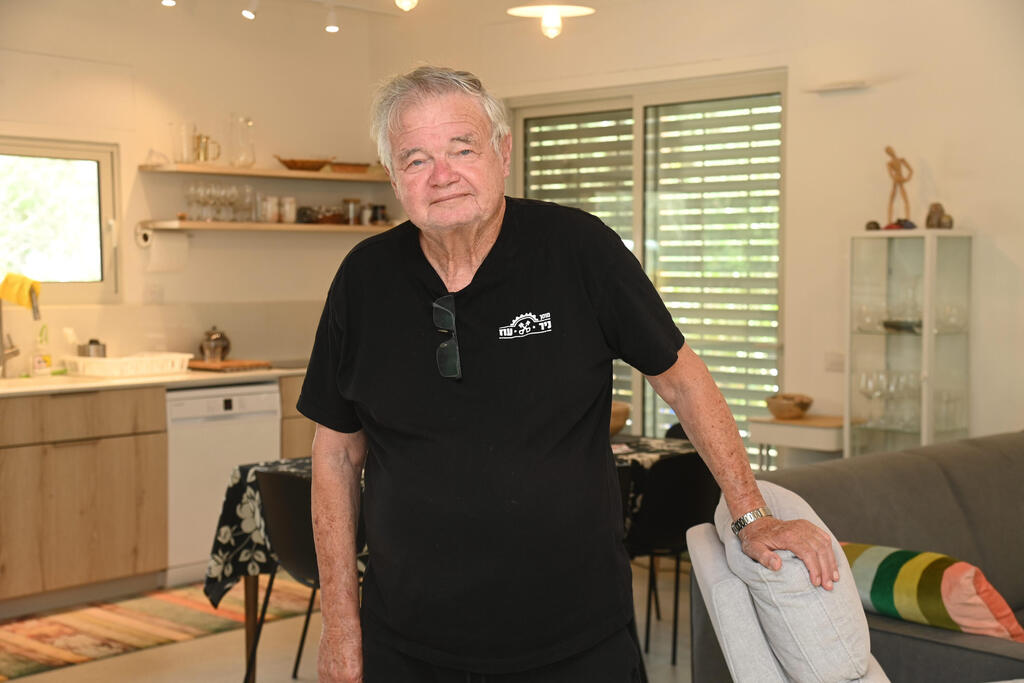
Giora Zehavi
(Photo: Herzl Yosef)
It is difficult to draw out any sense of hesitation from him. If anything, the construction around him makes him happy. “The building doesn’t bother me. The opposite. It feels great to see things being built and created,” he said calmly.
“The Philistines came here and wanted to destroy. They burned my house. This kibbutz will become a large kibbutz with more than 300 members. Right now there are only 23 kibbutz members living in Nir Oz, and I hope more will come. If not, we’ll bring in other good people.”
His age has not stopped him from continuing to work and help. “I provide some services at the kibbutz garage, help with sales, take cars for inspections and try to help however I can,” he said.
“I don’t want to travel abroad at all. I feel like I’m on vacation here, and the atmosphere is wonderful. We have no choice but to look forward. The only way to recover is to come here and be here. When I’m here, it gives strength to others who haven’t returned yet.”
Near his dining table is a painting by Eli Elgarat, brother of Itzik Elgarat, who was murdered. Eli, who died in 2017, had painted Zehavi’s children. A poem written by Zehavi’s son as a child was later added to the painting. One line reads: “Tall trees and some shorter ones, but still, the kibbutz and I are in love.” Zahavi smiles and says he agrees with every word.
You can never truly forget
(Photo: Herzl Yosef)
Atzili was returning from the grocery store when we met her. She put down her bags and stopped to talk. “My heart called me back,” she said. “I wanted to feel at home. It wasn’t a decision that came from my head or from logic, and I knew I would be afraid. But I wanted to come and try.
“I have to return to this land even though it is soaked in blood. We had a very nice apartment in Carmei Gat, but it wasn’t home. I still have the option of going back there, but I’m here, and I see myself staying.”
Even as residents try to rebuild routine, no one in Nir Oz is truly forgetting Oct. 7. The new homes being built include additional security measures beyond standard Home Front Command requirements.
They include an extra bullet-resistant door, a protected bathroom connected to the reinforced safe room, a larger-than-standard safe room and electric shutters throughout the house that can also be operated from inside the protected space.
The additional door is designed to prevent terrorists from entering and allow residents to lock the protected area from within. The reinforced bathroom means residents can remain inside the protected space for long periods if necessary.
Palmor said the additional security measures are intended as much to restore a sense of safety as to provide physical protection. “No one understood how vulnerable safe-room doors were to gunfire,” she said.
“Since we’ve lost trust and there still hasn’t been a state inquiry commission, in many ways we feel we haven’t moved forward. Three years on, we should have been in a different place. We never imagined we would need to build this kind of protection into our homes.” She stressed that the added protection is being financed by the kibbutz itself.
Palmor said about 20 individuals and families have already registered to join the kibbutz. Some are families with children who lived in Nir Oz on Oct. 7 and have decided to return. Others are young people going through the membership process, including couples preparing to marry and single people seeking kibbutz membership.
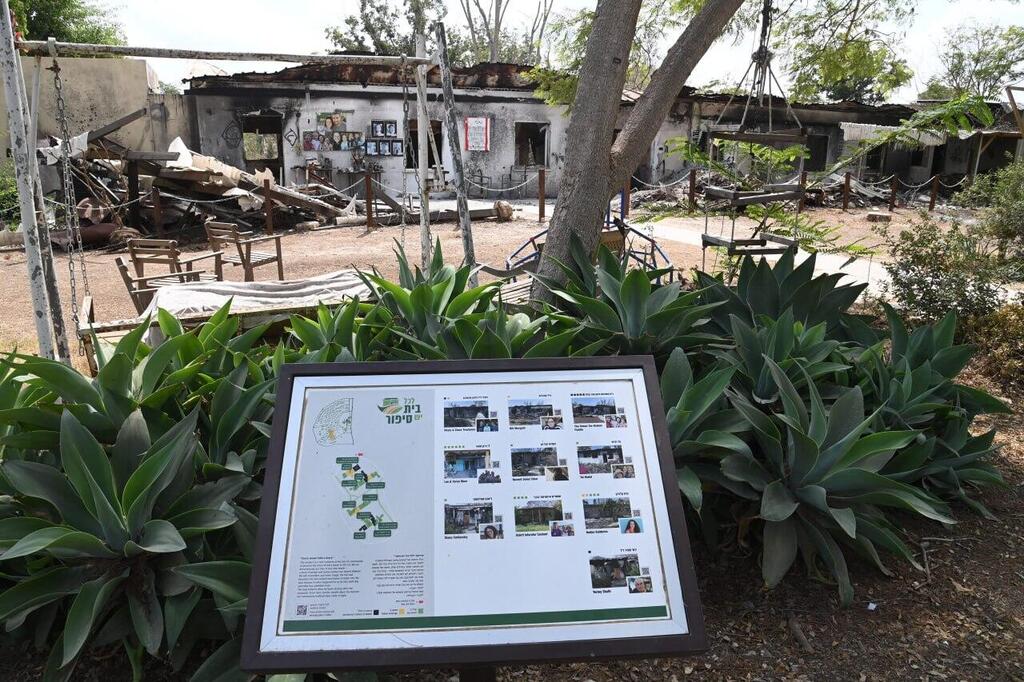
A construction site beside a burned home near the grocery store
(Photo: Herzl Yosef)
A burned home
(Photo: Herzl Yosef)
Among them are Galia Tzur, 50, and Arnon Einhar, 53, a couple who know Nir Oz well. They lived in the kibbutz in the 1990s before eventually moving to New Zealand. After Oct. 7, they found it increasingly difficult to continue their old lives.
“We felt uncomfortable,” Einhar said. “It was like living two lives. You’re living somewhere where you don’t feel people understand you.”
Tzur described the feeling differently. “We were surrounded by some of the most beautiful scenery in the world. Everything was quiet, and everything we once enjoyed suddenly felt meaningless,” she said. “None of that beauty meant anything to us anymore.” She suggested they leave everything behind, get on a plane and help in Nir Oz. His answer was “Me too, but I didn’t want to pressure you.”
Einhar first came to Israel, Tzur later joined him and eventually the couple decided to sell their home in New Zealand and move to Nir Oz. Their 18-year-old daughter joined them, while their two other children, both university students, have remained in New Zealand for now.
The couple are now in the process of becoming full kibbutz members. Einhar works in high tech and is deputy head of the local community security squad. Tzur works in Nir Oz in several positions connected to the reconstruction, including the conversion of the old boiler room and sewing workshop.
“We sold the house and moved,” she said. “It sounds crazy, right? Friends told us, ‘Go get yourselves checked. Something is wrong with you.’ But to us, it felt morally and personally right.”
‘To choose life, we have to leave’
Despite the rapid construction, Nir Oz is making an effort to preserve its longstanding gardens and trees, which have been part of the kibbutz’s identity for decades.
Ran Pauker, 89, one of the kibbutz founders and its legendary gardener, has also returned to live there in recent months.
About 45 families have decided not to return to Nir Oz and instead move to Kibbutz Beit Nir in the Beit Guvrin area. The organized group reached an agreement and will receive state benefits.
Families who want to leave independently and sever ties with the community, however, have yet to receive a solution.
One of them is the Maor family. Kibbutz member Yaron Maor survived the massacre after fighting terrorists who entered his home. He and his family decided that for their own recovery, they needed to leave the community and start again elsewhere. “To choose life, we have to get up and leave,” Maor said.
Since then, he has been fighting the state and the kibbutz for what he considers adequate financial compensation that would allow the family to begin again. “The national interest is to return residents to the Gaza border communities at any cost,” he said. “That is why, to this day, they don’t want to formulate a solution, because then people might decide not to return.”
Palmor said the community could not truly recover if some families were left without a way forward. “There can be no rehabilitation of the community if families are left by the wayside,” she said. The kibbutz is now pursuing legal action against the state over the issue, a dispute first reported by Ynet and Yedioth Ahronoth.
The memorial dilemma
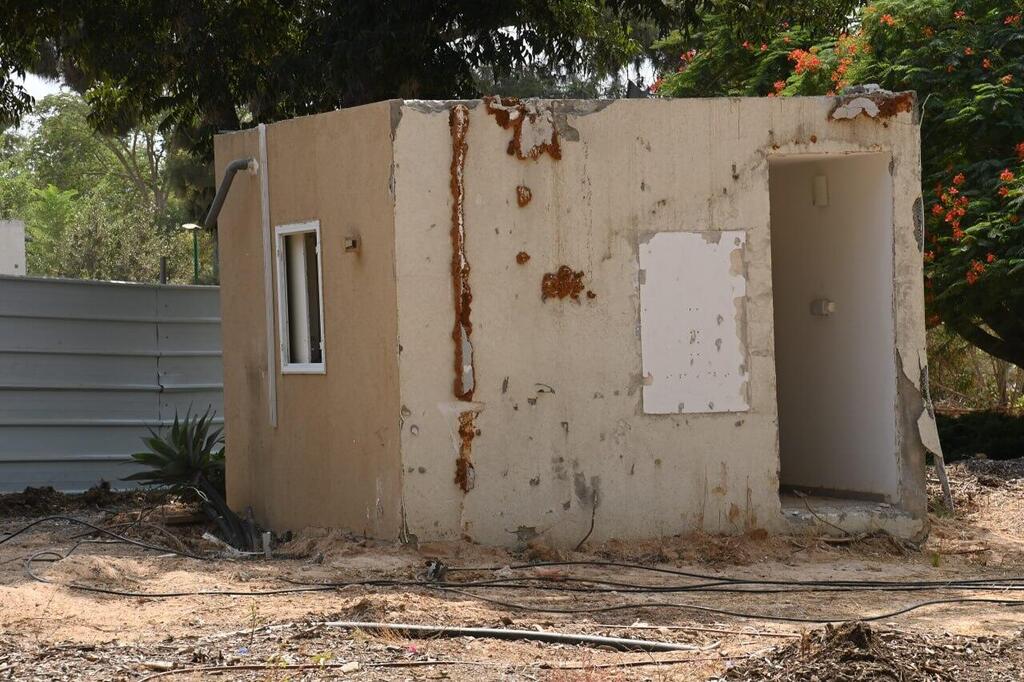
The question of commemoration is another sensitive point. Most of the damaged homes have already been demolished, but several remain standing, including the Bibas family home.
A painful debate continues within the community over whether such homes should be demolished so residents are not forced to confront the disaster every day, or whether some should remain as testimony to what happened there.
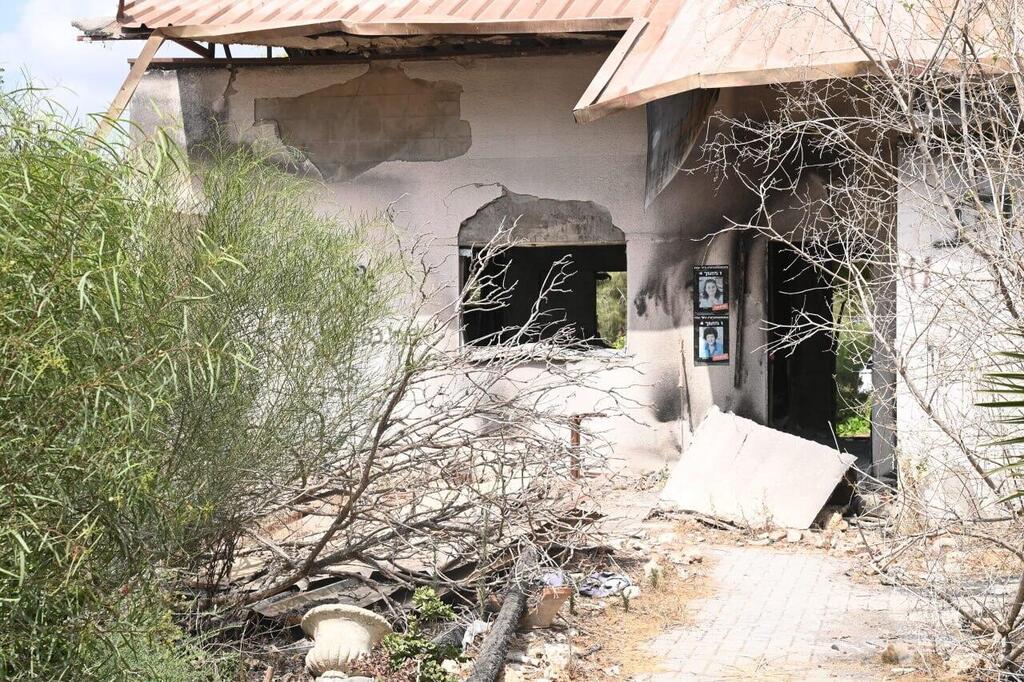
Should they be demolished so the tragedy is no longer constantly in view?
(Photo: Herzl Yosef)
A decision was expected earlier, but the vote was postponed. Kibbutz members concluded that trying to decide the issue before Oct. 7, the anniversary of the massacre, would only deepen existing divisions. It is now clear that no decision will be made before the sensitive date passes.
Meanwhile, opposite the destroyed home of the Kedem-Siman Tov family, who were murdered, stand the kibbutz’s old library and archive. The building has been transformed into a memorial space for those murdered and killed from Nir Oz.
The symbolic mailboxes that stood in the dining hall on Oct. 7 have been moved there, and visitors will be able to leave letters for those who were killed. Another space will document the campaign to free the hostages.
“We are trying to manage this sensitively and carefully without inflaming tensions that are already extremely difficult,” Palmor said. “The vote was postponed because the discussion is far more complicated than it first appears. There are enormous sensitivities involved.”
Alongside rebuilding its community, Nir Oz is also undergoing a process of privatization. The return is no longer an abstract idea. Residents shop at the grocery store, sit at the pub, eat in the dining hall, attend Pilates classes and are beginning to live again inside the kibbutz. Less than a month ago, Nir Oz even held its first wedding since Oct. 7.
More than 220 housing units are expected to be built. The question is no longer only who will live in them, but what kind of community will grow around them. For now, Nir Oz remains far from the kibbutz it once was.