

Reuters reported Wednesday night that gas stations in Moscow had once again imposed restrictions on gasoline purchases due to fuel shortages, amid repeated Ukrainian drone attacks on refineries across Russia. The report on restrictions on fuel purchases came the same day Russia confirmed that it had begun importing fuel from abroad — an extremely unusual step for a country that under normal circumstances is one of the world's largest fuel exporters.
The Ukrainian military has been launching hundreds of drones almost daily in recent months at oil facilities, factories and warehouses across Russia, as part of what Kyiv calls “the campaign to bring the war to the Russian citizen.” The aim is to make ordinary Russians pay a price for the attacks Russia has carried out deep inside Ukraine since February 2022 and thereby increase pressure on President Vladimir Putin to halt the strikes.
Gallery
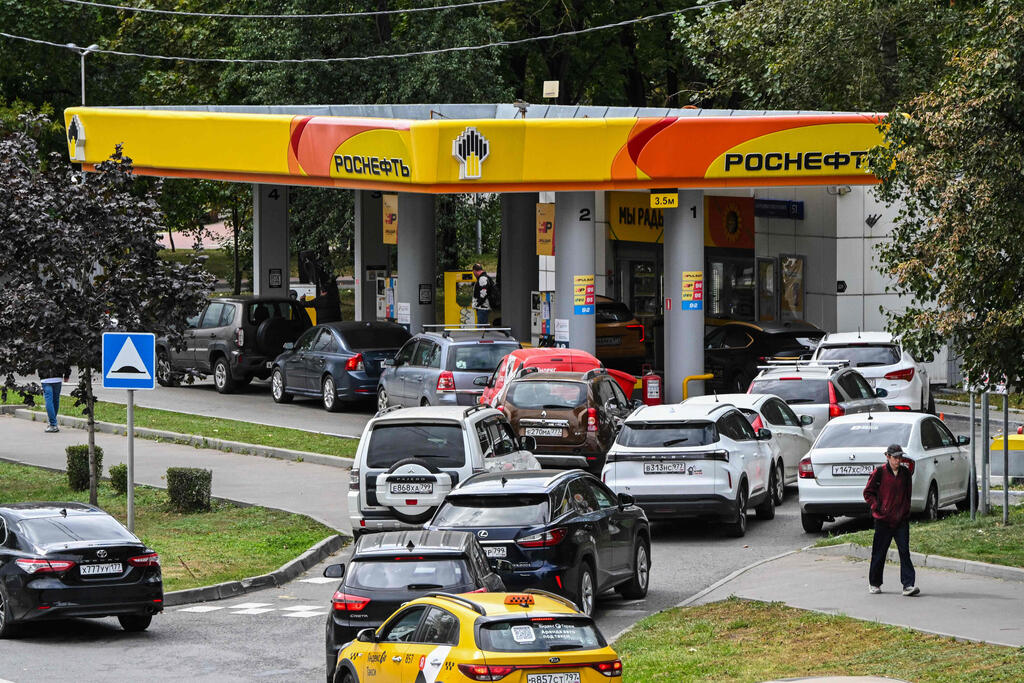
A line at the entrance to a gas station in Moscow Wednesday. Some companies are limiting purchases to 30 liters per customer
(Photo: Igor IVANKO / AFP)
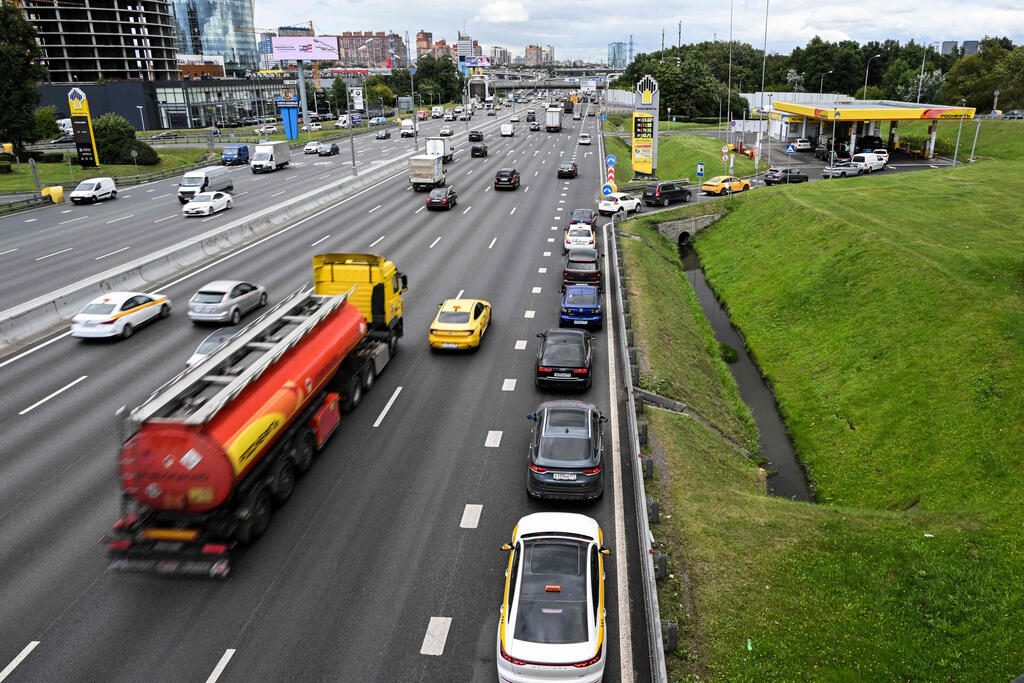
The shortage is expected to be felt as long as peak summer demand continues. A line at a gas station in the Russian capital
(Photo: Igor IVANKO / AFP)
The drone attacks have already forced several major oil facilities to shut down, with repairs at some of them expected to take several weeks or months. As a result, the fuel shortage began to worsen in May. By July, it had spread to most Russian regions. Restrictions were introduced at Moscow gas stations in June, but after some time they managed to ease them. To increase domestic supplies, Russian authorities recently banned gasoline and diesel exports, relaxed fuel quality standards and began importing petroleum products.
Eyewitnesses who spoke with Reuters over the past day reported seeing long lines at several gas stations in Moscow and the surrounding region. A representative at Gazprom Neft's customer service center said gasoline and diesel sales at the company's automated gas stations in Moscow had been limited to 40 liters per customer. At Gazprom Neft's other gas stations, diesel sales remained unrestricted, while gasoline purchases were limited to 60 liters per vehicle.
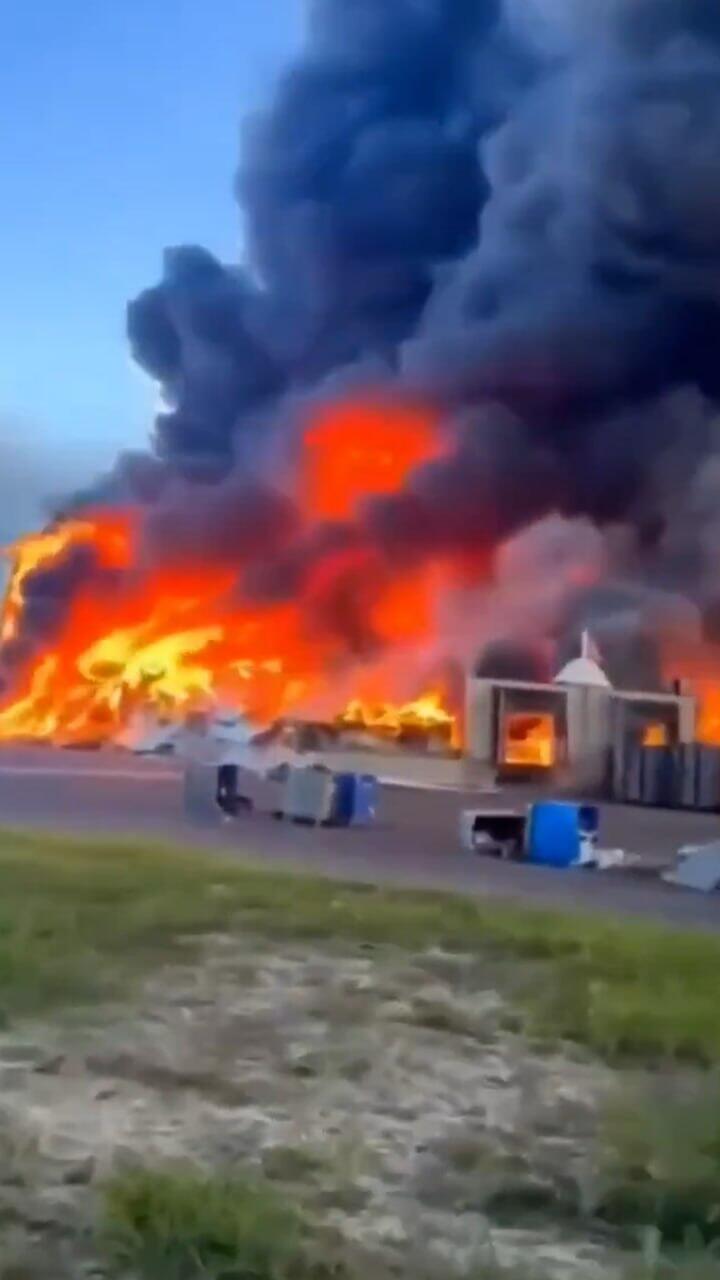
A fuel depot catches fire after being attacked by a Ukrainian drone
Rosneft, Russia's largest oil producer, said gasoline sales at all of its gas stations across Russia had been limited to 30 liters per vehicle, while diesel sales were not subject to restrictions. The company warned customers of longer wait times due to increased demand. Lukoil said it had imposed restrictions on fuel sales in Moscow and the surrounding region because of increased demand, unscheduled maintenance at refineries and the need to ensure stable operations at its gas stations. The company did not disclose the exact restrictions.
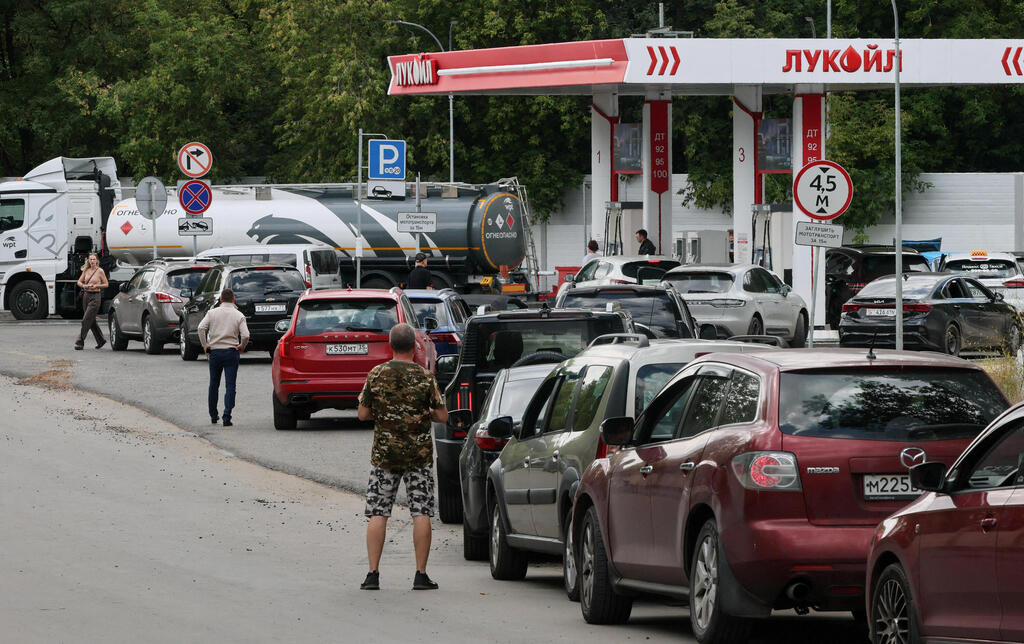
A line at a Moscow Lukoil gas station.
(Photo: REUTERS/Anastasia Barashkova)
Putin on attacks on Russia's 'Amazon': 'There is damage, but it is not critical'
Russian media are calling what is happening across Russia the “second wave” of the summer fuel crisis. Fuel shortages have been felt in dozens of Russian regions this summer, and experts warn that supplies will remain limited across most of the country until current demand, driven by the peak summer travel season, declines. The return of fuel rationing measures in some parts of the country comes despite Deputy Prime Minister Alexander Novak saying last month that the domestic fuel market was showing signs of “partial stabilization.”
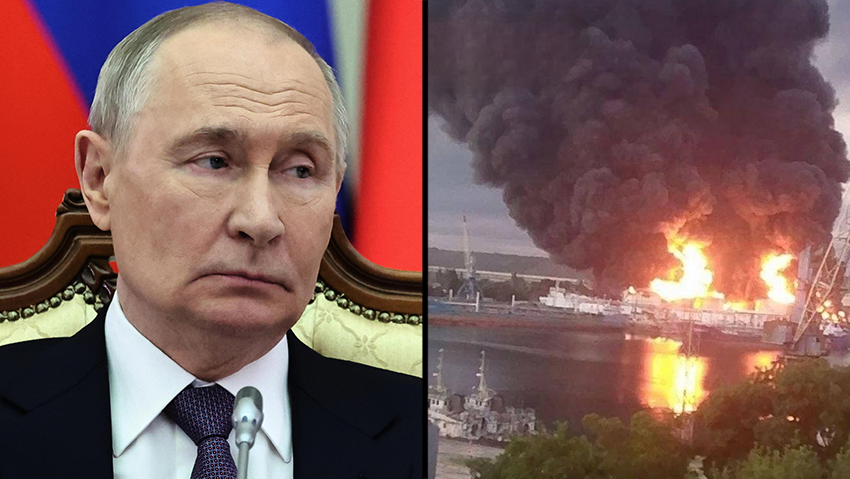
Putin after another Ukrainian strike on a Russian oil facility. Kyiv again launched more than 450 drones in a single night
(Photo: Alexander Kazakov, Sputnik, Kremlin Pool Photo via AP)
Energy Minister Sergei Tsivilev acknowledged Wednesday that long lines continue to form at gas stations, but insisted that fuel remains available as the government works to clear logistical bottlenecks. Efforts to ease the crisis are also being hampered by continued Ukrainian drone attacks on oil facilities. On Thursday, another such attack was reported when a drone set part of a refinery in Ufa, in the Republic of Bashkortostan, on fire, causing damage that will take at least several days to repair. The facility was hit as part of a Ukrainian drone attack involving more than 450 unmanned aircraft launched deep into Russia.
Meanwhile, Deputy Prime Minister Novak confirmed Thursday that Russia had begun importing fuel from abroad. According to Russia's TASS news agency, Novak did not provide details on the volume of fuel being imported or its source. He said the government expected several refineries to resume operations in the near future following “planned maintenance,” which should help increase oil product supplies.
Footage from an attack on Russia's 'Amazon': Heavy smoke rises from a warehouse in Samara


President Putin ordered his government Wednesday to launch a program to restore warehouses damaged or completely destroyed by Ukraine in drone attacks in recent months. Since July 18, Ukraine has attacked at least 24 warehouses belonging to online retail giant Wildberries, considered “Russia's Amazon,” causing explosions and fires that destroyed a significant portion of the facilities and the goods stored there. At an economic conference Wednesday attended by ministers and senior business executives, Putin — without explicitly naming the company — said attacks such as those carried out against the warehouses “did not cause, and could not have caused, critical consequences,” but acknowledged that they did cause some damage.
In the crosshairs: Shopping center, minibus and police station
Heavy fire from both sides continued Thursday, with another nine people killed — two in Russia and seven in Ukraine. In Russia, the deaths were reported in two regions bordering Ukraine, Belgorod and Bryansk, which are regularly targeted by Kyiv. In Belgorod, a Ukrainian drone struck a civilian car, killing a woman and wounding a man. In Bryansk, a woman was killed and her granddaughter wounded. According to the regional governor, two more people were wounded in an attack on a shopping center.
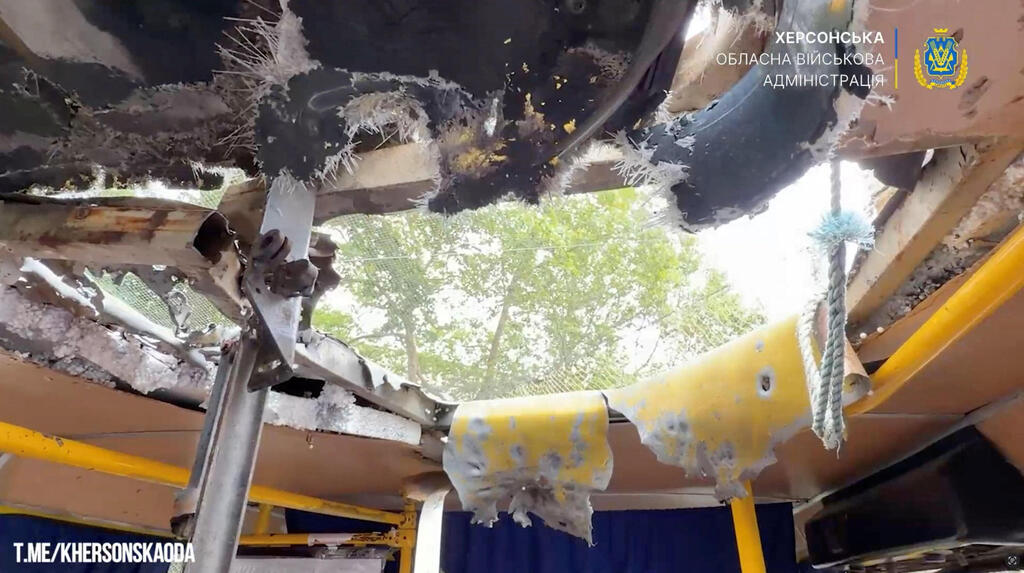
The roof of the minibus bombed by a Russian drone in Kherson. The driver immediately drove to the hospital
(Photo: Kherson region Military Administration/Handout via REUTERS)
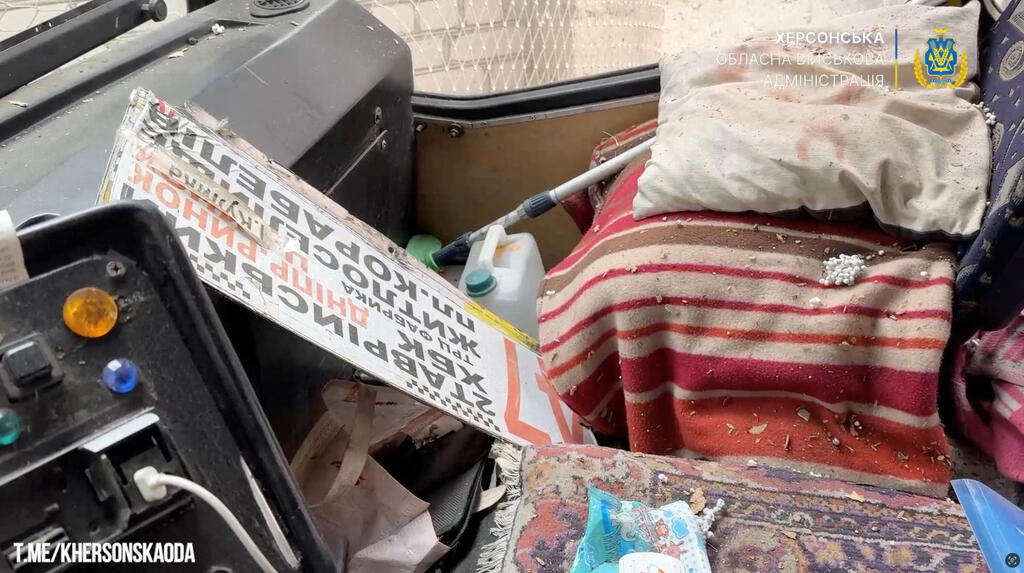
The destruction inside the minibus. Zelenskyy: 'This is the daily reality'
(Photo: Kherson region Military Administration/Handout via REUTERS)
In Ukraine, a Russian drone struck a minibus in Kherson in the country's south, killing four people and wounding four other women. Regional Governor Oleksandr Prokudin said the Russian drone operator could not have failed to know that he was targeting a civilian vehicle, yet he dropped the explosive directly onto the roof of the minibus. According to Prokudin, after the strike the driver immediately drove the damaged vehicle to the hospital to avoid wasting time. Ukrainian President Volodymyr Zelenskyy said such attacks were “the daily reality in Ukrainian regions near the front line.”
Another Russian drone struck a civilian car in the city of Kherson on Wednesday, killing a woman. In Zhytomyr in western Ukraine, a Russian missile-drone of the Bandrol type struck police headquarters, killing two police officers and wounding at least 20 others.
There was also a moment of relief for Russians and Ukrainians Wednesday, when the two countries announced that they had each handed over 103 prisoners of war. Zelenskyy said the Ukrainians returning home included members of the armed forces, the State Border Guard Service and the National Guard.
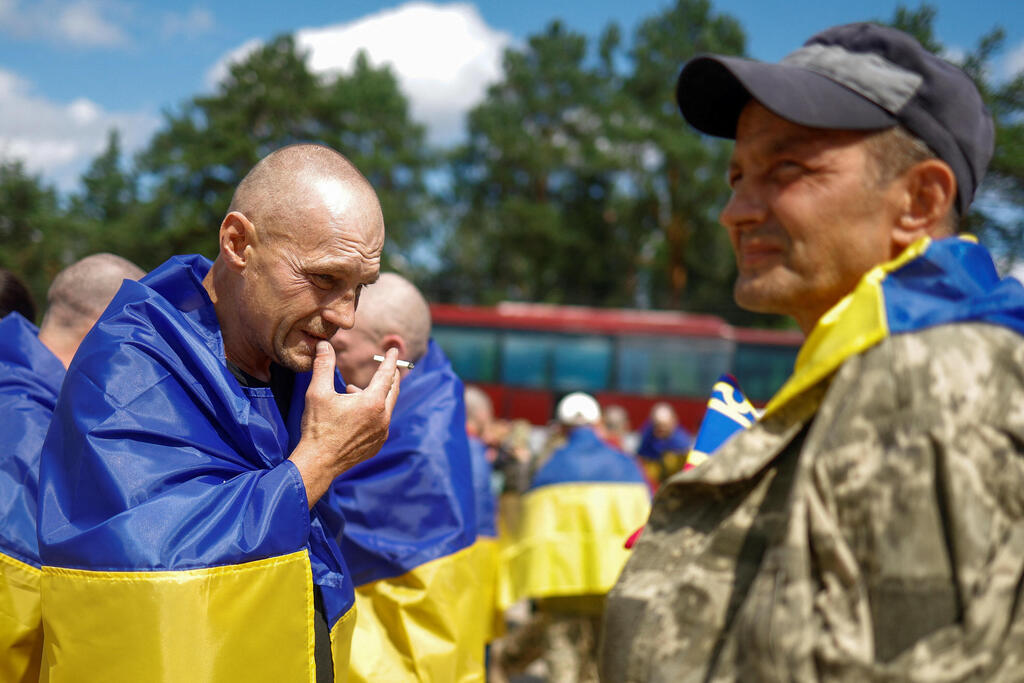
Ukrainian prisoners of war return home wrapped in their country's flag. 'We received letters, but beyond that we knew nothing'
(Photo: REUTERS/Valentyn Ogirenko)
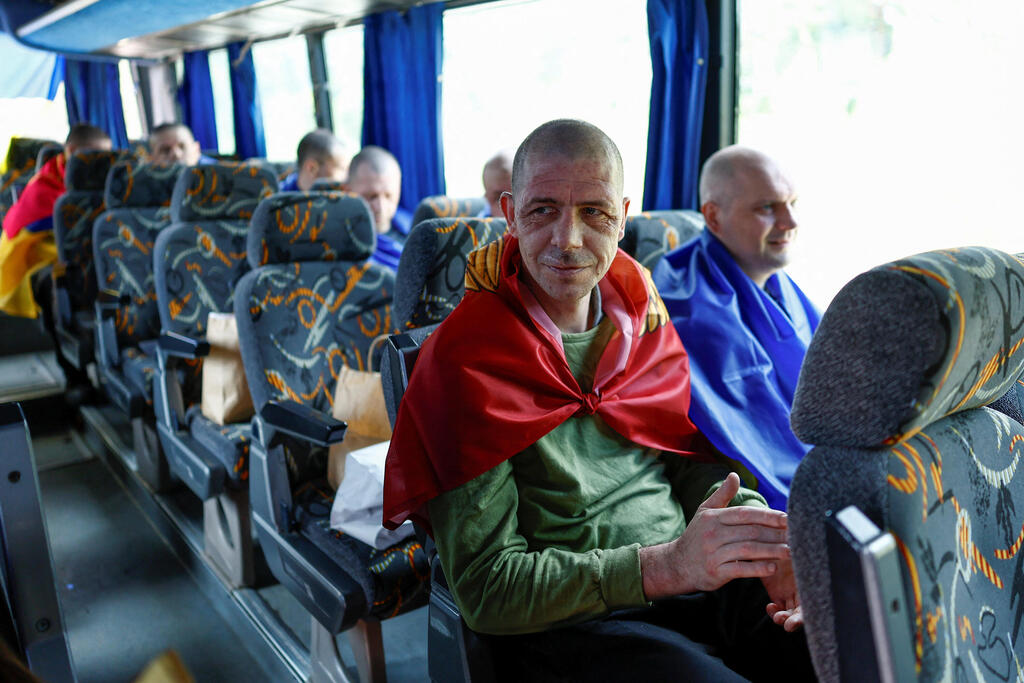
The hope: By the end of the month, soldiers captured while defending Mariupol will also be released. Freed prisoners make their way home
(Photo: REUTERS/Valentyn Ogirenko)
“It is a wonderful day. I came home. I didn't do anything heroic and I don't consider myself special,” Dmytro, a 29-year-old Ukrainian who had been held captive for three years, told Reuters. “I want to tell the families of the men who are still being held captive: Keep believing and don't lose hope.”
Another Ukrainian soldier, 43-year-old Anton Tymofieienko, who was on his way home after 28 months in captivity, described his time as a prisoner: “The most we received were letters from relatives. Beyond that, we had no information.”
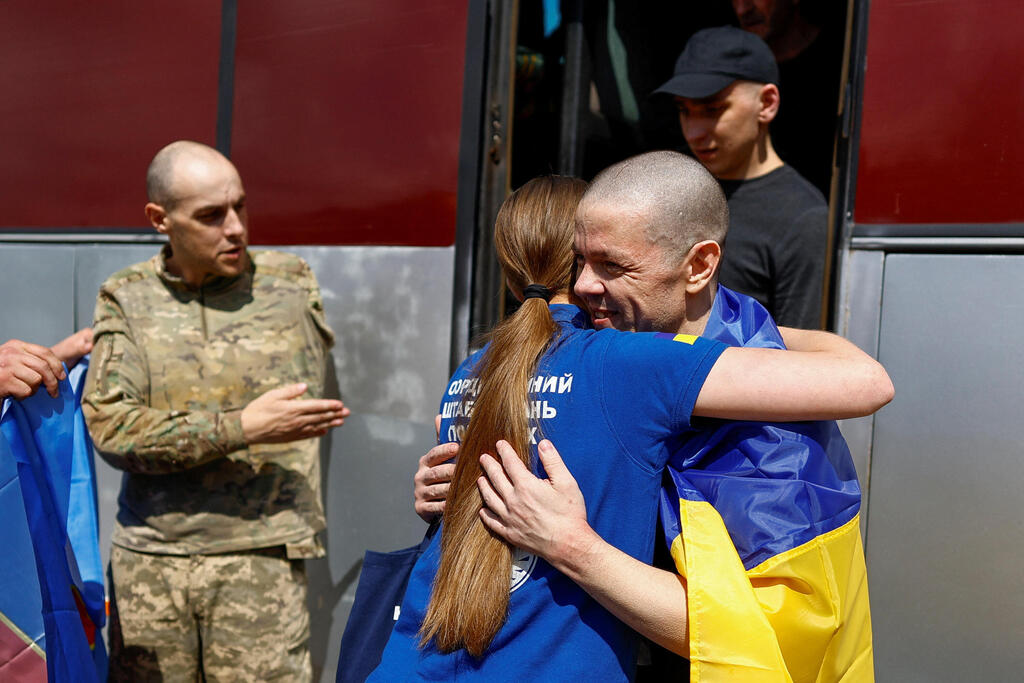
An embrace as they get off the bus. 'I'm not a hero'
(Photo: REUTERS/Valentyn Ogirenko)
Ukrainian military intelligence chief Oleh Ivashchenko said additional prisoner exchanges are expected before the end of the month. “In the next exchanges, we expect the return of defenders who have been held for a long time, including those who fought in the defense of Mariupol,” he said, referring to the port city that Russia besieged at the beginning of the war.