



Senior Israeli security officials said Thursday that the political leadership has instructed the defense establishment to significantly accelerate the entry of humanitarian aid into Gaza, even if that means forgoing some of the precautions meant to prevent food supplies from reaching Hamas.
According to officials involved in the matter, the directive stems from “intense pressure” within the government over growing international criticism and reports accusing Israel of causing mass starvation in Gaza.
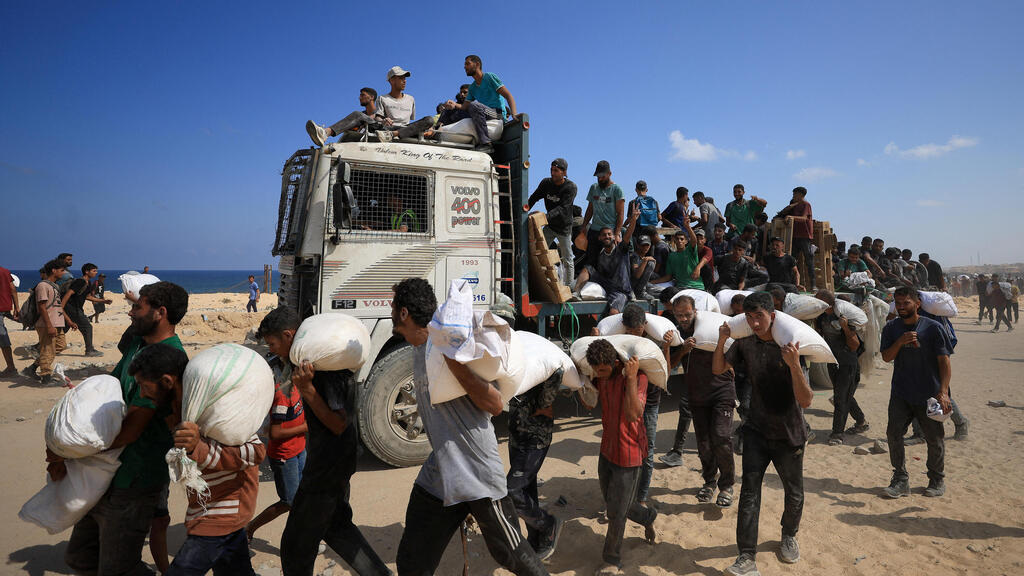
On Wednesday, roughly 150 aid trucks were coordinated and dispersed from the Kerem Shalom crossing, a notable increase compared to previous days. According to UN reports provided to Israel, for the first time in months, some trucks succeeded in reaching densely populated areas in the enclave and offloading supplies.
Until recently, much of the humanitarian aid was looted early in the distribution process, with food stolen and later resold. The Coordinator of Government Activities in the Territories (COGAT), Israel's liaison to the Palestinians, continues to enforce restrictions preventing the entry of aid financed by groups affiliated with Hamas or coordinated directly with the terror organization.
Get the Ynetnews app on your smartphone: Google Play: https://bit.ly/4eJ37pE | Apple App Store: https://bit.ly/3ZL7iNv
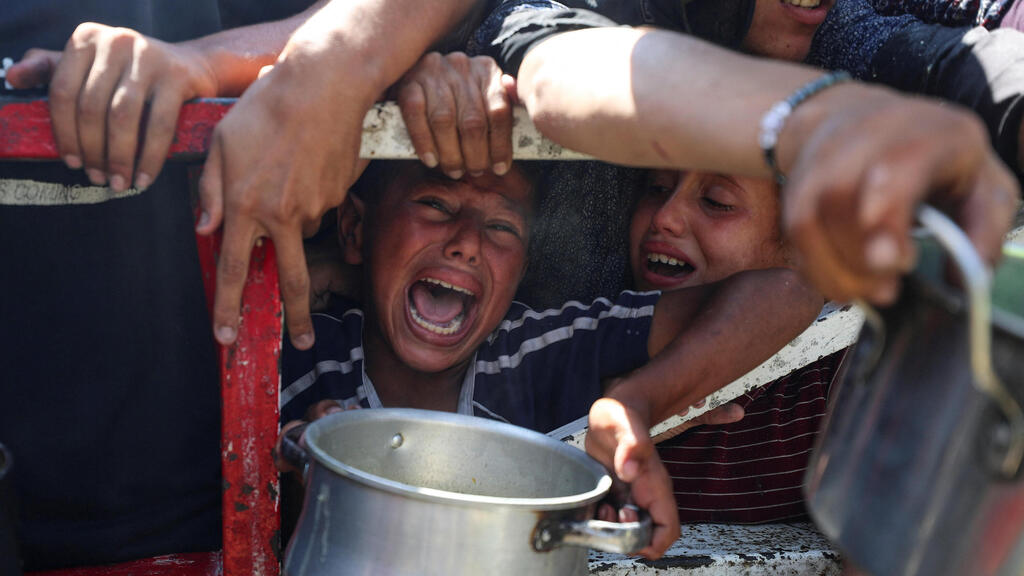
The UN has warned that the vast majority of Gaza’s population is facing a risk of starvation. UN Secretary-General António Guterres said this week that “famine is knocking on every door in Gaza.” The Hamas-run Gaza Health Ministry, whose statements are frequently cited in international media, claimed that 113 people have died of hunger since the war began, including two in the past 24 hours. It also stated that around 70,000 children in Gaza are now showing signs of malnutrition.
International aid organizations blame the humanitarian crisis largely on Israel’s decision to halt most of the previous aid mechanisms that had operated during much of the war, in which hundreds of trucks entered Gaza daily and hundreds of UN-managed distribution points operated across the territory.
(Photo: Reuters/Mahmoud Issa)
Due to widespread looting by armed groups and the risk of aid falling into Hamas' hands, Israel, in coordination with the United States, helped establish the American-run Gaza Humanitarian Foundation (GHF), which now operates just five distribution centers—four in the southern Gaza Strip between Rafah and Khan Younis, and one in central Gaza, south of the Netzarim Corridor.
These centers are secured remotely by IDF forces, who, according to both international reports and soldier testimonies, have at times fired warning shots to disperse crowds surrounding the facilities. These incidents, according to those reports, have resulted in the deaths of hundreds of Gazans.
Israeli officials continue to emphasize that Hamas is actively attempting to disrupt the operations of GHF sites to maintain control over aid distribution. On Thursday morning, the IDF reported that Hamas had launched a rocket the previous day toward a distribution center in Rafah, which landed approximately 250 meters from the site.
“Despite the launch,” the IDF said, “the center in the Morag [Corridor] area opened today, and tens of thousands of weekly food packages were distributed to families. This launch adds to the terror groups’ systematic and brutal efforts to sabotage the international aid program and prevent the distribution of humanitarian supplies to the people of Gaza.”