

Iranian President Masoud Pezeshkian said Sunday that the U.S. attacks on the country’s nuclear facilities would not halt Tehran’s progress, vowing that Iran would rebuild its destroyed installations “stronger than before.”
During a tour of the Atomic Energy Organization of Iran, Pezeshkian said that “the destruction of our nuclear facilities will not delay our progress. We will rebuild them, stronger than before.” He insisted that the country’s nuclear program is “entirely for civilian purposes” and reiterated that “we consider the atomic bomb forbidden.”
Gallery
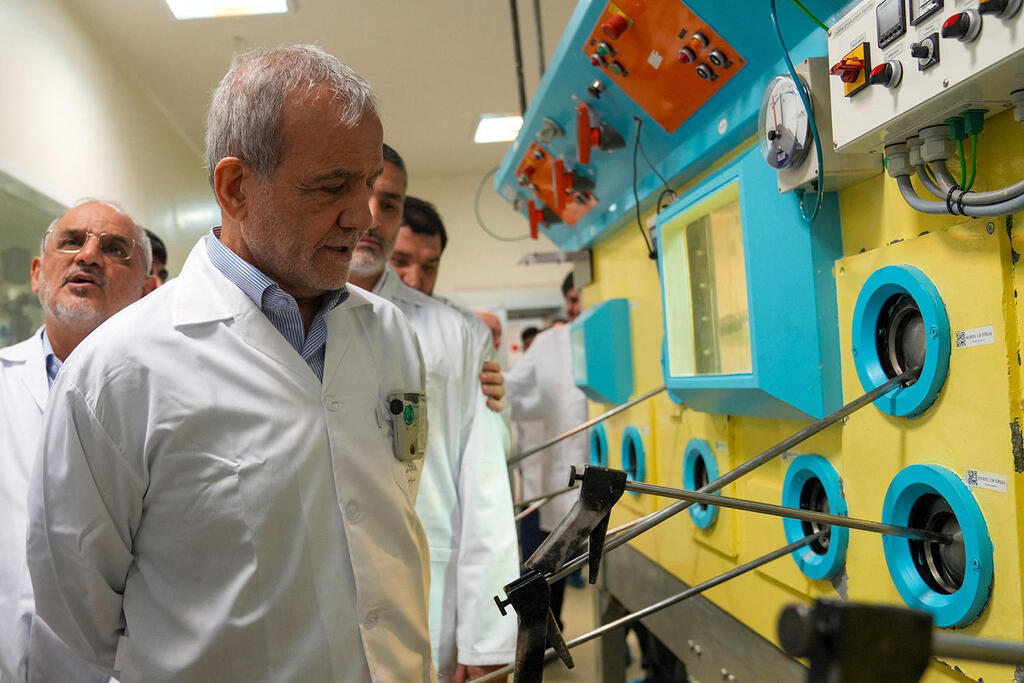
Iranian President Masoud Pezeshkian tours the Atomic Energy Organization of Iran
(Photo: Handout / IRANIAN ATOMIC ORGANIZATION (IAEO) / AFP) / RESTRICTED TO EDITORIAL USE - MANDATORY CREDIT "AFP PHOTO / Iranian Atomic Organization (IAEO)" - HANDOUT)
His remarks come amid lingering regional tensions following what Iranian and Israeli media have described as “the 12-Day War,” and as Western intelligence agencies report that Iran is gradually restoring its military capabilities after coordinated Israeli and U.S. strikes earlier this year.
Government spokeswoman Fatemeh Mohajerani said Sunday that the Foreign Ministry had “received messages regarding the resumption" of negotiations to curb Tehran's nuclear program, but added that details would be disclosed “at the appropriate time.”
A recent CNN investigation, citing European intelligence sources, reported that Iran has significantly increased imports from China of sodium perchlorate — a key component used in solid rocket fuel for ballistic missiles — despite the reimposition of international sanctions in late September. Between 10 and 12 shipments, totaling about 2,000 tons, reportedly arrived in Iran in recent weeks, enough to produce roughly 500 missiles. Analysts say the imports mark a clear sign of renewed missile production.
Israeli defense officials are monitoring the developments closely. Ynet war correspondent Yossi Yehoshua reported that Jerusalem has already conveyed “clear messages” to Beijing opposing the shipments, though China — seeking to expand its influence in the Middle East — has continued them. Before the war, Iran’s missile arsenal was estimated at around 2,700; Israeli officials believe it now holds roughly half that number but is rebuilding rapidly.
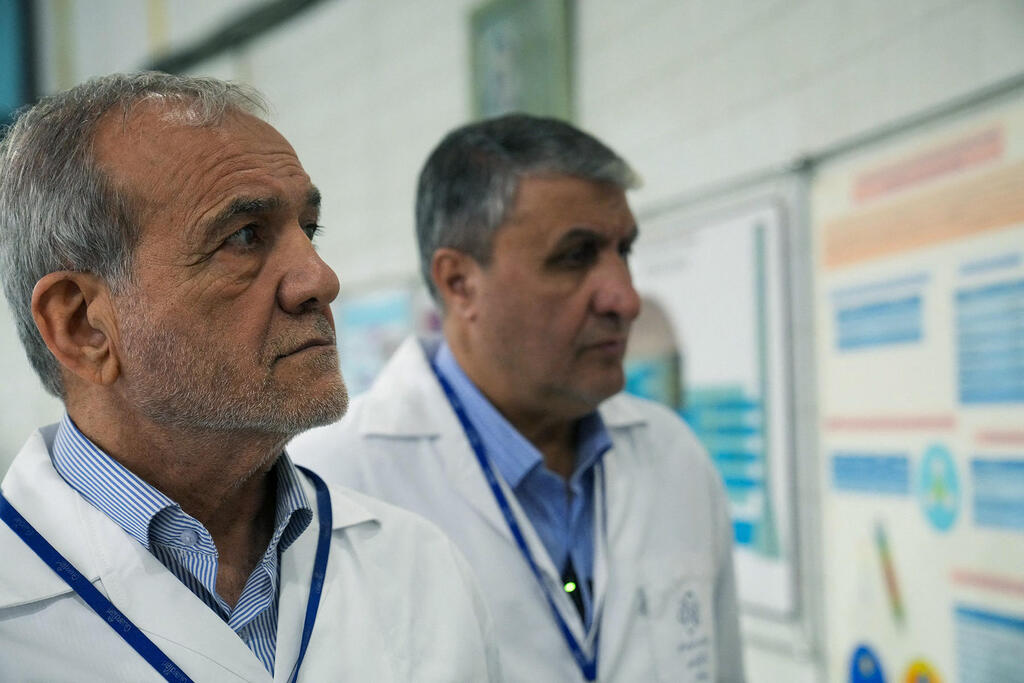
(Photo: Handout / IRANIAN ATOMIC ORGANIZATION (IAEO) / AFP) / RESTRICTED TO EDITORIAL USE - MANDATORY CREDIT "AFP PHOTO / Iranian Atomic Organization (IAEO)" - HANDOUT)
While Iran appears to be restoring parts of its missile program, Ynet security analyst Ron Ben-Yishai noted that Tehran still lacks critical manufacturing equipment, such as planetary mixers used in the production of solid-fuel propellants. He said there is no evidence Iran has resumed uranium enrichment or reactivated efforts to build a nuclear weapon, following the Israeli-led offensive in June, which destroyed multiple nuclear and Revolutionary Guard sites.
Former Mossad chief Yossi Cohen told Fox News over the weekend that the joint Israeli-American operation “obliterated” Iran’s nuclear facilities and halted uranium enrichment. “Since June 2025, Iran has been in a different position,” he said.
“I can absolutely accept the president’s description that Iran’s nuclear sites were obliterated. I know for sure that Iran doesn’t enrich uranium these days, which is a great achievement. And more than that, Iran knows two things: first, that we can, and we did — with the U.S., in beautiful cooperation and coordination. And second, something even more important — we can come again.”
"We destroyed their air-defense systems, their Revolutionary Guard sites, we chased their filthy terrorists in their own bedrooms and beds inside Tehran and other cities," he added. "We destroyed the nuclear facilities that were threatening the State of Israel up to the level of an existential threat — and they know that we’ve done a beautiful job there."
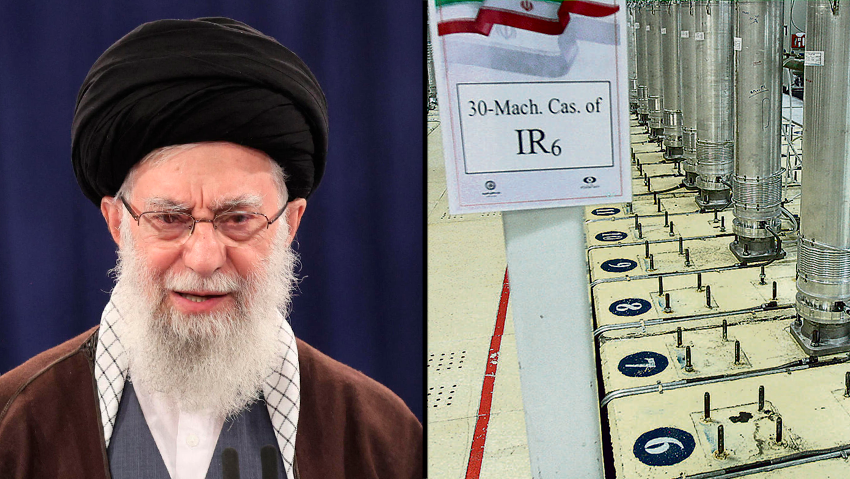
Iranian Supreme Leader Ayatollah Ali Khamenei
(Photo: AFP, AP)
Still, nuclear expert Dr. Col. (res.) Ori Nissim Levy, chairman of the World Nuclear Forum, warned that the Iranian nuclear threat “remains real and significant.” Satellite images, he said, show renewed activity at damaged sites, and up to 400 kilograms (880 pounds) of uranium may be unaccounted for. “In the worst-case scenario, a bomb could be produced within weeks, not months or years,” he warned.
Defense Minister Israel Katz and other senior officials have hinted that further Israeli action against Iran may be forthcoming. “The danger remains,” Levy said, “even if the world situation is better now than six months ago.”
Levy also commented on U.S. President Donald Trump’s recent announcement that the United States would resume nuclear testing after a three-decade hiatus, calling it “a dramatic and dangerous escalation. The world does not need more nuclear tests — this is a deeply troubling step.”