

Tensions surged across the Middle East on Wednesday as Iran’s Revolutionary Guard Corps said it had moved to the highest level of readiness for a possible U.S. attack, while personnel at the massive American Al Udeid air base in Qatar were advised to evacuate part of the facility by evening.
The warning came as U.S. President Donald Trump continues to weigh whether to carry out military action against Iran in response to the mass killing of protesters during the regime’s violent crackdown on nationwide demonstrations.
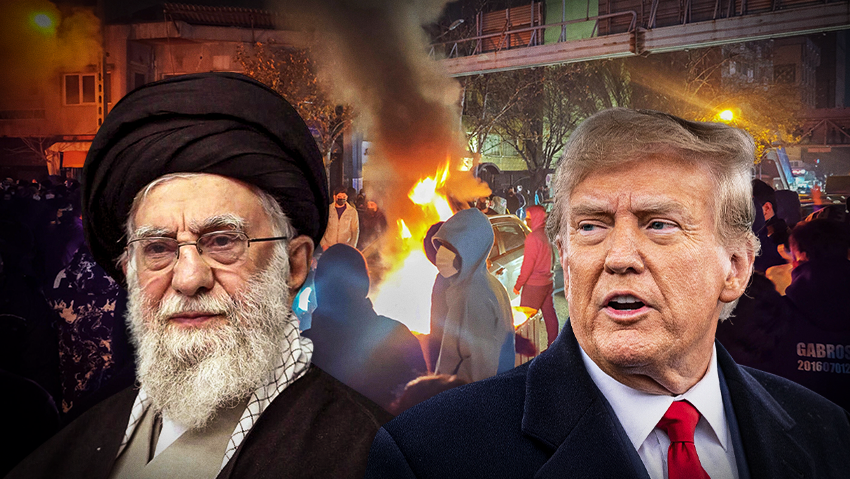
Maj. Gen. Majid Mousavi, commander of the Revolutionary Guard’s aerospace force, said Iran’s forces were “at the highest level of preparedness to confront any aggression.” He claimed Iran’s missile production now exceeds levels prior to the 12-day war with Israel in June last year and said all damage from that conflict had been repaired.
Earlier Wednesday, a senior Iranian official said direct communication channels between Tehran and Washington had been severed following Trump’s threats. Speaking to Reuters, the official said Iran had warned regional countries including Saudi Arabia, the United Arab Emirates and Turkey that U.S. bases on their soil would be targeted if Iran were attacked.
Shortly afterward, three diplomatic sources told Reuters that some personnel at Al Udeid air base in Qatar, the largest U.S. military installation in the Middle East with roughly 10,000 troops, had been advised to evacuate by the evening. The scope of the evacuation was not immediately clear.
Al Udeid was targeted by Iranian missiles in retaliation for U.S. strikes on Iran’s nuclear facilities during the June war, and partial evacuations were carried out ahead of that attack as well.
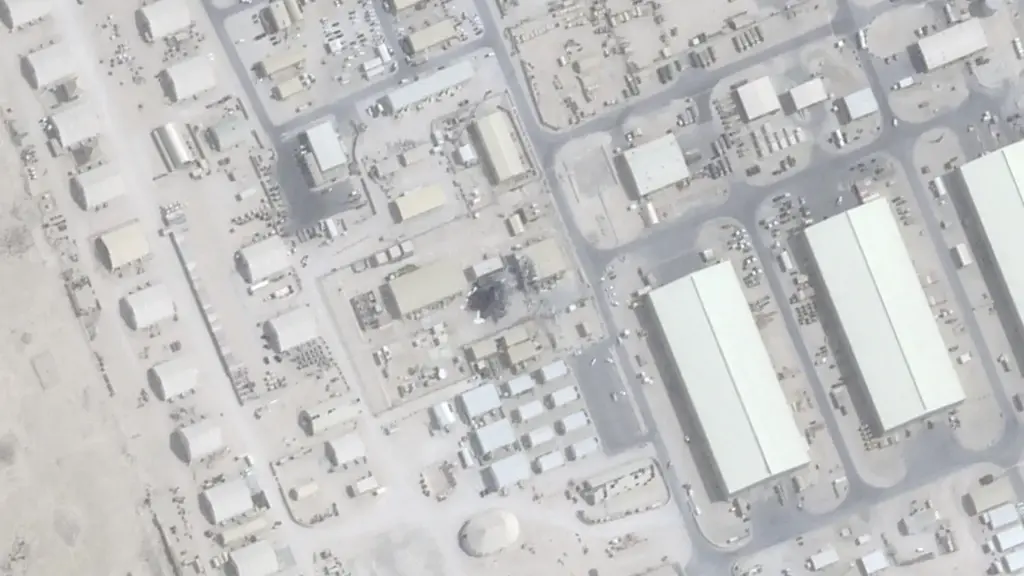
Al Udeid base in Qatar
(Photo: Planet Labs PBC via AP)
Amid concerns that Iranian retaliation could also target Israel, Israel’s “Wing of Zion” aircraft took off Wednesday afternoon from Nevatim air base. Officials familiar with the details said it was a preplanned routine training flight conducted as part of the aircraft’s annual maintenance program.
Trump escalated his rhetoric on Tuesday night, announcing on Truth Social that he had canceled planned negotiations with Iranian officials and urging protesters he described as “Iranian patriots” to continue demonstrating. “Help is on the way,” he wrote.
Asked during a visit to Detroit what he meant by the phrase, Trump declined to elaborate, telling reporters, “You’ll have to find out for yourselves.”
Overnight, reports said Trump discussed a range of military and nonmilitary options with senior advisers, including cyberattacks and other limited measures. U.S., Israeli and Arab officials have expressed concern that even a large-scale strike may fail to deal a decisive blow to the Iranian regime and could instead rally domestic support for it against an external enemy.
Trump also warned Iran against executing detained protesters. Asked in an interview with CBS about reports of imminent executions, he said the United States would take “very strong action” if such steps were carried out.
Despite the warning, concerns mounted that Iran could carry out its first execution as early as Wednesday. The family of Erfan Soltani, a 26-year-old from Karaj near Tehran, said he was arrested last Thursday, swiftly tried and sentenced to death. A relative told the BBC the execution was expected later in the day.
The Hengaw human rights organization said it had never witnessed such an accelerated judicial process in Iran.
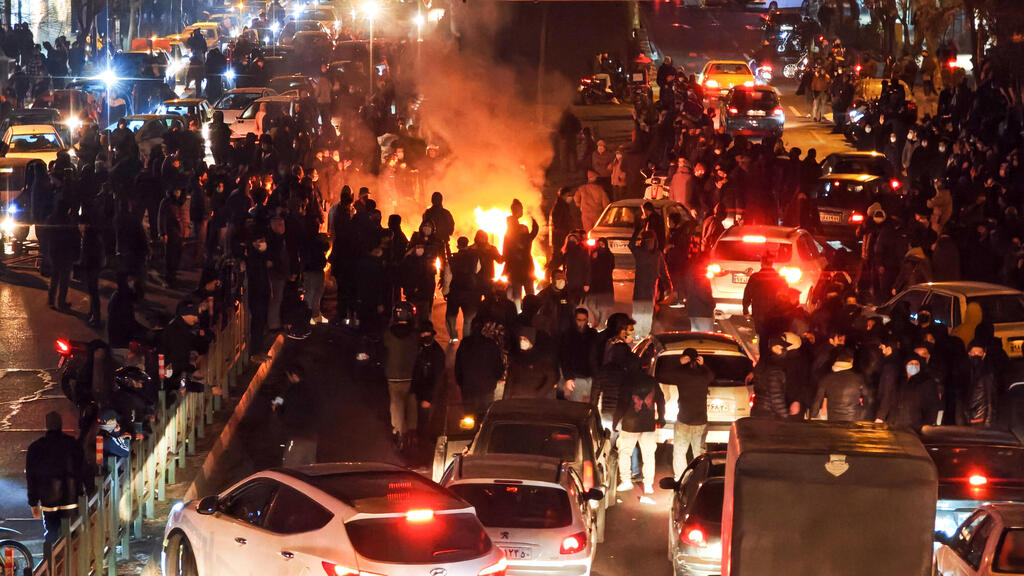
Iran protests
(Photo: Anonymous/Getty Images)
Iran’s judiciary chief, Gholam-Hossein Mohseni-Eje'i, said Wednesday that fast-track trials and executions of detained protesters would continue. Visiting a Tehran prison holding suspects accused of “terrorism and sabotage,” he said cases must be handled immediately, accusing protesters of “beheadings in the streets and burning people alive,” allegations made without evidence.
Protests erupted on December 28, initially sparked by Tehran bazaar merchants protesting soaring inflation and the collapse of Iran’s currency. As in previous protest waves, including the 2019 fuel protests and the 2022 hijab protests following the death of Mahsa Amini, demonstrations quickly evolved into a broader uprising against the clerical regime.
Chants of “Death to the dictator” and “This is the final battle, Pahlavi will return” echoed across multiple cities, referring to exiled Crown Prince Reza Pahlavi, son of the shah overthrown in the 1979 Islamic Revolution.
Unlike earlier protests, the current unrest comes as the regime is already weakened following the June war with Israel, the erosion of its regional proxy network and years of crippling sanctions and economic mismanagement.
The protests intensified last Thursday after Pahlavi called for nationwide demonstrations at 8 p.m. That evening, authorities shut down internet access across Iran. Nearly six days later, connectivity has yet to be restored.
Iranian security forces, including the Revolutionary Guard and Basij militia, have used live fire to suppress demonstrations. Thousands have been killed, according to human rights groups, in what appears to be the deadliest crackdown in decades.
An Iranian official acknowledged at least 3,000 deaths, including hundreds of security personnel allegedly attacked by armed protesters. The Human Rights Activists News Agency said it had verified 2,571 deaths, including 2,403 protesters, 143 regime affiliates, 12 minors and nine non-protester civilians. It also reported more than 18,000 arrests.
Israeli officials estimate the death toll may exceed 4,000, while opposition outlet Iran International has suggested it could reach 12,000.
Iran’s Fars News Agency, affiliated with the Revolutionary Guard, signaled Wednesday that internet restrictions may remain in place for at least another week, claiming a “direct correlation” between reduced online access and a decline in casualties.
Despite the blackout, some Iranians have managed to communicate with the outside world using Starlink satellite internet, which Elon Musk temporarily enabled free of charge inside Iran. Iranian security forces have reportedly searched neighborhoods in northern Tehran to locate and confiscate Starlink terminals, while CNN reported Tehran is using advanced military technology to jam the service.
Cybersecurity expert Amir Rashidi told CNN the scale of interference was unprecedented and similar to tactics used by Russia in Ukraine. NetBlocks said Iran’s shutdown ranks among the most extensive it has ever recorded.
CNN also reported the regime has become increasingly paranoid since last year’s war with Israel, citing deep Israeli intelligence penetration. Hassan Khomeini, grandson of Iran’s revolutionary leader, described the protests as “day 13 of the 12-day war,” accusing Israel without evidence of orchestrating the unrest.
As repression continues and executions loom, international concern is mounting, while Washington and its allies weigh whether pressure will translate into action or allow Iran’s rulers to once again survive a crisis through force.