


Attorney General Gali Baharav-Miara said Sunday that investigators had uncovered no evidence of foreign interference capable of changing the results of last month's parliamentary election, pushing back against allegations that have fueled a bitter confrontation with Shin Bet security agency chief David Zini.
"I am not aware of any evidentiary basis that comes even close to affecting the election results or substantiating a claim of influence that could have changed the outcome," Baharav-Miara said. "If additional new information that has not yet been presented to us emerges, it will be examined and handled in accordance with the law."
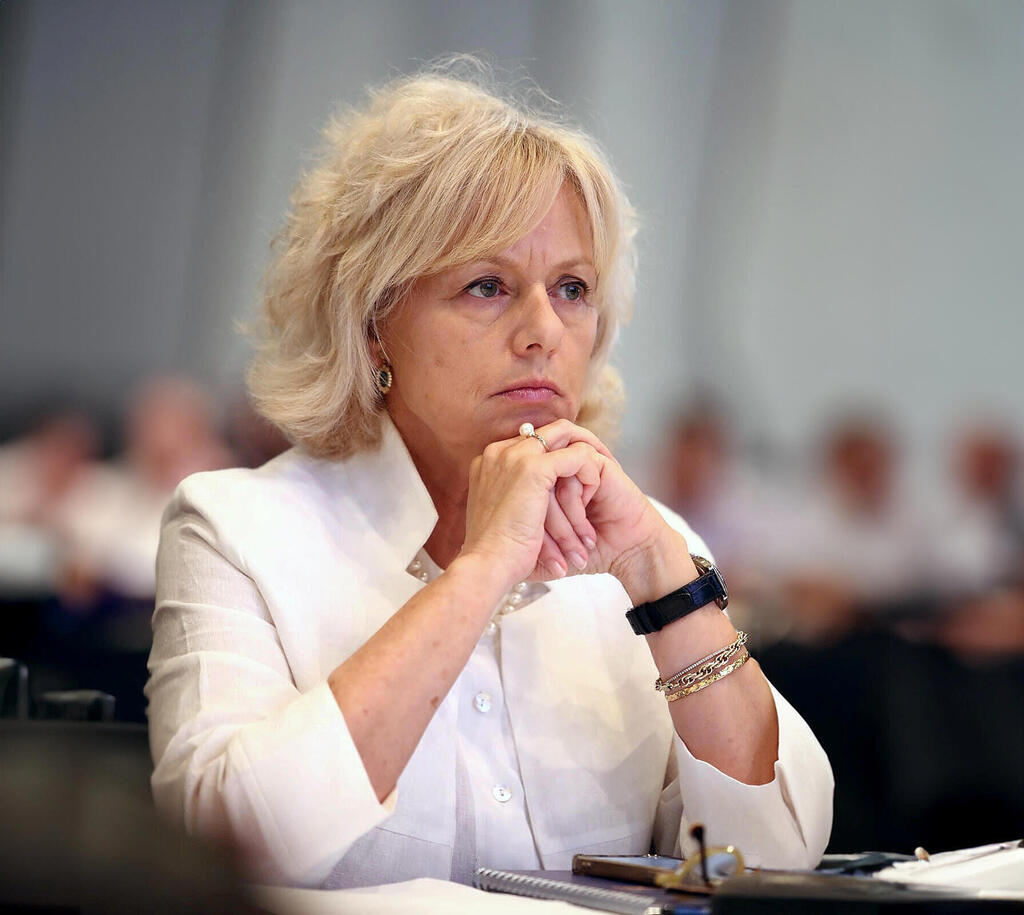
Speaking at the Justice Ministry's annual professional conference in the southern resort city of Eilat, Baharav-Miara addressed the investigation days after a highly publicized dispute with Zini over how authorities should examine allegations of foreign involvement in the election.
She insisted that decisions to question suspects must be based on evidence rather than political or ethnic considerations.
"When there is an evidentiary basis, whoever needs to be investigated will be investigated," she said. "This is not a matter of right or left. It is not a matter of Jewish or Arab. The decision whether to investigate someone is a professional, objective and equal one. That is how it has been, and that is how it will remain."
Her remarks suggested that the joint Shin Bet-police investigation had yet to produce significant evidence supporting allegations of a coordinated effort to influence the election outcome.
Baharav-Miara praised the chairman of the Central Elections Committee for overseeing the matter with professionalism and responsibility.
"The chairman of the Elections Committee is handling the issue professionally, with statesmanship and responsibility, out of a deep understanding of the importance of election integrity and public confidence in it," she said. "We will update him on developments."
'The first AI election'
Baharav-Miara said law enforcement authorities had devoted considerable resources in recent months to protecting the integrity of the election.
A large team from the State Attorney's Office and the Justice Ministry's legal advisory and legislative departments worked closely with the Central Elections Committee, the police investigations and intelligence division, and the Shin Bet, she said.
"We placed all our capabilities at the service of the Elections Committee and the public," Baharav-Miara said. "This was the first AI election. It required considerable thought and adjustments."
Baharav-Miara stressed that criminal offenses involving election integrity are serious threats to democratic governance. "They are anti-democratic," she said.
She said both she and State Attorney Amit Aisman were committed to opening investigations whenever sufficient grounds existed to suspect a criminal offense.
"The position of the state attorney and myself is that wherever reasonable suspicion of a criminal offense emerges, an investigation will be opened," she said. "We have already authorized significant investigative measures."
She expressed confidence in the joint investigative team and said its recommendations would guide further action.
"The handling of current incidents will also proceed as usual, in accordance with the professional recommendations of the team," she said. "So far, I have been presented with preliminary evidence relating only to a few isolated and narrowly defined incidents."
Clash with Shin Bet chief over questioning Arab politicians
The attorney general's remarks followed an unusually public confrontation with Zini over the investigation into suspected foreign interference in the election.
At the center of the dispute was Zini's demand to classify the entire affair as involving suspected national security offenses.

Shin Bet Director David Zini, Central Elections Committee Chairman Noam Sohlberg and Attorney General Gali Baharav-Miara
Such a classification would allow the Shin Bet domestic security agency to deploy broader investigative powers than those ordinarily available in criminal investigations.
Zini also sought authorization to question senior figures in Arab political parties under caution, a procedure used when investigators suspect a person may have committed a criminal offense.
The requests were reportedly made without presenting sufficient evidence to justify questioning the politicians as suspects.
Baharav-Miara rejected the demands, arguing that citizens and elected officials cannot be subjected to criminal questioning without an appropriate evidentiary basis. She warned that doing so would be unlawful.
The attorney general also opposed categorically classifying the entire affair as a security investigation, explaining that allegations involving election bribery could constitute ordinary criminal offenses without necessarily meeting the legal threshold for national security crimes.
The disagreement escalated when Baharav-Miara issued an unusual public statement accusing the Shin Bet of delaying the transfer of investigative materials to the joint team working with police.
She reiterated that anyone who needed to be investigated would be investigated, but only when supported by evidence.
The dispute reportedly spilled over into heated exchanges between Baharav-Miara and Zini, including raised voices and mutual accusations.
President Isaac Herzog subsequently intervened, speaking with both officials in an effort to ease tensions.
Baharav-Miara and Zini later met at Shin Bet headquarters and agreed to lower the temperature of their public confrontation and work toward maintaining a functioning professional relationship.
The following day, the Shin Bet began transferring investigative materials to police in stages.
However, the agreement to de-escalate the dispute did not resolve their fundamental disagreements over how the investigation should be conducted or the legal limits of the Shin Bet's authority.
Attorney general warns of 'immediate and serious threat' to rule of law
Beyond the election investigation, Baharav-Miara delivered a sweeping critique of judicial changes advanced by Netanyahu's outgoing government over the past four years.
She argued that Israel's institutional safeguards for human rights and its mechanisms for preventing the executive branch from abusing its authority remain comparatively weak.
That reality, she said, makes the professional independence of law enforcement institutions particularly important.
Baharav-Miara accused the government of seeking to fundamentally alter the relationship between law enforcement authorities and political leaders.
She said she, Aisman and their deputies had reached two fundamental conclusions about the government's proposed judicial reform.
"The initiative was not intended to improve the system," she said. "It was intended to change the operating principles of law enforcement in Israel, from loyalty to the public to loyalty to those in power."
Her second conclusion, she said, was that the changes represented "a fatal blow to the rule of law and human rights."
"Preserving public legal counsel and the prosecution service as professional, state institutions free of political influence cannot be taken for granted," she said.
The attorney general singled out two laws enacted earlier this year that she described as posing a "serious, clear and immediate threat" to the ability of law enforcement authorities to operate independently and serve the public.
One was legislation approved in June restructuring the Police Internal Investigations Department, known by its Hebrew acronym Mahash, which investigates suspected criminal misconduct by police officers.
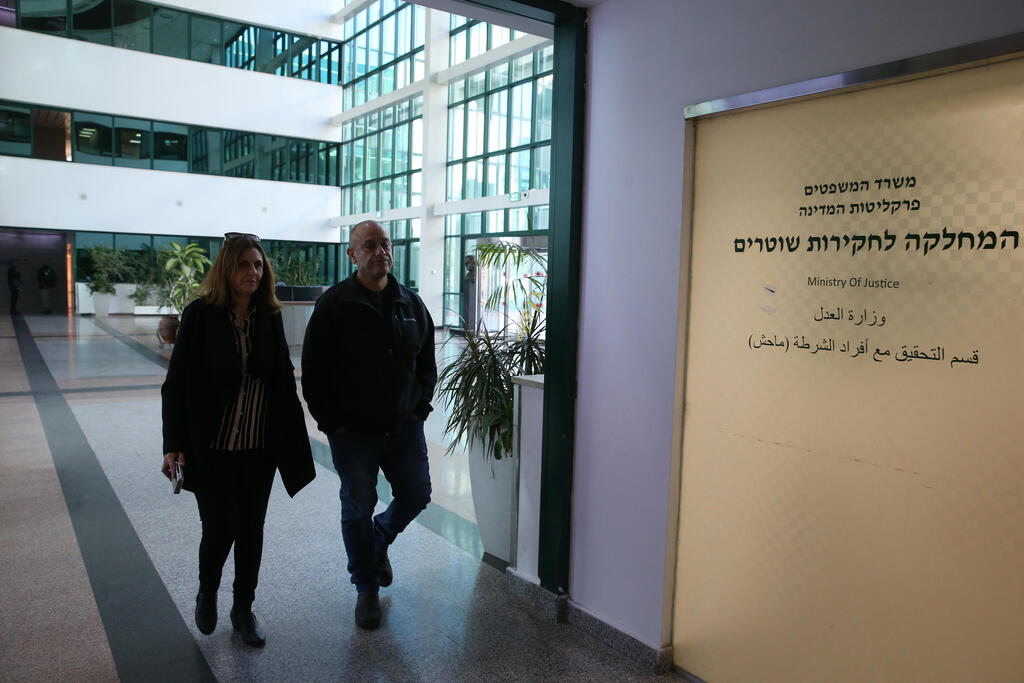
The Police Internal Investigations Department in the Justice Ministry
(Photo: Amit Shabi)
The second, approved in July, concerned changes weakening the institution of the attorney general.
Both measures were part of the broader judicial reform pursued by Netanyahu's coalition, which has generated intense political and legal controversy over the independence of the judiciary and law enforcement institutions.
'A poison pill' inside law enforcement
Baharav-Miara reserved some of her sharpest criticism for the legislation restructuring Mahash. She said the law had been presented as a relatively minor administrative reform designed to make the police oversight body more independent. In reality, she argued, it would undermine the fundamental principles of impartial law enforcement.
"The Mahash law is sometimes presented as a kind of organizational change, almost an innocent one," she said. "In practice, it is a poison pill inserted into the law enforcement system, dismantling from within the principles of political neutrality and equality before the law."
The original justification for the legislation, she said, was that Mahash needed to be separated from the State Attorney's Office to ensure its independence.
"But the law does something entirely different," she said. "It subordinates Mahash to the political echelon, contrary to the recommendation of the professional committee that examined the issue."
Baharav-Miara warned that the changes would give politicians substantial leverage over criminal investigations.
"The law creates significant pressure mechanisms for the political echelon to force the opening of criminal investigations against police officers, prosecutors, legal advisers and journalists," she said. "The political echelon will also be able to stop and thwart investigations into government corruption or investigations involving people close to those in power."
Under the legislation, she said, politicians would be empowered to appoint senior Mahash officials and remove them relatively easily.
"This is not independence. This is not an improvement of the situation. This is the politicization of a law enforcement system," she said. "Outwardly, Mahash will be presented as a professional unit, but internally, its proper operating mechanisms will be dismantled. This must not be allowed."
State attorney: 'We are not the government's private law firm'
Baharav-Miara also praised Aisman for his leadership during what she described as an exceptionally difficult period for the prosecution service.
"This is undoubtedly one of the most complex periods the State Attorney's Office has ever known, if not the most complex," she said. "I see and greatly appreciate the integrity of State Attorney Amit Aisman, the professionalism with which he analyzes every legal issue.
"I greatly appreciate the quiet, matter-of-fact and confident manner in which he steers the State Attorney's Office through this turbulent period."
She then offered a humorous comparison between the expectations of public legal service and the political reality she and Aisman had encountered.
"When someone takes office as attorney general, they envision a term in the spirit of the television series 'Law & Order,'" she said. "The state attorney and I got 'Survivor.'"
Aisman, speaking at the same conference, defended the prosecution service's obligation to uphold the law and the public interest, even when doing so brings it into conflict with elected officials.
"The State Attorney's Office is not the government's private law firm," he said. "Our duty is to represent the state and the public interest within the framework of the law.
"I respect the authority of the elected political echelon to set policy and advance changes in which it believes. That is its authority. But our professional responsibility does not end where disagreement begins."
Baharav-Miara ended her remarks with a pointed joke directed at outgoing Justice Minister Yariv Levin, one of the leading architects of the government's judicial reform.
Levin had previously locked the shared office used by the two officials in Tel Aviv, an incident that became emblematic of their deeply strained relationship.
Referring to the conference in Eilat, Baharav-Miara said: "So far, everything has gotten off on the right foot. Even my room isn't locked. That's refreshing."