


The Shin Bet domestic security agency began transferring intelligence materials to police Thursday after days of delays in an investigation into suspected foreign interference in last week's Knesset elections, amid a public dispute between the agency's director and the attorney general over whether Arab lawmakers could be questioned without sufficient evidence.
The materials, reportedly concerning polling stations in Arab communities, are being delivered in stages, with additional evidence expected to reach police later Thursday and Friday.
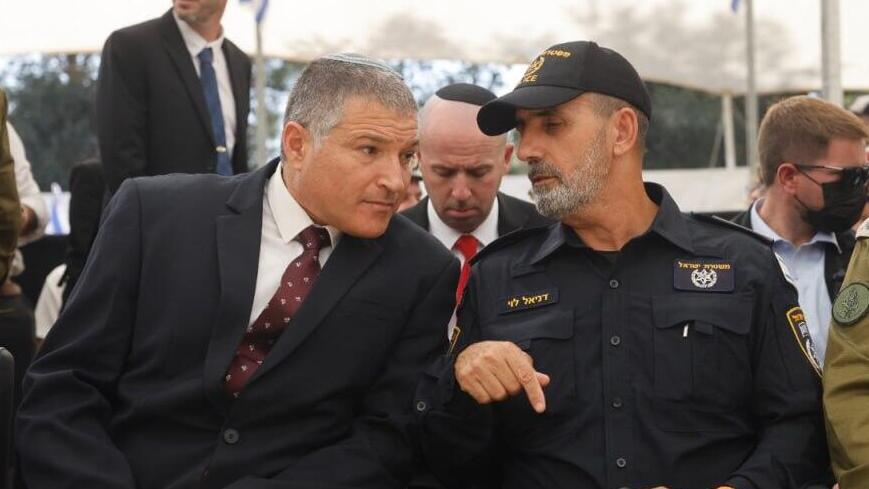
Shin Bet Director David Zini and Police Commissioner Danny Levy
(Photo: Olivier Fitoussi)
The transfer follows a request by Attorney General Gali Baharav-Miara that intelligence collected by Shin Bet be handed over to a special investigative team that includes police representatives.
Shin Bet officials said the gradual transfer was necessary because of the procedures involved in preparing and sharing the materials. "It takes time," the agency explained.
"There are processes that need to be carried out and meetings that need to take place to ensure everything is transferred properly," officials said.
The investigation centers on allegations that foreign actors, including Qatar, Turkey and the Palestinian Authority, funneled substantial sums of money to individuals associated with the Joint List, an alliance of predominantly Arab political parties, in an effort to influence the election outcome.
The allegations have not been substantiated publicly, and investigators have yet to establish the full scope of any suspected foreign financing or whether it affected the election results.
Police emphasized Wednesday that they currently have no plans or expectation of summoning lawmakers or other members of the party for questioning.
That includes Joint List lawmaker Ayman Odeh, despite reports suggesting there was broad agreement among investigators that sufficient evidence had been gathered to question him.
Shin Bet warns of potentially widespread foreign funding
On Wednesday, Shin Bet presented members of the Central Elections Committee with intelligence indicating what it described as potentially extensive foreign financing operations aimed at influencing the election.
"The intelligence presented by the service's professionals ostensibly indicates widespread transfers of substantial sums of money into Israel from foreign countries, originating from actors with hidden and even hostile interests, intended to advance foreign influence," the agency said.
Shin Bet said the findings warranted further intelligence gathering and criminal investigation.
"Information collected so far indicates that foreign financing and influence operations involving enormous sums of money are a widespread phenomenon, potentially involving thousands of people or even more," it said.
However, the agency acknowledged that its findings remained preliminary and that additional investigative work was required before firm conclusions could be reached.
"At this stage, we must complete further intelligence collection and investigative measures to obtain information that will allow us to connect the dots and establish, with a high degree of certainty and confidence, the scope of the phenomenon," the statement said.
The assessment comes amid a politically charged debate over the election results, with some politicians alleging widespread irregularities involving Arab political parties.
Those claims have intensified scrutiny of the security services and raised concerns about the potential use of intelligence investigations to challenge the legitimacy of the electoral process.
Shin Bet chief faces criticism over demands to question Arab lawmakers
Shin Bet Director David Zini has faced mounting criticism in recent days over reports that he sought to question senior figures in Arab political parties under caution as part of the foreign interference investigation, despite concerns that the available evidence did not establish reasonable suspicion.
Questioning under caution is a formal procedure in Israel in which an individual is interrogated as a criminal suspect and informed of the rights associated with that status.
The dispute has centered on Zini's reported confrontation with Baharav-Miara, who insisted that investigators must establish a sufficient evidentiary basis before summoning suspects, particularly elected lawmakers.
"Without reasonable suspicion, I will not authorize questioning anyone under caution, especially a member of the Knesset," the attorney general reportedly told Zini.
The disagreement, which began in a private conversation, became public Tuesday when Baharav-Miara issued an unusual statement responding to reports about the investigation.
"In an exceptionally unusual step, and in light of inaccurate reports, the attorney general wishes to clarify that in a country governed by the rule of law, citizens or elected officials cannot be investigated without evidence justifying such action," the statement said.
Baharav-Miara emphasized that investigators would be permitted to question anyone against whom sufficient evidence emerged, but that political pressure or unsubstantiated suspicions could not substitute for an evidentiary basis.
"If Shin Bet or any other body possesses evidence justifying an investigation, it is invited to present it," she said.
"Anyone who needs to be investigated will be investigated, but people will not be investigated without an evidentiary basis."
Attorney general accused Shin Bet of delaying investigation
In the same statement, Baharav-Miara publicly criticized Shin Bet for failing to transfer the intelligence materials it had collected to the special investigative team.
She said the agency's failure to provide the evidence was effectively preventing investigators from advancing the case.
"In addition, Shin Bet has not transferred the investigative materials it collected to the special investigative team for two days," she said.
The team was established following a recommendation by Justice Noam Sohlberg and operates in cooperation with police and under the supervision of state prosecutors.
Baharav-Miara said the failure to transfer the materials had delayed the investigation despite the urgency of determining whether foreign actors had attempted to influence the election.
"This is effectively delaying the handling of the matter," she said. "The law enforcement system is acting quickly and professionally to uncover the truth based on the materials in its possession, and investigative decisions will be made accordingly."