

Israel's Central Elections Committee said early Friday that the Shin Bet security agency's investigation into suspected election bribery and foreign interference would not affect the final results of Tuesday's parliamentary election.
In a recorded statement released overnight, acting committee director general Dean Livne also stressed that the investigation does not concern any particular community and dismissed reports circulated throughout Thursday as entirely unfounded. Livne said the statement was issued with the approval of committee chairman Supreme Court Justice Noam Sohlberg.
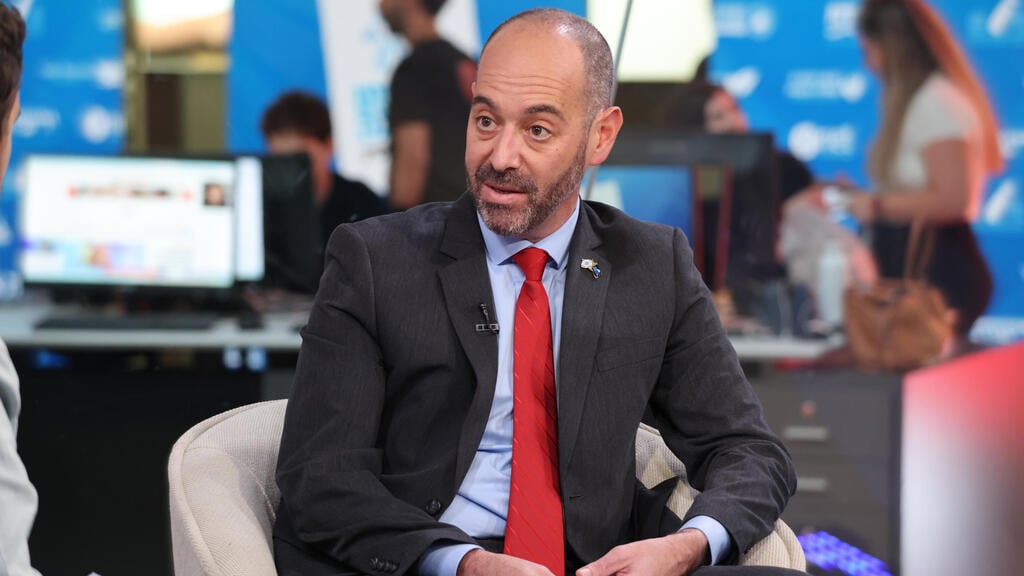
"Yesterday, the head of the Shin Bet presented classified intelligence to the committee chairman, which led to the opening of the investigation," Livne said. "With the chairman's approval, the main points were also presented to Prime Minister Benjamin Netanyahu, opposition leader Yair Lapid and Yashar! party chairman Gadi Eisenkot."
Livne emphasized that access to the intelligence was extremely restricted because of its high security classification. "No further details can be disclosed, but reports published throughout the day are entirely unfounded," he said.
"The investigation is taking place alongside the Central Elections Committee's ongoing work and will not affect the final results submitted to the president. Nor does it concern any particular community," Livne added. Once the investigation is completed, its findings will be submitted to Sohlberg, who will assess their scope and implications. The committee will update the public as quickly as possible, subject to the necessary restrictions.
Final election results confirmed
In a separate statement, the Central Elections Committee confirmed the final vote count for Israel's 26th Knesset, as announced earlier Thursday evening. Likud won 27 seats, Yashar! 21, Together 12, the Joint List 11, the Democrats 8, Ra'am 8, Yisrael Beiteinu 7, Otzma Yehudit 7, United Torah Judaism 7, Shas 6 and Religious Zionism 6.
The committee said the final voter turnout was 77.9%, with 5,716,665 votes counted. Of those, 5,690,778 were valid and 25,887 were invalid. The electoral threshold, set at 3.25% of valid votes, was 184,947 votes.
The committee stressed that the results remain subject to minor corrections over the coming days as part of its routine verification process, which includes reexamining a substantial number of polling stations, correcting data entry or transcription errors and reviewing complaints submitted by the public and candidate lists. "Subject to minor corrections, as in every election, these are the results that will be submitted to the president of the State of Israel on Wednesday, November 4," the committee said.
The Shin Bet issued its own statement Thursday concerning the investigation into suspected violations of election integrity, emphasizing that the inquiry was limited in scope and did not implicate any entire community. "An investigation of this kind is focused and limited, and does not cast suspicion on or accuse an entire community that exercised its democratic and legal right to vote," the agency said. "Only those who acted unlawfully will be dealt with."
The controversy began after Sohlberg sent a letter to Shin Bet chief David Zini instructing him to investigate suspicions involving foreign actors. According to reports, the intelligence concerns suspected transfers of money from Qatar, allegations Doha has categorically denied. Turkey has also rejected allegations of involvement.

Shin Bet chief David Zini, Central Elections Committee Chairman Justice Noam Sohlberg and the emir of Qatar
(Photo: Central Elections Committee, Nathan Howard/Pool via AP, Roi Yadovsky)
"The integrity of elections is at the heart of democracy," Sohlberg wrote to Zini. Although he stressed that he could not assess the substance of the allegations, he said their reported connection to foreign actors made a thorough investigation essential. Such an inquiry, he wrote, was necessary to protect the integrity of Knesset elections and prevent unlawful activity intended to undermine democratic institutions or engage in subversion.
In its statement Thursday evening, the Shin Bet clarified that the intelligence underlying the investigation came from information gathered by the agency as part of its legal responsibility to detect foreign influence. It did not originate from any political party or political figure on either side of Israel's political spectrum. The agency also said that, apart from Sohlberg, no one outside the Shin Bet had access to the information before the elections concluded.
The Shin Bet stressed that the investigation was ongoing and cautioned against speculation about the nature of the allegations. "Any statement concerning the content or substance of the suspicions does not reflect the Shin Bet's position and should have been avoided," the agency said. The findings will be presented to the chairman of the Central Elections Committee, who is authorized to make decisions on the matter.
The agency said all relevant information would be submitted to election officials in full, transparently and without interpretation once the investigation was completed. It also confirmed that, at Sohlberg's request and with his approval, Zini had personally briefed Netanyahu, Eisenkot and Lapid over the preceding 24 hours on the main allegations being investigated. The Shin Bet emphasized that it is a state institution whose actions are carried out solely under its legal mandate, with oversight from its professional and legal officials.