

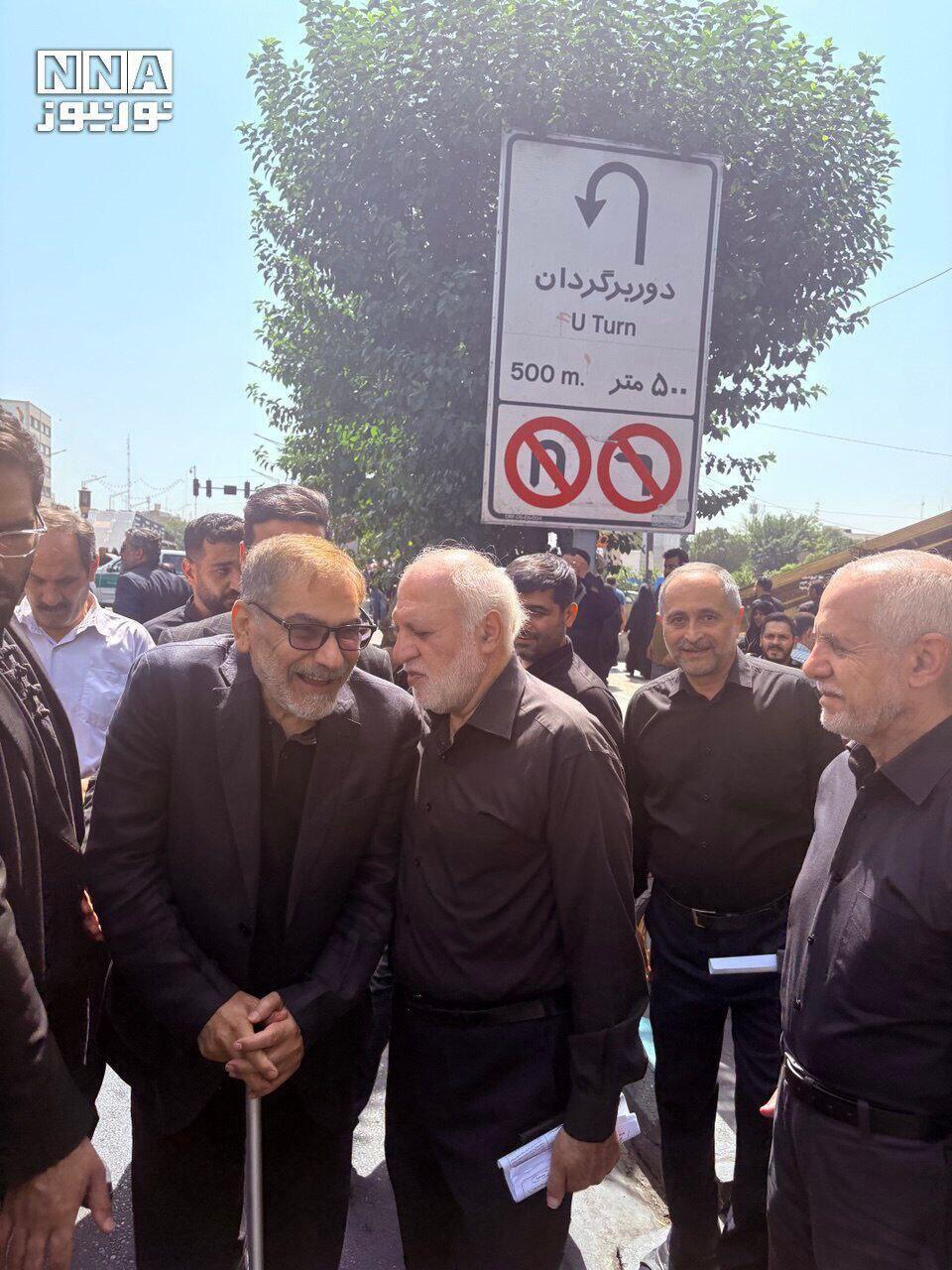
Thousands gathered Saturday morning in Tehran’s Revolution Square for a mass funeral honoring 60 senior military commanders and nuclear scientists killed in Israeli strikes during Operation "Like a Lion." Among the mourners were Iranian President Masoud Pezeshkian, Foreign Minister Abbas Araghchi, Quds Force commander Esmail Qaani, who was thought to be missing, Judiciary Chief Gholam-Hossein Mohseni-Eje'i, and Ali Shamkhani, senior advisor to Ayatollah Khamenei, attending for the first time since being injured in an Israeli strike. Iranian missiles were displayed prominently onstage.
Mass funeral in Tehran


During the ceremony, demonstrators called for prosecuting Rafael Grossi, head of the International Atomic Energy Agency (IAEA). Grossi has said centrifuges in Fordow are no longer operational following US strike. Many waved Khamenei’s photo and chanted anti-Israel and anti-U.S. slogans.
Among the dead: Chief of Staff Mohammad Bagheri, IRGC Aerospace Commander Amir Ali Hajizadeh, IRGC Commander Hossein Salami, and Hatam al-Anbiya Central HQ Commander Ali Shadmani.
Eje'i declared, “The Iranian people, through their massive presence today, send a message to the enemy: the blood of our martyrs will hasten the achievement of our goals... Our nation will not bow to humiliation.” He accused the IAEA of leaking intelligence: “It is unreliable, fails professional standards, and acts against our nation. Ending cooperation is only natural.”
Get the Ynetnews app on your smartphone: Google Play: https://bit.ly/4eJ37pE | Apple App Store: https://bit.ly/3ZL7iNv
MP Hamid Rasai said, “Under the parliament's decision, IAEA inspectors and Grossi are banned from entering Iran. Surveillance cameras will be disabled. The agency should’ve condemned the attack on our nuclear sites. Its silence proves it spies for our enemies.” Government offices closed to allow participation. These were the first major public funerals since the ceasefire began. Similar ceremonies were expected across Iran.
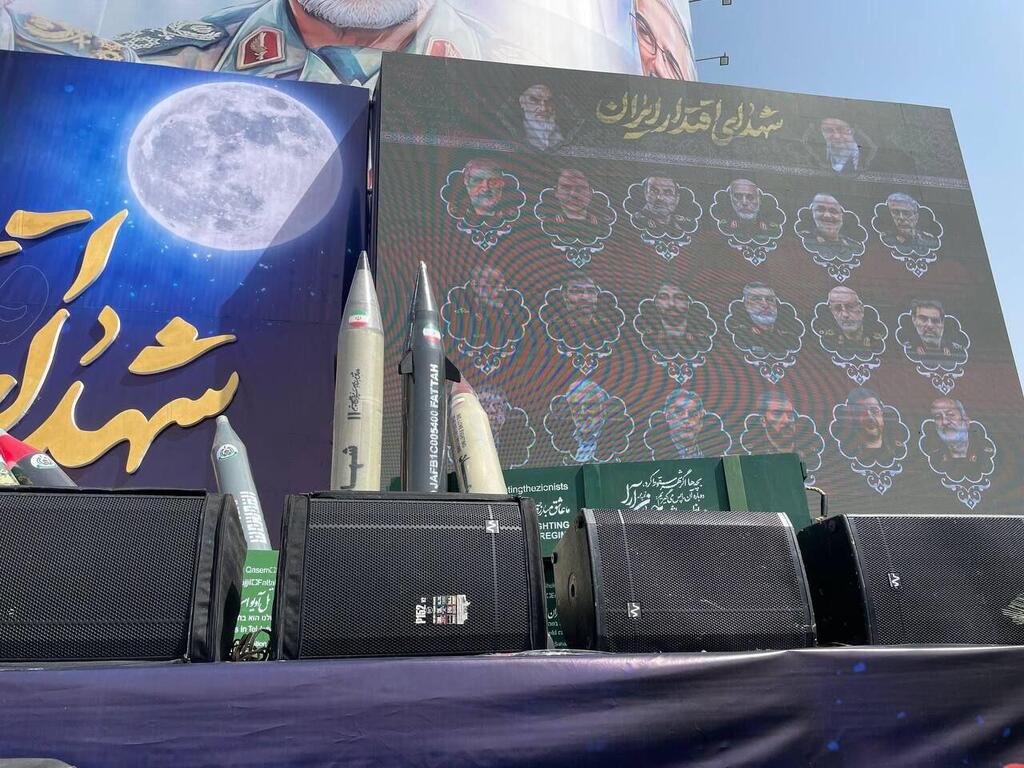
Missiles paraded on stage in Tehran
Iranian authorities confirmed roughly 600 dead from Israeli strikes—aligning with IDF figures that hundreds of soldiers, dozens of headquarters, and over 30 senior security officials were eliminated, including three chiefs of staff. In a 12-day campaign, IDF struck around 900 targets via 1,500 sorties. About 200 ballistic missile launchers—roughly half Iran’s stockpile—were destroyed.
Over 35% of production facilities were hit, though fewer than in previous Lebanon and Gaza campaigns due to distance. The 900 targets included 1,500 components: air defense systems, radars, surface-to-air launchers, control centers, and missile depots. More than 80 SAM launchers were neutralized—many not pre-listed but identified mid-air via drones. Fifteen outdated fighter jets, most 40–50 years old, were destroyed, weakening Iran’s border defense and control over the Strait of Hormuz. Six airports were hit, including one in Mashhad—roughly 1,430 miles from Israel, farther than the distance from Tel Aviv to Rome.