

The Middle East entered another night of uncertainty Saturday as U.S. President Donald Trump weighed whether to intensify strikes on Iran, Tehran widened its threats and the IDF raised defensive readiness across Israel.
Washington issued two security warnings to Americans in the region, while Iranian officials threatened retaliation against Israel, Gulf states and bases beyond the Persian Gulf. Israel’s political leadership remained publicly silent, Home Front Command instructions were unchanged and Ben Gurion Airport continued operating normally.
US President Donald Trump visits American troops in New Jersey


It remained unclear whether Trump intended to order a renewed military escalation or was seeking to strengthen his position in negotiations. CBS reported Friday that the U.S. and Israel were preparing one of the most significant bombing operations yet against Iranian energy and infrastructure targets, possibly within days.
An Israeli official later told CBS that Israel was unaware of any decision to fully resume the campaign and had not been asked to participate in U.S. military action against Iran.
Trump, who visited troops at a military base in New Jersey earlier Saturday, published a stream of threatening and unusual posts on Truth Social. He shared images of fighter jets and boasted that 159 Iranian vessels had been sunk under his leadership, contrasting his record with those of former presidents Joe Biden and Barack Obama.
In another post, Trump celebrated the collapse of the Iranian rial. “Trump is destroying the Iranian currency. Iran is experiencing massive inflation,” text above a graph shared by the president read.
Other posts focused on Venezuela and Greenland, while AI-generated images showed Trump walking beside a bound alien and appearing with his head placed on Elvis Presley’s body.
The possible American target list could include several major Iranian power plants, according to an earlier report by Britain’s Telegraph. Among them were the Shahid Salimi plant in Tabriz, the Khorramabad facility in Lorestan, the Shazand complex near Arak and the Ferdowsi power station in Mashhad.
Other potential targets included the Bushehr nuclear power plant, which supplies electricity to about 2 million people, and the Damavand plant southeast of Tehran, which produces more than half the capital’s electricity. Hydroelectric and industrial power facilities in Khuzestan, Isfahan and northwestern Iran were also cited.
Iran threatens response beyond the Gulf
Iranian officials continued escalating their rhetoric. Seyed Mohammad Marandi, a member of Iran’s negotiating team and a University of Tehran professor often described as close to the regime, warned that Gulf populations should prepare for immediate evacuation.
“Based on statements by the Trump administration, it appears highly likely, after months of threats, that tonight will be the last night of normal life in Qatar, Saudi Arabia, Kuwait, Bahrain, the UAE and perhaps Oman,” Marandi wrote on X.
“If attacks are carried out against Iran’s civilian infrastructure, the vital infrastructure of these regimes, together with that of Israel and perhaps Jordan, will be destroyed,” he added. “The populations of these regimes should prepare for immediate evacuation.”
Iran’s Nour News said reports of possible U.S. attacks on Iranian energy infrastructure had increased the likelihood of escalation.
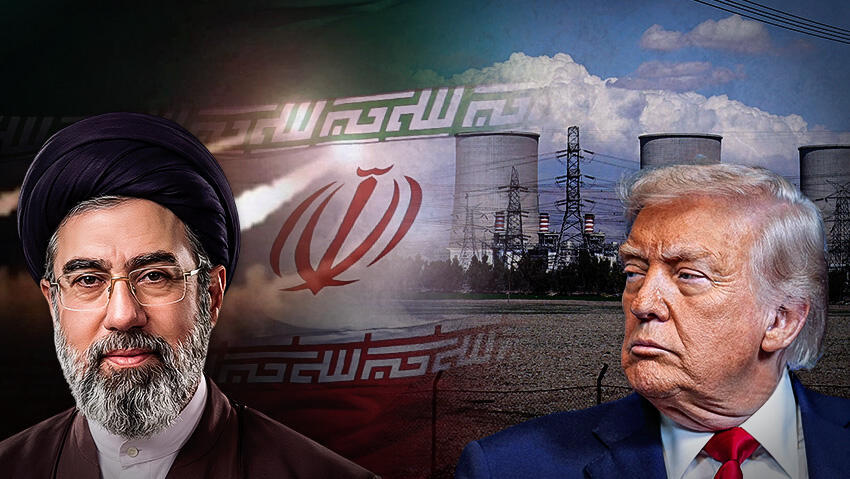
Ebrahim Rezaei, a member of the Iranian parliament’s National Security Committee, warned that retaliation would not be confined to the Persian Gulf.
“Our response to a possible enemy attack will not be limited to the Persian Gulf,” he said. “We will respond against all enemy bases and against the source of the attacks, wherever it may be.”
The warning appeared to include facilities such as Diego Garcia, the Indian Ocean island used by U.S. bombers, as well as British bases connected to American military operations.
Iran’s Foreign Ministry said the country would use “all its means” to defend its rights, interests and national security against what it called U.S. and Israeli aggression.
Iranian Foreign Minister Abbas Araghchi also held separate telephone conversations with Pakistani army chief Asim Munir and Turkish Foreign Minister Hakan Fidan. Iranian reports said the discussions focused on regional developments and the danger of further escalation.
Araghchi warned against “any adventurism by the U.S. military” and stressed Iran’s readiness to defend its sovereignty and respond decisively to any attack.
Israel prepares without seeking escalation
The war remains unpopular in the United States, and Israel is seeking to avoid being portrayed as pushing Trump toward a broader conflict. Israeli officials are waiting for the president’s decision while acknowledging that previous periods of intense speculation did not lead to a collapse of the status quo established in April.
Nevertheless, Israeli military readiness remains high. U.S. defense officials said another 10 American refueling aircraft were expected to arrive in Israel in the coming days.
Israeli planners assume that if Trump approves strikes on Iranian infrastructure, Tehran may retaliate against Israel even if the IDF does not participate. Israel is preparing for missile attacks and other scenarios while also trying to avoid any miscalculation that could convince Iran that an Israeli strike is imminent.
Senior Israeli officials warned that if Iran fires missiles at Israel, it “will pay a very heavy price.”
U.S. embassies in Bahrain, Iraq, Jordan, Kuwait, Lebanon, Oman, Qatar, Saudi Arabia, the UAE, Egypt and Israel issued warnings urging American citizens to leave or prepare for immediate departure if the situation escalates.
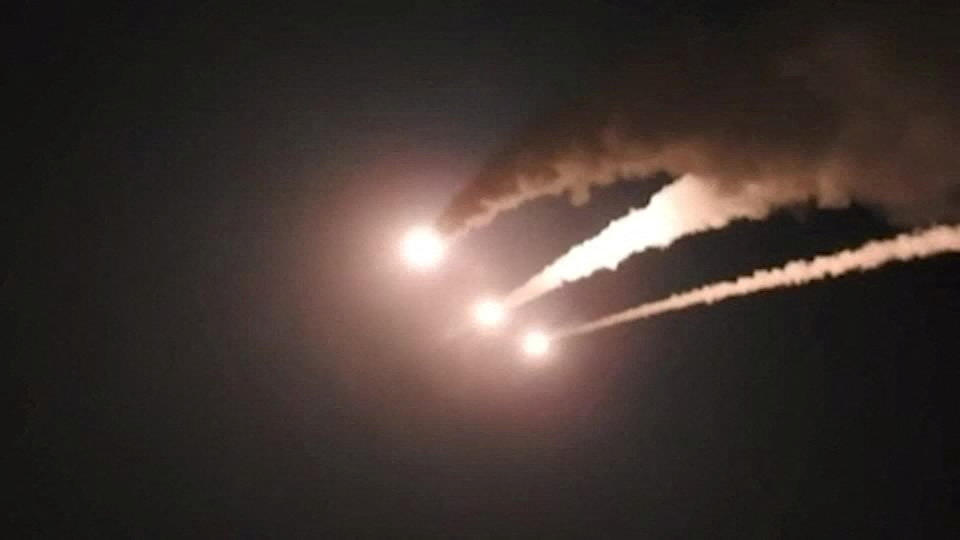
Iranian missiles launched toward Israel on June 7
(Photo: WANA (West Asia News Agency)/ via REUTERS)
The State Department also issued a regional advisory. “U.S. citizens should consider departing the region or be prepared to depart in the event of escalation,” it said.
The Washington Post reported that the commander of U.S. European Command had warned Pentagon leaders that without another destroyer in the Middle East, he could be forced to prioritize defending the U.S. homeland over Israel.
According to the report, Gen. Alexus Grynkewich said he would not be able to maintain the same level of protection against ballistic missile attacks without additional naval forces.
A U.S. defense official described the warning as similar to previous requests by commanders competing for limited weapons and resources. American naval vessels are also enforcing restrictions on Iran and have intercepted missiles launched at Israel by the Houthis and other Iranian proxies.
Israel maintains a three-tier missile defense system that has already been tested in previous rounds of fighting.
Home Front Command has not changed its instructions to the public. Northern Command told communities along the border Saturday evening that there had been no change in the security assessment.
“We are aware of all the reports in the media,” the command said. “At this stage, there is no change in the situation assessment and there are no instructions for the civilian area. Any change will be communicated as early as possible.”
The Transportation Ministry also said Ben Gurion Airport was operating normally and there had been no changes to the flight schedule.
“The Transportation Ministry is prepared for every scenario,” it said.