

The television in the living room of the large two-story house on the outskirts of Bint Jbeil in southern Lebanon was still on. On a table in the sitting room lay three Kalashnikov rifles. A quick check showed there was a round in the chamber. The terrorists had been moments away from opening fire.
“When you find a regular weapons cache, the weapons are usually unloaded and packed away,” said Maj. D., 24, commander of the Golan Reconnaissance Company. “When you find a weapon with a round in the chamber, you understand terrorists were here just moments earlier. Inside the closets, we found Iranian-made explosive devices still wrapped in their original plastic packaging, ready for use, along with anti-tank missiles. In another incident, we found a huge anti-aircraft machine gun meant for firing at helicopters. I had never seen a weapon like that in my life.”
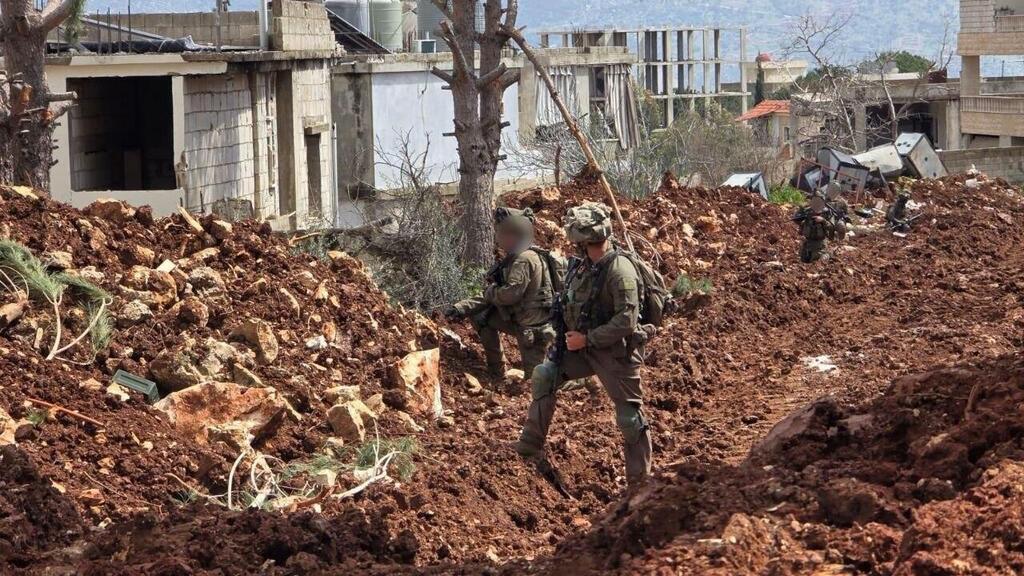
The Golan Reconnaissance Company, known as Unit 989, usually operates under the 474th Territorial Brigade in the 210th Division and is assigned to the Syrian front. But its fighters in the field pushed to cross the border into Lebanon.
“I came to the commander of the 52nd Battalion and told him, ‘If you’re going to Lebanon, we’re coming with you,’” Maj. D. said. “It came from below, from the fighters. We changed our gear from short operations to a long maneuver, trained for exercises simulating combat there, which is different from the Syrian sector, and adapted the company to the Lebanese terrain.”
The company is based on recruiting young men who grew up in West Bank settler outposts. The entry requirement is at least two years of residence in an outpost recognized by the military. Many of the recruits are defined as lone soldiers and serve in a track that includes eight months of basic training and another four months in the company.
The phenomenon of West Bank farming outposts has grown sharply in recent years and now includes about 170 sites. Many operate in coordination with Central Command and the IDF, but they also remain a constant point of friction with the Palestinian population. Security officials have repeatedly pointed to some illegal outposts as sources of nationalist crime, sometimes against Palestinians and sometimes against security forces. The Golan Reconnaissance Company project sits precisely inside that sensitive space.
The army acknowledges that not everything runs smoothly and that disciplinary offenses are part of the command challenge. But commanders say the operational results have proved themselves. Word of the company has spread through the outposts, and young men who had previously been flagged by the Shin Bet or had criminal records are now working to clear those records in order to enlist.
“These guys who grew up in the outposts are very connected to the terrain. They know how to survive, they are highly independent and you can give them responsibility,” said Col. Benny Kata, commander of the 474th Brigade, under which the company operates. “They operate here in the Syrian sector and know how to produce high-quality intelligence. Discipline problems can exist in any framework, and that is why there are commanders and IDF values, to draw clear lines for them and for every other soldier. When we do that, we see the results in the field.”
In Syria, the fighters serve as a reserve force to prevent raids and operate on foot and by vehicle from the border triangle to Mount Hermon, including in complex areas such as Wadi al-Yarmouk. Their mission is to map the first and second lines of villages, including Saida, Rafid and al-Maalqa, to build an intelligence picture.
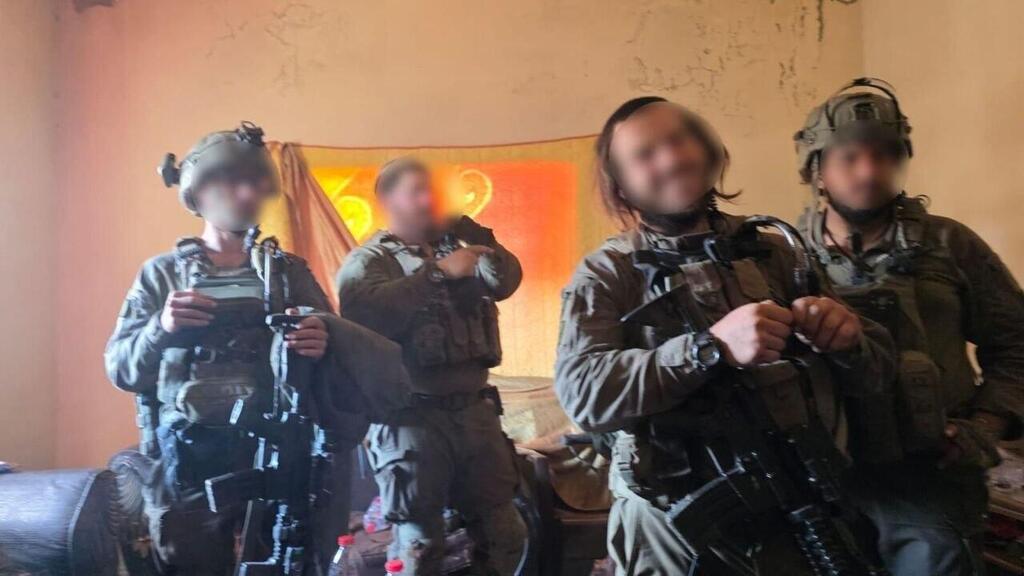
(Photo: IDF)
There, they bring the knowledge they acquired in the outposts into the army: reading terrain and tracking.
“The guys bring me evidence that terrorists were here only a few hours earlier,” Maj. D. said. “They know how to identify footprints, tiny changes in the ground and animal droppings, and date them precisely.”
In Lebanon, the challenges changed. The company first operated under the 91st Division and the Givati Brigade in the villages of al-Khiam and Aainata, and later joined the 98th Division in the Bint Jbeil area, moving at the front alongside tanks from the 52nd Battalion.
One of the main threats the fighters encountered was explosive drones, aimed mainly at armored vehicles.
“As a foot infantry force, we have an advantage,” one fighter said. “With correct terrain reading, if they don’t see you, they won’t attack you. We assigned several fighters whose only job was to look at the sky and detect drones, and in one case we also managed to bring them down. Beyond that, correct positioning behind cover and movement through concealed terrain with large spacing make it very difficult for the enemy to identify us.”
The stories of the company’s soldiers reflect the complexity of the track. Sgt. Shuval came from the Neria outpost, also known as Givat Ronen.
“On October 7, I understood that I wanted to enlist and started training,” he said. “Ahead of enlistment, I received notice that I was barred from joining because of the Shin Bet. At first, I didn’t want to go to the reconnaissance company because I was looking to serve in the West Bank, but the recruiter who works with the outposts acted together with the Shin Bet, and we resolved the restriction literally the day before enlistment.”
“In hindsight, I’m glad I got here,” he added. “This is a place that fights for everyone who wants to enlist. Without this system, I would not have managed to enter the IDF. When people around me see something that works and succeeds, enlistment rates rise. At first, I was sure the place was less operational, but I was pleasantly surprised by the level of trust they give us.”
According to IDF figures, 17 soldiers in the company are defined as lone soldiers, four soldiers from the last class entered officers’ training and enlistment has risen 50% compared with last year.
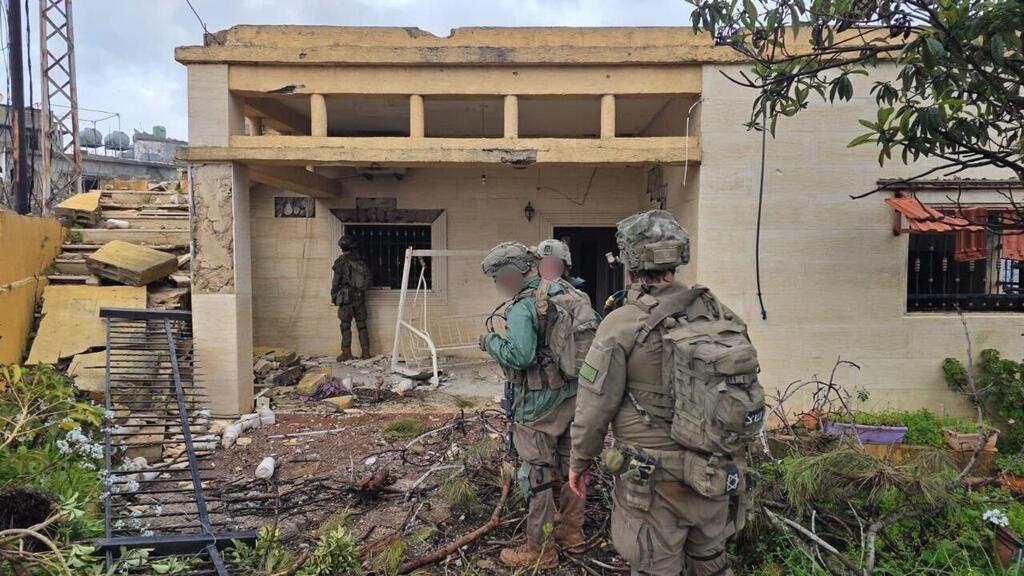
(Photo: IDF)
From time to time, claims are also raised against the army and government for cooperating with young men from settler outposts, many of which have not been legalized. The IDF is trying, through the sensitive enlistment process into the company, to draw those young men into military service and create an easier path for them into the army. On one hand, it is a welcome move. On the other, it must be done carefully and with close supervision so the project does not spin out of control.
Cpl. Gur Aryeh, who came from Kfar Zoharim in the Elah Valley, a youth village for at-risk teenagers from Haredi backgrounds, described the operational atmosphere in Lebanon.
“You enter with a certain fear, but alongside it there is a sense of power from the size of the mission,” he said. “A lot of people told us they had not seen fighters with this kind of fire in them. We would say, ‘Let’s capture another house and another house.’ We are a foot unit that walks dozens of kilometers with bags and equipment on our backs. That was the peak for every fighter. That is what we trained for, and we didn’t think about the cost.”
Gur Aryeh was wounded in the Bint Jbeil area by indirect fire and evacuated to a hospital.
“You see there that everyone, everyone from the unit who was wounded, only wants to return and go back inside,” he said.
Asked about the gap between the complex reality of the outposts and joint service in the IDF, the fighters gave a sharp answer.
“We make a complete separation,” one said. “The moment you put on a uniform, there is no outside influence.”
At the same time, they understand that the project’s future depends on how the military treats it.
“The classes are getting bigger, and what happens here later depends on the system, if it knows how to treat graduates of the company and give them full rights,” one fighter said.