

The threat by 12 yeshiva heads Tuesday night to not send their students to the IDF’s armored corps, as they have previously done regarding the artillery corps, presents the IDF with a dramatic problem at a time when it is already facing a significant shortage of combat soldiers.
The letter was sent in response to a pilot program to integrate female combat soldiers into tanks, with the first cohort expected to begin in November.
“Operationally, the equation created by the High Court ruling is clear: a few female combat soldiers each year versus giving up many dozens of male combat soldiers in every draft cycle,” a senior military source familiar with the matter said. “If the rabbis’ threat is carried out, it will not be possible to do both. We have already seen the consequences in the artillery corps, and we cannot afford a similar situation in the armored corps while also meeting the requirements set by the court ruling. The High Court has put us in an impossible position.”
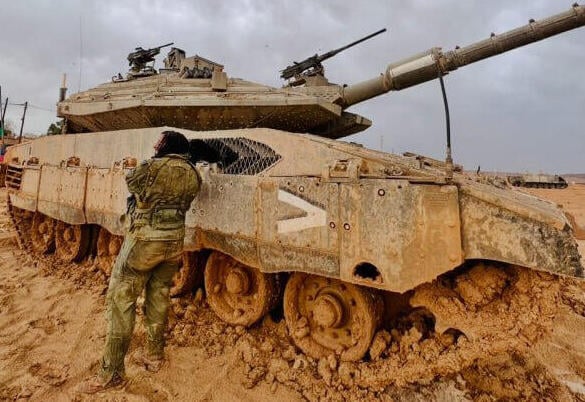
In April, the High Court accepted a petition concerning women’s combat service in the IDF and ordered the military to integrate women into maneuvering armored units. The ruling said the IDF has a legal duty to provide, as much as possible, equal opportunity between men and women in assignments to combat roles. It also ruled that the army must open a trial for female combat soldiers in the Armored Corps by November 2026.
Following the ruling, attorney Yanor Bartenthal, who represents the female soldiers, sent a letter to IDF Chief of Staff Lt. Gen. Eyal Zamir as part of monitoring implementation of the decision. “The ruling is not a recommendation and not a statement of intent — it is a legal obligation,” he said.
The rabbis' letter was signed by Rabbi Elyakim Levanon and Rabbi Shahar Imber, heads of the Elon Moreh Yeshiva; Rabbi Haggai Londin and Rabbi Tal Shaulian, heads of the Holon Yeshiva; Rabbi Yehoshua Van Dijk, head of the Itamar Yeshiva; Rabbi David Fendel, head of the Sderot Yeshiva; Rabbi Baruch Wieder, head of Yeshivat HaKotel; Rabbi Yossi Rodriguez, head of the Ayelet HaShachar hesder yeshiva in Eilat; Rabbi Noam Waldman, head of the Nir Yeshiva in Kiryat Arba; Rabbi Eliyahu Rahamim Zini, head of the Or Veyeshua Yeshiva in Haifa; and Rabbi Yaakov Yadid, head of the Karmiel Yeshiva. The document said three additional heads of hesder yeshivas joined the statement but asked not to be named.
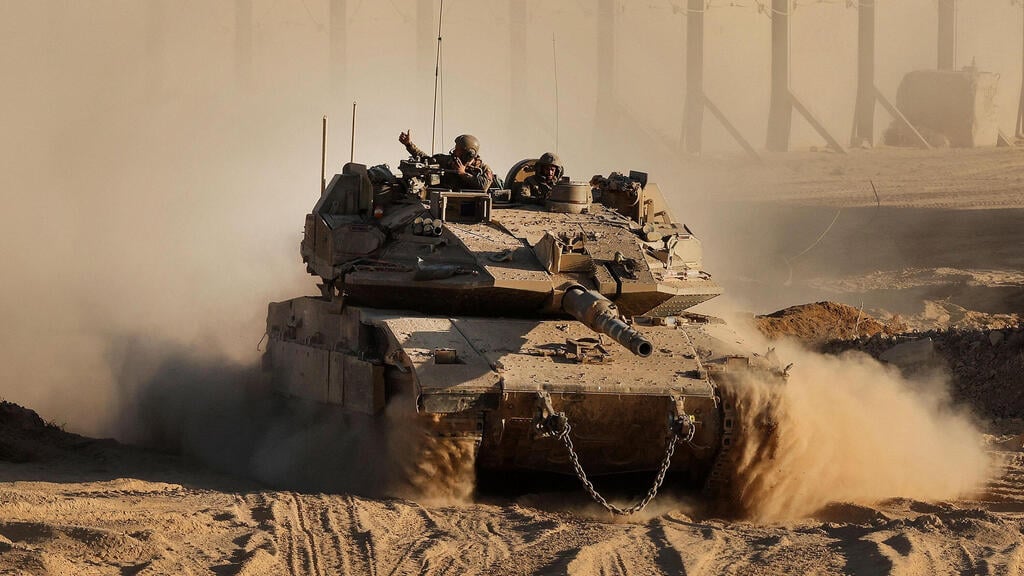
A tank operating in the Gaza Strip
(Photo: Jack Guez / AFP)
“We, the undersigned heads of hesder yeshivas, whose students are on the front lines of the fighting, view with great severity the High Court’s decision to require the IDF to integrate female combat soldiers into the maneuvering armored corps," the letter said. "We are pained by the weak response of the State of Israel and the IDF, which did not express opposition to this move. As yeshiva heads, we are aware of the heavy responsibility on our shoulders."
"The IDF is the army of the people of Israel, and the sanctity of the camp is the basis of the IDF’s spirit and of success in defeating the enemy,” the rabbis wrote. “Putting female soldiers in tanks together with male soldiers causes spiritual and practical harm to combat capability.”
“We have decided that service in the armored corps is forbidden according to Jewish law, and therefore we will not send our students to serve in the armored corps starting with the next draft. Our thousands of students who enlist in combat units will continue to do so with a sense of mission and strength, but the IDF is responsible for ensuring that those with combat profiles who are not suited for infantry service have a combat framework suited to their fighting spirit.”
'Everyone who can be a combat soldier deserves the chance'
Osnat Levy, 27, from Jerusalem, was among the participants in the first pilot program for women in the armored corps. She enlisted in 2017 to Caracal, and after four months of basic training was transferred with 14 other female soldiers to the pilot. For about six months, they trained as armored combat soldiers in Brigade 460, but after completing the course the pilot was frozen. The four female soldiers who went on to the tank commanders course were removed from combat roles.
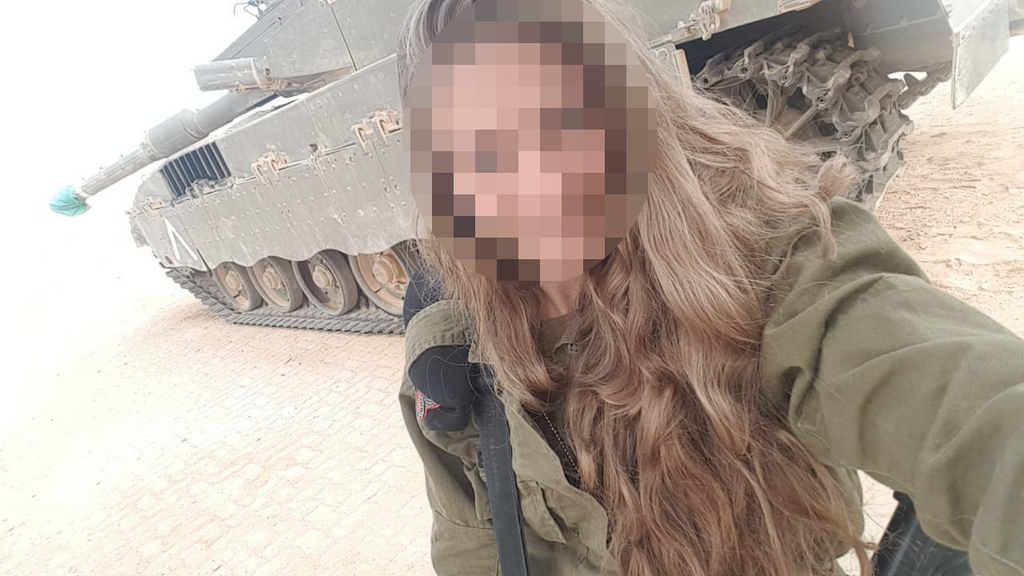
Osnat was among the participants in the first pilot program for women in the armored corps
“The best period of my service was in the tank commanders course, and I finished my service with great disappointment,” Levy said last week. “We were supposed to go to officers’ course, but they decided to freeze the pilot midway — and we were the ones who paid the price. We completed the pilot successfully, and still they stopped it and did not recruit more women to the armored corps. It angered me, and I decided to go fight for it.”
The difficult feeling that followed her after her service led her to legal action. Levy contacted a law firm, and a petition was later filed with the High Court demanding the integration of women into combat units in the IDF.
“Before I enlisted, I wanted to serve in Sayeret Matkal, and then I discovered there were no women there,” she said. “It felt wrong to me, because I knew I could serve in Sayeret Matkal.”
Today, Levy serves as a reserve combat soldier in an engineering battalion and continues to follow the petition, hoping the High Court’s decision will indeed be implemented in the IDF.
“What worries me is the disconnect between the system and what is actually happening,” she said. “Decisions are made but not implemented on the ground. I hope today’s female candidates for military service continue to fight. I know it is not easy and can be discouraging, but they should stand their ground and insist.”
She said the struggle is about opportunity, not obligation. “Not everyone needs to be a combat soldier, but everyone who can be deserves the chance. One of my greatest fears was that I was fighting for no one. But knowing there is a next generation gives me hope and the will to continue.”