


Thirty-nine years after Israeli Air Force navigator Ron Arad was captured and went missing, his wife Tami Arad reflected on Thursday on the return of Israeli hostages from Gaza and the enduring pain of families still waiting for their loved ones.
Ron Arad was taken captive on October 16, 1986, after ejecting from his aircraft during a mission over Lebanon. Despite extensive efforts to discover his fate, he has been considered missing ever since.
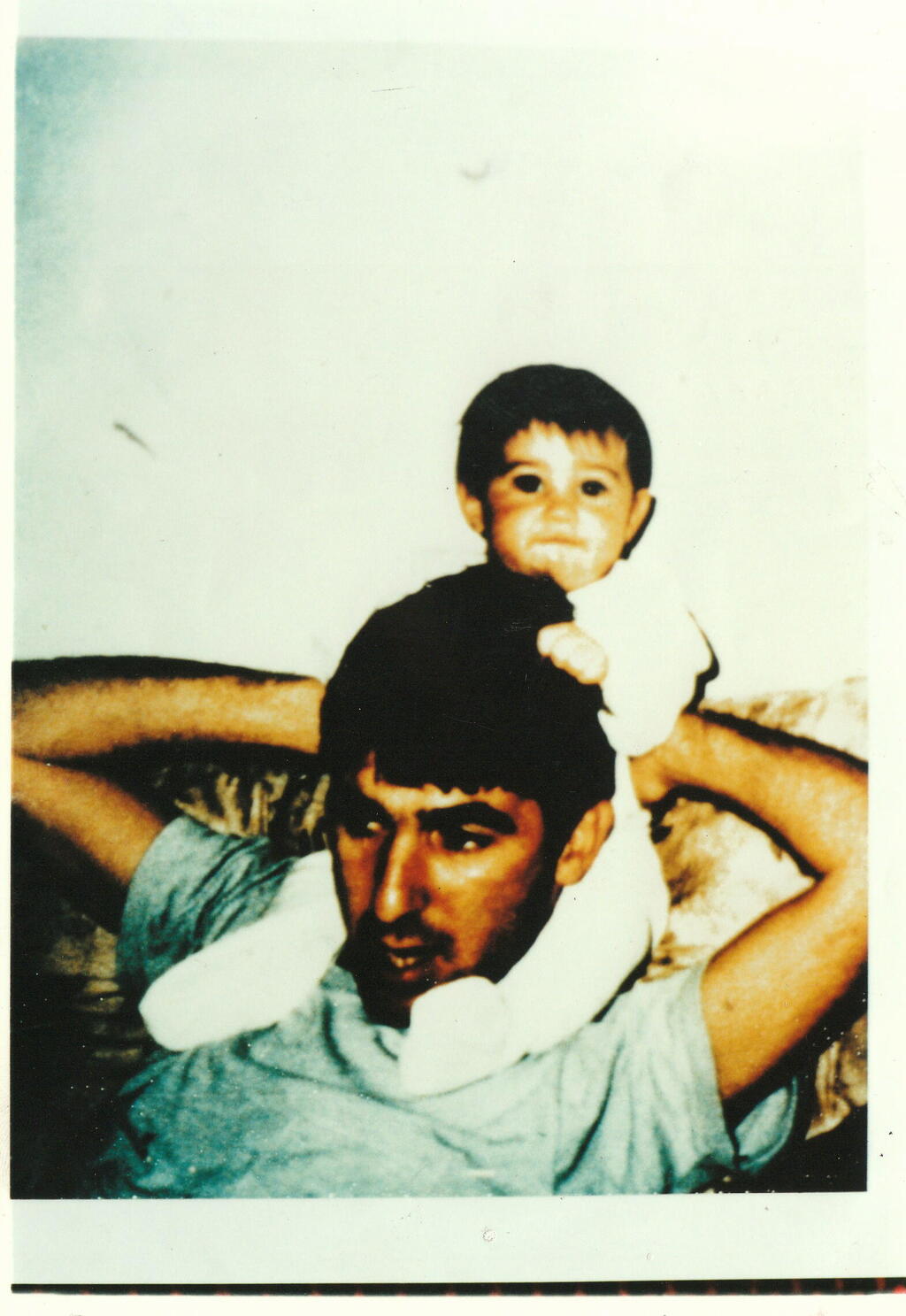
In a Facebook post marking the anniversary of his capture, Arad described her memories of those early days and her emotions watching families reunite with hostages released after two years in Hamas captivity. “Yuval was a year and three months old when Ron was captured,” she wrote. “She could barely say ‘Abba’ (Dad) and waited every evening for him to come home from the squadron.”
Arad wrote that she and her daughter often looked at pictures of Ron and that she used to send “gifts from Dad” in the mail to help keep his memory alive. “Today, Yuval is a mother of three girls,” she said. “On Monday, both of us cried tears of joy when Emma and Yuli, Alma and Roni, and Re’em got to hug their fathers — David, Omri and Elkana — and when Sharon, Lishay and Rivka embraced their loved ones.”
Arad described the wave of emotions that swept through Israel following the release of 20 living hostages this week. “There is no greater joy than saving lives,” she wrote. “Twenty young people came back from the dead. They entered all our hearts, and suddenly, for a moment, we could breathe, smile and cry with joy. We watched Einav Zangauker embrace her son Matan Zangauker, and Anat Angrest embrace her son Matan Angrest. A whole day passed in tears, watching the moving videos of 20 young people finally returning home.”
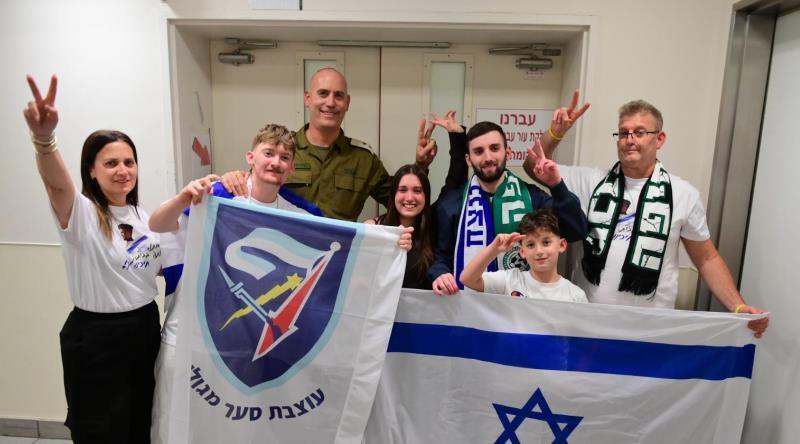
Freed Hamas hostage Matan Angrest and his family
(Photo: GPO)
She praised Zangauker for leading what she called a model of determined activism. “‘A mother climbing the barricades’ is a new Israeli expression, and that patent belongs to Zangauker,” she wrote. “It’s no wonder she was called a lioness mother. With the help of dedicated people like Natalie and Ilana — Matan’s devoted partner, who joined the struggle immediately after returning from captivity — they understood what took others longer to realize: routine and normalization make people forget the hostages. Military pressure endangers their lives.”
Arad said Zangauker’s personal campaign became a national movement. “Einav’s struggle for Matan became a struggle for all the hostages,” she wrote. “She inspired other families to join a courageous and unapologetic fight. Over the past year, more mothers and fathers have taken to the streets shouting, ‘Save our children — Israel’s government is abandoning them.’ The returned hostages themselves said that the demonstrations strengthened their spirits in captivity. They saw their families, they saw strangers carrying signs with their pictures, and they understood that the public had not forgotten them.”
Last year, Arad took part in a march marking 38 years since her husband’s disappearance, an event that has become a symbol of Israel’s long struggle to bring home soldiers and civilians held captive.

Einav Zangauker and her son Matan
(Photo: IDF)
In her post, Arad recalled warning in August that the hostages in Gaza might share her husband’s fate if the government failed to act quickly. “Twenty young Israelis received the gift of life this week and returned to their loving families, including some whose relatives opposed deals or an end to the war,” she wrote. “I mention this to highlight the moral stance of the public, which did not distinguish between one hostage and another. Reading the names of all the hostages in front of Begin Center and near ministers’ homes reminded those who tried to divide and distract that the public wants everyone home.”
She criticized Prime Minister Benjamin Netanyahu, accusing him of missing opportunities to bring the hostages back because of political considerations. “Those who returned will likely find it hard to believe that Israel’s prime minister thwarted opportunities to bring them back because the political constellation didn’t suit him,” she wrote. “Their rehabilitation will have to deal with that as well.”
Arad also commented on U.S. President Donald Trump’s speech at the Knesset on Monday, which she described as resembling a “Likud Central Committee cook-out.”

(Photo: Chip Somodevilla/Getty Images)
“Symbols of Netanyahu’s rule replaced the attorney general and the Supreme Court president,” she wrote. “The Knesset speaker declared that the hostage chapter was over and cheerfully removed his hostage pin in front of shocked families whose loved ones remain in Gaza. For long minutes, the hall echoed with applause worthy of Kim Jong Un’s parliament.”
She accused Netanyahu of prioritizing his political survival over the hostages’ return. “Netanyahu has no interest in the speeches about ‘the day after,’” she wrote. “The prospect of a pardon troubles him far more than ending the war. Trump is Netanyahu’s embarrassing polygraph, but embarrassment exists only when a person recognizes accepted norms and boundaries. The past two years have proven that Netanyahu sanctifies only Netanyahu.”
Arad concluded her post on a somber note. “We still have long days ahead before everyone is brought to a proper burial,” she wrote, “and long, difficult days in the fight over Israel’s character, as reflected in Hostage Square.”