

A 22-year-old northern Israel man was arrested last month on suspicion of working for Iran and manufacturing explosives as part of an alleged plot to assassinate former prime minister Naftali Bennett, authorities revealed on Thursday after the Ashkelon Magistrate’s Court lifted a gag order over the investigation's details.
The suspect, Ami Gaydarov of Haifa, was arrested along with three other young men from the Haifa metropolitan area on suspicion of committing grave espionage offenses for Iran in exchange for about 80,000 shekels, or roughly $26,000.
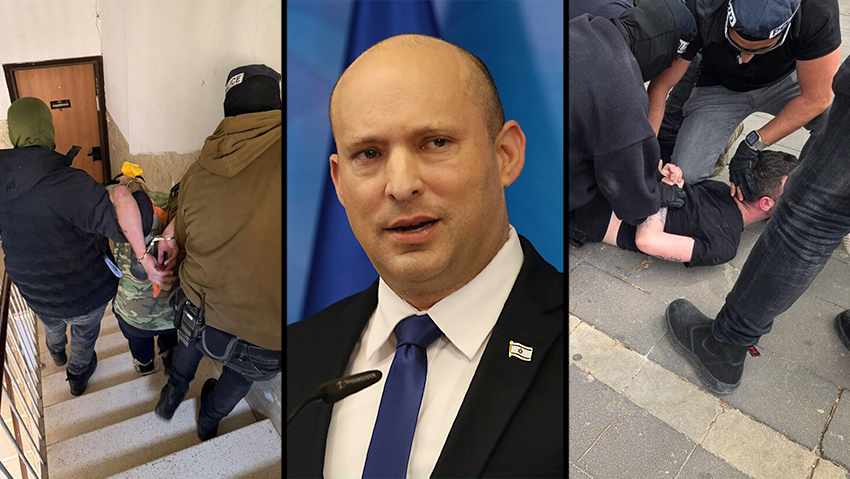
According to a joint investigation by Lahav 433, Israel’s elite national crime unit, and the Shin Bet domestic security service, Gaydarov allegedly contacted an Iranian operative on his own initiative in August last year while looking for ways to make money. Investigators said he then began carrying out assignments for the handler and was paid through cryptocurrency and PayPal.
Authorities said the case escalated when the Iranian operative instructed Gaydarov to obtain dual-use chemicals, materials that can have both civilian and military applications. Under that guidance, investigators said, Gaydarov produced between 8 and 10 kilograms of explosive material at his home. Police said the explosives were intended for use in an attack on Bennett.
Investigators said Gaydarov also tested the explosive material, causing what they described as a powerful blast from a small amount, and recorded the experiment on his cellphone with two friends in the Haifa area. The video is now in the hands of investigators, authorities said.
Beyond the alleged plot against Bennett, investigators said Gaydarov also passed sensitive wartime information to his Iranian handler during Iranian missile attacks on Israel. According to authorities, he provided information about missile impact sites in Haifa, a major northern port city that is home to strategic infrastructure, including oil refineries and a commercial port.
Investigators said he also photographed those facilities and shared details about civil defense alerts and air raid sirens issued by the Home Front Command.
The Iranian handler and the main suspect began working together in September 2025, and the operation was halted after several months, Superintendent Maor Goren, who heads the investigative team, told ynet. But he said the contact resumed in March of this year, just days after the start of the war.
From that point until the night before his arrest, Goren said, Gaydarov was allegedly carrying out assignments for Iran that included photographing strategic sites, documenting missile impact scenes and interceptions, and trying to determine the location of a U.S. Navy destroyer expected to arrive at Haifa port. “He was carrying out operations for the Iranians up until the night before his arrest,” Goren said.
According to Goren, Gaydarov initially approached several Iranians on his own in an effort to work for them, but they eventually directed him to operate through a single Iranian handler. Shin Bet investigators said they tracked the main suspect’s activity in recent months along with four other young men who allegedly helped him carry out the assignments he received.
That intelligence was passed to Lahav 433 and five suspects were initially marked for arrest. They were detained on March 9 on suspicion of committing serious offenses on behalf of an enemy during wartime. After the investigation became overt, police decided to release one of those detainees. Authorities said the remaining four suspects are expected to face serious indictments.
Gaydarov, the main suspect, is expected to be charged with contact with a foreign agent, aiding the enemy during wartime and preparing and possessing explosive material. The other three suspects are not accused of contact with a foreign agent because, according to investigators, they were not in direct touch with the Iranian handler.
Goren said Gaydarov had been looking for an easy way to make money and turned to Telegram groups advertising jobs. One of the offers, he said, promised money for working from home. Investigators say Gaydarov knew clearly that he was knowingly making contact with Iranian intelligence.
Around August 2025, Goren said, Gaydarov accepted the job offer from the Iranian handler. At first, he was given simple test missions, such as taking pictures on the street and sending locations he had been instructed to reach. Investigators said the handler appeared to be testing his ability to navigate, follow instructions and document targets. Once payment was made for successfully completed tasks, Goren said, Gaydarov became further entangled in the operation.
After several months, as investigators described it, the operation escalated sharply. Gaydarov was allegedly instructed to buy chemicals sold at retail pharmacy chains in order to manufacture TATP, a highly unstable explosive known to security agencies around the world and associated with terrorist attacks because of its destructive power and relative ease of assembly from commercially available ingredients.
Authorities said Gaydarov bought the chemicals and tools needed to make the explosive in stores in Haifa, and that his Iranian handler instructed him how to manufacture it in an apartment he rented in the city. At that stage, investigators say, Gaydarov recruited others to help purchase some of the materials.
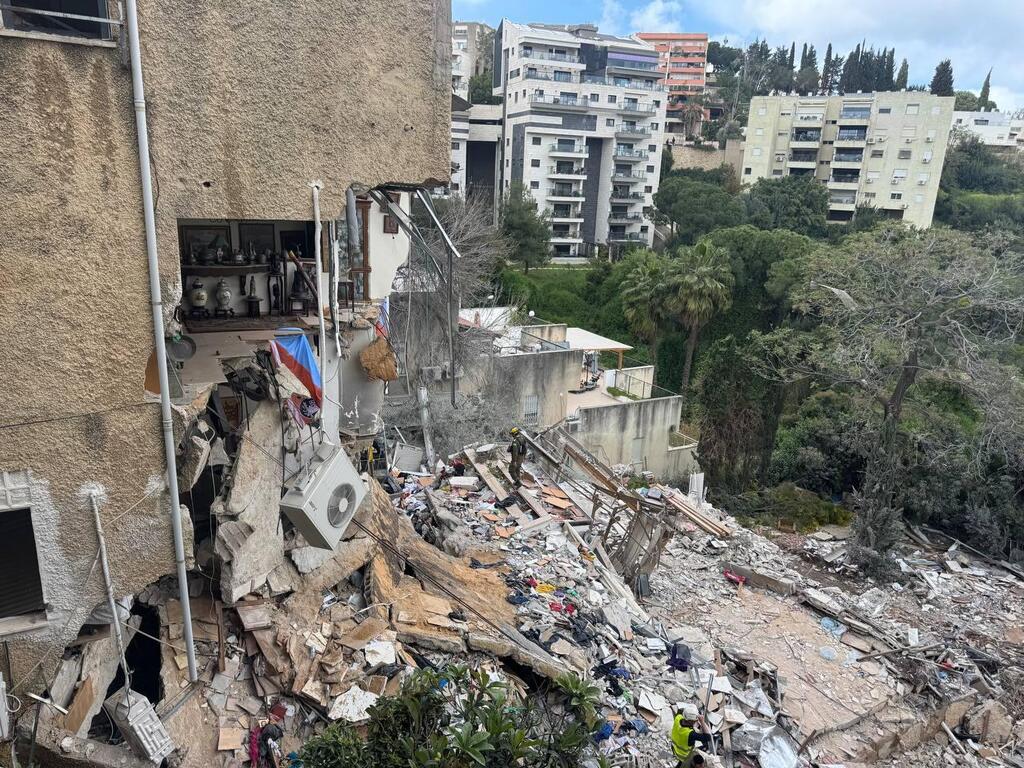
Haifa home damaged by Iranian missile during the war
(Photo: Eitan Glikman)
At one point, authorities said, Gaydarov and one of his friends went to an underground parking garage in the Haifa area and tested the explosive, causing a powerful blast. Investigators say Gaydarov stored the material he produced in jars. Fearing he was under surveillance, he later transferred the explosives to one of his friends. That suspect, after receiving the bag containing the material, decided on his own to get rid of it, according to investigators.
In a joint statement, the Shin Bet and police said Gaydarov bought dedicated phones to manage contact with his handlers and rented an apartment in Haifa where he manufactured the explosive material. Authorities said he documented the process in videos and photographs and sent them to his handler as proof that he had completed his assignments.
The statement said Gaydarov also involved several friends and relied on them to help acquire raw materials needed to make the explosives. As a result, several additional Israeli citizens from northern Israel were arrested for questioning, including Sergey Libman and Eduard Shovtiyuk.
Investigators said the suspects assisted Gaydarov in buying materials, concealing the explosives and carrying out a test of their effectiveness, each according to his alleged role.
Authorities also said that during Operation Roaring Lion, Gaydarov was instructed by his handler to provide the Iranians with photographs of Haifa port and missile impact sites in northern Israel. Investigators said he was also asked to locate a property for rent overlooking the port where a fixed camera could be installed for surveillance.
For all of the alleged activity, authorities said, Gaydarov received more than 70,000 shekels, or about $22,000.
'Imagine nearly 30 times that amount of explosive material'
Superintendent Goren said the main suspect had produced a very large quantity of highly sensitive explosive material, and that any mistake in handling it could have caused a massive blast and injured neighboring residents.
“It is important to understand that the main suspect produced a very large quantity of sensitive explosive material, where any error in handling it could have caused a huge explosion that would have harmed neighbors,” Goren said. “Each of the explosive devices that were seized and detonated last year on buses in Bat Yam contained 300 grams of explosive material, and that caused an enormous blast. So imagine a quantity nearly 30 times greater that the suspect managed to produce.”
Goren stressed that the contact with the Iranian handler had not yet reached the stage at which the suspect was given addresses or targets for planting the improvised explosive device.
The head of the investigative team added that the information the suspect passed to the Iranian handler in real time during the war had helped Iran.
“They do not know where the missile impacts are, and he was passing along reports he gathered from the media or photographed himself,” Goren said. “He was filming interceptions and sending them to the handler, which could clearly help the Iranians analyze the situation.”
The suspects denied the allegations after their arrest. But when investigators confronted them with evidence gathered during the covert phase of the investigation, they admitted to the acts attributed to them and expressed remorse, authorities said.
Gaydarov was the one who directed his four friends, including a survivor of the massacre at the Nova music festival in October 2023. He paid them from the money he received from the Iranian handler, giving each of them several hundred shekels.
Raouf Naggar, an attorney with the public defender’s office representing one of the suspects, said: “This is a person suffering from a complex medical and psychological condition. We know the investigation has now concluded, and he fully cooperated with the investigating unit. We will be able to respond in greater detail after receiving the indictment and the investigative materials.”
In recent years, Lahav 433’s national serious crime unit and other police units have opened 60 investigations into Israelis accused of spying for Iran. All of those cases ended with the filing of serious indictments.