


Former U.S. vice president Kamala Harris accuses Prime Minister Benjamin Netanyahu of undermining former president Joe Biden during the Gaza war in her new book, saying he hoped Donald Trump’s return to the White House would secure his political survival.
Harris’s memoir, 107 Days, was released Tuesday in the United States. In it, she writes that Netanyahu brushed aside Biden’s "loyalty to Israel,” and preferred a president willing to agree to "very extreme proposals" he had for Gaza’s future. "He wanted Trump in the seat opposite him,” she said.
Gallery
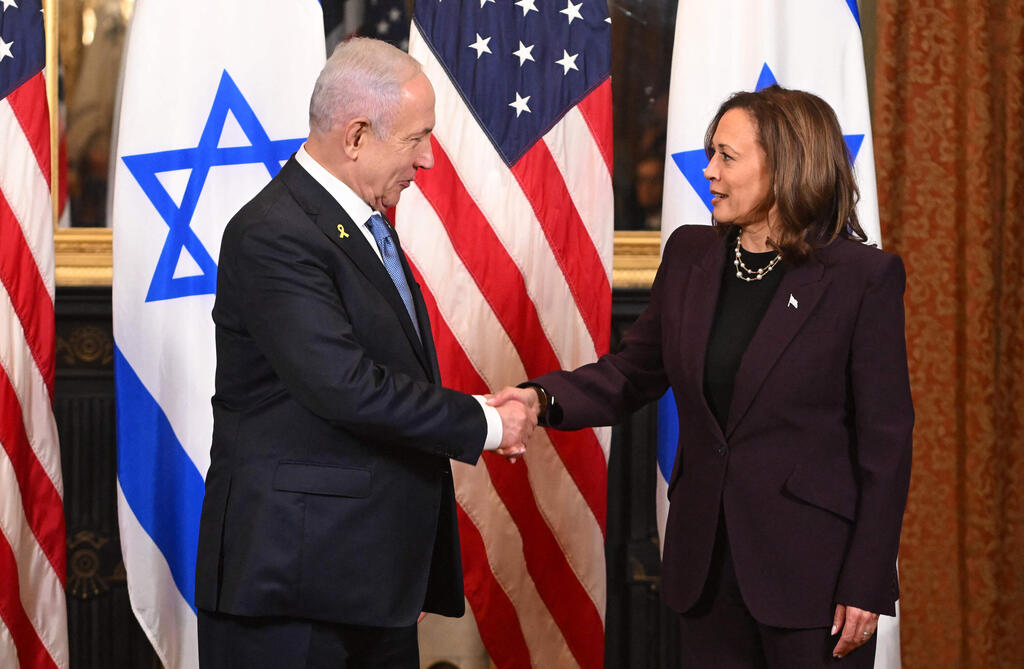
Prime Minister Benjamin Netanyahu and Former U.S. vice president Kamala Harris
(Photo: ROBERTO SCHMIDT / AFP)
Harris recounts a tense July 2024 meeting with Netanyahu, in which she confronted him over his denial of Gaza’s humanitarian crisis. “His hooded gaze and disengaged demeanour made it clear to me that he was running out the clock,” she writes, describing Israel’s military campaign as “unproductive.”
The book portrays Biden as “inadequate and forced” when addressing Palestinian suffering, limited by his warm feelings toward Israel. Harris says she pleaded with Biden to extend the empathy he expressed for Ukrainians to innocent civilians in Gaza but “he couldn't do it; while he could passionately state, 'I am a Zionist,' his remarks about innocent Palestinians came off as inadequate and forced.”
Harris also describes tensions inside the White House. She says Biden’s aides scolded her after a March 2024 speech in Alabama, when she called for an immediate Gaza ceasefire and labeled the situation a “humanitarian crisis.” The remarks went viral, drawing anger from the president’s team, which she says feared she had described the crisis too clearly.
She writes of pro-Palestinian protesters who trailed her campaign events, chanting that she supported “genocide” and vowing not to vote for her. "The issue was not binary, but the outcome of this election certainly was," she writes, adding that she wished that they understood that “sitting out the election or voting for a third candidate would elect Trump and kill any effort for a just peace, any hope for a two-state solution.”
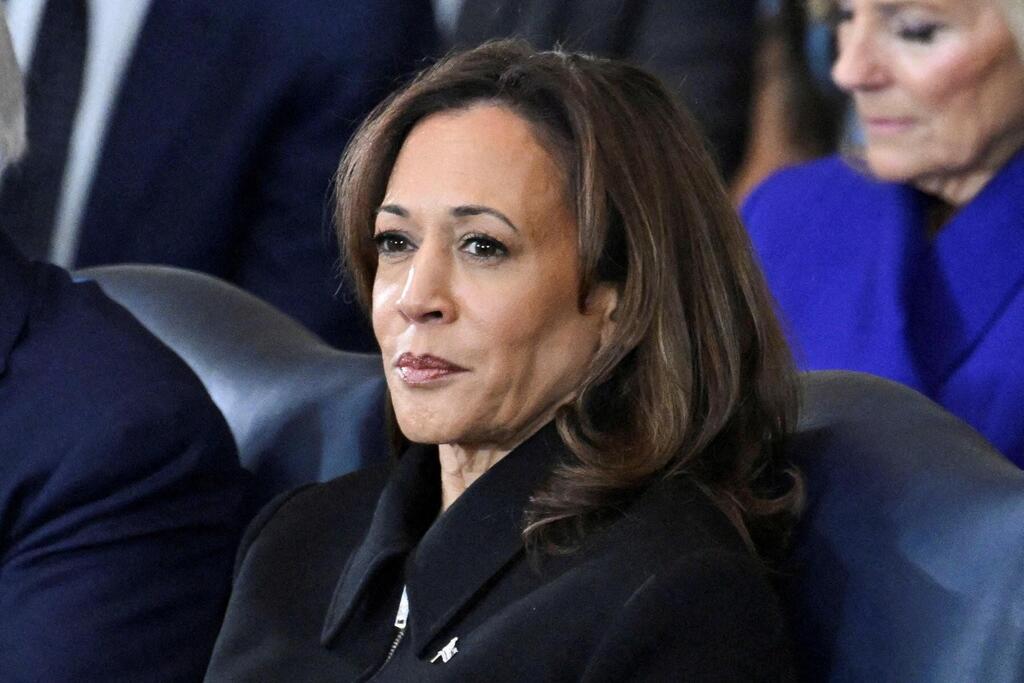
Kamala Harris
(Photo: Saul Loeb, Reuters)
“The war in Gaza is not a binary issue, but too often the conversation about it is,” Harris writes. “I wanted to acknowledge the complexity, nuance and history of the region, but it seemed very few people had the appetite for that or the willingness to hold two tragic narratives in their mind at the same time, to grieve for human suffering both Israeli and Palestinian.”
In passages about the search for a running mate, Harris says she asked Pennsylvania Gov. Josh Shapiro, a prominent pro-Israel voice, how he would handle Gaza protests if chosen. Shapiro told her his past views were mistaken and that he now supported a two-state solution. She notes that on the same day she interviewed potential running mates, Israel assassinated Hamas leader Ismail Haniyeh in Tehran, a reminder of how deeply the Middle East crisis intruded on her campaign. She says Democratic lawmakers also pressed her to harden her stance on Israel, including calls for an arms embargo.
Harris reflects that after an October 2024 appearance on The View—when she said there was nothing she would have done differently than Biden—she realized voters wanted more separation between her and the president on Gaza.
She writes that post-election surveys found Biden voters in 2020 who declined to back her cited “ending Israel’s violence in Gaza” as their leading reason, above the economy, immigration or abortion.