

Prime Minister Benjamin Netanyahu on Tuesday postponed a planned public statement on the government’s updated proposal to expand draft exemptions for ultra-Orthodox men, delaying what was expected to be his first direct response to a measure that has shaken Israel’s political system and roiled his coalition.
Netanyahu’s office said he would speak at 8:10 p.m., but minutes beforehand his spokesperson announced that “due to scheduling constraints, the prime minister was forced to delay his statement on the draft law.” The address had been expected as Netanyahu also seeks a pardon from President Isaac Herzog, a request he submitted on Sunday. Earlier in the evening, Netanyahu met with Transportation Minister Miri Regev to discuss next year’s state budget.
Gallery
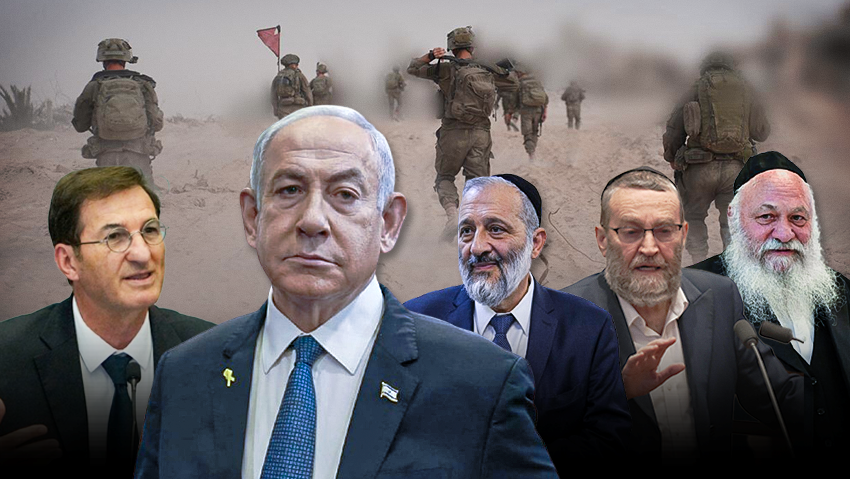
(Photo: IDF Spokesperson’s Unit, Yair Shagi, Reuven Castro, Amit Shaabi, AFP, Alex Kolomoisky, Yoav Dudkevich, AP)
Opposition Leader Yair Lapid and former Prime Minister Naftali Bennett had already prepared separate statements on the proposal. Bennett called the draft bill “a full political evasion law.”
Government Secretary Yossi Fuchs said Tuesday morning that Netanyahu “is determined to approve the draft law” and that the public would hear this “in his own voice” soon. He told Kol Barama Radio he expected the bill to pass despite internal opposition. “We know of four who will not support it, but in the end the backing will be factional,” Fuchs said. “We were not surprised by the objections. We anticipated them.”
Lapid said Netanyahu canceled the address because he could not defend the proposal. “Netanyahu’s escape tonight is a clear message to every coalition member: you cannot defend this law, and this law will not pass,” he said. Lapid pledged to block the legislation, calling it “a full-fledged evasion law.”
He argued the proposal “is full of holes inserted intentionally,” with no quotas, sanctions or enforcement mechanisms. He said authority over the process would rest not with the Israel Defense Forces but with Shas leader Aryeh Deri and United Torah Judaism’s Yitzhak Goldknopf. Lapid accused Netanyahu of choosing “those who avoid service over soldiers,” saying the legislation’s purpose is to restore funding to yeshivas. He cited 60 billion shekels in annual public spending on students who do not enlist, and said the bill “dishonors our soldiers, the more than 920 who were killed, the 20,000 wounded over the past two years, Zionism and the IDF.”
Bennett, who followed Lapid’s remarks, opened by referencing the October 7 attack and said “only together can we overcome everything.” He said the IDF currently lacks about 20,000 soldiers “to defend the country’s borders,” adding: “There are only two options — draft our ultra-Orthodox brothers to share the burden or impose roughly 120 additional reserve days every year on reservists and destroy their future.”
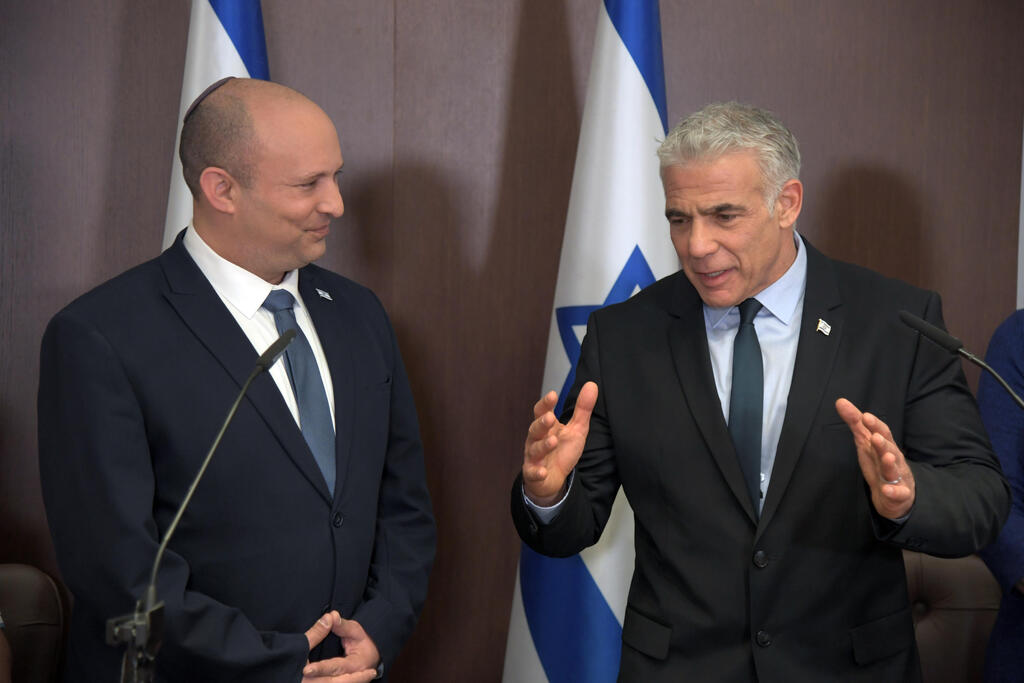
(Photo: GPO)
Messages within the coalition remained mixed. Opponents of the version advanced by committee chair Boaz Bismuth include Likud MKs Yuli Edelstein, Dan Illouz, Sharren Haskel, Moshe Saada, Eli Regev and Moshe Solomon; MK Michal Woldiger; and Aliyah and Integration Minister Ofir Sofer of the Religious Zionism party, who said he will vote against the bill even if he is fired. A coalition official said Netanyahu knew the legislation would face resistance but “did not know the depth of the opposition or the scale of the problem.”
A draft of the bill published last week has drawn wide criticism from the opposition and reserve duty organizations. It states that national civilian service in auxiliary units under the Prime Minister’s Office would count as service. It defines an ultra-Orthodox candidate as someone who studied in ultra-Orthodox institutions for at least two years between ages 14 and 18, broadening the pool to include graduates of the ultra-Orthodox education system rather than only full-time yeshiva students.
Under the proposed enlistment targets, 8,160 young men would enter military or civilian service during the first 18 months, through June 2027. The second year would require 6,840 draftees, the third 7,920 and the fourth at least 8,500. From the fifth year onward, the proposal sets a goal of drafting 50 percent of each annual cohort of ultra-Orthodox graduates, including those entering civilian service, capped at 10 percent of the annual quota.