

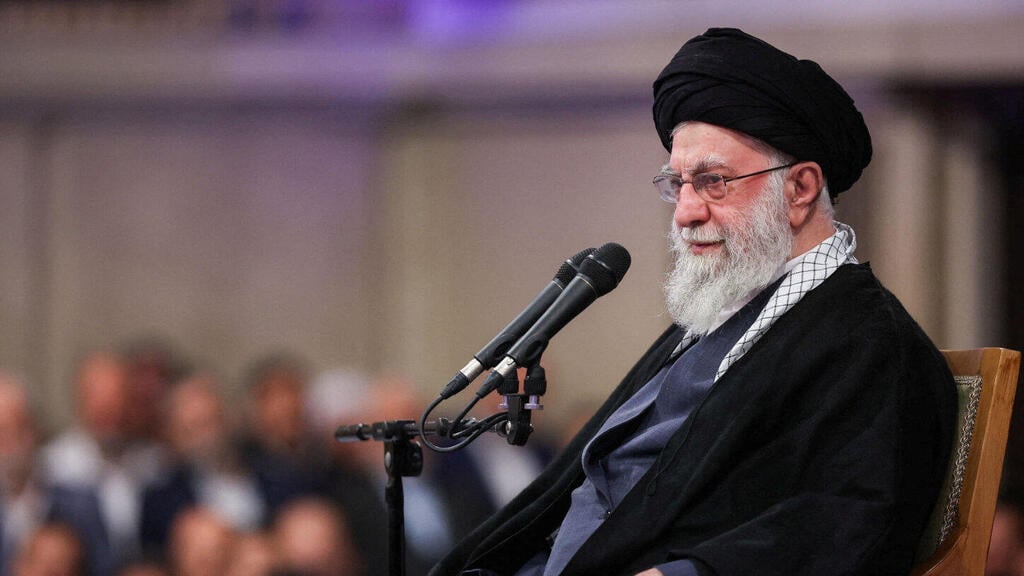
President Donald Trump’s statements on the wave of protests in Iran and the regime’s brutal crackdown initially focused on the harm to demonstrators and his intention to “help them.” In recent days, however, Trump has completely shifted course, turning the spotlight instead to Iran’s nuclear program — the same program he himself claimed was destroyed in strikes last June during Operation Rising Lion. Against the backdrop of a possible additional U.S. strike on Iran, The New York Times reported early Friday on the intelligence assessments underlying the change in Trump’s rhetoric.
officials at the White House believe a second American attack, following the one last June, could have even more significant consequences. The situation in Iran is sensitive. U.S. intelligence assessments say the protests, combined with Iran’s dire economic condition, have weakened the regime to the point that an American or Israeli action could accelerate its collapse, though it remains unclear what would follow.
Trump confirmed that he had spoken with Iran
(Video: The White House)


Another assessment is that an Iranian counterattack would likely focus largely on major cities in Israel, unlike the June strikes, which were aimed mostly at military targets and critical infrastructure.
In a separate Times report, it was noted that the Pentagon has expanded the options presented to Trump for action against Iran, including the possibility of a commando raid on nuclear sites. According to that report, Israel is pushing for U.S. participation in renewed strikes on Iran’s ballistic missile program.
Overnight, Trump confirmed that he had spoken with the Iranians and delivered a message: “No nuclear weapons and stop killing protesters.” According to U.S. and European officials, in the six months since Operation Rising Lion and the U.S. strikes on facilities at Fordow, Natanz and Isfahan, Iran has made little progress toward restoring its ability to enrich uranium and produce a nuclear warhead.
As a result, the Times raised questions about what the targets of a new American operation would be and whether Trump’s threats are intended solely to bring Supreme Leader Ayatollah Ali Khamenei to the negotiating table over a nuclear agreement. It also questioned whether another strike on Iran’s nuclear program would serve as a pretext for further weakening Khamenei and the regime.
In line with Trump’s threats, the Pentagon has sent massive military forces to the Middle East, including the aircraft carrier Abraham Lincoln; six destroyers and three additional warships that are not destroyers; fighter jets; various refueling assets; and air defense systems.
According to the Times, U.S. and Israeli intelligence communities have made the collection of intelligence on Iran’s efforts to recover from last June’s strikes a top priority. Those efforts include, according to the report, analysis of satellite imagery, interception of communications and the use of human sources, in an attempt to gain insight into decision-making in Tehran. Officials briefed on the matter said that “the intelligence is not unequivocal.”
They said the enriched uranium stored underground at the three sites that were attacked — the material closest to weapons-grade level — still exists and is likely hidden even deeper than before. Without access to that enriched uranium, most of which officials say is stored at the Isfahan facility, it would be extremely difficult for Iran to produce a nuclear weapon. In the meantime, Iran is operating at its nuclear facilities and attempting to dig deeper, beyond the reach of even the most powerful bombs in the U.S. arsenal.
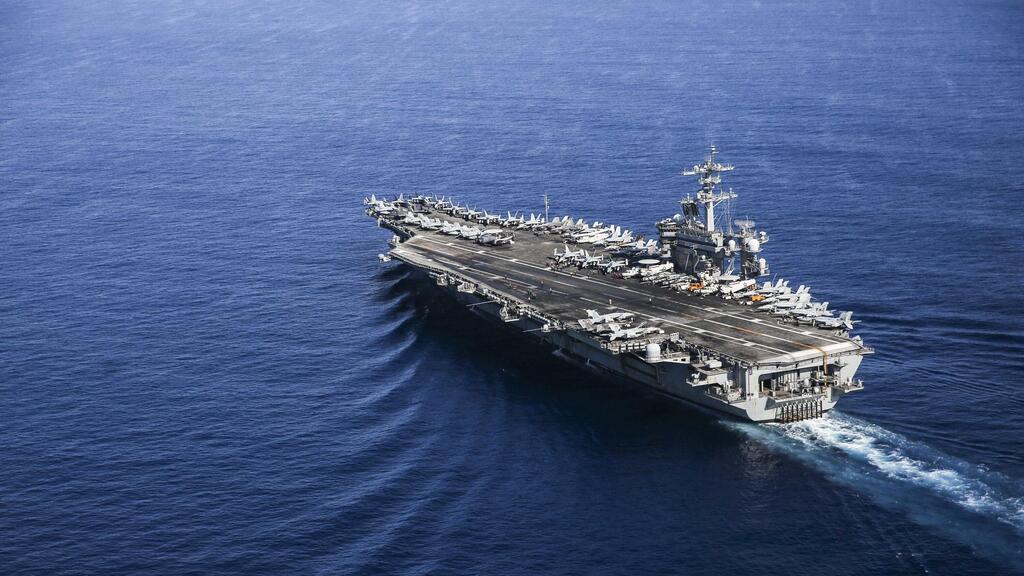
(Photo: US Navy)
However, Western intelligence agencies have found no signs that Iran is currently enriching uranium to a high level or taking any other steps aimed at producing a nuclear warhead. In addition, according to several officials familiar with U.S. intelligence assessments, Iran has not built new nuclear facilities during this period.
Activity has been identified, however, at two nuclear sites whose construction has not been completed, and which have been known for at least several years to the United States, Israel and international inspectors. One site is located near the uranium enrichment facility at Natanz, which was struck by both Israel and the United States in the last war. Another site is located in Isfahan.
Contrary to Trump’s repeated claim over the past six months that Iran’s nuclear facilities were “destroyed,” the damage assessment in the U.S. National Security Strategy document is less definitive. It states that the American strikes “significantly damaged the nuclear program.”
According to the Times, the centrifuges at the Fordo facility have not been operational since the strikes, and international inspectors assessed that the shockwaves alone from the bombs destroyed the internal operation of the centrifuges, which spin at supersonic speeds. U.S. officials said Iran has taken steps to try to determine whether those centrifuges can be replaced. In addition, U.S. intelligence indicates that Iran is digging deeper to build new infrastructure that would be beyond the reach of Massive Ordnance Penetrator bombs, which the United States used in June. That use showed the Iranians how deep the bombs are capable of penetrating, a factor that led previous U.S. administrations to refrain from using them.
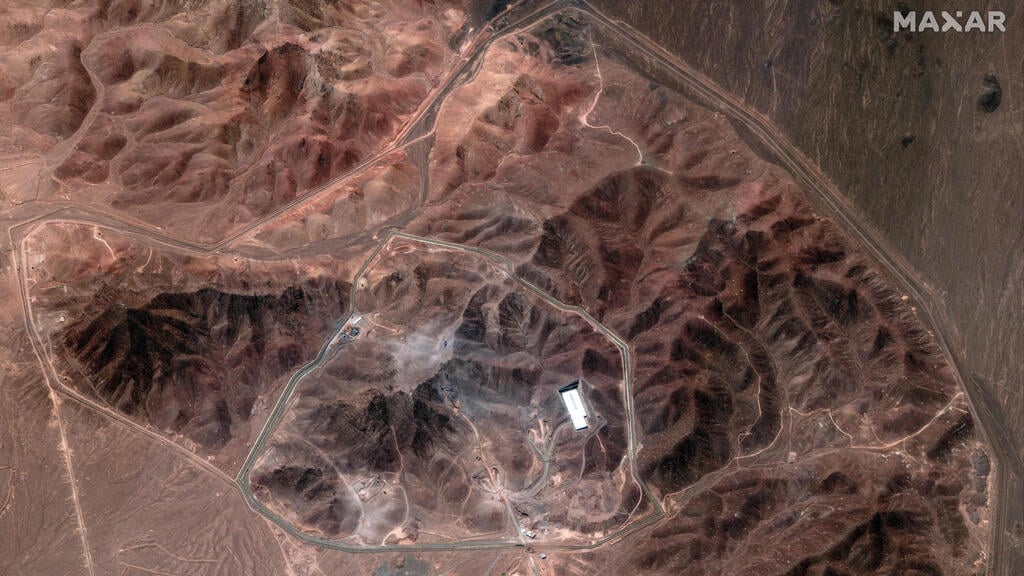
Fordow
(Photo: AFP PHOTO/ SATELLITE IMAGE ©2024 MAXAR TECHNOLOGIES)
Some American officials who reviewed the intelligence reports assessed that if Iran manages to access the remaining buried uranium and restore damaged sites or activate new ones, it would take about two months to restart centrifuge operations and return to the point they were at before the June war. Even if Iran succeeded in enriching uranium to weapons-grade level, it would still need to build the bomb itself, a process that would take at least several months.
According to the Times, although the Iranian regime has laid the groundwork, it has taken no visible action toward high-level enrichment, a step required in the process of building a bomb. The reason, Iranian leaders believe, is that Israeli intelligence has penetrated so deeply into their government and scientific infrastructure that Israel and the United States would quickly learn of any attempt to resume nuclear activity. Any such activity would give the United States and Israel grounds to carry out another round of “mowing the grass,” an Israeli term for periodic military action to degrade an adversary’s capabilities.
Israeli intelligence assessments of the state of Iran’s nuclear program do not differ significantly from those of U.S. intelligence agencies. Both conclude that last year’s military campaign delayed Iran’s nuclear project by about six months to a year.
However, concern in Israel is far greater regarding Iran’s efforts to upgrade its arsenal of ballistic missiles and drones. During the fighting last year, Israel intercepted and destroyed more than 80 percent of the missiles launched from Iran. Israeli intelligence officials estimate, however, that Iran may assess Israel as more vulnerable this time, due to a shortage of interceptors to defend cities against an attack.