

Amid rising tensions between the United States and Iran, the Islamic Republic has signaled to America’s regional allies that it is prepared to respond forcefully to any attack on its territory — and far more lethally than its restrained response last year.
The warning comes as U.S. President Donald Trump renewed his threat to strike Iran if no agreement is reached. Iranian officials made clear that, unlike their limited and pre-signaled strike on a U.S. base in Qatar following Operation Midnight Hammer in June last year, any future response would come without advance warning.
US President Donald Trump


Trump responded Saturday night to comments by Iran’s Supreme Leader Ayatollah Ali Khamenei, who warned that a U.S. attack would ignite a regional war.
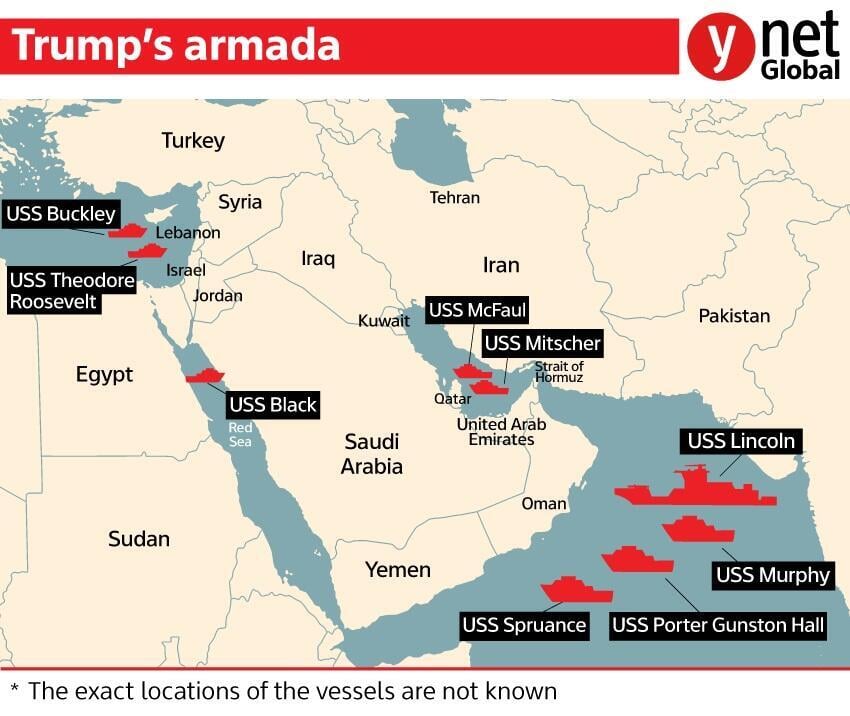
“Why wouldn’t he say that? Of course he’d say that,” Trump told reporters. “We have the biggest and strongest ships there right now, very close, within a few days,” he added — suggesting U.S. forces would be ready for action in the near term. “I hope we make a deal. If we don’t, we’ll see whether he’s right or not.”
Two Western officials familiar with the intelligence told The Washington Post that despite damage to Iran’s missile program during its war with Israel, Tehran still retains the capability to inflict significant harm on U.S. forces, allies and assets across the region. According to the report, “critical elements” of Iran’s missile infrastructure were not destroyed in the June fighting, while others have since been repaired.
Amir Mousavi, a former Iranian diplomat now based in Iraq, told the Post that Iran has doubled missile production since the 12-day war and made significant progress repairing damaged launchers. He said new launch systems have been deployed in mountainous regions, making them difficult to target. “These capabilities cannot be easily neutralized,” he said.
Iranian Foreign Ministry spokesman Esmail Baghaei said Tehran is reviewing the details of several diplomatic initiatives and expects developments in the coming days. Foreign Minister Abbas Araqchi has held talks with counterparts from Egypt, Turkey and Saudi Arabia.
At the same time, Iran’s chief of staff, Maj. Gen. Abdolrahim Mousavi, issued a stark warning. “Our forces are fully prepared for confrontation and for delivering a response strike,” he said. “Our revenge is open-ended. Any mistake by the enemy will be met with an immediate response.”
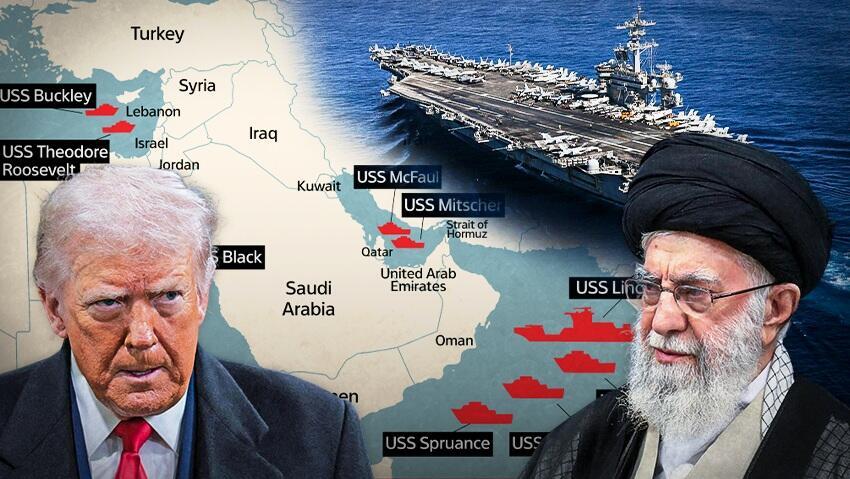
Donald Trump and Ali Khamenei
“In the event of any attack on Iran, no American will be safe,” Mousavi warned. “The fire in the region will burn America and its allies.”
Mocking talk of a naval blockade, Mousavi added: “You should revisit your geography and geopolitics lessons. A strong Iran cannot be besieged. We have revised our defense doctrine and shifted to offense. Our response in any war will be fast, decisive and beyond U.S. calculations.”
Iranian parliament spokesman Ebrahim Rezaei echoed the threats, saying Tehran would respond “at the highest level, decisively and destructively” to any aggression. He claimed Iran has extensive intelligence control over enemy movements and warned that a U.S. strike would trigger a regional confrontation, placing American military and economic interests squarely within Iran’s operational reach.
“Iran is more offensively capable than during the 12-day war,” Rezaei said. “If we strike enemy interests, we can neutralize 50% of their capabilities in the first phase.”
Iran expert Benny Sabti of Israel’s Institute for National Security Studies said negotiations remain possible in the short term but warned of a dangerous game of brinkmanship. “This is a game of chicken,” he said. “No one wants to climb down.”
Sabti noted that Iran’s nuclear facilities have been damaged and cannot currently operate, adding that while uranium stockpiles alone are insufficient for a bomb, uncertainty remains. “Trump is a winning card right now,” he said, “but we don’t know what the situation will be in three years.”
The tensions come as the European Union has designated Iran’s Revolutionary Guard Corps as a terrorist organization. Tehran summoned European ambassadors in protest, calling the move “illegal and unjustified,” and hinted at retaliatory measures. The EU decision aligns it with the United States, Canada and Australia, which have already designated the IRGC as a terrorist group following its role in violently suppressing mass protests in Iran.
Iran warned that joint naval exercises with China and Russia remain on track and urged regional countries, including Saudi Arabia, to carefully consider the consequences of further escalation.