

Israel confirmed Wednesday that senior officials held a rare direct meeting with Lebanese civilian representatives in Naqoura, as the United States intensifies efforts to prevent the collapse of the northern ceasefire and push both countries toward limited economic coordination.
In a statement, the Prime Minister’s Office said that, on Prime Minister Benjamin Netanyahu’s instruction and as part of ongoing security dialogue among the United States, Israel and Lebanon, the National Security Council’s deputy head for foreign policy met in Naqoura with U.S. presidential adviser on Lebanon Morgan Ortagus and Lebanese civilian officials. The meeting was described as “positive,” with both sides agreeing to develop ideas for potential economic cooperation. The statement stressed that Israel views the disarmament of Hezbollah as an obligation entirely unrelated to any economic discussions. The parties agreed to hold follow-up talks.
The Naqoura meeting—held under heavy American pressure—marked the first time in years that Israeli and Lebanese civilian officials participated together in the ceasefire oversight framework, which until now included only military representatives. Netanyahu authorized National Security Council representative Dr. Uri Resnick to attend, while Lebanon sent Simon Karam, its former ambassador to the United States.
U.S. envoy Morgan Ortagus also attended, after meeting in Jerusalem a day earlier with Netanyahu, Defense Minister Israel Katz and IDF intelligence chief Maj. Gen. Shlomi Binder, who presented intelligence on Hezbollah’s growing strength and the Lebanese government’s inability to restrain the terrorist group.
The U.S. Embassy in Beirut said the expanded participation reflects the ceasefire mechanism’s commitment to “political and military dialogue aimed at achieving security, stability and lasting peace.” Representatives from France and UNIFIL also joined.
Israeli official: escalation not inevitable
The meeting came amid heightened anxiety along the northern border. Despite assessments earlier this week that Israel was preparing for a possible pre-emptive operation in Lebanon, a senior Israeli official said Wednesday that “there is no decision to certainly move toward escalation,” adding that the American position is a major factor in Israel’s decision-making.
The official said a more forceful Israeli operation remains an option “on the table,” aimed at preventing Hezbollah from restoring damaged capabilities. “The organization hasn’t achieved much because we are striking continuously,” he said, noting that any broader action would depend heavily on U.S. backing.
Lebanese PM signals openness to broader talks
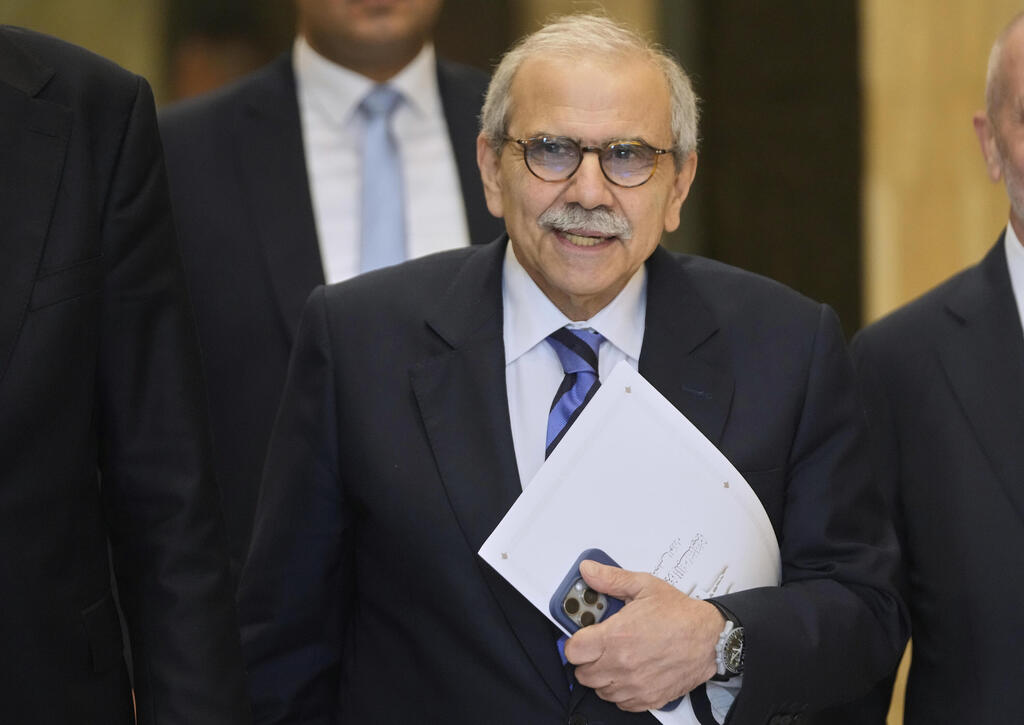
Lebanese Prime Minister Nawaf Salam told Al Jazeera that Lebanon is prepared for discussions with Israel that go beyond military coordination, though he stressed the country is not engaged in peace negotiations. He said normalization “depends on the process,” adding that economic discussions could form part of it. Salam reiterated that Hezbollah must ultimately disarm, saying its weapons “did not deter Israel and did not protect Lebanon.”
(Photo: AP Photo/Hussein Malla)
Lebanon’s Al-Mayadeen network, aligned with Hezbollah, quoted Salam as saying Lebanon will discuss UNIFIL alternatives with UN Security Council members. He said any progress requires an Israeli pullback from disputed northern areas, adding that Beirut is “open” to U.S. and French involvement in verifying Hezbollah’s disarmament in the south.
Israel warns Hezbollah is building up again
Following Ortagus’s Jerusalem meetings, Israeli officials said Hezbollah is moving large numbers of short-range rockets across the Syrian border and relocating infrastructure north of the Litani River, while keeping operatives embedded in border villages more than a year after the ceasefire took effect.
A senior Israeli official told the U.S. envoy this week that Israel does not believe Hezbollah will ever give up its weapons under a negotiated agreement. “There is no point in continuing with this agreement,” the official said. “We are heading toward escalation, and we will decide when, according to our interests.”
The tone shifted somewhat after Wednesday’s meeting in Naqoura, with Israeli officials acknowledging that intense U.S. pressure has momentarily slowed momentum toward a military confrontation.