

Supporters of Abdul El-Sayed continued celebrating his victory in Michigan's U.S. Senate election on Wednesday, a win that will make him the first Muslim senator in American history when he takes office in January. El-Sayed, a fierce critic of Israel, used his victory speech to promise that American taxpayers' money would go into their own pockets rather than fund "apartheid, genocide and war," an unmistakable reference to Israel.
For many supporters, his election marked a historic political milestone for the Muslim American community. Writing in The Washington Post on Wednesday evening, Keith Richburg noted that many Arab Americans in Michigan viewed El-Sayed's campaign as a defining moment, comparable to the pride Black Americans felt when Barack Obama won the presidency in 2008, a victory that had once seemed impossible.
El-Sayed in victory speech: 'We can move from Inshallah to Alhamdulillah'


El-Sayed, 41, is the son of Egyptian immigrants, a physician and epidemiologist who previously headed the Wayne County Department of Health in Michigan. Like many of his allies on the Democratic Party's far left, he frequently accuses Israel of committing "genocide" in Gaza and has called for an end to all U.S. military assistance to Israel, including funding for defensive systems, arguing that the money should instead be invested in American communities.
He narrowly defeated moderate, pro-Israel candidate Haley Stevens, who had the backing of the Democratic establishment, in the party's primary. Although he entered the general election against Republican Mike Rogers as the underdog, El-Sayed steadily gained momentum, eventually overtaking his opponent in the polls and winning by approximately eight percentage points.
Gallery
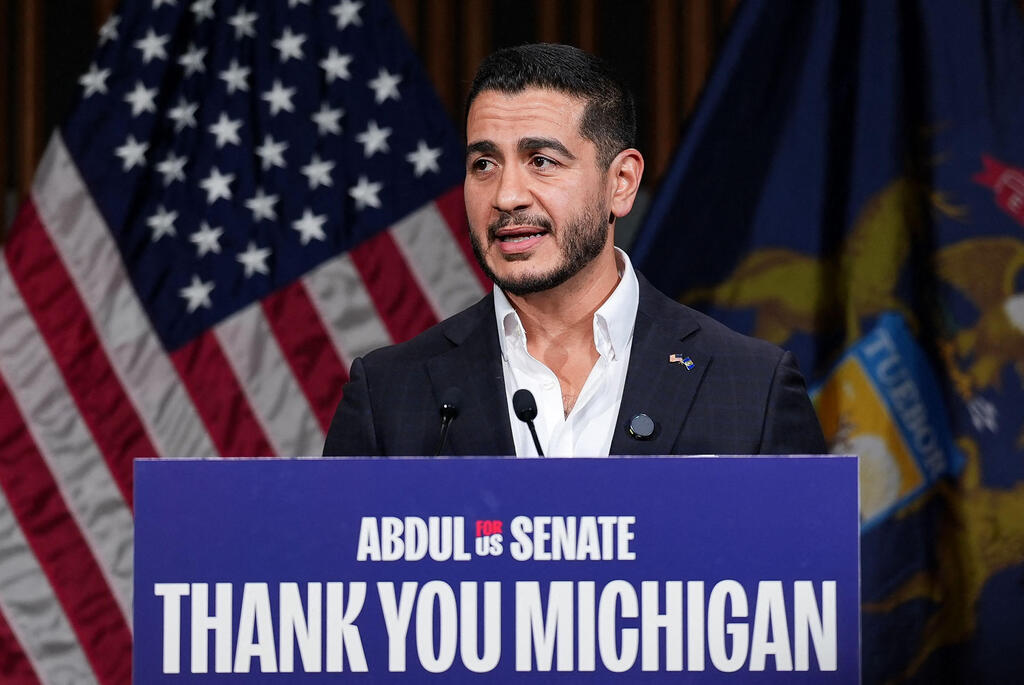
Abdul El-Sayed thanks his supporters after his Senate election victory
(Photo: Salwan Georges/Getty Images/AFP (Photo by Salwan Georges / GETTY IMAGES NORTH AMERICA / AF)
In his victory speech Wednesday morning, El-Sayed mocked the American Israel Public Affairs Committee (AIPAC), the pro-Israel lobbying group that spent millions of dollars campaigning against him, first in the Democratic primary and then in the general election.
"We can go from inshallah to alhamdulillah," he declared, using the Arabic expressions meaning "God willing" and "praise be to God." Addressing AIPAC, he added: "To AIPAC, which spent $42 million against us, thank you for giving me the opportunity to beat you twice."
He also returned to the war in Gaza. "They try to portray you as hateful if you believe Palestinian children should grow up in their ancestral homeland without being killed with our tax dollars," he told supporters. "We want our tax dollars invested here, in schools, health care and infrastructure. We don't want our money sent to fund apartheid, genocide or war."
The campaign ad that sparked outrage in the US:
'Eggs? We need to save $7 to kill Palestinians'
The bitter contest between El-Sayed and Rogers was marked by allegations about ties between El-Sayed's family and the Muslim Brotherhood, references to his sister's support for Hamas' October 7 massacre and criticism of his refusal to explicitly condemn an antisemitic campaign ad supporting his candidacy. The advertisement blamed Israel for high food prices, depicting a woman shopping at a supermarket who says she cannot afford eggs because "we need to save $7 to kill Palestinians."
President Donald Trump also intervened in the race, repeatedly describing El-Sayed as a "dangerous jihadist." Trump deliberately called him "Mohammed El-Sayed" and "Abdul Ramadan" to emphasize his religion and even compared him to the terrorists responsible for the September 11, 2001, attacks.
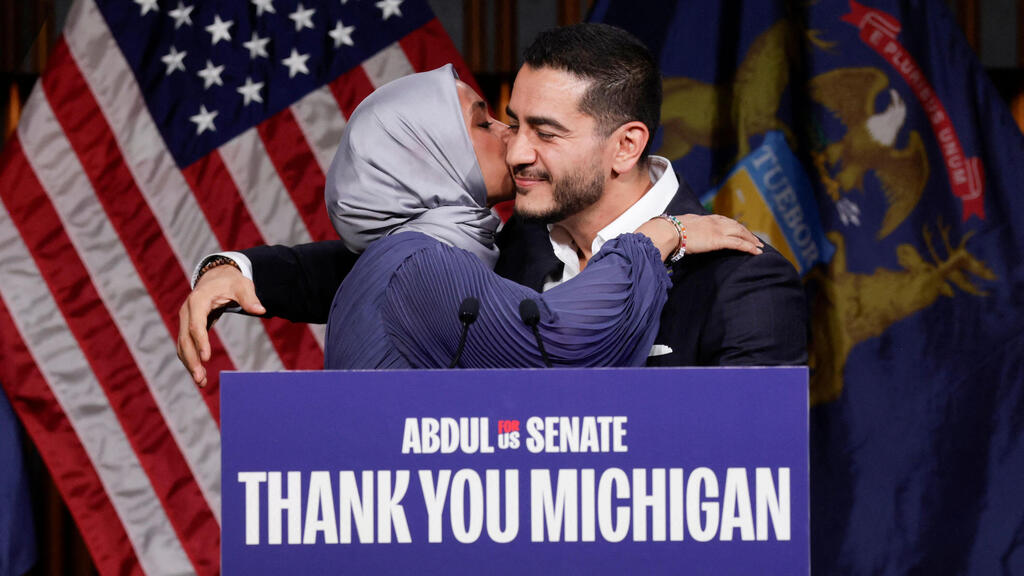
Abdul El-Sayed receives a kiss from his wife after his victroy speech
(Photo: Jeff Kowalsky / AFP)
Against that backdrop, El-Sayed took the stage in Michigan on Wednesday morning and emphasized his pride in his Muslim identity. "My name is Abdulrahman Mohamed El-Sayed," he declared to cheers from the crowd, carefully pronouncing his full name, including the guttural consonants of Arabic.
"Thank you for giving the most unlikely candidate the opportunity to stand here. During this campaign, some of you came up to me and asked, 'How come you don't hit back? How come you don't call them racists or hateful?' They weren't aiming at me. They weren't just attacking me. They were aiming at you and attacking you. They were attacking the very idea of America."
He also took aim at his main political opponents. Addressing Rogers, he said: "Enjoy your retirement. You chose hate, and Michigan chose hope." He had a pointed message for Vice President JD Vance: "There's a sweet irony in the fact that you're constitutionally required to swear me into office." And to Trump, who had repeatedly used stereotypical Muslim names to ridicule him, El-Sayed said: "I know you've had trouble with my name. From now on, you can just call me 'Senator.'"
Weapons, Israel and 'the most horrific acts'
El-Sayed's supporters who gathered at his Michigan campaign headquarters Wednesday morning struggled to contain their excitement as they spoke with the BBC.
"He's like my son. He grew up with my children," said Rasha Basha, 56, one of the Democratic candidate's supporters.
Another supporter, Ladana Mousa-Basha, 31, recalled El-Sayed's early achievements in their community. "He was one of the first people in our community to deliver a commencement speech at the University of Michigan. When we were kids, we never imagined that someone with his name, just six years after 9/11, would have any chance of being the commencement speaker at one of the best universities in the country."
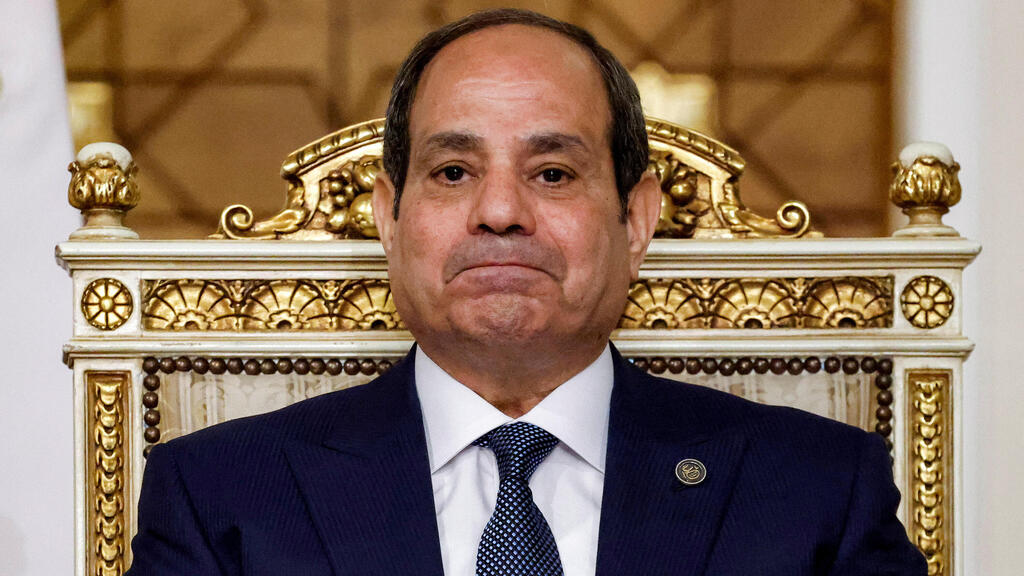
He called President Abdel Fattah el-Sisi's government a 'military dictatorship'
(Photo: Ludovic Marin/Pool via Reuters)
Abe Basha, 37, described how the campaign had revived painful memories. "This past month, the bigotry, the hatred, it actually reminded me very much of 9/11. My name is Ibrahim, but I changed it to Abe," he said. El-Sayed's election to the Senate, he added, "will be bigger than anything we may have ever experienced as Muslim Americans."
In Egypt, the homeland of El-Sayed's family, his victory appears to have been met with mixed feelings.
CNN noted that while many Egyptians welcome his attacks on Israel, they also remember other statements in which he challenged a cornerstone of relations between Washington and Cairo: U.S. military aid to Egypt.
El-Sayed has supported reducing that assistance, just as he has advocated cutting or ending military aid to Israel. He has argued that American funding helps strengthen the grip of what he calls a "military dictatorship" in Egypt, referring to President Abdel Fattah el-Sisi's government. Sisi has ruled Egypt since 2013, when he overthrew elected President Mohamed Morsi, a member of the Muslim Brotherhood, in a military coup.
CNN also reported that El-Sayed angered Egyptian commentators when he suggested that, had his father not immigrated to the United States, he himself might have become a taxi driver. The remark was interpreted by some as disparaging toward Egypt.
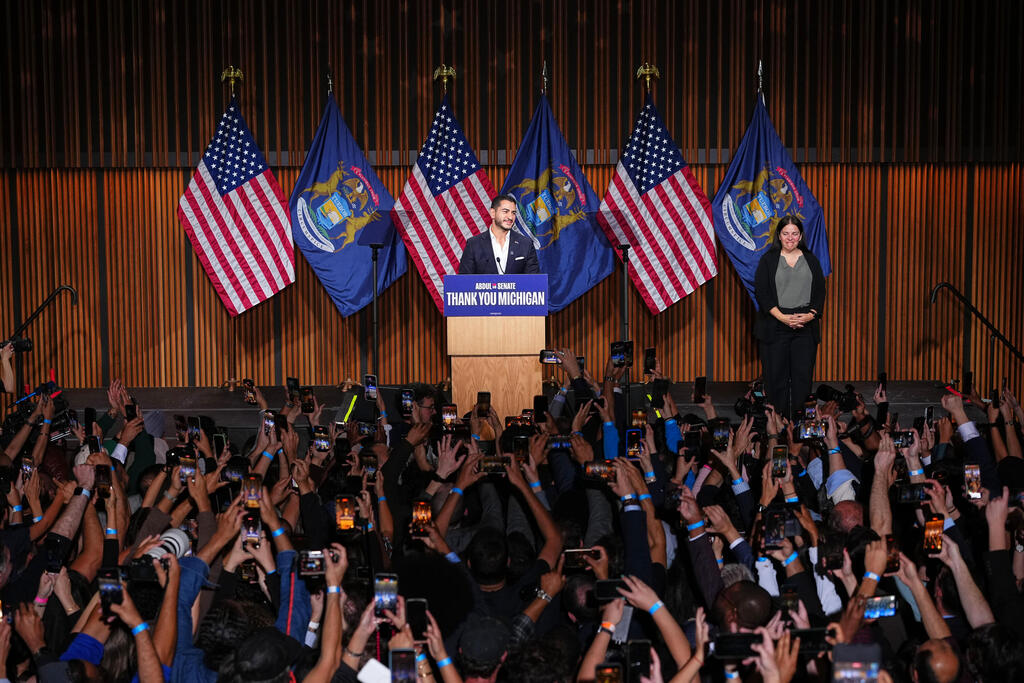
Supporters on election night
(Photo: Julia Demaree Nikhinson/AP)
According to CNN, on September 10, following El-Sayed's victory in the Democratic primary, Egyptian writer Mohamed Salmawy published a column in Al-Masry Al-Youm questioning whether Cairo should distance itself from a politician who criticizes Egypt or instead establish ties with a rising political figure challenging Israel's influence in Washington. By Wednesday morning, after El-Sayed's election victory, the story was absent from the leading coverage of Egypt's major state-owned media outlets.
On Wednesday evening, roughly 12 hours after his victory was declared, El-Sayed gave an interview to NPR, the American public radio network. Asked about Trump's announcement Tuesday that the United States would end military assistance to Israel, he responded: "I think the president is actually right on that policy. I would also like us to stop selling Israel weapons that are used to carry out the most horrific acts, including genocide and apartheid."
During the same interview, El-Sayed also criticized U.S. military aid to Egypt, Saudi Arabia, Jordan and Pakistan, repeating his argument that American taxpayers' money should be invested at home.
Asked about reservations toward him among some Jewish and Black voters, El-Sayed replied: "There is always more work to do, always more to build and always more conversations to have." He also argued that the election results challenged the claim that he was unable to win support from those communities.
Daniel Edelson contributed to this report.