

Three times, Abdul El-Sayed answered "no" when asked in an interview whether he or his family had ties to the Muslim Brotherhood. But on Monday, just one day after his appearance on NBC's "Meet the Press," a social media post written by his half-sister 14 years ago began circulating: Their mother, she wrote, had been active in the Islamist movement in Egypt during the 1970s, before immigrating to the United States.
For El-Sayed, the Democratic nominee for a U.S. Senate seat in Michigan who hopes to become the first Muslim senator in American history, the revelation is politically explosive just three weeks before the midterm elections. His Republican opponent, Mike Rogers, has already turned the posts into a campaign advertisement in a race that could determine whether Republicans retain control of the Senate or Democrats take it over for the remainder of Donald Trump's presidency.
Gallery
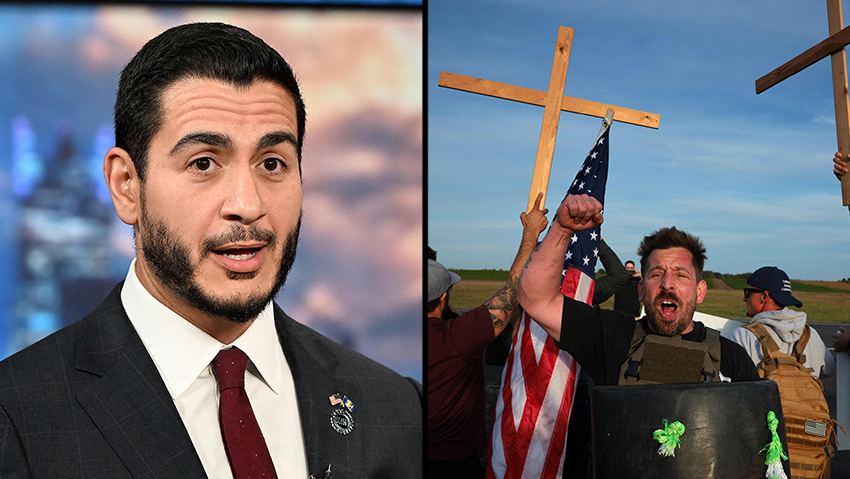
El-Sayed and protesters who tried to disrupt his campaign event in Michigan over the weekend
(Photo: Robin Buckson/Pool via REUTERS, CHIP SOMODEVILLA / GETTY IMAGES NORTH AMERICA / AFP)
Trump on El-Sayed: ‘To me, he’s Mohammed. And he’s a radical jihadist’


"I had an amazing conversation with my mom about her activism in the Muslim Brotherhood in the early 1970s, when she was in college," Eman Abdelhadi, now a researcher at the University of Chicago, wrote on Twitter, now X, in 2012, adding the hashtag "#respect."
In another post, she wrote: "My family has long been MB," referring to the Muslim Brotherhood, although she added that she believed the movement had handled politics poorly and destructively. In 2013, she wrote that relatives had been imprisoned because of their membership in the Islamist organization and asked followers to pray for family members who supported it in Egypt.
Abdelhadi and El-Sayed share the same mother, Fatten Elkomy, but grew up in separate households after their parents divorced. The posts do not establish what exactly their mother did within the movement, whether her son knew about her involvement or whether he himself had any connection to the organization.
The posts surfaced after El-Sayed was interviewed on NBC on Sunday and explicitly asked whether he or his family had any ties to the Muslim Brotherhood, the Islamist movement founded in Egypt from which Hamas also emerged.
The question came against the backdrop of Republican efforts in recent weeks to portray him as a "radical jihadist" with links to Islamist organizations, allegations he has repeatedly denied.
When moderator Kristen Welker asked whether he or his family had ties to the Brotherhood, El-Sayed replied: "No, but let's talk about this."
"No, you don't have any ties?" Welker pressed. "No," he answered. "And your family doesn't?" "No," El-Sayed repeated. He argued that Rogers was raising the issue merely to repeatedly emphasize the word "Muslim" and encourage voters to view him with suspicion because of his name and religion.
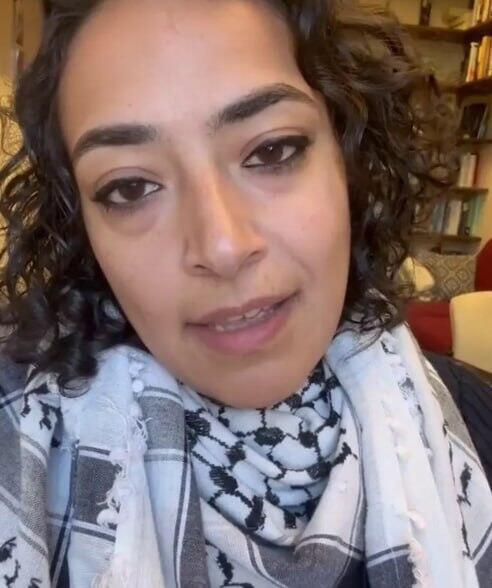
Eman Abdelhadi, El-Sayed's half-sister, who celebrated the October 7 massacre
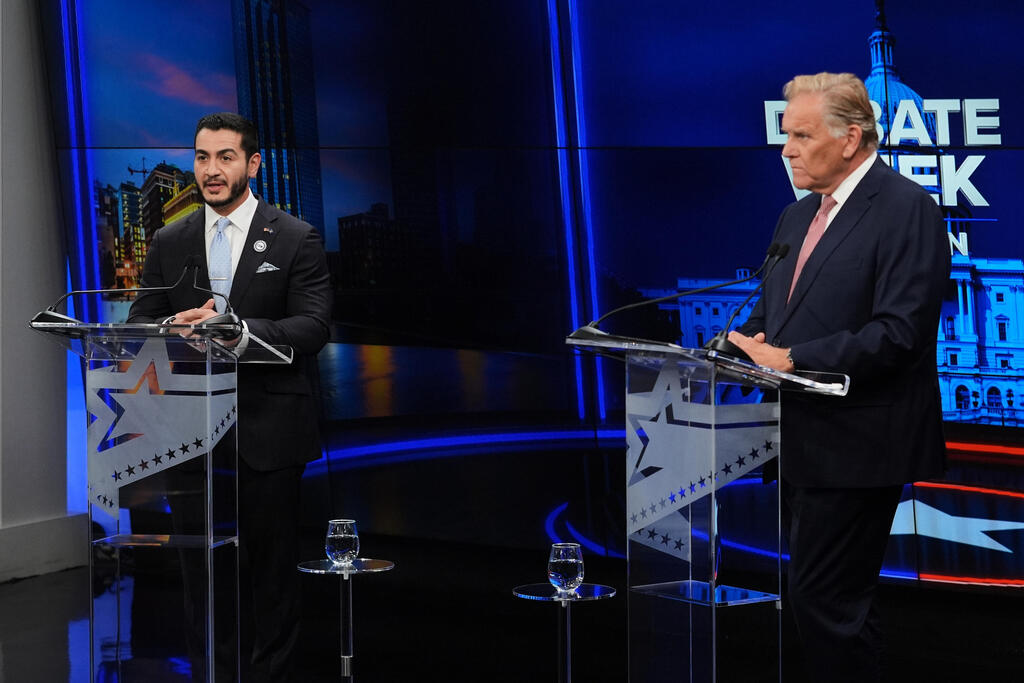
Last week's debate between Republican candidate Mike Rogers and Abdul El-Sayed
(Photo: AP Photo/Paul Sancya, Pool)
On Monday, Rogers circulated a new campaign video combining El-Sayed's denials from the interview with his sister's posts, accusing his opponent of lying. El-Sayed's campaign responded that Rogers was using "bad faith attacks on Abdul's faith and family" to divert attention from the cost of living and soaring gasoline and grocery prices.
The campaign also maintained that allegations linking El-Sayed to the Muslim Brotherhood had been "debunked as racist and untrue," but did not address the specific post in which his sister described their mother's involvement in the movement.
The same half-sister had already caused difficulties for El-Sayed over the summer, after other old social media posts surfaced, including one described as celebrating the October 7 massacre.
Support for Mohamed Morsi and indictment of organization where his mother worked
El-Sayed, a prominent figure on the Democratic Party's far left and an outspoken critic of Israel, has repeatedly denied ties to extremist organizations. His critics, however, argue that his conduct raises questions about his actual beliefs.
Fox News, for example, noted that on the second anniversary of the October 7 attack, El-Sayed sent an email to supporters asking them to donate money to Palestinians. In the message, he compared Hamas to the Israeli government, although he described both as "evil."
The network also pointed to his campaign appearances alongside streamer Hasan Piker, who previously declared that the United States "deserved 9/11." El-Sayed described the remark as "stupid" but refused to distance himself from Piker.
Although several media outlets, including the conservative Fox News, reported that they had been unable to identify any direct ties between El-Sayed and the Muslim Brotherhood, attention is now focusing on his mother's possible connection to the movement.
The Brotherhood is designated a terrorist organization by several countries, including Egypt. The United States has also designated its Egyptian and Jordanian branches as terrorist organizations over their support for Hamas.
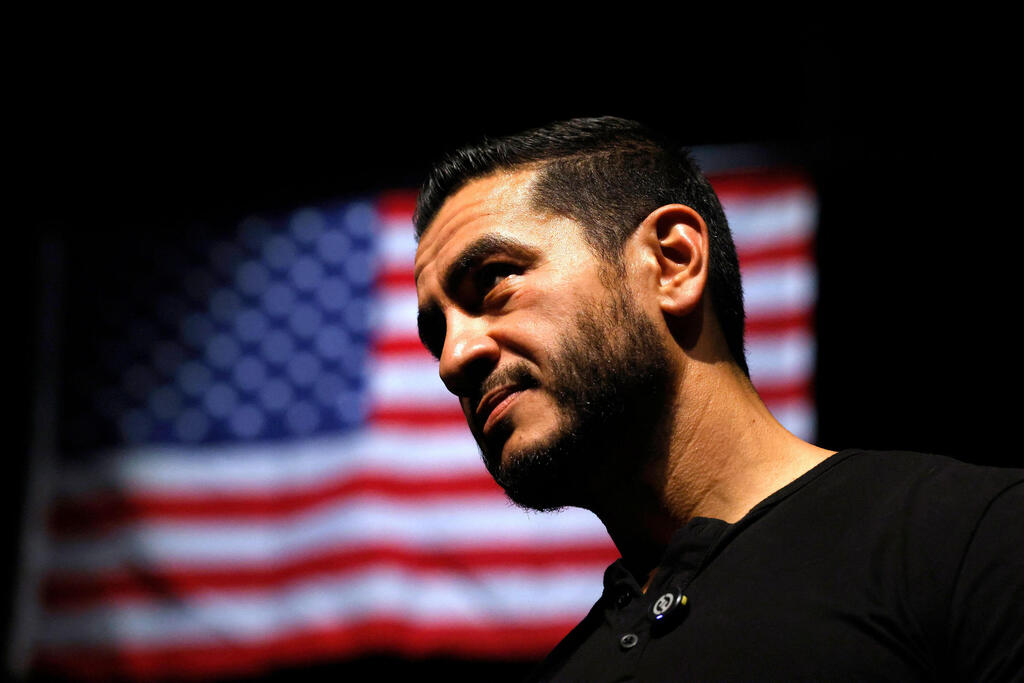
(Photo: JEFF KOWALSKY / AFP)
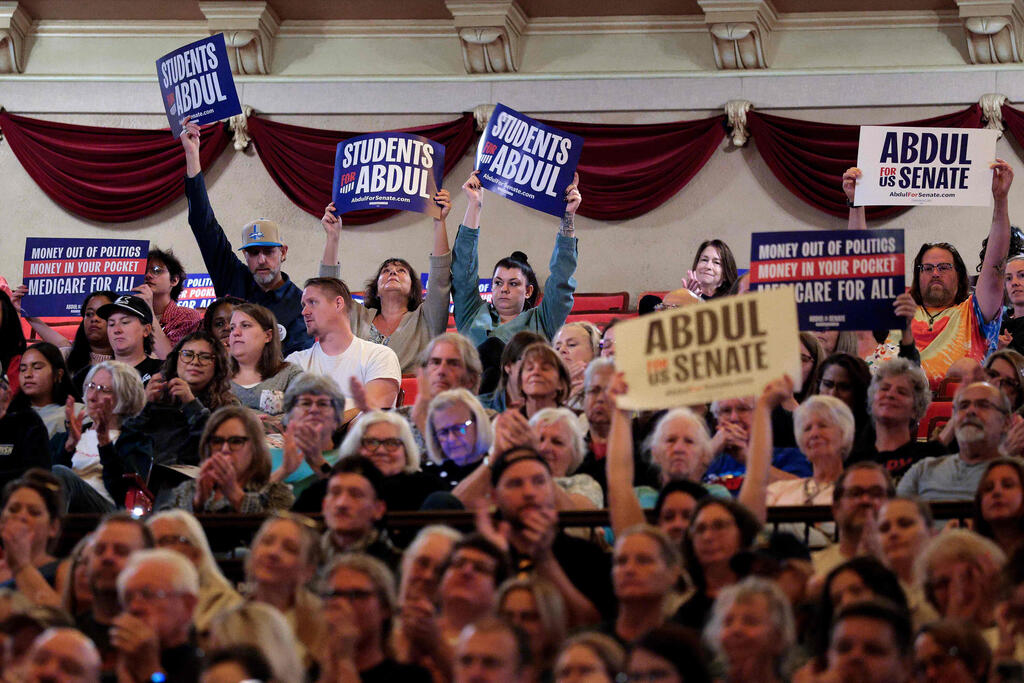
(Photo: CHIP SOMODEVILLA / GETTY IMAGES NORTH AMERICA / AFP)
The activism attributed to El-Sayed's mother by his sister dates back more than 50 years, before Hamas was founded. However, after moving to the United States, Elkomy worked for an Islamic aid organization that the U.S. government sanctioned in 2004 for supporting al-Qaeda and Hamas.
According to American media reports, Elkomy worked for the Islamic American Relief Agency, or IARA. U.S. Treasury Department documents stated that the organization was responsible for transferring funds to Palestinian territories for terrorist activities and, in particular, served as a conduit for money intended for Hamas through a Western European country.
In 2007, the organization was indicted. Elkomy was mentioned at least 12 times in the accompanying list of exhibits, although she herself was never charged. The exhibits documented her involvement in financial transfers and recordings of telephone conversations between 1999 and 2002.
At the time, Elkomy denied that the organization had any ties to terrorism. In a 2004 interview with the St. Louis Post-Dispatch, she explained that her work involved helping orphans and children who had lost at least one parent, adding that it broke her heart to think they would no longer receive assistance.
El-Sayed himself expressed support in 2011 for the revolution then unfolding in Egypt against President Hosni Mubarak. In an opinion article, he called on the United States to support the protesters even if doing so resulted in the Muslim Brotherhood coming to power.
He argued that even in that scenario, there were several reasons why the resulting state would look nothing like Iran. In addition, a 2012 document published in an Egyptian newspaper listed a "Dr. Abdel-Rahman El-Sayed" from New York among its signatories.
The signatories expressed support for decisions by Egypt's then-president Mohamed Morsi, a Muslim Brotherhood figure, after he expanded his presidential powers. They also called for a "purge" of the media and police. El-Sayed's campaign declined to comment on the letter.
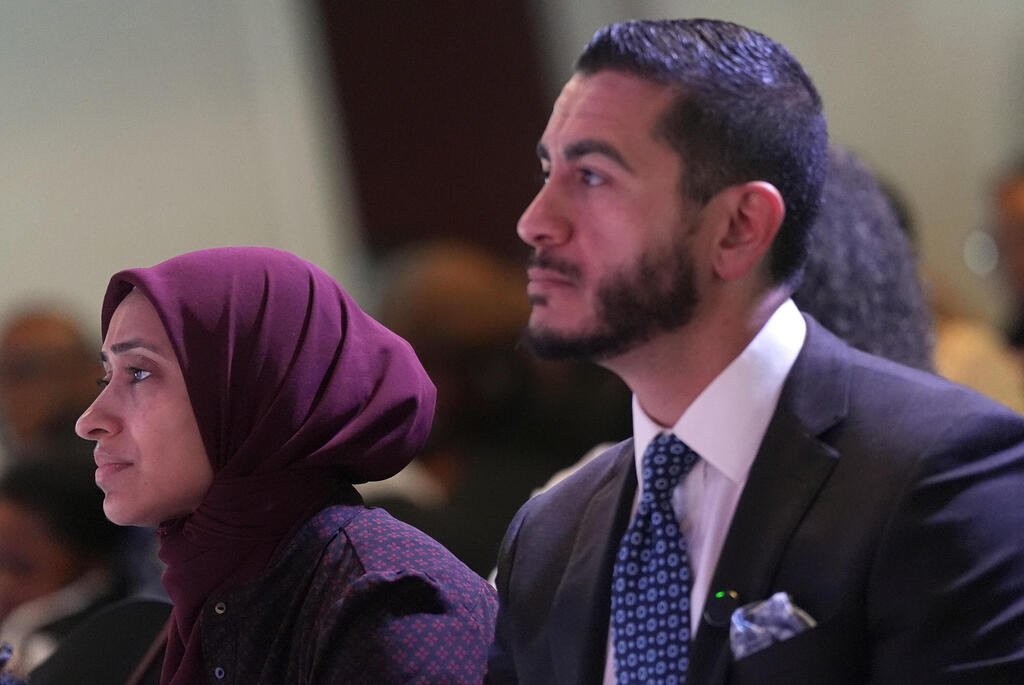
El-Sayed and his wife, Sarah Jukaku
(Photo: AP Photo/Julia Demaree Nikhinson)

(Photo: JEFF KOWALSKY / AFP)
The U.S. midterm elections, scheduled for November 3, will determine control of both the Senate and the House of Representatives, which are currently controlled by Republicans.
Midterm elections have historically been viewed as a referendum on the sitting president, and polling has suggested that Democrats have an opportunity to take control of both chambers amid Trump's low popularity and widespread frustration with the cost of living and the sharp rise in prices caused by the war with Iran.
In the Senate, where Republicans currently hold a 53-47 majority, a Democratic takeover would depend heavily on the party's ability to retain its Michigan seat, which is being vacated by retiring Democratic Sen. Gary Peters.
The contest between El-Sayed and Rogers is therefore considered particularly important. Polls have consistently shown El-Sayed ahead, but only by a narrow margin.
El-Sayed, 41, was born to Egyptian immigrant parents. He is a medical doctor and epidemiologist who previously headed the Wayne County Department of Health Services in Michigan. He has never held elected office, although he ran for Michigan governor in 2018 and lost the Democratic primary to Gretchen Whitmer, who went on to become governor.
He is considered a member of the Democratic Party's far-left progressive wing. Alongside repeated accusations that Israel committed "genocide" in Gaza, he has called for an end to all U.S. military assistance to Israel, including support for defensive systems. He argues that the money should instead be invested in American communities.
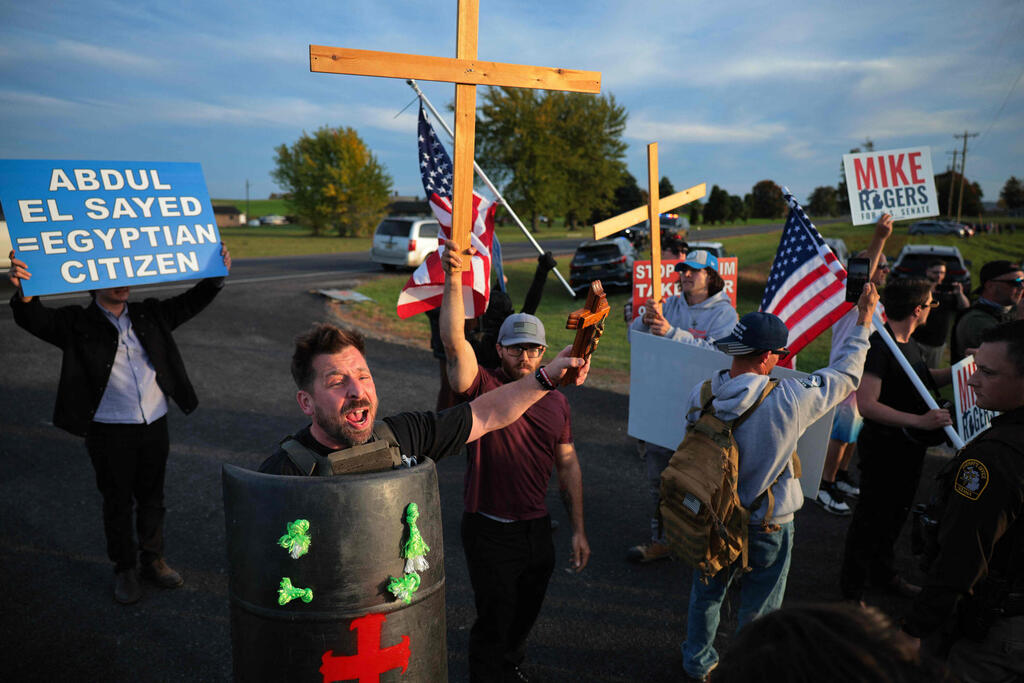
Right-wing activists protesting against El-Sayed's campaign event over the weekend
(Photo: CHIP SOMODEVILLA / GETTY IMAGES NORTH AMERICA / AFP)
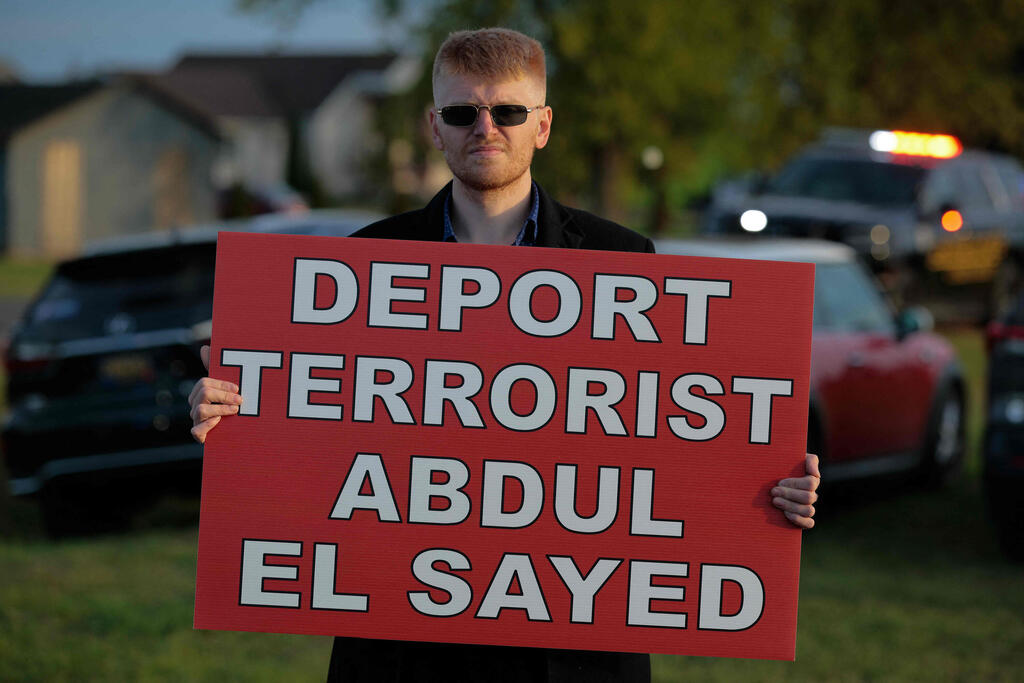
(Photo: CHIP SOMODEVILLA / GETTY IMAGES NORTH AMERICA / AFP)
In August, El-Sayed won the Democratic Senate nomination after an especially contentious primary, narrowly defeating Haley Stevens, a moderate, pro-Israel Democrat, by about one percentage point.
The contest between El-Sayed and Stevens was widely regarded as a crucial test of the direction of the Democratic Party as a whole. It followed a series of victories this year by progressive candidates challenging the party's established leadership and taking strongly anti-Israel positions in local congressional and mayoral races. Those victories signaled a dramatic increase in the progressive movement's influence.
Most of those successes, however, came in liberal strongholds such as New York and California, where Democratic candidates are often effectively assured of victory. Michigan, by contrast, is a swing state that Trump won in 2024 by a narrow 1.4 percentage points.
For progressives, the Senate contest offers an opportunity to demonstrate that they can attract broader public support beyond their traditional strongholds.
‘Bin Laden jersey’ and the Israel-Iran comparison: ‘Both are dangerous’
Republicans, meanwhile, see Michigan as one of their best opportunities to capture a Democratic Senate seat and improve their chances of retaining control of the chamber. Against that backdrop, Trump and his allies have intensified their attacks on El-Sayed in recent days, portraying him as a dangerous extremist.
Trump has repeatedly referred to the candidate as "Mohammed," even though his name is Abdul, behavior that the president's critics describe as blatant Islamophobia. In one recent social media post, Trump called him "Mohammed El-Sayed," a "RADICAL Extremist" and a "Terrorist Sympathizer."
At a rally Saturday, Trump again described El-Sayed as a "radical jihadist" and explained why he had decided to call him Mohammed. "Somebody said, his name isn't Mohammed; it's Abdul. I said, to me, it's Mohammed," Trump told the crowd.
He added that, as president, he could call the candidate whatever he wanted, and repeated his accusation that El-Sayed was a jihadist.
Trump also shared a photograph of himself and first lady Melania Trump alongside a photograph of El-Sayed and his wife, who wears a hijab, with the caption "Two VERY DIFFERENT Americas."
Republican Sen. John Kennedy, who is not related to the family of the late President John F. Kennedy, appeared alongside Rogers and said that El-Sayed "sleeps in a Bin Laden jersey."
On Monday, Trump shared a video in which singer Kid Rock warned of a "civil war over religious ideology" and described El-Sayed as a "wolf in sheep's clothing."
El-Sayed, for his part, argues that Trump is trying to divert attention from the cost of living. "He knows my name is Abdul. He says it every day," El-Sayed responded. "But he's not just attacking me. He's attacking all of us."
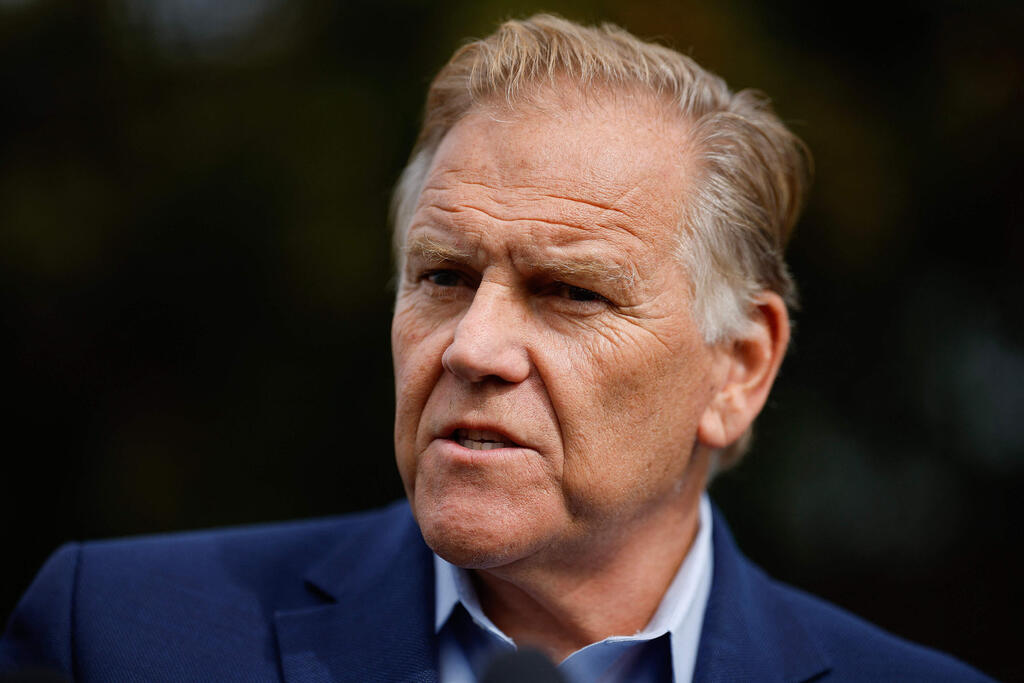
Republican candidate Mike Rogers
(Photo: CHIP SOMODEVILLA / GETTY IMAGES NORTH AMERICA / AFP)
He accused Trump of looking down on ordinary Americans and believing that he could use El-Sayed's name and religion to distract voters from the economic hardship caused by his policies.
El-Sayed said that hardship was being felt at gas stations, grocery stores and doctors' offices, and that Trump underestimated voters' ability to recognize what was happening. "It's time for change," he concluded.
Even without the attacks on his identity, El-Sayed continues to generate controversy over his positions toward Israel. During a debate last week, the moderator asked him which country posed a greater danger to the United States, Israel or Iran. El-Sayed refused to choose. "I think both of them have proven dangerous in their own way," he said.
He argued that Iran presented a risk of attacking the United States, while Israel was drawing Washington into wars it had no reason to fight.
El-Sayed accused Israel of pushing Washington into the war with Iran. Asked whether he would support supplying defensive weapons to Israel if Iran attacked it, he rejected the idea. "I don't want our tax dollars buying weapons for other countries," he said, reiterating that he wanted public money invested in schools and health care in Michigan. Rogers responded that he would approve such assistance.
The March attack on Temple Israel synagogue near Detroit has also continued to trouble El-Sayed's campaign. The attacker, who had lost relatives in an Israeli strike in Lebanon, rammed his vehicle into the synagogue building while children were inside and opened fire at a security guard.
Although El-Sayed condemned the attack, he also said that "hurt people hurt people." Members of the Jewish community interpreted the remark as an attempt to justify an antisemitic terrorist attack.
In August, El-Sayed apologized to the Michigan Democratic Jewish Caucus, saying that the timing of his remarks had been wrong.
His efforts to improve relations with Jewish voters may be having some success. A group called "Jews for Abdul" has been established to help him win the election.
This week, the pro-Israel lobbying group AIPAC also returned to the campaign. An organization affiliated with the group sent election materials opposing El-Sayed to approximately 130,000 Jewish voters in Michigan. During the Democratic primary, the lobby spent approximately $30 million supporting his more moderate opponent, Stevens, who ultimately lost.
El-Sayed attacked Obama, who is now campaigning for him
El-Sayed received support during the Democratic primary from prominent progressive leaders, including Sen. Bernie Sanders and Rep. Alexandria Ocasio-Cortez. In the final stretch of the campaign, however, he is also working to secure support from the Democratic Party's more moderate establishment, possibly in an effort to attract undecided voters.
Former Vice President Kamala Harris recently appeared alongside him at an event in Detroit, and former President Barack Obama is expected to join him at a rally in the city next weekend.
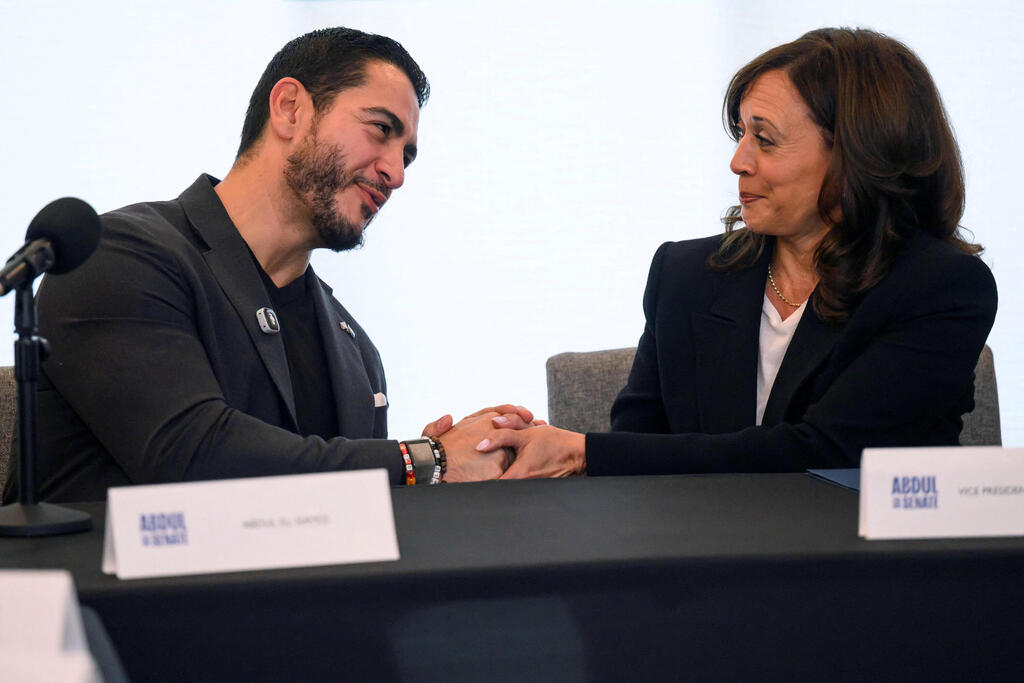
El-Sayed with Kamala Harris last month
(Photo: David Guralnick/Pool via REUTERS)
That support comes despite El-Sayed's past criticism of Obama. Fourteen years ago, El-Sayed, whose charismatic style has led some to call him the "Obama of Michigan," accused the then-president of perpetuating wars and undermining civil rights.
During Sunday's NBC interview, El-Sayed explained that he had been "young and angry" at the time and had not understood how difficult it was to bring about meaningful change. When interviewer Kristen Welker asked whether America was ready for a Muslim president, he brought the conversation back to Michigan. "I think Michigan is ready for a Muslim senator," he said.