

The Nobel Peace Prize winner will be announced Friday, and U.S. President Donald Trump is hoping to be the lucky recipient — amid his efforts to broker a deal to end the war in Gaza and secure the release of hostages, which he believes could boost his chances for the prestigious award. But experts say his odds remain low, despite his repeated claims of having ended “seven wars” and endorsements from world leaders, including Israeli Prime Minister Benjamin Netanyahu.
Analysts speaking to ABC News explained that the Norwegian committee that selects the laureate typically focuses on “durable peace, the promotion of international fraternity and the quiet work of institutions that support those aims.” They noted that Trump’s record may work against him, citing his disregard for international institutions and global concerns over climate change.
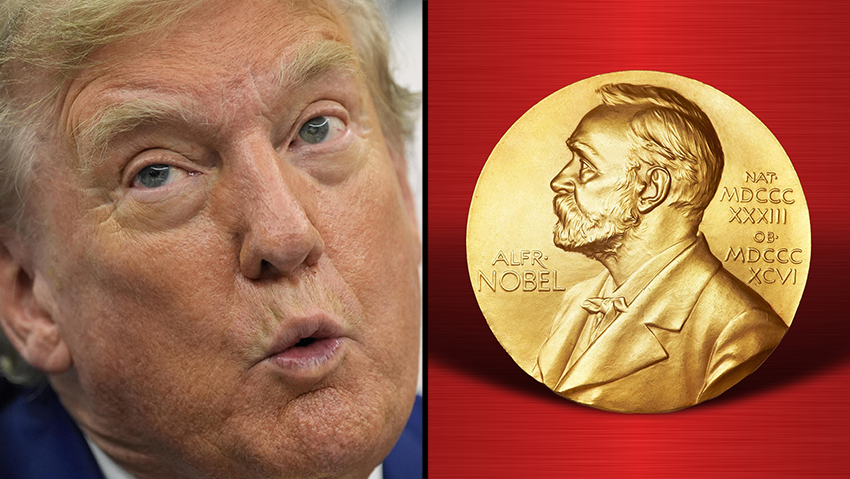
Trump has voiced his desire to win the prize since his first term in the White House. Recently, he told United Nations representatives, “Everyone says I should get the Nobel Peace Prize.” His boasting and high-profile endorsements may make him a favorite among betting agencies, but it remains unclear whether he is viewed similarly by the five members of the Nobel committee, appointed by the Norwegian parliament, who meet behind closed doors. Experts say Trump’s brash style may clash with the restrained Nordic culture, potentially hurting his chances.
Trump has received multiple nominations for the prize from individuals in the U.S. and politicians around the world since 2018. However, nominations from Netanyahu and leaders of Pakistan and Cambodia — who credited him with mediating their respective military disputes with India and Thailand — were submitted after the January 31 deadline and are therefore ineligible for this year’s prize.
One valid nomination came from U.S. Rep. Claudia Tenney, a Republican from New York, citing Trump’s role in the 2020 Abraham Accords, which normalized relations between Israel and the United Arab Emirates, Bahrain, Sudan and Morocco. That nomination was reportedly sufficient to place Trump on the initial list of candidates considered by the committee. In contrast, a Ukrainian lawmaker who submitted another nomination for Trump later withdrew it, citing Trump’s failure to condemn Moscow following a Russian missile strike on Kyiv.
Benjamin Netanyahu informs Trump that he has recommended him for the Nobel Peace Prize, July 8
(Video: Reuters)


Trump has repeatedly declared that he “deserves the prize,” pointing to his claim of ending seven conflicts — though critics argue that many of the military engagements he takes credit for resolving were either exaggerated or nonexistent. He now hopes his proposed Gaza peace initiative will bring an end to nearly two years of war between Israel and Hamas. “Nobody has ever done this,” he said last week during a speech to military personnel at the Marine Corps base in Quantico, Virginia. Still, he added, “They’ll probably give it to someone who did nothing.”
Experts note that the committee tends to favor “ongoing multilateral efforts” over “quick diplomatic wins.” Theo Zenou, a historian and fellow at the Henry Jackson Society, an organization focused on international relations and national security, said Trump’s efforts have yet to demonstrate long-term impact. “There’s a huge difference between stopping the fighting temporarily and resolving the root causes of the conflict,” he said.
Zenou also emphasized that Trump’s dismissive stance on climate change does not align with what many—including the Nobel committee — see as the greatest long-term threat to global peace. “I don’t think they’re going to give the world’s most prestigious peace prize to someone who doesn’t believe in climate change,” he said. “If you look at past winners, they were bridge-builders who pursued international cooperation and reconciliation—those aren’t words we usually associate with Donald Trump.”
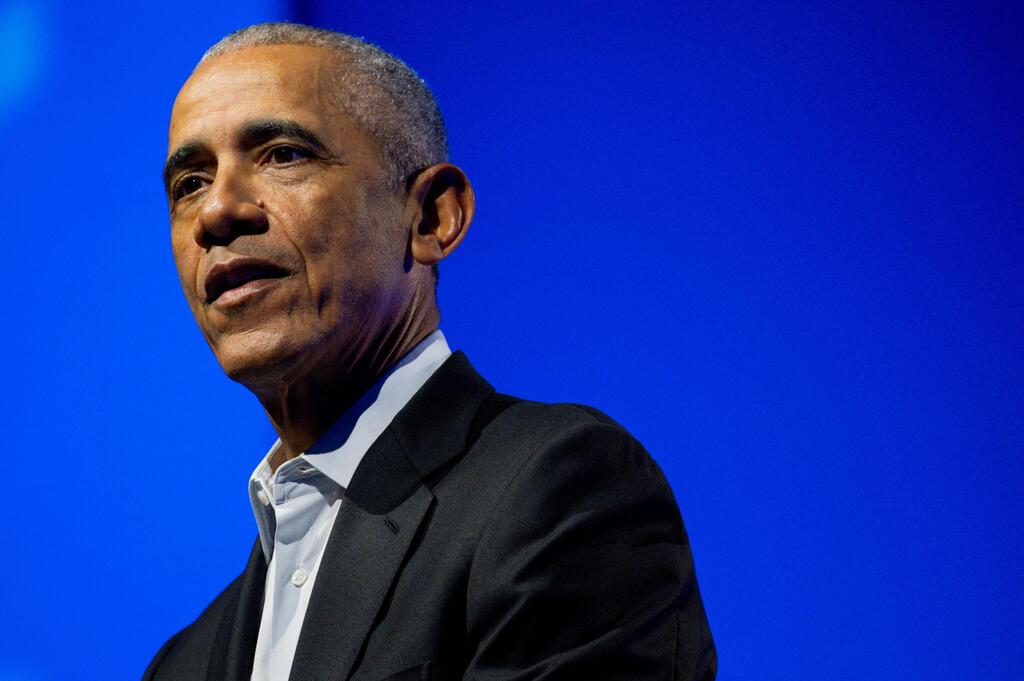
Barack Obama
(Photo: Vincent Alban, Reuters)
The Nobel committee faced harsh criticism in 2009 after awarding the Peace Prize to then-President Barack Obama just nine months into his first term. Many argued Obama had not yet held office long enough to merit such recognition.
In his memoir, former Nobel committee secretary Geir Lundestad wrote that the prize was awarded to Obama in the hope that he would embody values of multilateral diplomacy, peace and democracy — but admitted that the committee “did not achieve what it had hoped.” Trump, by contrast, has embraced a more isolationist approach and frequently claims he was unfairly denied the honor. “If my name were Obama, I’d have gotten the Nobel Prize in 10 seconds,” he said in October 2024.
Nina Græger, director of the Peace Research Institute Oslo, added that Trump’s repeated public statements about wanting the prize could actually hurt his chances, as the committee does not want to appear to be yielding to political pressure. “Trump’s chances of winning the prize this year are very slim,” she said. “His rhetoric does not reflect a peaceful worldview.”
With just days to go before the Nobel Peace Prize is announced, Donald Trump is waging an unprecedented campaign — both public and behind the scenes — to win the honor. A report by Bloomberg cited sources in Norway who say the former U.S. president is applying significant diplomatic pressure, including outreach to foreign leaders, personal appeals to Norwegian officials and help from allies in government and business.
One of Trump’s key emissaries, Middle East envoy Steve Witkoff, urged the Norwegian committee in August to “come to its senses” and award the prize to Trump, who has claimed that failure to do so would be “a major insult to America.” Behind the scenes, Witkoff and Secretary of State Marco Rubio have lobbied European leaders to back Trump’s candidacy, and Trump himself reportedly called Norway’s finance minister Jens Stoltenberg to discuss the prize.
Figures from the business world have also joined Trump’s campaign. Pfizer CEO Albert Bourla recently praised Trump for his role in “Operation Warp Speed,” the COVID-19 vaccine initiative launched during his administration, saying it accelerated vaccine development and improved the ability to diagnose the virus. Bourla suggested such an effort is “typically worthy of the Nobel Peace Prize.”
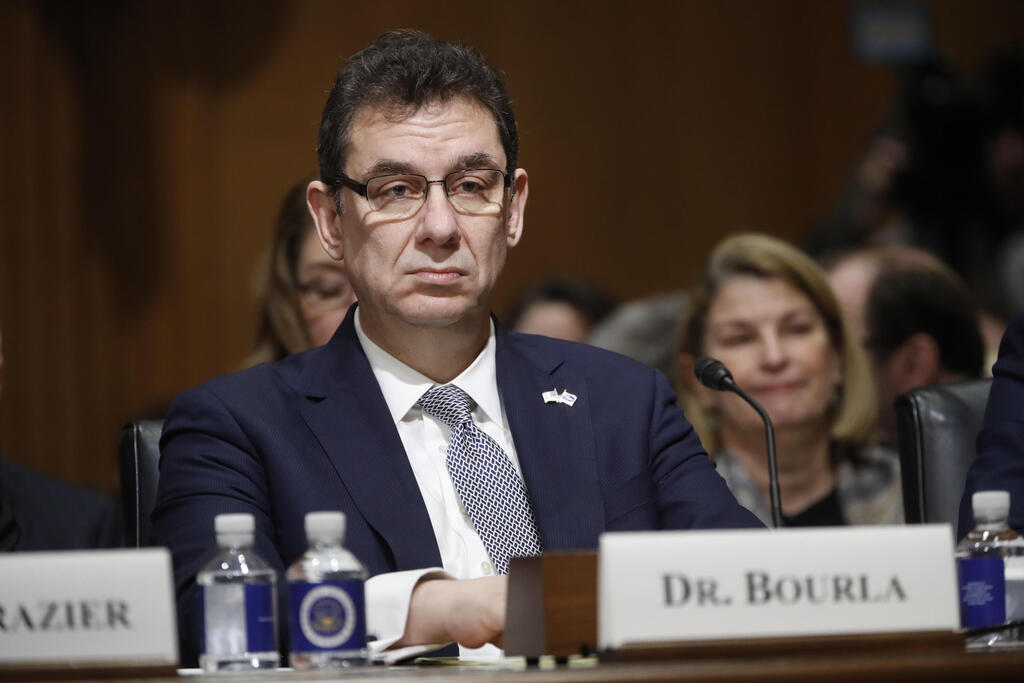
Pfizer CEO Albert Bourla
(Photo: AP)
Meanwhile, Norwegian government officials are reportedly concerned about the potential diplomatic fallout if Trump is passed over — especially amid already strained relations with Washington. Tensions have risen since Norway’s sovereign wealth fund divested from several Israeli companies and Caterpillar over the war in Gaza, prompting threats from the U.S. of increased tariffs on Oslo.
The Nobel Peace Prize, awarded since 1901, is the only Nobel prize not selected by a Swedish committee. Instead, it is decided by a separate five-member committee appointed by the Norwegian parliament, as stipulated in the will of dynamite inventor Alfred Nobel. The prize can be awarded to individuals or organizations. In recent years, winners have included a Japanese anti-nuclear weapons group, imprisoned Iranian women’s rights activist Narges Mohammadi, and human rights defenders from Belarus, Russia and Ukraine. The last head of state to win the prize was Ethiopian Prime Minister Abiy Ahmed in 2019, honored for his peace efforts with Eritrea — though his country later descended into a brutal civil war.
According to betting agencies, this year’s frontrunners include Yulia Navalnaya, widow of Russian opposition leader Alexei Navalny, who died in prison last year, and humanitarian groups operating in Sudan, where a civil war has raged for over two years. Trump is ranked third. Should he lose, observers expect him to lash out on social media — before launching a fresh campaign for the 2026 prize.
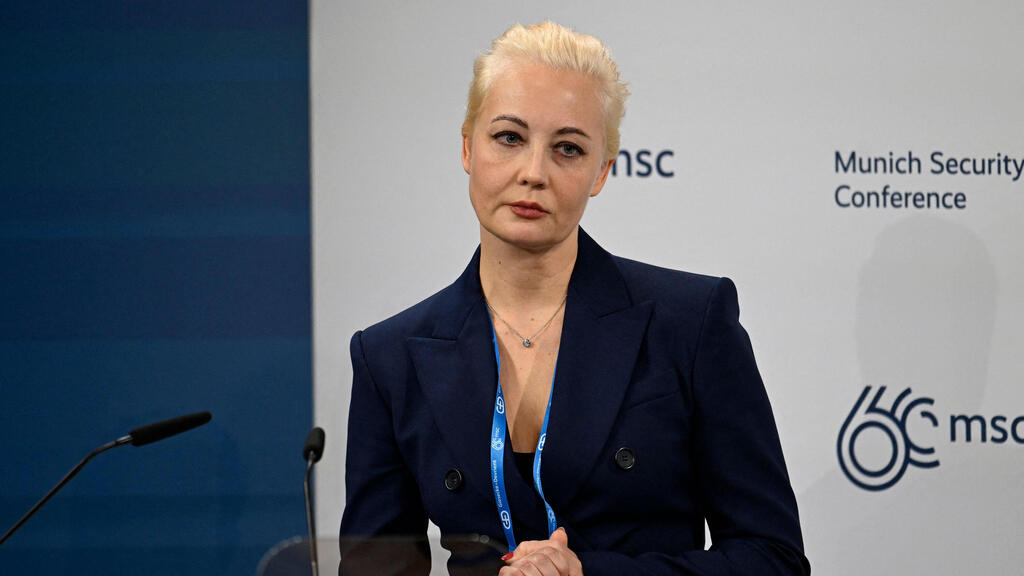
Yulia Navalnaya
(Photo: THOMAS KIENZLE / AFP)
The Nobel announcements begin Monday with the prize in medicine, followed by physics on Tuesday, chemistry on Wednesday, and literature on Thursday. The Peace Prize, along with the economics award, will be announced Friday.
The current chair of the Nobel Peace Prize committee is also head of the Norwegian branch of PEN International, a free-speech advocacy organization. Other committee members include academics and former politicians, selected by Norwegian political parties in proportion to their representation in parliament.
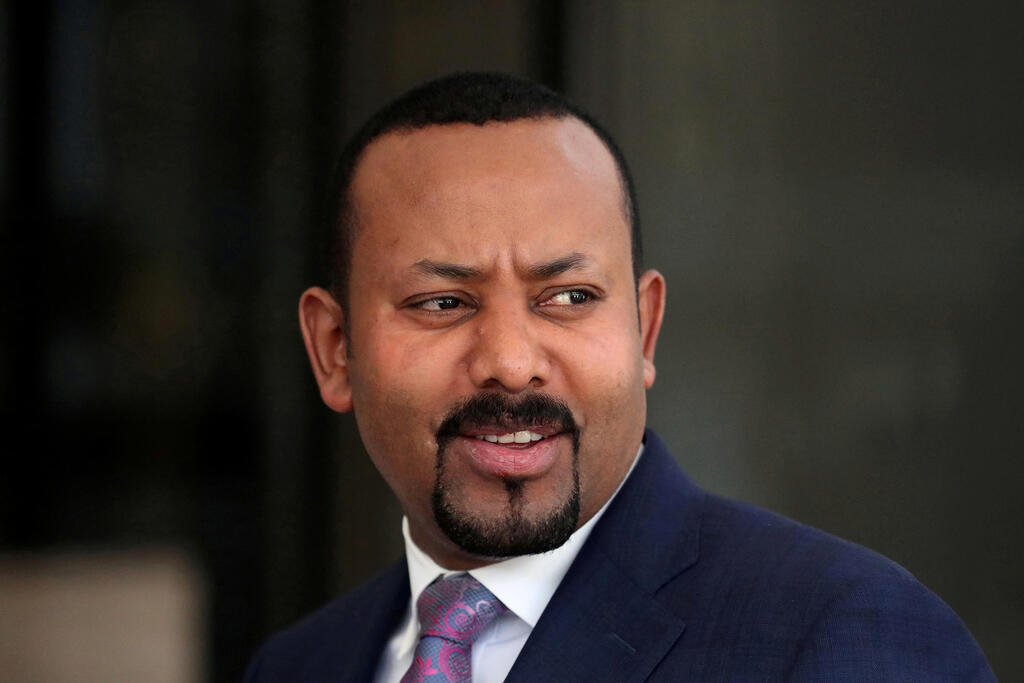
Abiy Ahmed
(Photo: Reuters)
Winners must align with the criteria laid out in Alfred Nobel’s 1895 will, which called for honoring those who have done “the most or best to advance fellowship among nations, the abolition or reduction of standing armies, and the establishment and promotion of peace congresses.” Kristian Berg Harpviken, secretary of the Nobel committee (who participates in deliberations but does not vote), told Reuters that “the prize is awarded based on the global context.”
“The committee members look at the world, consider what’s happening, and examine the major trends, concerns and promising developments,” Harpviken said. “These can range from a specific peace process to a new kind of international agreement under development or recently adopted.”
Thousands of individuals are eligible to nominate candidates, including members of national governments and parliaments, heads of state, university professors in fields such as history, law, philosophy and social sciences, and past Peace Prize laureates. This year, there are 338 nominees, though the full list is kept sealed for 50 years.
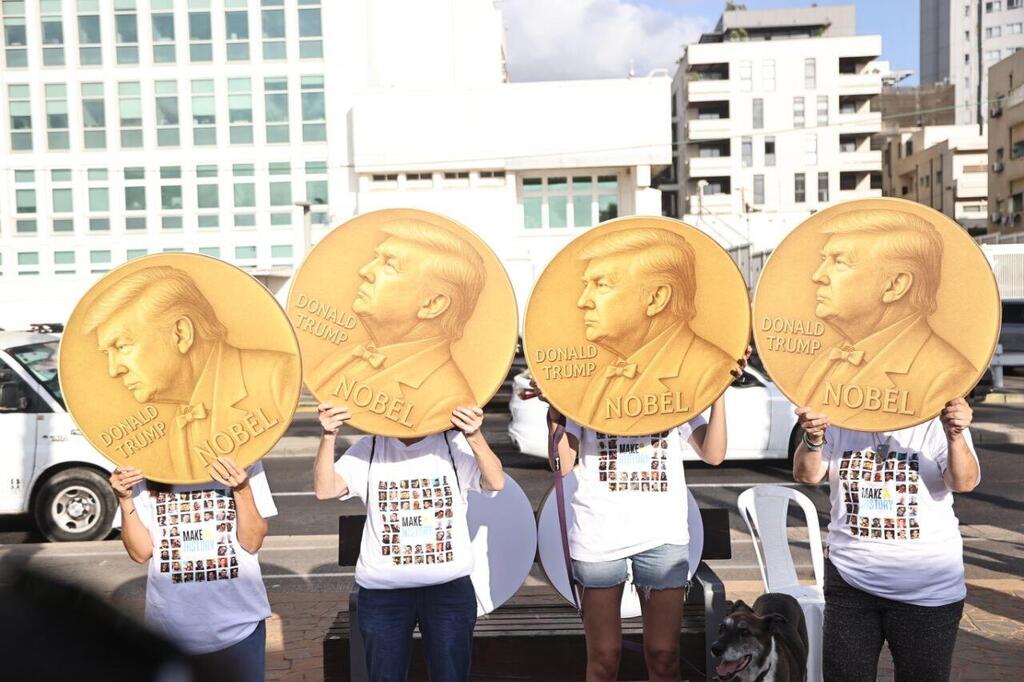
An installation by the families of the hostages in front of the US embassy, in which they 'award' Trump the Nobel Peace Prize, on September 2
(Photo: Moti Kimchi)
Nominations close on January 31. Committee members may also submit names until their first meeting in February. After reviewing all nominees, they narrow the list and evaluate each candidate with the help of a panel of experts and advisors. The committee meets about once a month to discuss the candidates. “The decision is typically made in August or September,” Harpviken said. The goal is to reach consensus, but if necessary, a majority vote decides. The last time a committee member resigned in protest was in 1994, after the prize was jointly awarded to Yasser Arafat, Shimon Peres and Yitzhak Rabin.
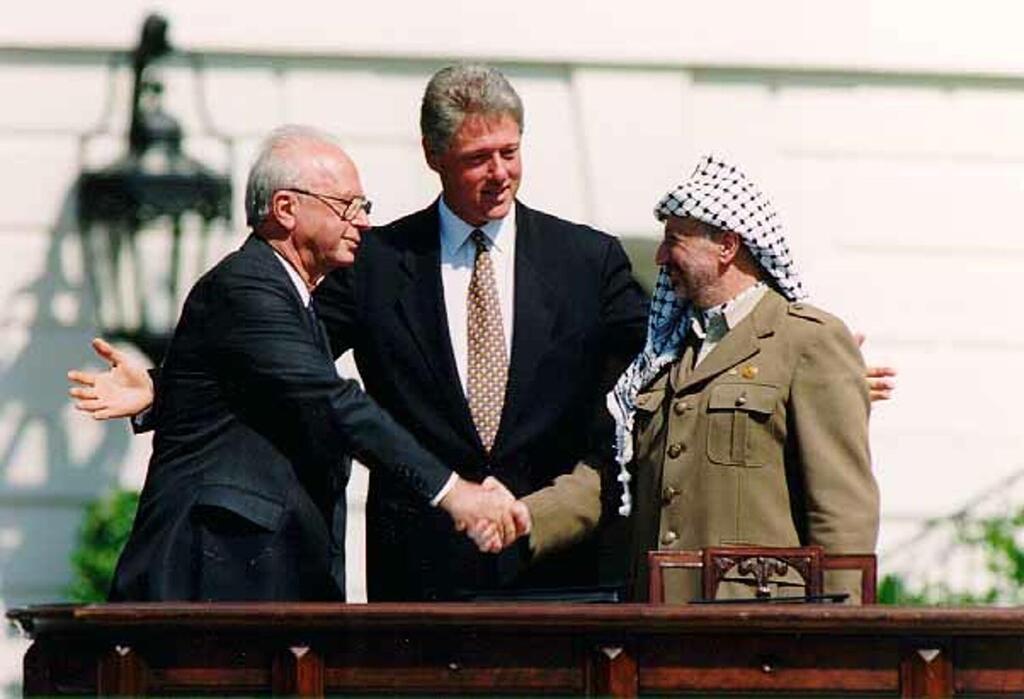
Yasser Arafat and Yitzhak Rabin alongside Bill Clinton
(Photo: Reuters)
While the full list of nominees remains secret, nominators may reveal their choices — though there is no way to verify if the nominations were actually submitted. Besides Navalnaya and the Sudan aid organizations, other publicly named nominees this year include the International Criminal Court in The Hague, NATO, jailed Hong Kong activist Chow Hang-tung and Canadian human rights lawyer Irwin Cotler.
Nobel experts say Trump is unlikely to win unless he dramatically changes course, as his current policies run counter to the international order the committee seeks to uphold. They believe the prize could instead go to a humanitarian organization, journalists or a U.N. institution — but also caution that the committee is known to surprise. Last year’s winner was the Japanese group Nihon Hidankyo, composed of survivors of the atomic bombings of Hiroshima and Nagasaki and dedicated to nuclear disarmament.
The winner will receive a medal, a diploma, and 11 million Swedish krona (about $1.19 million) — along with international prestige and attention. The announcement will take place Friday at 12 p.m. Israel time at the Nobel Institute in Oslo, with the official ceremony scheduled for December 10 at Oslo City Hall, marking the anniversary of Alfred Nobel’s death.