


Ceasefire negotiations between Israel and Hamas will open Monday in Sharm el-Sheikh, with American envoys Steve Witkoff and Jared Kushner expected to join later in the week, alongside mediators from Egypt and Qatar. The discussions appear to mark the most serious progress since the start of the war, and Israel is now closer than ever to the return of all hostages and to an end to the fighting since October 7.
Prime Minister Benjamin Netanyahu initially projected optimism that this time an agreement could be reached, but experience has shown that unexpected obstacles may emerge. Netanyahu said Sunday he “cannot guarantee” that Hamas will agree to release the hostages.
Gallery

(Photo: Andrew Harnik/GETTY IMAGES/AFP, ANDREW CABALLERO-REYNOLDS / AFP, Alex Kolomoisky, AP Photo/Evan Vucci, AP Photo/Ariel Schalit)
Trump: 'Closer to peace in the Middle East'
In the short term, the 20-point plan presented by U.S. President Donald Trump stipulates that once both sides approve the agreement, hostilities will cease, Israel will begin a gradual withdrawal, and all hostages will be released within 72 hours. Israel will withdraw to the “yellow line” shown on a map Trump published Sunday night, leaving it with a continued presence inside Gaza, including along the Philadelphi Corridor and in Rafah in the southern Strip.
At the same time, there will be a broad release of Palestinian prisoners and the return of bodies, with Hamas members offered either amnesty or safe passage to third countries. Humanitarian aid will be expanded significantly and administered by the United Nations, the Red Crescent, and other international organizations, along with efforts to rebuild essential infrastructure and clear rubble.
In the Egyptian talks, the parties will address the remaining gaps regarding the first stage of Trump’s plan, particularly Hamas’s demand to free “symbolic” prisoners such as Marwan Barghouti. Israel is expected to present a list of 250 prisoners serving life sentences whom it is prepared to release, out of 280 such inmates currently held. Hamas is expected to press for greater concessions on this issue, and Israeli officials acknowledge that the room for maneuver is very limited, meaning significant compromise may be required.
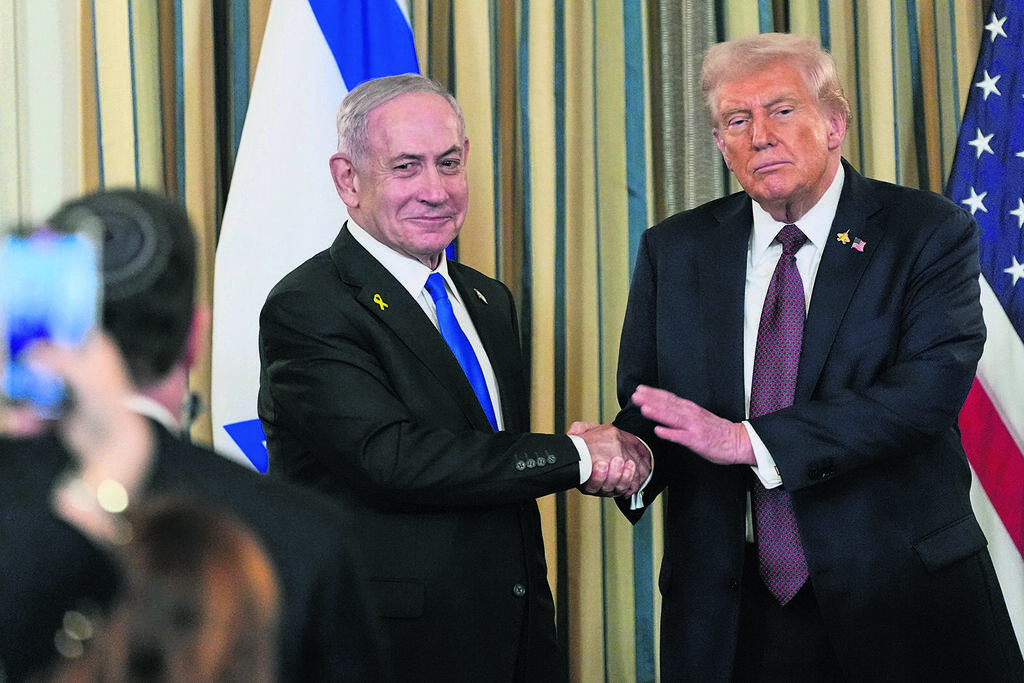
(Photo: Alex Brandon/AP)
According to Trump’s plan, the end of the war will also include the establishment of a Palestinian technocratic interim government under international supervision by a “Board of Peace” headed by the U.S. president himself. The body would oversee reconstruction efforts and raise funding until reforms within the Palestinian Authority allow it to assume responsibility for Gaza. The plan also calls for the demilitarization of the Strip, though it is unclear whether that issue will be discussed in Egypt. Israeli and American officials have described such matters as “technical,” referring only to arrangements tied to the hostages’ release.
Despite numerous challenges, there has been significant progress in Hamas’s agreement to release hostages while Israeli forces remain deep inside Gaza. This marks a sharp departure from the “Witkoff outline,” which had been the main proposal under discussion until now, toward the new “Trump outline.”
The first and most notable difference is that the plan bears the president’s name — signaling that the leader of the world’s most powerful nation is personally taking the lead. Another key change is that while the Witkoff outline envisioned releasing the hostages in two stages, Trump’s plan calls for the release of all hostages at once. That represents a major gain for Israel and a blow to Hamas, which sought to retain the captives as leverage and prolong negotiations. Trump has declared that all hostages will be freed within 72 hours, saying he will not tolerate delays or “games.”
A stronger deal for Hamas, new guarantees for ending the war
Unlike the Witkoff outline, under the Trump plan Hamas receives far more significant guarantees regarding the end of the war. The president’s framework provides greater detail about “the day after” in Gaza, with stronger commitments from Arab states. It also includes an explicit Israeli pledge to avoid annexation — a clause absent from the earlier outline.
In addition, the Trump plan places greater emphasis on creating an Arab multinational force and establishing the “Board of Peace,” chaired by Trump himself, which would be responsible for Gaza’s reconstruction.
To fully understand the shift, one must also look back at the January deal formulated under former U.S. President Joe Biden. That agreement was concluded with Trump’s intervention after his return to the White House. Biden’s administration had the advantage of deep familiarity with the region and a highly structured policy process, yet the results fell short of expectations.
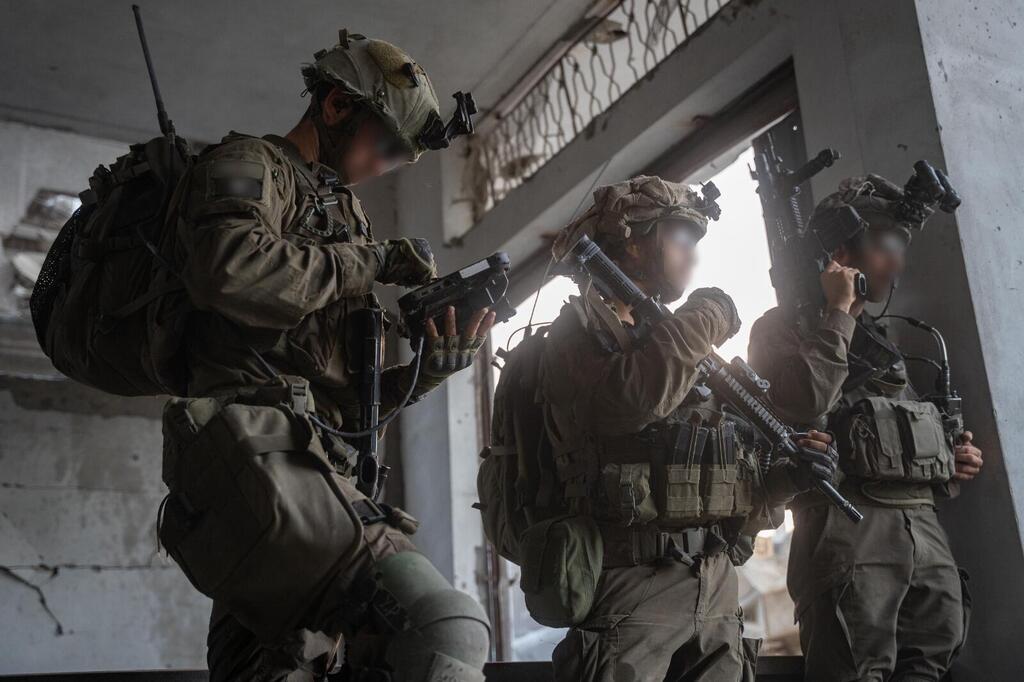
(Photo: IDF)
Trump’s approach is the opposite: no formal policy machinery, unseasoned officials with limited regional expertise, and broad declarations that often lacked substance. His early months back in office were marked by threats to “open the gates of hell,” none of which materialized, and by repeated proposals from Witkoff that produced few concrete results — apart from the release of one captive soldier, Idan Alexander, viewed as a goodwill gesture by Hamas.
The last major deal was reached in January, when 33 hostages were freed. Since then, several further attempts have failed, with both Israel and Hamas accused of torpedoing talks.
Kushner’s involvement credited with diplomatic 'breakthrough'
Developments in recent days are widely attributed to the involvement of Trump’s son-in-law, Jared Kushner — a figure highly regarded by the mediators as the architect of the Abraham Accords. For the first time, Kushner and his team managed to produce what one diplomat described as “a glimpse of strategic genius.”
The Americans succeeded in politically isolating Hamas by forging a new alignment among Turkey, Qatar, and Egypt — three states that previously pursued divergent agendas. By closing off Hamas’s maneuvering space, they prevented the group from playing mediators against one another or shifting between Doha and Istanbul as it had in the past.
Washington also brought new stakeholders to the table, including Indonesia and Pakistan, two major Muslim nations with global influence. But just as the Americans isolated Hamas, they also limited Israel’s freedom of action — effectively “breaking Netanyahu diplomatically,” as one observer put it.

(Photo: Brendan SMIALOWSKI / AFP)
The Trump administration, mindful of its evangelical base, avoided publicly embarrassing Israel as Biden’s team sometimes had. Officials told Netanyahu that Hamas was “the mediators’ problem” and effectively took ownership of the issue, in some cases even speaking on Israel’s behalf.
The Americans declared that the war would end, that an international mechanism would administer Gaza, and that Israel would withdraw in stages. While Netanyahu can claim coordination with Trump, in practice the Americans dictated the terms — albeit with sensitivity to Israel’s conditions, especially the return of all 48 hostages still held by Hamas.
One Israeli official described the new approach bluntly: “The Trump team figured out how to handle the two troublemakers in the neighborhood — Hamas and Israel. They isolated both. Trump dealt with Israel, the mediators handled Hamas.”
Broader interests at play
Each player has larger strategic goals beyond Gaza. For the United States, the plan advances the expansion of the Abraham Accords and opens the way for hundreds of billions of dollars in reconstruction projects — ventures in which Trump’s family is expected to have a role, with Kushner involved in Gaza’s rebuilding.
Trump also has substantial economic interests in Qatar, and for the first time since his return to office he appears to be operating with a clear plan and a coherent coalition to execute it.
A key element of Trump’s strategy was to prevent lawyers and bureaucrats from stalling the deal. “I don’t care about the details,” he reportedly told aides. “First bring back the hostages, end the war, and pull Israel back to the perimeter — then we’ll see. We’ll talk about Gaza’s management and security later. But first, the hostages.”
In doing so, Trump ensured that procedural disputes would not derail the agreement, as had happened earlier with the Witkoff plan. He focused instead on the two sticking points that had blocked all previous attempts: Israel’s reluctance to end the war, and Hamas’s refusal to release hostages without such a commitment.
A senior U.S. official compared Trump’s method to a real-estate deal: “You transfer the money first, then ownership, then delivery. He’s applying the same logic here.”
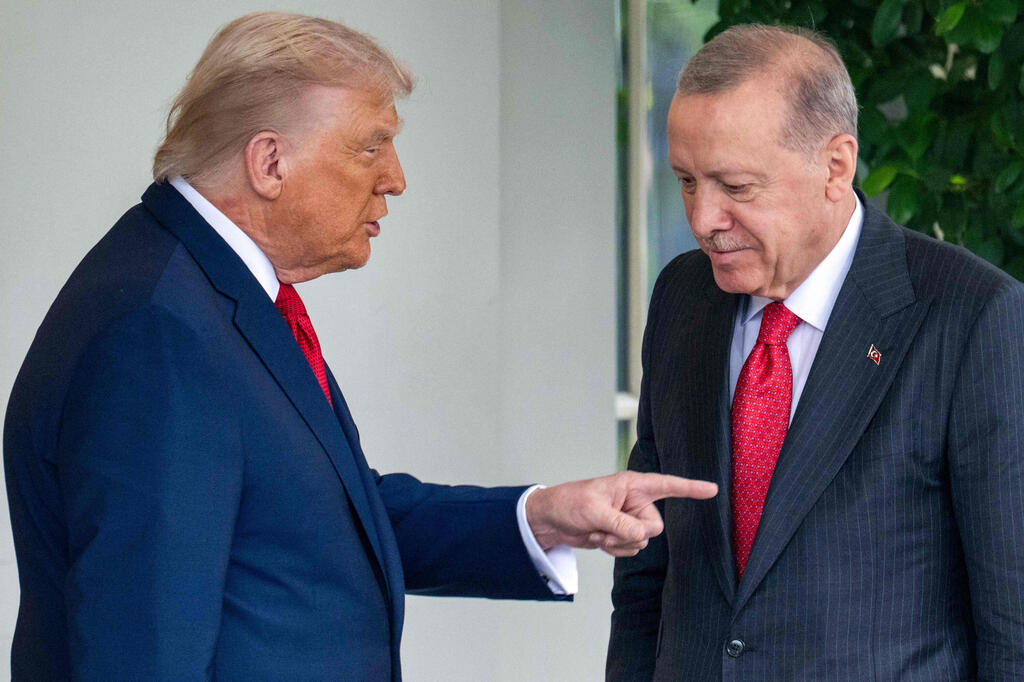
(Photo: Jim WATSON / AFP)
Trump also managed to skillfully enlist Turkey and its assertive president, Recep Tayyip Erdoğan, turning his ambition to Ankara’s advantage. In return, Turkey is expected to benefit from renewed access to American F-35 fighter jets, while Erdoğan — once isolated internationally — now finds himself at the negotiating table with the U.S. president. As one observer quipped: “Hamas for F-35s.”
At the same time, Qatar has secured major U.S. security guarantees that Israel could only dream of. Trump, analysts say, has “paid cash” in diplomatic terms to end the Gaza war — and in return, he could gain something priceless: a place in history and possibly the Nobel Peace Prize “for actions, not words.”
'A comparison between apples and oranges'
Retired Col. Doron Hedar, former commander of the IDF’s General Staff Negotiation Unit, said comparing Trump’s 20-point plan to previous diplomatic efforts is “a comparison between apples and oranges.”
“Over the past two years, the negotiations and frameworks discussed were all partial or phased,” he said. “These included the November 2023 women-and-children deal and the Netanyahu-Biden plan implemented right after Trump’s election and under his pressure.”
According to Hedar, there were additional attempts at partial deals afterward, “but for the first time in two years there is a framework plan that addresses all the issues related to Gaza — and even beyond.”
“In the past, Israel had more influence in shaping what we called ‘the day after,’” he added. “Now the outline is being dictated by the mediators, who effectively presented it as a kind of arbitration proposal.”
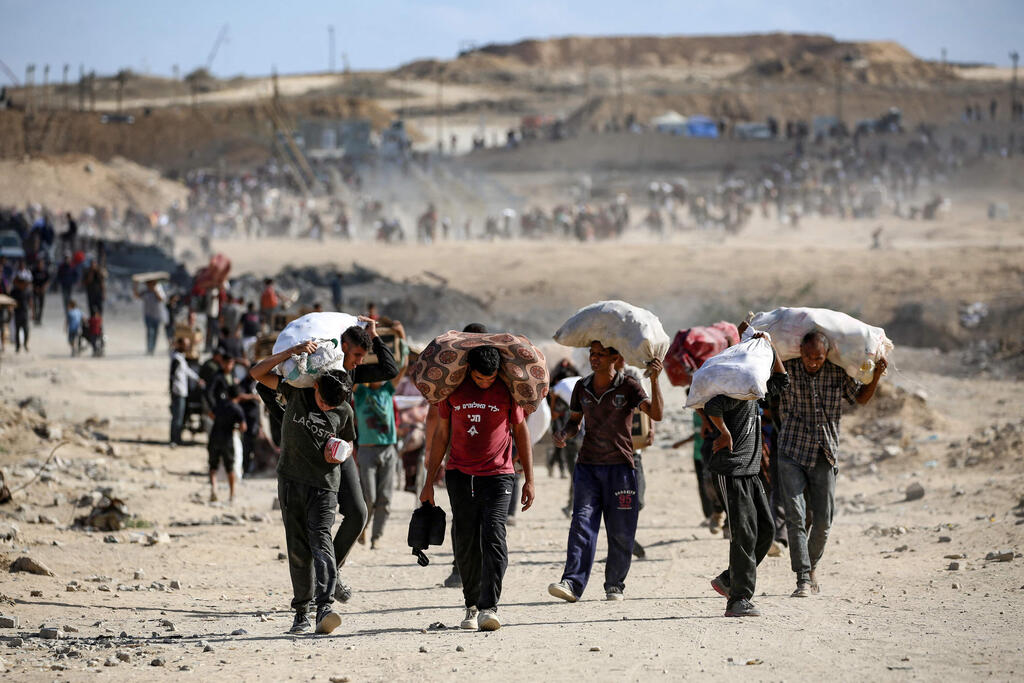
(Photo: Eyad BABA / AFP)
Hedar noted that “there are still gaps to close and details to finalize,” but said it appears Trump and his team will ultimately decide on those issues. “Previously, discussions centered on receiving part of the hostages first, then negotiating a ceasefire, and only later releasing the remaining hostages. Here, the principle is reversed: all the hostages are released first. The ceasefire parameters have been imposed, and the sides can negotiate the details — but not the overall framework.”
From Israel’s perspective, Hedar said, Trump’s proposal has certain advantages over Witkoff’s. Under the earlier plan, Israel would have received only 10 hostages and half of the bodies in exchange for the release of Palestinian prisoners and a 60-day ceasefire, during which the sides were to discuss “the day after.” It was already clear that Hamas would reject Israel’s demands for disarmament and disengagement from governing Gaza.
Under Trump’s outline, Israel would receive all hostages within 72 hours, something that could have happened under Witkoff’s plan only if it were completed in full. In addition, Hamas would be required to disarm, Gaza would be demilitarized, and if Hamas rejects the deal, a joint Arab force would take military action against it.
Israel promises partial withdrawal
In the medium and long term, Trump’s initiative sets out a new security, economic, and political framework for Gaza. Hamas would be excluded from governance, required to surrender its weapons, and see its military infrastructure dismantled.
Unlike Witkoff’s proposal, Trump’s plan includes an explicit Israeli commitment not to occupy or annex the Gaza Strip. Israel would partially withdraw in two stages — first to rear defensive positions following the hostages’ release, then gradually to border areas, in step with the demilitarization process.
In any case, Israel would retain control of the security perimeter and the Philadelphi Corridor, the buffer zone between Gaza and Egypt.
'A bitter pill to swallow'
Retired Maj. Gen. Tamir Hayman, former head of Military Intelligence and now head of the Institute for National Security Studies, said Trump’s plan embraces Israel’s core principles: the immediate release of all hostages, the complete removal of Hamas from power, the demilitarization of Gaza, increased Israeli security oversight, and a lasting IDF presence along the borders — specifically the perimeter and the Philadelphi Corridor.
He said the concept of a Palestinian technocratic administration under international supervision “makes sense.” Officially, it would be a nonpolitical body — consistent with Netanyahu’s demand for an alternative to both Hamas and the Palestinian Authority — but in practice it would likely maintain ties with the PA, as Arab states insist. Evidence of that is found in Clause 8 of Trump’s proposal, which calls for reopening Rafah Crossing under the mechanism established in January 2025, staffed by PA personnel. Several figures marked to lead the new local administration and security force are known Fatah or PA affiliates.

(Photo: IDF)
From a security standpoint, Hayman said, Israel’s gradual withdrawal could help maintain long-term control over key areas — particularly along the perimeter and the Philadelphi route — to protect communities in the western Negev and prevent weapons smuggling from Egypt’s Sinai Peninsula.
Moreover, should Hamas reject the deal, Trump’s plan explicitly allows Israel to continue military operations to clear areas under Hamas control while simultaneously promoting political, security, and civil stabilization in cleared zones.
Restoring the Palestinian Authority
On the diplomatic and civil front, the initiative recognizes the need to rehabilitate the Palestinian Authority. The plan envisions rebuilding Gaza’s governance, infrastructure, economy, and social fabric, as well as countering extremist ideologies — a process of “de-radicalization.”
According to Hayman, these are essential elements for creating “a material and ideological shift” that could stabilize Gaza and reduce incentives for violence and extremism.
He added that the plan’s final clauses imply that if earlier stages — including deep PA reforms and Gaza’s reconstruction — are implemented, “conditions would emerge for a credible path toward a Palestinian state.” That notion, absent from Witkoff’s framework, represents what Hayman called “a balanced formula” — incentivizing Palestinians to adopt a more moderate, peace-oriented political approach while preserving Israel’s security control and avoiding the transfer of sovereign powers until Palestinian leadership fundamentally changes its stance toward Israel.
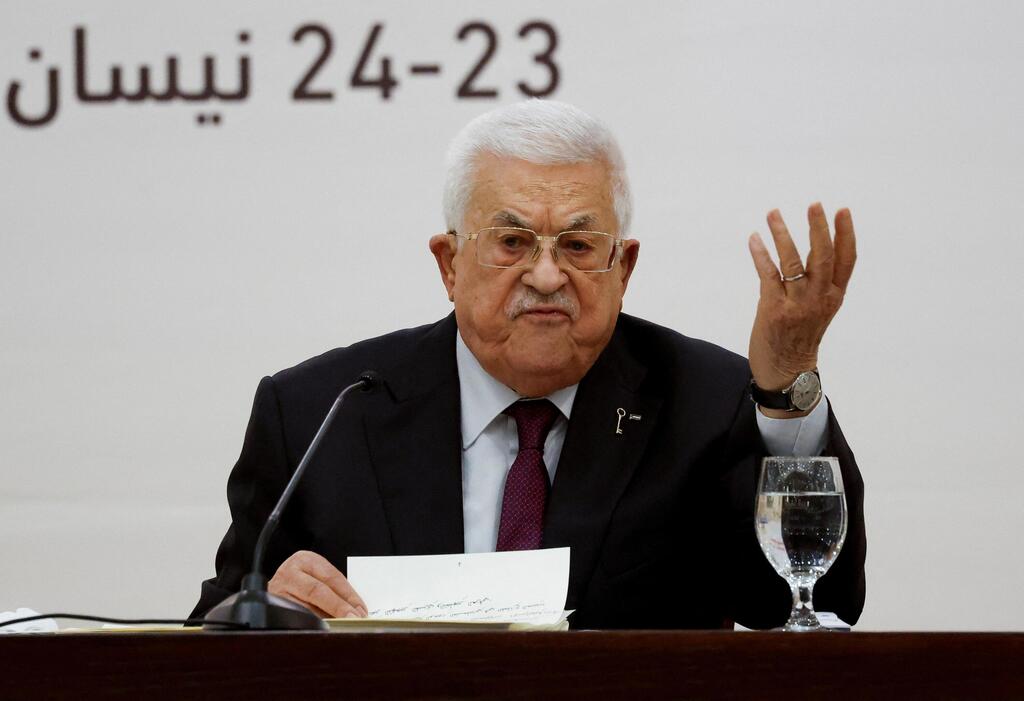
Palestinian Authority President Mahmoud Abbas
(Photo: Mohamad Torokman/Reuters)
Still, Hayman cautioned, the American proposal includes “gaps and weaknesses” from Israel’s perspective. The offer of amnesty to Hamas members who pledge to abandon terrorism, he said, is “a bitter pill to swallow” — emotionally difficult even if not a direct security threat, since Israel would still reserve the right to target any who return to militancy.
Even more troubling, in his view, is the clause allowing Hamas operatives to emigrate abroad, where they could resume activity against Israel. “It’s a tolerable compromise,” Hayman said, “and it aligns with international precedents for dismantling extremist groups.”