

On the same day she attended a memorial for one fallen friend, Adva Segev received news that another had been killed.
“I was at the military section of our cemetery in Modi’in, at the memorial service for Ofir Berkovich, a good friend from high school who fell a year ago in Gaza,” says Segev, 21. “Suddenly, my father arrived at the cemetery and told me that Itay had fallen. I couldn’t believe it was real. That day—almost exactly a year later—two of my good friends were killed in the war.”
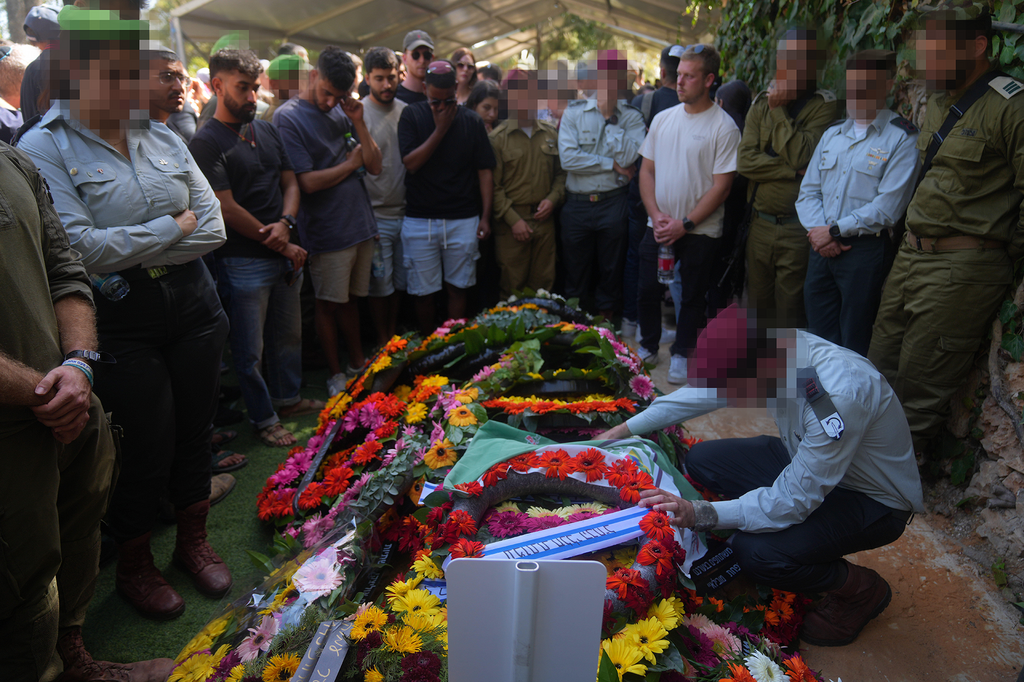
Segev says that eight graduates of her high school in Modi’in-Maccabim-Re’ut have fallen since the start of the war. She herself recently completed combat service that included fighting in Gaza. Now, instead of planning a trip abroad or university studies, she is grappling with the loss of people she grew up with.
“My heart and mind refuse to believe that I’m saying goodbye at Ofir’s grave at the end of the memorial service and walking past a new grassy plot where Itay’s grave will soon be dug,” she says quietly. “Only one row separates them.”
Modi’in-Maccabim-Re’ut, a city of about 110,000 residents midway between Jerusalem and Tel Aviv, has long prided itself on its strong sense of community. Families are connected through schools, youth movements, synagogues, sports clubs, and cultural life.
That tight bond has only deepened as the city confronts grief on an unprecedented scale. Since the start of the war, 35 soldiers from Modi’in—most of them in active duty—have been killed in fighting against Hamas terrorists in Gaza and along Israel’s borders.
On Sunday, Captain Yaniv Kola, a company commander in the 932nd Battalion of the Nahal Brigade, and his communications soldier, Staff Sergeant Itay Yavetz, who lived nearby, were both killed in Gaza.
Residents of the city, who make a point of saluting every fallen soldier on their final journey, came out Monday morning to pay their last respects to Kola before his burial in the military section of Mount Herzl in Jerusalem. They later returned to the streets carrying Israeli flags to salute Yavetz, who was buried in Modi’in’s cemetery.
For years, Modi’in has ranked among Israel’s leading cities for enlistment in the Israel Defense Forces. In 2024, the city recorded a 91.8 percent enlistment rate, with 9 percent of residents serving in active duty, career, or reserve service.
“We grew up alongside the army, which was always in the background,” Segev says. “As children, our parents did reserve duty, the older students enlisted in combat units, and now it’s our turn.”
She adds that in Modi’in, remembrance is woven into daily life. “When I walk, I see the sign ‘Shira Shochet Path’—she was a lookout from our class who was killed on October 7. When I drive, I pass ‘Eitan Karlsbrun Path’ near the Scouts, where I was part of the ‘Amir’ troop, named after Amir Ben Aryeh. I feel a big sense of loss for every person who fell, from our city and beyond. Amazing people who could have contributed so much more to Israeli society.”
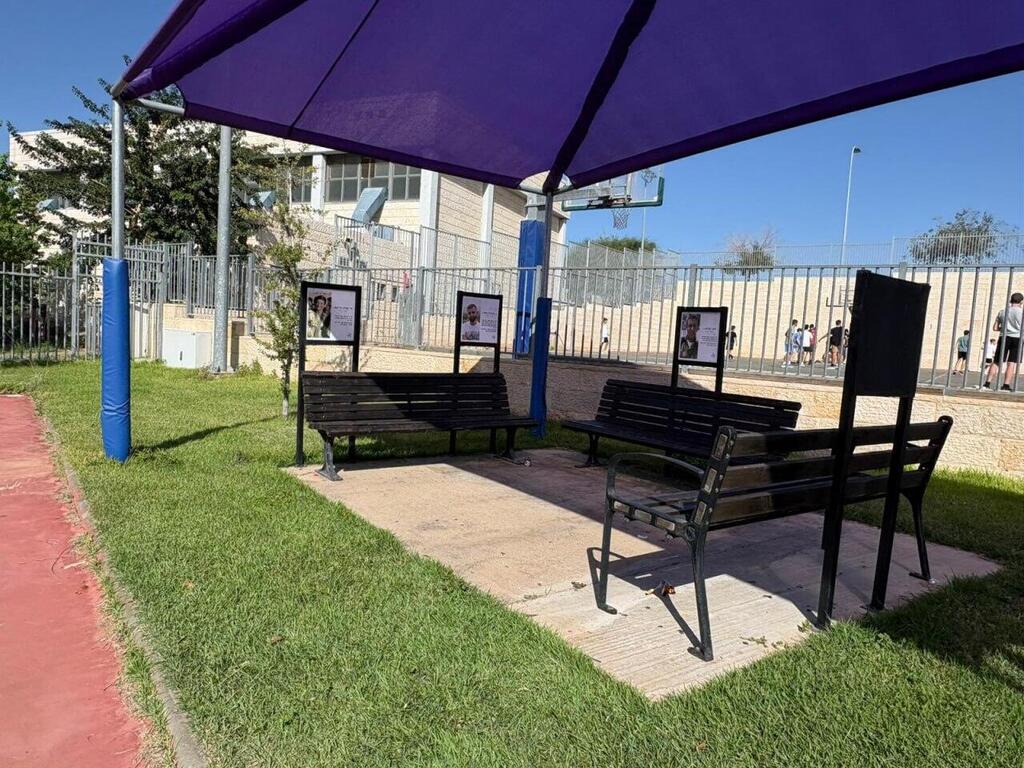
Memorial at Yachad High School
(Photo: Yachad High School)
At Yachad High School in Modi’in, benches and a gym have been dedicated to Ariel Tsym, a former student killed during the war. “Memorialization has become part of the city,” Segev says.
Principal Sagiv Elbaz, who has led Yachad for 13 years, says the past two years have transformed life at the school and across the city. “Every time there’s news of fallen soldiers, I tense up, fearing the moment I’ll receive that call from the family or the municipality,” he says.
In Modi’in, every fallen soldier is commemorated with a park, garden, or pathway named in their honor. Elbaz says the school works closely with the families of fallen alumni. “We’ve created memorial trails, like the gym named after Staff Sergeant Ariel Tsym, who was preparing for service in a combat unit,” he says. “Students remember the fallen in every corner. It’s no longer just a chapter in a history lesson—it’s someone they knew directly or indirectly.”
Elbaz describes himself as a “bereaved principal” and recalls how a staff member asked her son, who is about to enlist, whether he hesitates after hearing of more local soldiers killed. “He told her, ‘It’s our role to carry on their mission,’” Elbaz says. “The loss of students who studied just a few years ahead of them inspires a strong desire to enlist, to volunteer for reconnaissance or combat units, to be on the front lines. They all say, ‘It’s our time to shoulder the burden.’ This is a generation that understands that defending the country is its mission.”
Friends of Itay Yavetz from the army’s Erez program attended his funeral in Modi’in. Friends of Yaniv Kola were there as well.
After Yavetz’s funeral, mourners continued “visiting” classmates from high school, youth movements, or the neighborhood who are buried in the military section. Uniformed soldiers stood silently by the grave of Staff Sergeant Amit Most, a combat medic in the Nahal Reconnaissance Unit who fell in the October 7 battles.
Next to him lies Maj. Adir Meir Abudi, a company commander at the Home Front Command’s basic training base in Zikim, killed in combat with Hamas terrorists. “I knew Adir and Amit, and now Itay has joined the military section,” one soldier told a friend.
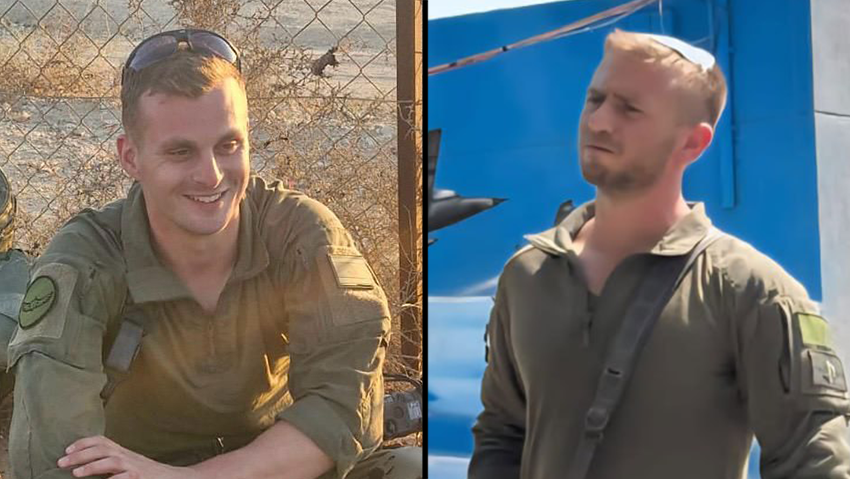
Captain Yaniv Kola, Staff Sergeant Itay Yavetz
(Photo: IDF)
Modi’in-Maccabim-Re’ut Mayor Haim Bibas said the city has endured heartbreaking losses.
“This week we said goodbye to two heroes, two of the city’s finest young men,” Bibas said. “The streets were filled with residents who came out with flags and accompanied them on their last journey. For 16 years now, the city has led in enlistment to the IDF, in combat service, officer training, and meaningful service—among both men and women. The city also leads in volunteer reserve service.”
He recalled the start of the war on October 7, when Hamas terrorists launched a surprise attack on southern Israel, killing civilians and soldiers. “On that morning, thousands of fighters left home for the battlefield—my children, the children of our neighbors, the sons and daughters of this city—who understood the magnitude of the moment, put on their uniforms, and moved south and north to save the country,” Bibas said. “They didn’t ask each other about their political views. They left home together with one clear understanding—they fight shoulder to shoulder to protect our home.”
He added: “My view is clear: service in the IDF is not only a civic duty—it is a moral duty for all of us, as Jews and as Israelis. Every sector of society must take part. The army belongs to all of us; it is our children’s army, and without it we have no country. For the children of our city, this is not a slogan—it’s a way of life.”
“An unthinkable number of soldiers—men and women, officers and commanders, in active and reserve service—from our city have fallen since the start of the war,” the mayor continued. “Our duty is to continue remembering and commemorating every one of them, by naming a path in their honor, telling their story, and passing on their legacy to the next generation. They are our heroes. Thanks to them, we are here.”