


An internal IDF investigation into the battle at Zikim beach and the nearby kibbutz has revealed a stark contrast between the military’s failures and the swift, effective response by local civilian defenders. While IDF soldiers faltered in the face of the Hamas infiltration on October 7, the kibbutz’s alert squad successfully prevented any terrorists from entering the community.
No residents were abducted and the only fatality in the kibbutz area was a civilian — an off-duty Shin Bet officer who was killed during an encounter with terrorists while passing by on a nearby road.
Footage of Hamas infiltration to Zikim beach


The findings echo those of a separate probe into the attack on nearby Netiv HaAsara, underscoring a disturbing pattern: in both locations, IDF forces had no numerical disadvantage, yet their response was marred by critical leadership failures, faulty equipment and a lack of initiative.
In both cases, the small IDF unit was led by a squad commander with a malfunctioning radio who made poor tactical decisions and avoided engagement with the enemy.
Responsibility for early failures lies not with the soldiers themselves but with senior officers in the IDF’s Gaza Division, particularly in its northern brigade. Despite these lapses, no commanders were dismissed or disciplined.
At the Zikim base, for example, the soldier assigned to relay battlefield reports left his command post to seek shelter during the initial rocket barrage at 6:29 a.m., as instructed. For nine critical minutes — an eternity in combat — no one was monitoring the radio or coordinating a response to the breach.
According to the probe, both Zikim and Netiv HaAsara were under the same Golani Brigade unit, operating under the 77th Armored Battalion. Investigators noted multiple severe mishaps during and after the fighting, including the horrifying discovery that seven Israeli bodies were left in a shelter on Zikim beach for an entire week after being killed by grenades and automatic fire.
Despite the scale of these failures, the previous IDF chief of staff, Herzi Halevi, opted not to penalize any officers involved — a decision consistent with his broader policy following the October 7 massacre.
IDF footage of operation at Zikim on October 7
(Video: IDF Spokesperson's Unit)
One particularly chilling moment in the Zikim investigation stood out: six Golani soldiers abandoned their position in the beach parking lot after spotting about ten Hamas terrorists approaching.
"They should have stood between the terrorists and the civilians hiding in the bathrooms and shelters," said an IDF source. "After they retreated, the terrorists killed at least 14 of the 17 Israelis on the beach. The soldiers did not act with the courage expected of them. This was a colossal failure — soldiers in that position are supposed to charge forward, even if it means dying."
The fleeing soldiers also left behind a van, which the terrorists commandeered and drove toward Kibbutz Zikim. Fortunately, a naval lookout spotted the van and alerted the kibbutz’s security coordinator, who quickly mobilized the emergency squad.
Armed and ready, they took up positions around the kibbutz. One alert squad member opened fire on the terrorists after spotting an anti-tank missile launcher in the vehicle.
Critical intelligence gaps and one officer's defiant decision
The soldiers had been stationed in the Zikim area for two and a half months by October 7. The company at the center of the probe had drilled 46 times with the Israeli Navy on handling beach infiltration scenarios.
But when a real attack came on, key systems broke down: the emergency squad leader’s radio failed, severing communication with Navy forces who were engaging Hamas terrorists nearby.

As in other post-October 7 investigations, the Zikim probe found that the "dawn alert" drill, conducted at 5:30 a.m. with just 42 soldiers responsible for the entire sector, was carried out as if it were a routine weekend.
No one in the Gaza Division or IDF Southern Command informed front-line troops of the warning signs detected in Gaza nearly ten hours earlier — signals that were already the subject of high-level security discussions.
The investigation also highlights a breakdown between mid-level commanders, such as the Ashdod Naval Base chief — responsible for Gaza’s maritime zone — and their superiors, who withheld key intelligence even from them.
The Ashdod commander, a captain, participated only briefly in a nighttime consultation. At 4:28 a.m., the Gaza Division contacted him about an unusual sign from Gaza but dismissed it as likely a Hamas drill. Unconvinced, the commander contacted Navy headquarters and the intelligence directorate, only to receive similar reassurances.
By 5:43 a.m., senior Navy officers, including the head of operations and the unit’s operations officer, told him, "There’s nothing — just a Hamas drill. Don’t move forces or act unusually, or you’ll blow intelligence sources."
Nevertheless, the Ashdod commander chose to act. Without informing his soldiers of the threat, he quietly repositioned at least one naval vessel farther south and raised readiness levels at the base.
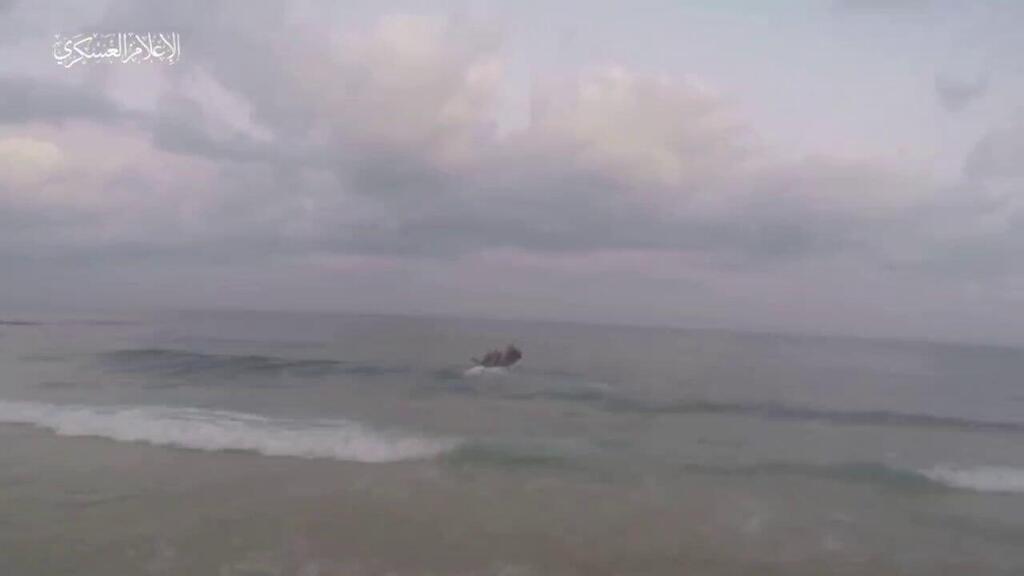
That independent decision proved crucial two hours later, helping prevent Hamas from reaching Ashkelon and Ashdod beaches, nearby gas rigs and the strategic Eilat-Ashkelon pipeline terminal — even though the Navy ultimately failed to stop some terrorists from reaching Israeli shores.
Get the Ynetnews app on your smartphone: Google Play: https://bit.ly/4eJ37pE | Apple App Store: https://bit.ly/3ZL7iNv
‘Soldiers are expected to charge forward, and die if needed’
The central focus of the IDF’s internal investigation was the decision by a Golani platoon commander and his soldiers to retreat from Zikim Beach — seen on security footage as an outright flight — allowing Hamas terrorists to murder civilians hiding there, then continue the rampage using the soldiers’ own military vehicle to reach a nearby kibbutz.
In their debriefing, the soldiers argued that they hadn’t fled but rather repositioned to a more advantageous location. They cited two reasons: intense, unidentified fire nearby — later identified as naval cannon fire from an IDF ship and a belief that the number of terrorists greatly outnumbered them. In reality, it was seven Golani soldiers facing off against ten terrorists.
One of the seven suffered from combat stress reaction during the firefight and another was physically wounded. Four of the remaining soldiers later deployed into Gaza and were not dismissed.
“They didn’t talk about fear in the debrief and they didn’t see themselves as fleeing,” said IDF officials. “They believed they were being flanked. Still, there’s no doubt they made both tactical and ethical errors.” The IDF added: “The soldiers had the ability to neutralize the terrorists. In situations like this, we expect combat soldiers to charge forward to save civilians — and to die if necessary.”
The army noted another possible factor: this was the platoon's “Alon” unit, tasked primarily with operating armored personnel carriers. Though they are certified infantry in training, their operational role typically focuses on fighting from within armored vehicles.
Hamas terrorists at Zikim on October 7
The investigation highlighted additional critical failures. For 40 hours — starting the morning of October 7 and lasting until Sunday night — there was zero operational communication between the Gaza Division’s northern brigade and the IDF’s Gaza naval command.
The brigade reported the beach had been cleared, missing seven Israeli bodies inside a shelter that had been riddled with bullets the previous morning. The corpses were only recovered a week later.
Despite being heavily populated and mere meters from Gaza, Zikim Beach wasn’t designated a “vital asset” like the nearby EAPC facility, border-adjacent communities or strategic military outposts. As a result, the IDF’s response there was insufficient.
The Golani force’s deputy company commander opted to fight from inside an APC with a platoon that came under heavy fire and had its systems disabled, meaning he was unable to influence the battle in the broader sector.
The sector’s field medical post left the area around 6:30 a.m. on orders from field commanders, having been stationed there since late night. The Golani alert platoon had no geolocation beacons, in violation of operational protocols. Meanwhile, access roads in the Zikim area remained open and civilians attempting to flee drove directly into gunfire and were hit.
At the same time, the report praised Golani and Armored Corps troops from the 51st and 77th battalions, who helped prevent mass slaughter in the area’s communities by fighting at multiple enemy infiltration points.
Many fought until wounded or killed. Naval forces continued heavy bombardment from sea to shore that morning, halting a third wave of hundreds of terrorists attempting to storm the Zikim area.
One Maglan commando platoon commander was commended for arriving quickly from home — alerted by a friend from the unit who lived in Kibbutz Zikim. He scouted the dunes, located enemy forces and neutralized them.
Kibbutz Zikim’s 11-member alert squad was also lauded: armed and trained on their own initiative, they quickly mobilized and held the perimeter, preventing any terrorists from infiltrating the kibbutz, where 900 residents were sheltering.
‘There was no army that day, we were betrayed’
The IDF presented the findings of the battle at Zikim Beach and Kibbutz Zikim last week. Residents who attended told Ynet that according to the army, 38 Hamas terrorists reached the beach in seven boats.
They were reportedly under the influence of stimulant drugs. Seventeen civilians were murdered at the beach. When the rocket barrage from Gaza began, fishermen and beachgoers ran to hide in restrooms and a fortified shelter — where they were butchered.

Shahaf Krief
Among the dead was 17-year-old Shahaf Krief from Moshav Gilat, who was gunned down with his friends. His father, Shlomi, said he and his wife chose not to attend the debrief. “We didn’t want to go. I heard Golani soldiers left them in the restrooms. There was no army that day — not the navy, not the air force, nothing. I know that if I’d gone, I would’ve lost it.
“I’m still struggling to keep myself together. How did seven little rubber boats get into the country so easily? What happens when submarines come — where’s the army then? These were just rubber boats. A patrol boat could’ve blown them up in seconds. My wife isn’t the same person. They betrayed us.”
Remembering his son, Shlomi said: “Shahaf was a good kid. He loved helping others, especially kids who were bullied. He never thought he was better than anyone else. He had a ranch, raised and trained horses, talked to them.
“He and his girlfriend, Alina Weisberg, went to Zikim Beach that night with tents and music. When the shelling started, they hid in the restrooms. He filmed everything. He called everyone — except me — because he knew I would’ve come.”
Kibbutz: findings highlight the need for a state commission
Following the debrief, Kibbutz Zikim issued a statement: “The findings presented to the Zikim community are deeply disturbing and underscore the urgent need for a state commission of inquiry into the October 7 surprise attack.
“The IDF failed to stop the naval and ground assault, failed to protect civilians on the beach and only reached the kibbutz at midnight. Residents and their children had to evacuate under relentless fire, entirely on their own. The area wasn’t fully secured for more than a week.
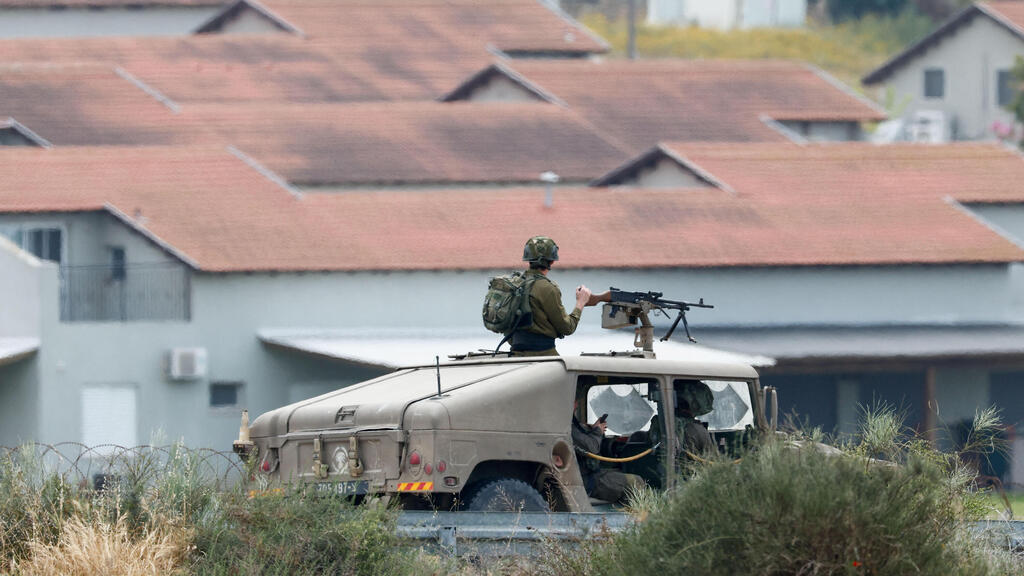
IDF forces overlooking Kibbutz Zikim
(Photo: REUTERS/Amir Cohen)
“Zikim residents deserve complete security and call on security authorities to eliminate all threats to the kibbutz and beach. We demand full implementation of all approved defense measures, tailored to our unique situation as a community near Israel’s maritime border, so that safety in both the kibbutz and the beach is fully restored,” the statement added.
“We deeply honor the bravery of IDF soldiers and security forces who gave their lives in defense of Zikim and mourn all the beloved civilians who were murdered. We are especially grateful to the kibbutz’s alert squad, the security coordinator and all residents who joined them. Their courage saved the kibbutz, blocking terrorists with their own bodies and ingenuity.
“We are also thankful and proud of the soldiers who fought in nearby bases, at sea and along the border, who repelled the continued assault. Despite the horrific failure, the Zikim community is strong. A year ago, we decided to return, rebuild and grow for our members and future generations.
“The kibbutz leadership is committed to ensuring that the rebuilding and development plans for Zikim and the whole region are carried out in full to secure the community’s resilience and future. We continue to pray for the safety of IDF soldiers and security forces and demand the immediate return of all hostages to their loved ones — now.”