


A coalition of more than 100 bereaved families will lead a rally in support of national conscription on Thursday in Jerusalem to protest the draft law currently progressing in the Knesset Foreign Affairs and Defense Committee under the leadership of Knesset lawmaker Boaz Bismuth.
“We united out of a deep moral obligation to ensure that the conscription law promoted in recent days in the Foreign Affairs and Defense Committee, led by Bismuth, does not pass in its current form—a law that does not meet the security needs of the IDF and does not address the reality in which the State of Israel finds itself,” the Families for Conscription Forum said in a statement.
Gallery
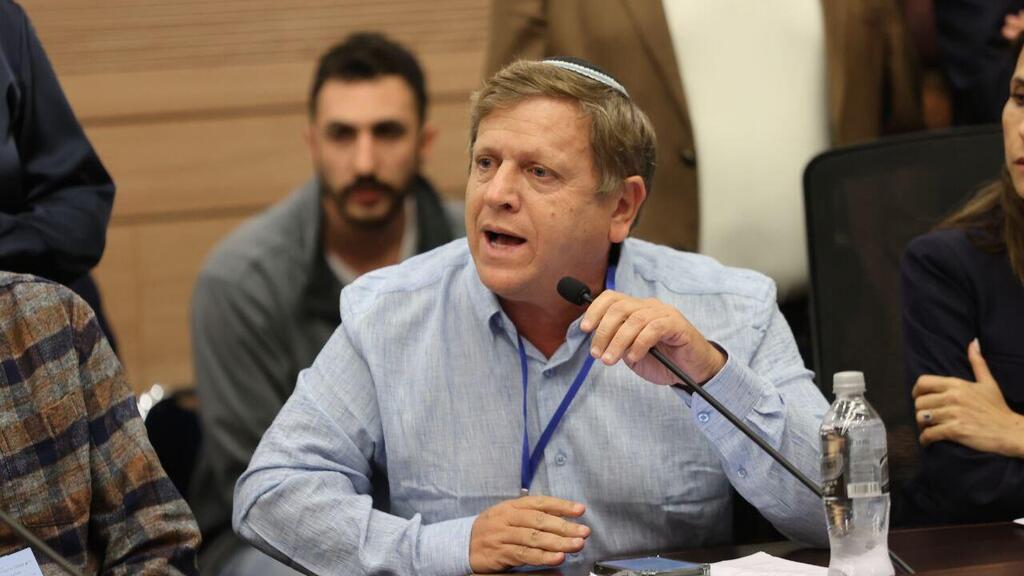
Bereaved father Haggai Luber speaks against the draft bill at a Knesset committee hearing
(Photo: Alex Kolomoisky)
The group said the fight “is not political. For us families this is a battle for the values of the people of Israel and the will of our sons, daughters, parents and spouses who fell in defense of the people and the land. For the simple, basic principle on which the state was founded and preserved: everyone bears the responsibility of service. Our pain is individual, but the responsibility is national.”
The forum urged all citizens to join a march starting at the Strings Bridge at 4:30 p.m. and ending with a rally at the Knesset at 6 p.m. calling for a draft law that meets the state’s security needs.
A coalition of organizations which represents thousands of soldiers and reservists and their families also expressed support and intention to march together.
“This is a natural shared destiny between those who bear the responsibility of military service and sacrifice themselves for the security of the State of Israel, and the families who have already paid the heaviest price. We will march together in Jerusalem for the families in a joint and clear call to the leadership—there must be a different draft law for the security of Israel,” the coalition said in a statement.
'We will not let them differentiate between blood and blood'
Among those marching on Thursday will be Haggai, father of Staff Sergeant (Res.) Yehonatan Luber, 24, who was killed in an encounter with terrorists in southern Gaza on December 25, 2023. Luber left behind parents, eight siblings, his widow Aviya and their two sons—Nachman and Amatzia, who was born after his father’s death.
“When the war broke out we were sure that people who do not enlist, including the ultra‑Orthodox, would change their ways in light of the terrible massacre and the desperate need for soldiers,” Haggai said. “Unfortunately it did not happen, reality has slapped them in the face. Even bereaved families like ours did not make them understand the burden on all of us to get up and enlist.”
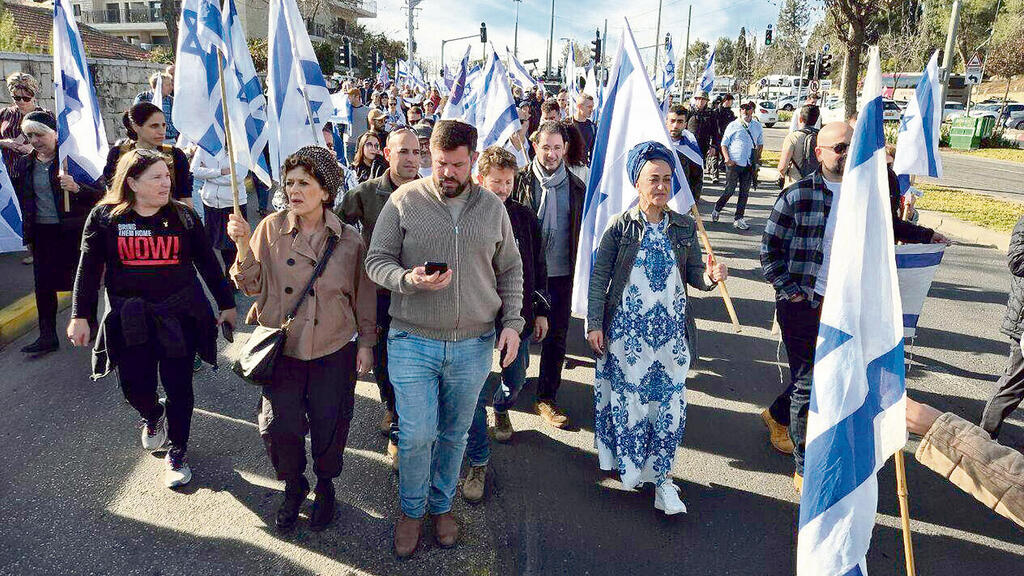
Protest march against the promotion of the draft exemption law last year
(צילום: אלכס גמבורג )
He spoke of his sons, Yehonatan’s bereaved brothers, who returned to fight immediately after their mourning period and completed roughly 900 days of reserve duty together. “My boys returned to Gaza out of deep commitment and understanding that there are no others. If they do not come another border point will be undefended, soldiers will not be protected, terrorists will not be destroyed.”
Haggai said he will march with a clear message: “We will not let them differentiate between blood and blood, sending my remaining children and Yehonatan’s future children to fight without an effective law that ensures that everyone, including all, will enlist.”
He added a message of hope and determination: “Our moral voice, the bereaved families, will be heard loud and clear by Likud and Religious Zionism, and I believe it will lead to a significant radical change. We will be there, we will watch them, and we will hold politically accountable anyone who votes for this law as it is.”
'A matter of security'
Also marching is 35‑year‑old Benjamin Frankel from Yatir, married to Michal and father to three children: Roi, 5, Ori, 3 and Shir, 1. Frankel served in the reserves with the 205th Brigade until he was wounded on August 5, 2024 near Khan Younis by an explosive device.
“It happened during my second reserve rotation after about 100 days of duty. We went to search and clear a suspicious structure. When I advanced with my team, the device exploded and I lost consciousness,” he recalled.
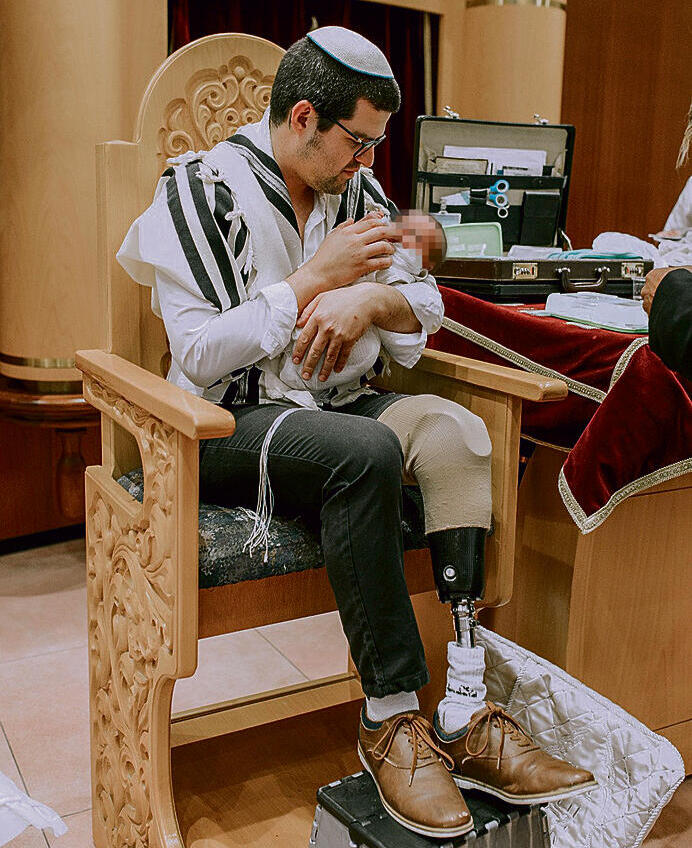
Benjamin Frankel lost his leg in an explosion in Khan Younis during reserve service
Six soldiers were wounded in the incident and Frankel lost a leg and was injured in his eye and hand. “I feel that if we had gone on that mission with more engineering support and less worn‑out fighters I might have two legs today,” he said, lamenting the heavy physical price he paid, which he believes could have been avoided if manpower shortages flagged by security forces had been properly addressed.
Frankel, active in the Forum of the Religious Nationalist Reservists, said the need to increase combat manpower is not just a theoretical debate about equality and justice, but a security issue. “How many more bereaved families will there be in the next round, how much security will remain in the field, how many forces will be in the air and on the ground—when all this is tied to the real combat force required by the field.”
'Turn the tables'
Also marching will be 38‑year‑old Avital Abramzon of Ness Ziona, a co‑founder and leader in the “El HaDegel” (To the flag) movement. She is married to Capt. (Res.) Eitan and they have three children: Ori, 9, Malachi, 6 and Ma’ayan Chaim, 2.
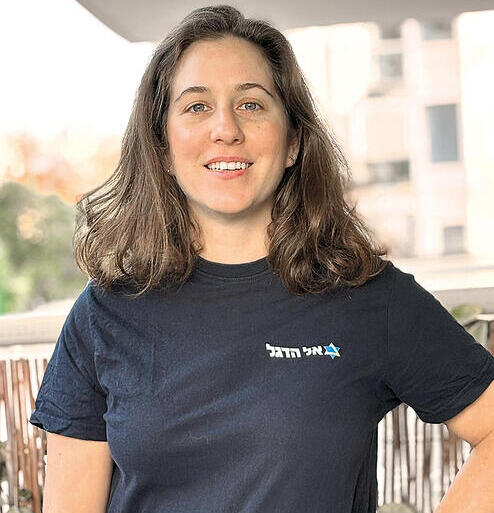
Avital Abramzon is a co-founder of the El HaDegel group
“There is an amazing generation that went out to fight, and it is important that it be represented in leadership," she says. "A generation that wants to implement Zionism, that does not engage in politics—sees what is good for the state and the people of Israel. We initiated a proposal that defines the status of Torah scholars. In our view we need to turn the table—the correct basic assumption is that everyone enlists, except a defined quota of Torah scholars.”
In November 2023, Eitan, who serves in the Negev Brigade, was seriously wounded in an encounter with terrorists in Beit Hanoun. “I was very anxious that something would happen to him, and in the end I got that phone call. It was a relief to hear his voice, because he was alive. After that started a very long rehabilitation journey that continues to this day,” she said.
She described the severe clash in which 13 soldiers were wounded and how her husband miraculously survived. “Even after he fell from three stories, the terrorists shot at him. Today he uses a cane because of a spinal fracture, his mobility is limited. He can no longer hike with us or run around with the children, we have parted with things we knew and dreams we dreamed,” she explains.
Abramzon said her professional life was also affected by Eitan’s injury. “Eitan is a dentist by profession, he can hardly return to work. My own career has been diverted, life shifted, changed a lot. We are still rebuilding—we are adapting to a reality forced on us," she says.
When she joins the bereaved families on Thursday, Abramzon said she wants to bolster their call. “We understand that the current law is dangerous, does not meet security needs and is morally warped. We call together for a real draft law,” she concluded.
'The next generation of the IDF'
Among the marchers will also be Hillel Azoulay, 17, from Jerusalem, a 12th‑grade student at Shaharit High School. He plans to complete a year of service with the HaShomer HaChadash and then enlist in a significant combat role.
During the war he coped with the painful loss of Staff Sergeant Shoham, an Armored Corps fighter from the 401st Brigade. “Yuval was my brother’s best friend, and my family and I were privileged to know him. His death shook me deeply. He was a great man with an even greater heart. Loving, attentive, smart and funny,” he said.
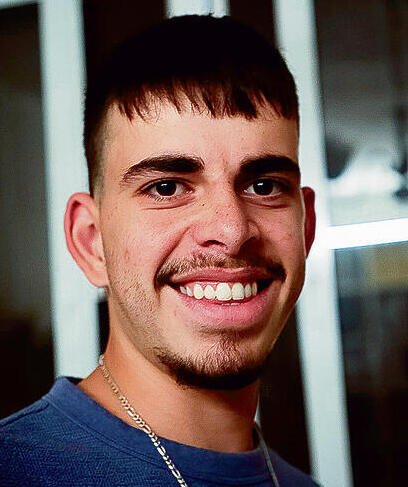
Hillel Azoulay, 17, is ready to do 'significant' military service in a combat unit
“Yuval taught me many things, most notably the importance of enlistment and service. It drove him crazy that there was inequality, it was really in his nature. His death increased my motivation to enlist in an elite unit. I am the next generation of the IDF, I will do everything I can to contribute as much as possible,” he said.
These beliefs also led Hillel to stand with the bereaved families on Thursday. “I am disappointed in public officials who do not stand behind us and do not ensure that this difficult mission will be shared equally by all," he explains. "It cannot be that there are people whom our public officials exempt from it, it is important that everyone share the burden.”