


Since the release of 20 living hostages in mid-October, Israel has been swept by waves of emotion — a mixture of joyful reunions and painful funerals. Amid the hugs, tears and celebration, there have also been days of grief, deep disappointment and fear among families of the hostages still held in Gaza — a fear of being the last ones left, of being forgotten.
With the return of Lt. Hadar Goldin’s remains on Sunday, four hostages are still believed to be held dead in the Gaza Strip: Ran Gvili, Meny Godard, Dror Or, and Sudthisak Rinthalak.
Gallery
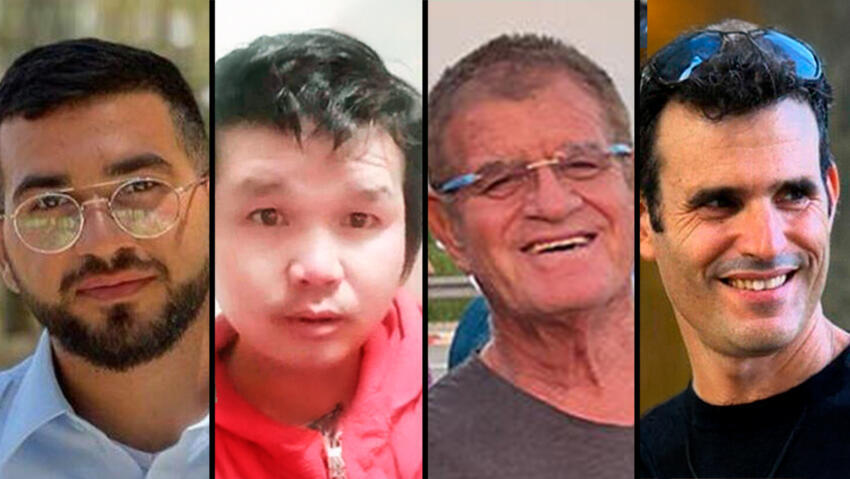
The four remaining hostages in Gaza; from right: Dror Or, Meny Godard, Sudthisak Rinthalak and Ran Gvili
(Photo: Police Spokesperson, Courtesy of the family, Blue Ribbons)
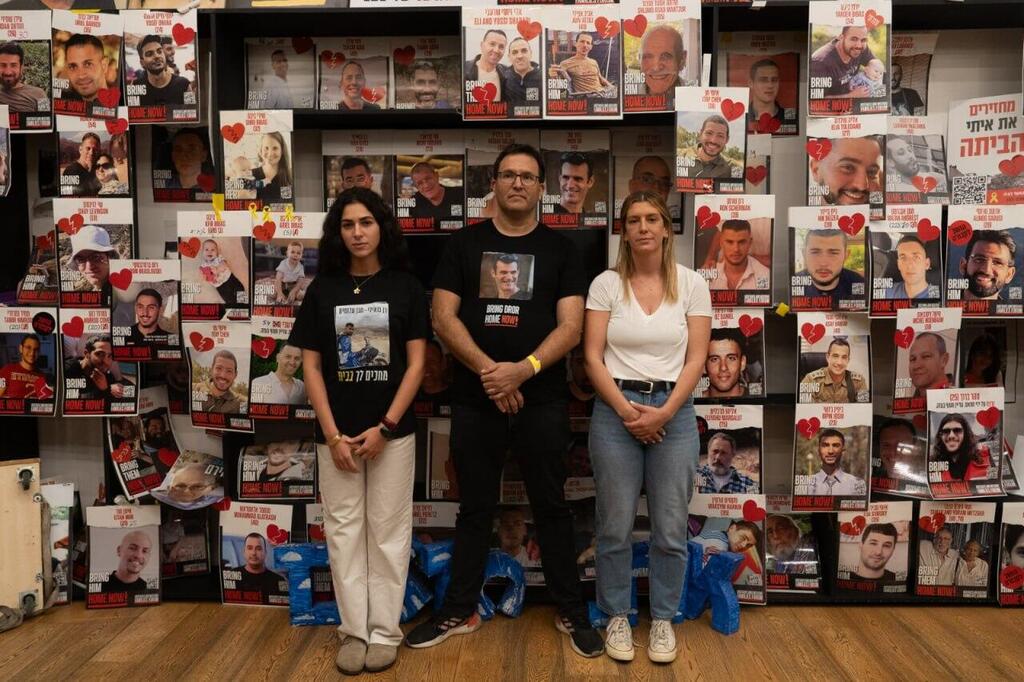
From right: Bar Godard, Elad Or and Shira Gvili
(Photo: Dana Reany)
Their families share one hope: that the Israeli public and leadership won’t let the issue fade from public discourse or from the national agenda. “It’s not over until it’s over,” said Elad Or, brother of Dror Or.
‘The emotions are mixed’
Elad has been living through emotional extremes for the past month. “The emotions are mixed — even today,” he said. “You can’t describe the excitement at the Saturday night rally when we saw the hostages who returned. And at the same time, we watched the funeral of Itay Chen and are now preparing for the funeral of Lior Rodaeff. Things are moving forward. We are truly happy for others. But alongside that joy, there’s fear — the fear of being the last ones left. Of being forgotten.”
He emphasized that the mission is far from complete. “It’s not over until Dror, Ran Gvili, Meny Godard, and Sudthisak are back. We’re asking the public to keep holding this with us.” Elad added that he’s aware of information indicating that rescuing some of the remaining hostages will require a complex engineering and logistical operation, which the IDF is already preparing for. “We need more time,” he said.
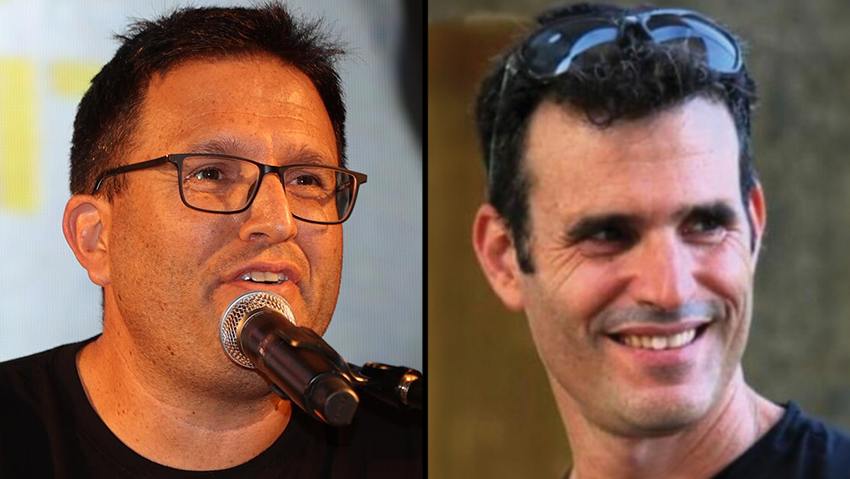
Elad Or and his brother Dror
(Photo: Yariv Katz)
Elad also expressed frustration over recent public discourse on the hostages. “We’ve seen posts saying, ‘Goldin or go back to fighting.’ That makes me sick. The American guarantees are what made the recent progress possible. We’re hanging on with our last strength — I don’t even know where we’re finding it anymore.”
Beyond personal pain, Elad noted the deep bonds that have formed between the hostage families. “We’ve known the Godard family our whole lives,” he said. “Ayelet and Meny Godard are my parents’ closest friends. The Gvili family shares our fate. Ran fought and was killed. For me, bringing back Meny or Ran is like bringing back Dror.”
‘Fear that my dad might not come back’
Bar Godard, daughter of Meny, shared her experience after witnessing the convoy that returned Hadar Goldin’s remains. “It feels like an emotional storm,” she said. “Each person who comes back is a piece of our heart returning. I can’t explain how much it helps us breathe again when one of them comes home.”
But the joy is shadowed by fear. “The other side of that coin is fear. Fear of being left alone. Fear of being forgotten. Fear that my dad might not come back. Everything feels so fragile.”
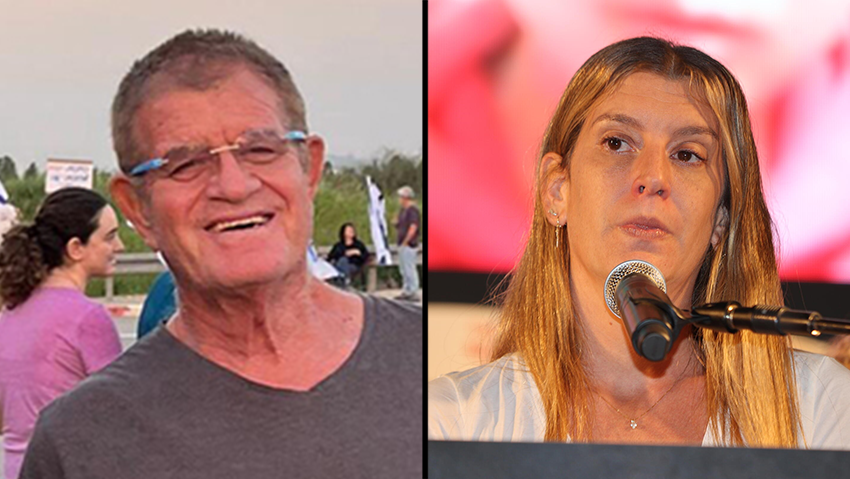
Bar Godard and her father Meny
(Photo: Yariv Katz)
Bar described a month of upheaval. “After a month full of devastating disappointments and also good news, we’re still paying the highest price. We lost our mother. We lost our father — and he still hasn’t come home. We are the face of this bereavement. And if there is an ending, even in the best case, it will be a very sad ending.”
She recalled a moment just before the Oct. 7 massacre. “Dror and Elad’s father told me that on October 5, they were at my parents’ house until 1 a.m., drinking wine. The things they were worried about then — how different they are from today.”
Bar spoke about the close connection with the Or family: “They’ve been family to me for as long as I can remember. They lost their parents in Be’eri, too. Their kids are waiting for their dad to come back from Gaza, just like we are.”
About the Gvili family, she said: “We met at Gal Hirsch’s. They touched my heart. I pray their pain ends soon.”
She also expressed regret to the Goldin family. “I’m sorry for all the years I wasn’t by your side. I didn’t understand. I admire you. And I now feel that the people of Israel have proven that ‘until the last hostage is home’ is not just a slogan.”
‘I knew we’d be among the last’
Shira Gvili, sister of fallen soldier Ran Gvili, describes an emotional reality filled with dread. “It’s the most surreal and expected situation in the world,” she said. “I knew we’d be among the last, but I didn’t know just how much.” The fear, she explained, is constant: “It’s the fear of being left behind. It never leaves your thoughts. I’m out of words. We’re living without energy,” she added. “I always had a feeling he would be one of the last — because so little is known about him.”
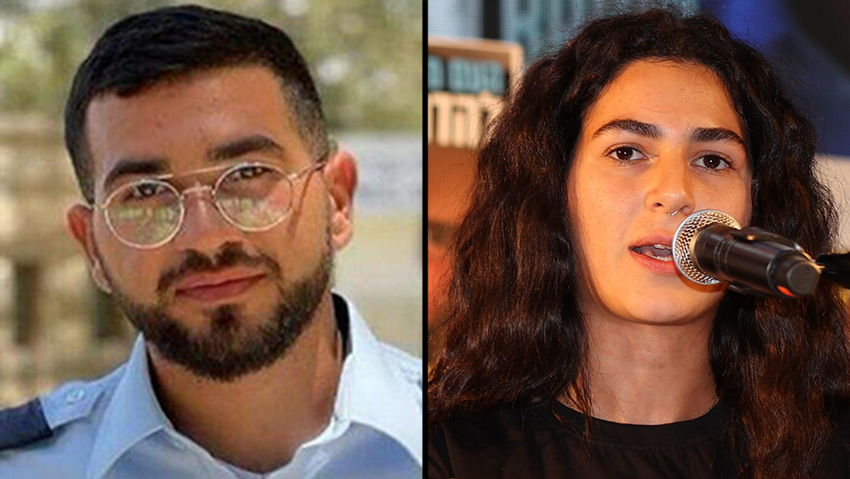
Shira Gvili and her brother Ran
(Photo: Yariv Katz, Police Spokesperson)
Shira also described a strong bond with the families of Dror Or and Meny Godard. “These are incredible families,” she said. “We’ve talked about how we need to unite. But every day is critical. Every day we might be left alone in this battle.” Despite the pain, she also feels supported by families whose loved ones have already returned. “They’re still in this with us. That warms our hearts — that even those who’ve come home haven’t left us behind.” Then, with a lightness that barely masks her anguish, she added, “They’re saving the best for last.”
Funeral with only his photo
The family of Sudthisak Rinthalak, a Thai national from Nong Khai Province, remembers him as the backbone of their household. He came to Israel in 2017 with friends to work in agriculture and support his aging parents. On Oct. 7, he was murdered in an orchard near Kibbutz Be’eri and abducted. He was 43.

Sudthisak Rinthalak
Reports in Thailand say Sudthisak left behind an older brother and had no children. His aunt said that while working in Israel, he remained in regular contact with his family. After news of his abduction, his mother, Orn, was hospitalized. In May 2024, the family was officially informed that he had been killed on that tragic Saturday. “I had already come to terms with it, but my wife was in tears,” his father, Thong-ma, told local media.
After receiving the news, the father called on Hamas to release the remaining hostages, explaining that the Thai workers kidnapped from the Gaza border region “came looking for work to escape poverty and in hopes of a better life.” He said only his eldest son remains at his side to care for him. With visible grief, the parents said they are still hoping to see their son returned from Gaza — and if not, they will be forced to hold a funeral with only his photo.