

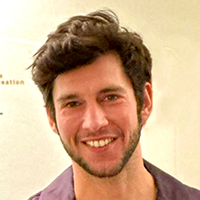
A secretive and reportedly amateur rescue operation, carried out in March on behalf of U.S. President Donald Trump, aimed to extract three Americans sentenced to death in the Democratic Republic of Congo for alleged involvement in a failed coup in May 2024. The mission collapsed within two days.
The bizarre case—still shrouded in mystery—has two Jewish-Israeli angles. One of the three Americans sentenced to death was Benjamin Reuben Zalman-Polun, a Jewish man with family ties in Israel, who was rumored to be a Mossad agent. Another was Israeli-American businessman Moti Kahana, who participated in the attempted rescue.
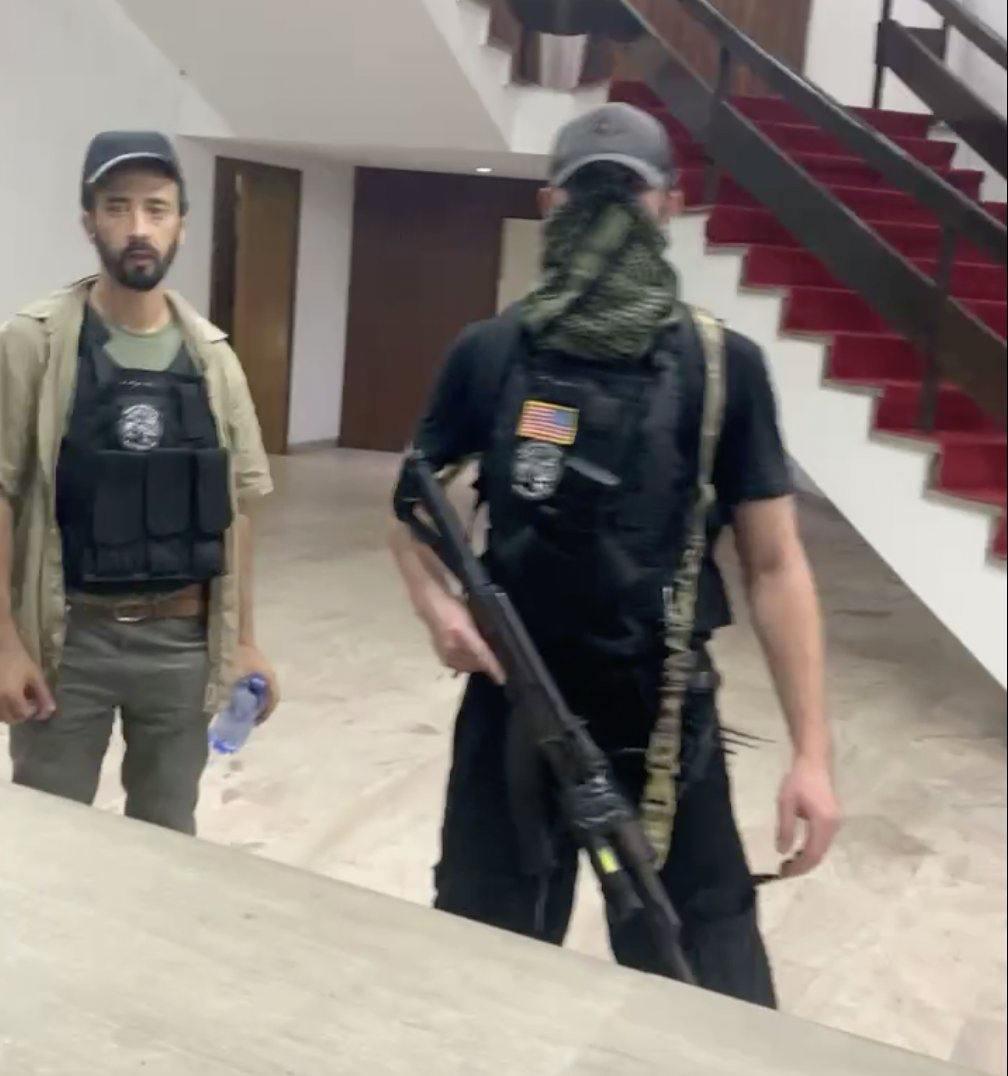
The three men's death sentences were reportedly later commuted to life in prison and they were extradited to the United States as part of a diplomatic-security agreement. They are now in federal custody awaiting trial for allegedly conspiring to overthrow a foreign government.
In exchange for their release, the U.S. reportedly agreed to support Congolese efforts to defend against Rwandan military forces operating in eastern Congo, and in return, secured access to the country’s strategic mineral resources.
Kahana, who previously coordinated humanitarian evacuation operations in Afghanistan and Ukraine, is CEO of the logistics firm GDC. The company was briefly considered as a contractor to deliver humanitarian aid to Gaza—though, according to Kahana, it was ultimately rejected due to his criticism of Prime Minister Benjamin Netanyahu and his refusal to pay a "commission" to an intermediary linked to an Israeli politician.
Kahana and his company operate in a fluid space between humanitarian logistics and ad-hoc diplomacy, with projects spanning Asia and Africa. Some efforts end in contracts, others in headlines—or risky adventures.
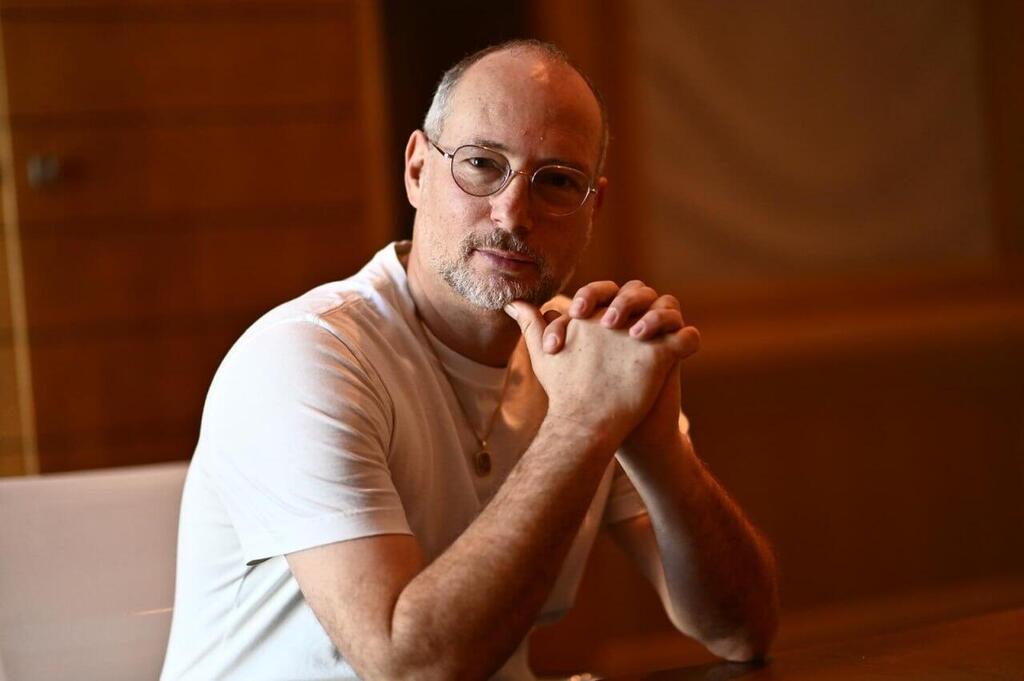
Moti Kahana
Ahead of the attempted rescue this past spring, Kahana assembled an unofficial delegation that included two other men: Justin Sapp, a former U.S. special forces operative, and Stuart Seldowitz, a former Obama administration diplomat who previously faced allegations of a hate crime after being filmed berating a Muslim food vendor in New York.
In March, the three arrived in Kinshasa, the Congolese capital, in vehicles bearing diplomatic plates. Their stated goal was to secure a meeting with Congolese President Félix Tshisekedi.
Get the Ynetnews app on your smartphone: Google Play: https://bit.ly/4eJ37pE | Apple App Store: https://bit.ly/3ZL7iNv
Kahana had previously met with Tshisekedi on the sidelines of the World Economic Forum, warning him of an alleged coup plot involving foreign actors, including Israelis. During that meeting, he handed Tshisekedi an envelope containing a list of names he claimed were key conspirators. One of the names was Gen. Frank Ntumba, head of the presidential guard, who later discovered who had leaked his name.
However, the trio’s planned meeting with Tshisekedi during the March mission never took place. Instead, Kahana, Sapp and Seldowitz were invited to a dinner at a secure compound operated by a local Israeli security contractor inside a military base. Among those present were a French-Israeli arms dealer with longstanding ties to the Congolese regime and several other security figures.
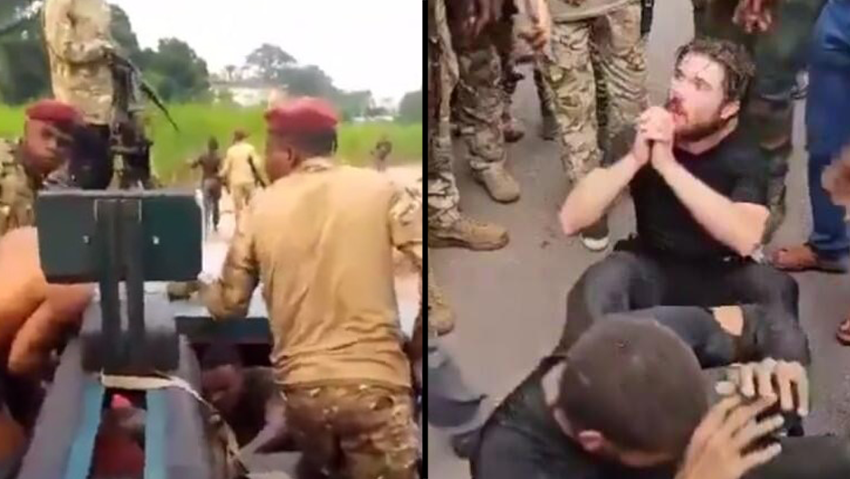
The arrests of the suspects
What happened after the dinner remains disputed. Kahana and his team said they were invited by their hosts to a nighttime shooting range session “for fun,” while Congolese intelligence services later claimed it was a cover for an assassination plot.
Later that night, the three Americans returned to their hotel—only to be confronted in the lobby by Gen. Ntumba, the same official Kahana had once allegedly implicated. Ntumba demanded their passports. Fearing arrest, one of the men contacted U.S. Ambassador Lucy Tamlyn in Kinshasa, who dispatched armed embassy staff to extract the group and take them to the airport in a diplomatic vehicle.
Though the men managed to board an Air France flight bound for Paris, they were removed before takeoff and taken for questioning. Their release came only after renewed U.S. diplomatic intervention, including a message from Dustin Stewart, deputy special envoy for hostage affairs at the White House, assuring Congolese officials the men were not impostors.
Even as the three were eventually cleared for departure, witnesses reported that Congolese military vehicles raced to the runway in a failed attempt to block the plane from taking off. Kahana later described the three days in Kinshasa as “the most terrifying time of my life.”
Despite the mission’s failure, both Kahana and Trump administration officials insisted it had succeeded in delivering a clear message to Congo: Washington was serious and ready to negotiate. Soon afterward, the U.S. and Tshisekedi finalized an agreement linking American military assistance to Congo with access to the country’s strategic mineral resources.