

The fourth annual MEAD Conference, which brings together participants to discuss regional security cooperation, was held this week in Washington at one of the most sensitive and consequential moments since the forum was established.
The gathering came amid uncertainty over the future of the confrontation with Iran, continuing threats across the region and ahead of two elections likely to shape the next phase of relations between Jerusalem and the White House: Israel’s election and the U.S. midterm elections.
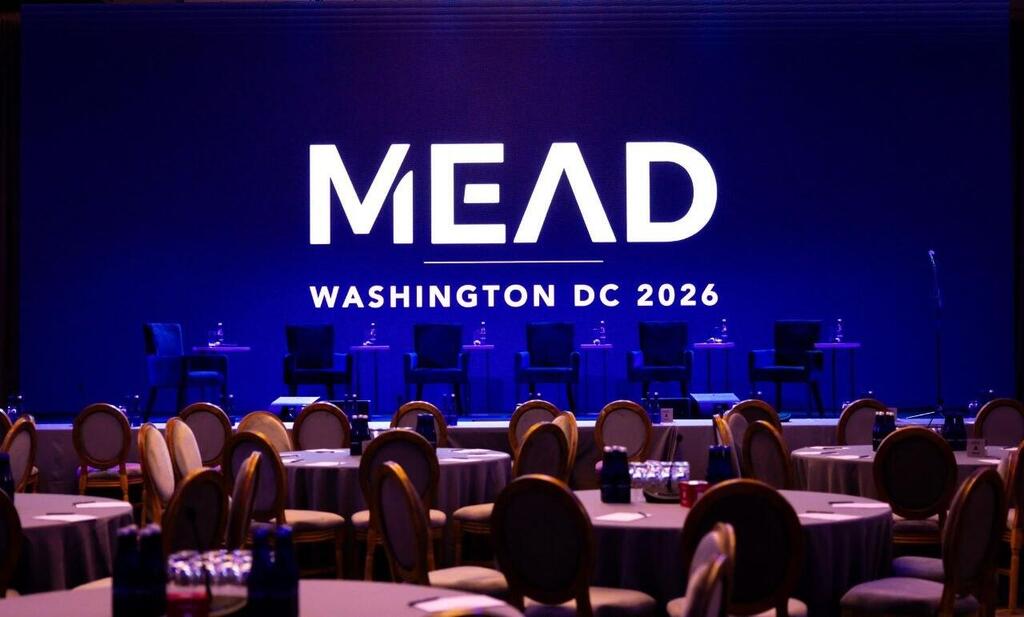
This year, representatives from 24 countries traveled to the U.S. capital, including officials and experts from the United States, Israel and other countries across the Middle East — the largest number of countries represented since the conference was founded.
Several countries that do not have diplomatic relations with Israel also sent representatives, taking advantage of the confidentiality rules that have governed the conference since its inception.
In recent years, MEAD has emerged as an influential forum for shaping ties among Washington, Jerusalem and capitals across the region. Discussions have covered security, intelligence, technology, business, energy and governance, as well as energy security and maritime shipping routes — issues that over the past year have shifted from primarily economic concerns to matters of critical regional security.
One of the keys to the conference’s success is its adherence to the Chatham House Rule, which allows participants to speak candidly without having their remarks or identities publicly attributed. That arrangement has become particularly significant at a time when virtually every public statement in the region is closely scrutinized.
Participants made a number of extraordinary remarks during the conference’s various panels that, because of those confidentiality rules, cannot be reported.
One speaker who drew particular attention was Maj. Gen. Tomer Bar, the former commander of the Israeli Air Force, making his first appearance at an international forum since leaving the post. Several other former senior officials who played central roles in the war with Iran also participated. Their accounts offered striking insights into the conflict that cannot be disclosed under the conference rules.
On the sidelines of the conference, two notable assessments emerged from officials who asked not to be identified.
A former senior Biden administration official offered a bleak assessment of Israel’s standing in American politics. The former official said Democrats, as well as many younger Republicans, are increasingly distancing themselves from Israel, while American Jews are becoming increasingly alienated from the country.
In the former official’s view, Israel’s current government is “erasing Israel’s value” in the eyes of broad segments of the American public.
The official also expressed concern about the future of U.S.-Israel relations if Prime Minister Benjamin Netanyahu forms another government. A different prime minister, the official said, could help “reset” the relationship and ease Israel’s difficulties in the United States — even someone relatively unfamiliar to Americans, such as former IDF chief Gadi Eisenkot.
‘Netanyahu has lost credibility’
People close to U.S. President Donald Trump said on the sidelines of the conference that he and his closest advisers are deeply disappointed with Netanyahu.
According to the officials, Netanyahu has “lost credibility” in their eyes over Gaza, Lebanon and Syria. They said frustration with Netanyahu is growing behind the scenes, even if it has not spilled into public statements. As evidence, they pointed to the U.S. administration’s decision not to condemn Britain over sanctions it imposed on Israel.
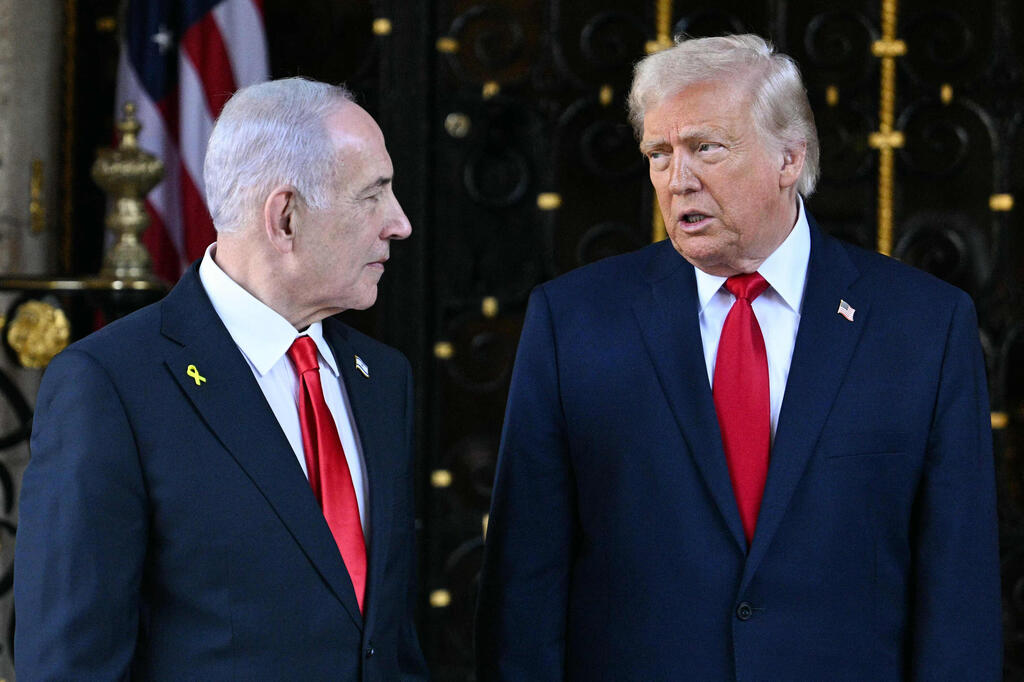
Prime Minister Benjamin Netanyahu and US President Donald Trump
(Photo: Jim WATSON / AFP)
The Trump associates also expressed anger over Netanyahu’s handling of the U.S. president’s 20-point plan to end the war in Gaza, which they said was drawn up in coordination with the Israeli prime minister. They accused Netanyahu of now seeking to undermine the plan.
On Trump’s support for a pardon for Netanyahu, who is on trial in Israel on corruption charges he denies, the officials said the president’s position was not part of any deal. Rather, they described it as a reflection of Trump’s personal identification with what he views as the persecution of a political ally, with no quid pro quo being sought.
A substantial portion of the conference was devoted to conditions in the Gaza Strip and implementation of the 20-point plan. Participants described some improvement compared with a year ago: Humanitarian aid has increased significantly, the rate of casualties has fallen sharply and, according to some speakers, about 90% of Gaza residents now oppose Hamas, whose popularity is declining.
At the center of the proposed framework is a Palestinian technocratic committee intended to provide services and temporarily administer Gaza, alongside an international body overseeing implementation of the plan.
The proposal calls for recruiting and training a Palestinian police force of between 10,000 and 12,000 officers. Israel is screening a pool of about 220,000 candidates, according to information presented at the conference, and has so far approved about 16,000.
Meanwhile, an international stabilization force is taking shape. It is expected to initially include about 2,500 troops from several countries before expanding with additional personnel contributed by countries in Africa, Asia and Europe.
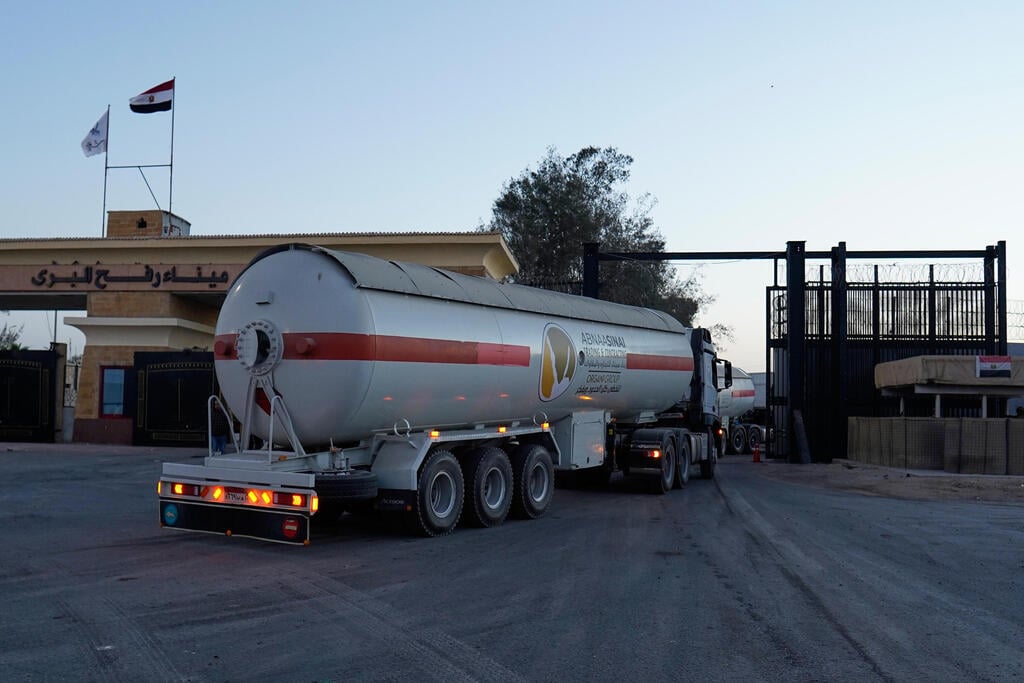
A gas truck enters the Gaza Strip
(Photo: AP Photo/Mohamed Arafat)
However, sharp criticism of Israel was heard at the conference over allegations that it is blocking the international force from entering Gaza, preventing the entry of the technocratic committee, which is waiting in Cairo, and preventing 4,000 Palestinian police officers from leaving Gaza for training in Egypt.
The international community also came under criticism. Participants said many countries blame Israel for conditions in Gaza while themselves refusing to accept students or refugees from the territory.
The discussions indicated that Israeli officials see little chance of Hamas voluntarily disarming, but believe the diplomatic route should be exhausted before other measures are taken. That assessment comes amid warnings from the IDF that Hamas is rebuilding its strength and removing weapons from storage.
Iran weakened, but collapse could take years
Much of the conference focused on Iran’s condition in the six months since the latest round of fighting began.
A broad assessment emerged that the government in Tehran has been severely weakened. Participants said Iran’s economy is in dire condition, with the local currency falling to about 2.3 million rials to the dollar and official inflation at roughly 88%, though some believe the actual rate is considerably higher. The government is also struggling to pay public-sector salaries.
Assessments presented at the conference suggested that about 80% of Iranians oppose the government and that signs of internal fractures are emerging within both the political establishment and the military.
Participants stressed, however, that they did not expect an imminent collapse. Rather, they described a gradual process that could take one to three years.
Meanwhile, some pointed to troubling signs surrounding Supreme Leader Mojtaba Khamenei, saying he has surrounded himself with some of the most extreme figures in the Iranian establishment amid growing paranoia and fears for the government’s survival.
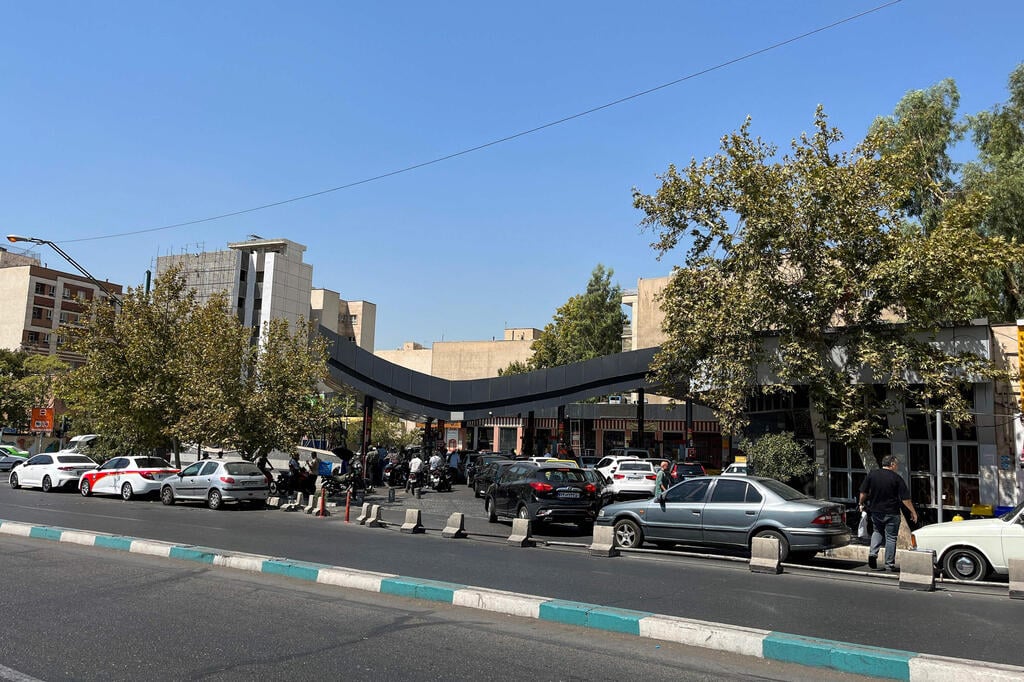
Long lines at gas station in Tehran, Iran
(Photo: AFP)
A person familiar with the matter said on the sidelines of the conference that the memorandum of understanding signed in June between Washington and Tehran had been a “terrible” document that would have funneled hundreds of billions of dollars to Iran, helping preserve the mullah rule and potentially advancing its path toward a nuclear weapon.
The person said hard-liners in Tehran, intoxicated by what they saw as their own strength, ultimately failed to implement the document because they sought complete U.S. capitulation. That refusal, the person argued, prompted Trump to reassess the situation and recognize whom he was dealing with.
Behind the scenes, representatives of several Middle Eastern countries agreed that the region ultimately needs to be rid of Iran’s extremist government, according to discussions at the conference. But there was also an acknowledgment that such an outcome is far from guaranteed and would require considerable patience.
Participants also said that if Iran attacks Israel, Israel’s response would be severe and would focus on Iranian oil infrastructure — a move that some at the conference believe could accelerate the government’s collapse.
Cautious optimism over Lebanon and Syria
The mood surrounding Lebanon was one of cautious optimism. Assessments presented at the conference described Hezbollah as significantly weaker than in the past, though Lebanon’s government is still seen as too weak to confront the Iran-backed terrorist group directly.
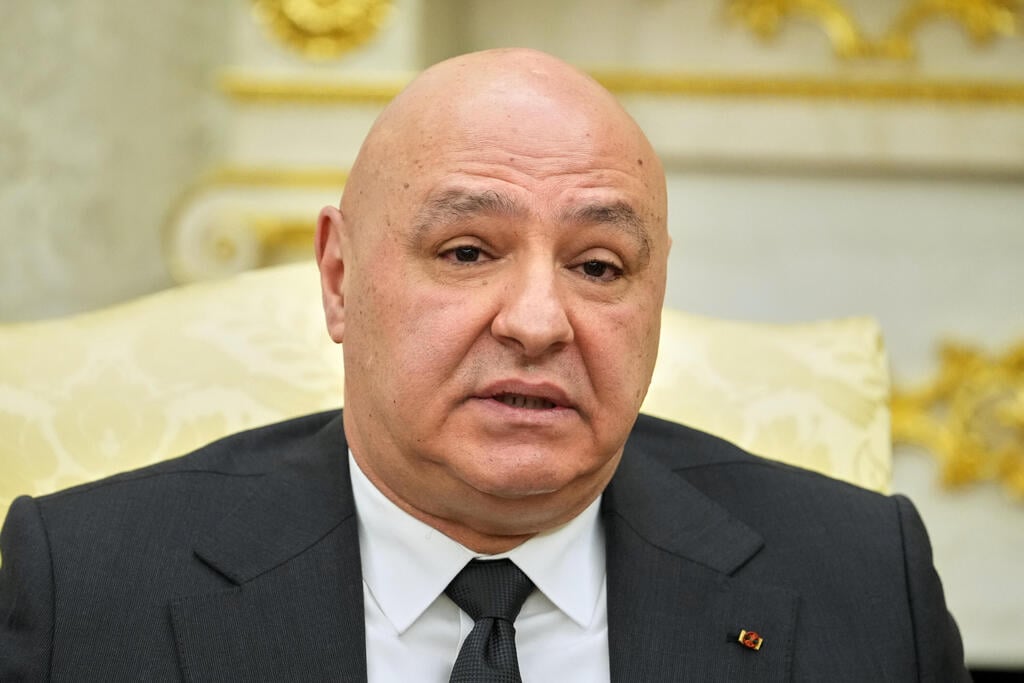
Lebanese President Joseph Aoun
(Photo: AP Photo/Mark Schiefelbein)
Participants also described the trajectory in Syria as positive, though far from ideal.
Some in Israel view Syrian President Ahmad al-Sharaa as a pragmatist and believe Jerusalem should give him a chance, seeking a security agreement with his government while proceeding with “caution and suspicion.”
Others regard al-Sharaa, a former Islamist insurgent leader, as little more than “a terrorist in a suit.” Both camps, however, agreed that full normalization between Israel and Syria is less realistic for now.
Discussions of the Gulf states revealed a shared concern over Iran as well as sharp criticism of the Muslim Brotherhood. In some sessions, participants described the Islamist movement as more dangerous than Iran itself, arguing that dialogue with Tehran remains possible despite the threat it poses.
Participants also voiced fundamental opposition to allowing any single actor to control strategic shipping routes such as the Strait of Hormuz and the Bab el-Mandab Strait. Control of the waterways, they argued, is a global problem rather than merely a regional one.
Discussions also touched on a long-term U.S. strategy to develop an oil pipeline that would bypass the Strait of Hormuz and expand refining capacity on U.S. soil, reducing dependence on the strategic waterway.
Israel-Saudi ties ‘better than they appear’
The outlook for expanding the Abraham Accords, the U.S.-brokered normalization agreements between Israel and several Arab states, was mixed.
There was skepticism that Saudi Arabia would normalize relations with Israel in the near future, but participants stressed that relations between Jerusalem and Riyadh remain better than public appearances suggest.
The Trump administration has not abandoned its ambition to expand the Abraham Accords, participants said, and developments underway behind the scenes could potentially bear fruit after the elections.
The discussions also emphasized that current military and intelligence cooperation between Israel and the United States is at an unprecedented level — even when compared with Washington’s historic alliance with Britain.
Israel’s domestic political situation also featured prominently. Participants assessed that after the coming election, Israel will need to form a broad government capable of addressing two major unresolved issues: legislation governing military conscription for Haredi, or ultra-Orthodox, men and the government’s efforts to overhaul the judiciary. Both were described as potential “time bombs” if no solution is found.
Participants also noted that, for the first time in years, there is no significant public pressure within Israel to withdraw from territory its forces currently hold — whether in Lebanon, Syria or Gaza. Some at the conference viewed that situation as an opportunity to shape a new diplomatic reality in the region before other actors fill the vacuum.
China’s role was another subject of discussion. According to assessments presented at the conference, Beijing is no longer purchasing Iranian oil, though it previously supplied Tehran with raw materials for its missile industry in exchange for oil.
Participants said Washington has been sending Beijing clear messages on the issue while continuing to impose secondary sanctions on entities accused of helping Iran circumvent restrictions, including banks in Turkey and other actors in India.