

British Foreign Secretary Ed Miliband announced Tuesday that the United Kingdom would impose economic sanctions on Israeli settlements in the West Bank, after saying in recent weeks that London intended to “reset” its policy toward Israel.
Meanwhile, the foreign ministers of Canada, Denmark, Finland, France, Iceland, Ireland, Norway, Poland, Portugal, Spain, Sweden and Britain issued a joint statement on the two-state solution.
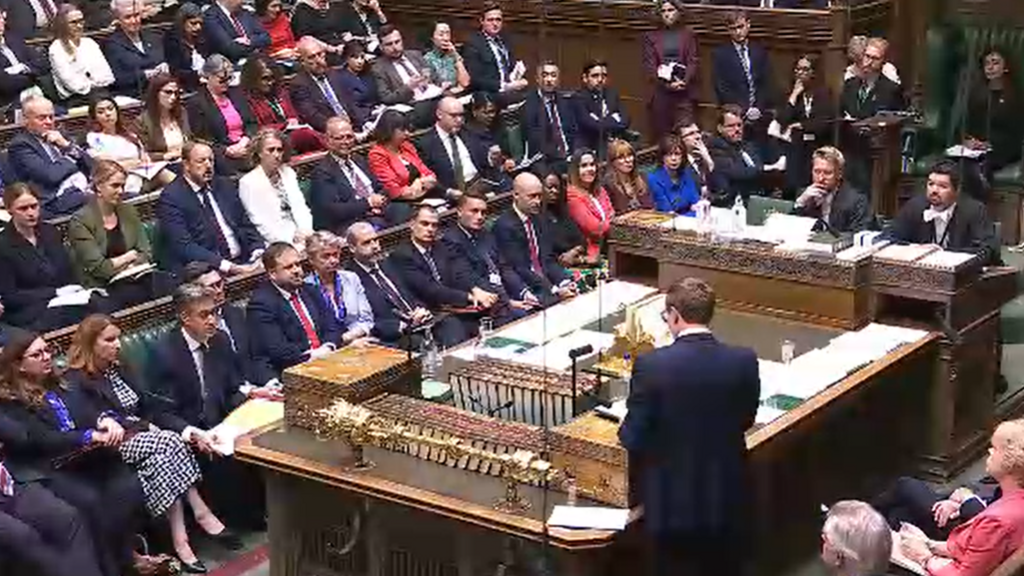
“The Government of Israel’s actions in the West Bank are undermining the possibility of a two-state solution,” they said. “The Government of Israel must immediately halt the expansion of settlements and civilian administrative powers, ensure accountability for settler violence, and investigate allegations against Israeli forces.”
The countries said they intended to “impose restrictions on trade with settlements considered illegal under international law.”
Returning to the sanctions announced by London, Miliband opened his statement by saying: Britain and Israel will continue to cooperate on shared national security interests." At the same time, he stressed: “Securing a two-state solution is the North Star of our government’s policy.”
After saying Finance Minister Bezalel Smotrich was trying to bury the idea of a Palestinian state, Miliband said: “The British Government agrees that there is ethnic cleansing of Palestinians in areas of the West Bank, perpetrated by settler terrorists. And all too often, the Israeli government has turned a blind eye to this.”
“I do not believe the British people want us supporting the occupation by accepting products from settlements in our shops and supermarkets," Miliband added. "We will take action against companies providing services such as construction, financing or real estate to settlements. Anyone who finances or assists illegal settlements will face the full force of British sanctions. The settlements are illegal and should not be promoted in Britain.”
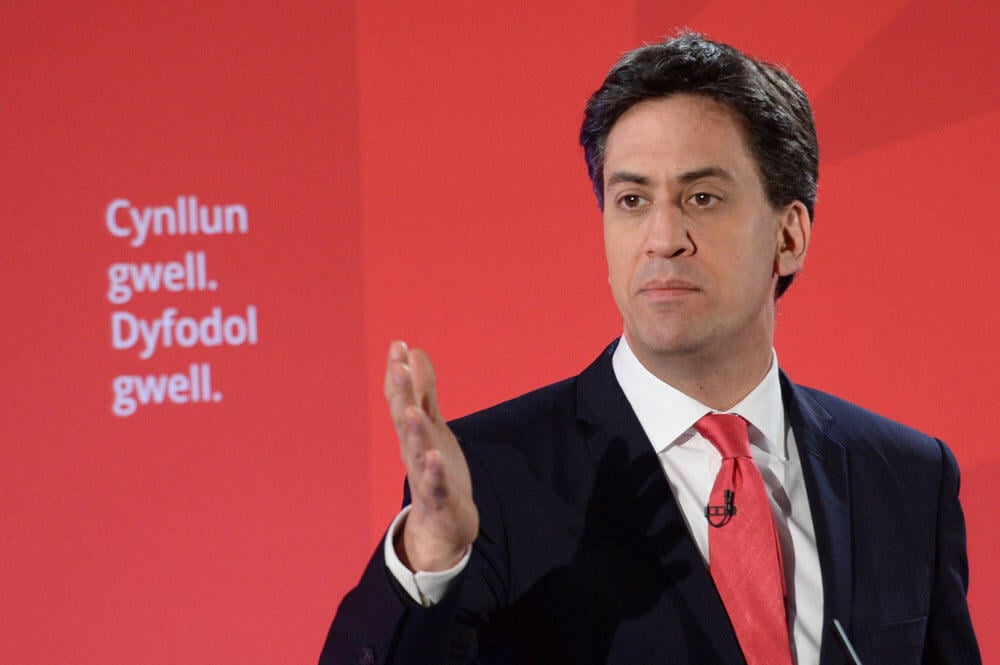
Ede MIliband: 'I do not believe the people of Britain want us to support the occupation'
(Photo: AP)
“The sanctions will target illegal settlements and settlement expansion, not Israel. We will continue to support important and valued trade with green line Israel precisely because we support the two-state solution, including security and prosperity for Israel,” he concluded.
The British sanctions also relate to arms supplies to Israel. On that issue, Miliband said: “We have already suspended 30 arms licenses for the IDF in Gaza and that will remain in place. We will refuse licenses for arms sales that contribute to the occupation — that means a double prohibition on arms sales.”
A former senior Israeli diplomat commented on developments in Israel-Europe relations and said: “Until now, the European Union has been cautious and avoided sanctions because it wanted to wait for the election results. But if France follows Britain, that is a completely different game. It will make it very difficult for other European countries to remain silent. If France breaks ranks with the European Union, there will be more countries that follow: Spain, Belgium, Portugal, Ireland and others.”
British Foreign Secretary Ed Miliband
(Video: British Foreign Office)


According to the diplomat, the British move stems from “the anti-Israel base.”
“This stems from domestic political considerations by a prime minister and foreign secretary looking toward their Labour base,” he said. “They are causing major damage because it will be seen as interference in the Israeli election and could trigger a very harsh Israeli response.”
The diplomat assessed that the coordinated move with additional countries was in fact intended to prevent Israel from responding disproportionately, such as by expelling ambassadors.
“Because we are in an election campaign, the Israeli response could be very severe,” he added. “The range of possible responses against Britain is broad and could even include an embargo on transferring Israeli weapons technology to the British, as was done with the French. With Ireland, Israel closed its embassy in Dublin and did not appoint an ambassador to Spain. At present there is no Israeli ambassador in Britain because of the Braverman investigation. Summoning ambassadors for reprimands is already fairly certain.”
'The idea is that the two-state solution not be erased'
Before the announcement in the House of Commons, Work and Pensions Secretary Pat McFadden said: “The intention is not to boycott all Israeli goods. The measures are specifically aimed at the expansion of these settlements, which are illegal under international law.”
In an interview with The Times, he added that “at the heart of the statement is the idea that Britain, together with many other countries, does not want to see the possibility of a two-state solution in Israel and Palestine erased by changes to the facts on the ground.”
According to information received by Israel’s senior political echelon, Britain is trying to persuade additional countries to join it and impose sanctions. France is one of the first that may join, with Canada another possibility.
Bloomberg reported that British diplomats told the Americans that the sanctions being imposed at this stage on settlements are “mainly symbolic” and would not have a material impact on Britain’s broader trade or security relations with Israel.
It was also reported that a diplomatic effort is underway to calm the Trump administration’s response, amid concerns that the sanctions could become the first significant obstacle in U.S. relations with Britain’s new prime minister, Andy Burnham.
U.S. Ambassador to Israel Mike Huckabee told the BBC: “If Britain continues to advance the sanctions, there is no doubt there will be an American response, at the political or federal level.” He said such a response could “create an enormous impact on the British economy.”
The New York Times had already reported Monday that Britain was expected to impose a trade ban on products manufactured in settlements in the West Bank. The American newspaper cited officials who said the measures involved “broad economic restrictions targeting Israeli settlements in the occupied West Bank,” as they put it. It added that the measures were expected to include a trade ban as well as sanctions on companies assisting settlement construction.
Herzog: 'Stop!'
President Isaac Herzog addressed the sanctions Tuesday morning, saying: ““If this happens, I believe it will prove to be a grave miscalculation, a decision that will fall on the wrong side of history. I say to all foreign governments: Stop! Step away from the dead-end of sanctions and boycotts. And turn toward constructive dialogue and toward cooperation.”
Herzog said the move also amounted to “blatant interference in the democratic elections of a sovereign state.” He made the remarks at an appreciation event marking 30 years of Israeli participation and success in the European Union’s Horizon Europe research and innovation program.
Herzog rejects the UK sanctions
(Video: Alon Fargo)
“More countries may join. This will serve no one,” the president added. “It will directly harm Palestinians by depriving them of businesses and jobs, and ultimately it will harm the interests and national security of freedom-loving countries. Sanctions are not a solution. Dialogue is. I say to all foreign governments: turn toward constructive dialogue and cooperation.”
The Labour government has previously imposed sanctions on several Israeli settlers and illegal outposts over violence against Palestinians and unauthorized development in the West Bank. Tuesday’s announcement is expected to expand those sanctions to cover trade in goods, and possibly certain services, with all settlements in the West Bank.
British Prime Minister Andy Burnham has expressed concern about the E1 project approved by Israel, which would effectively cut the territory in two. Palestinians and human rights groups say the project could destroy hopes for a future Palestinian state.