

Britain will announce a ban Tuesday on trade in goods produced in Israeli settlements in the West Bank, a British minister confirmed, marking a significant escalation in London’s policy toward Israeli settlement activity.
Pensions Minister Pat McFadden said Foreign Secretary Ed Miliband would present the measure to Parliament later in the day. “The foreign secretary will make a statement to Parliament later today, and at the heart of the statement is the idea that the UK, along with many other countries, do not want to see the possibility of a two-state solution in Israel and Palestine being erased,” McFadden told Times Radio when asked how the trade ban would work.
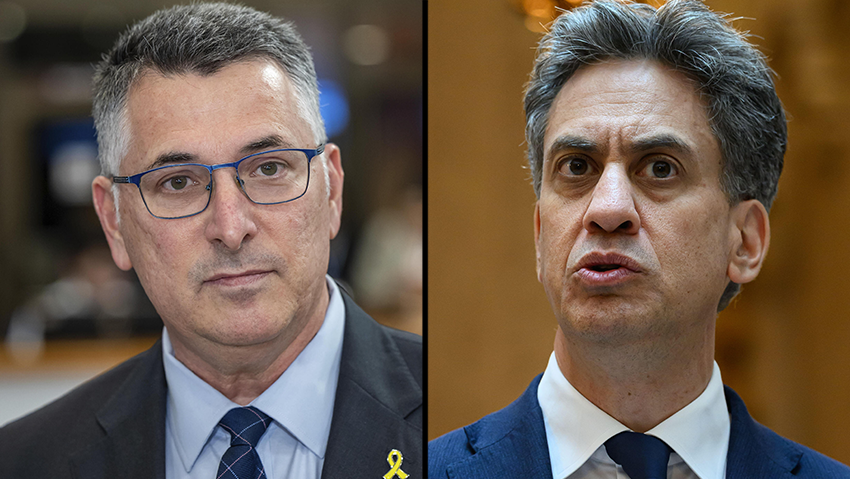
Israeli officials had been bracing for the move and were closely monitoring whether Britain would limit its measures to settlement products or also impose personal sanctions on Israelis and restrictions on companies involved in settlement construction. The measures under discussion have also included products originating in east Jerusalem and the Golan Heights.
Britain has said in recent weeks that it intends to carry out a “comprehensive reset” of its policy toward the settlements. Miliband had previously said the government was examining measures to prevent trade with settlements, including a possible prohibition on goods and services originating there.
Israeli officials do not currently expect a significant expansion of Britain’s restrictions on arms exports to be a central part of Tuesday’s announcement. Their assessment is that London will not substantially broaden those restrictions at this stage, in part because the remaining British military equipment supplied to Israel is considered limited but important.
The move comes amid a sharp deterioration in relations between the two countries. For years, Britain largely confined its opposition to settlement expansion to diplomatic condemnations and guidance urging British companies to avoid economic activity in the settlements. Tuesday’s expected announcement would move that policy into direct economic action.
Jerusalem is preparing a forceful response and is expected to accuse the British government of intervening in Israeli politics at a sensitive point in the election campaign. Israeli officials are also waiting to see whether London announces personal sanctions in addition to the trade ban.

Finance Minister Bezalel Smotrich and National Security Minister Itamar Ben-Gvir
(Photos: Alex Kolomoisky, Menahem Kahana/AFP)
Finance Minister Bezalel Smotrich called for the British ambassador to Israel to be expelled. “Expel the British ambassador tonight! We will not be a doormat for an antisemitic government in a country that has been conquered by radical Islam and is trying to save itself from economic and social decline by attacking Jews and the State of Israel. The British Mandate in the Land of Israel is over,” he wrote on X.
National Security Minister Itamar Ben-Gvir, meanwhile, responded by calling on Prime Minister Benjamin Netanyahu to recognize Argentine sovereignty over the Falkland Islands, which are controlled by Britain and claimed by Argentina.
“It is time for the State of Israel to publicly recognize that the Falkland Islands are occupied Argentine territory, which the British are violently stealing from the Argentine people,” Ben-Gvir wrote in Spanish. He accused Britain of exploiting the islands’ natural resources and called on Israel to impose sanctions on the UK “for as long as the occupation continues.”
Argentine President Javier Milei reposted Ben-Gvir’s message.
The European Union, by contrast, has shown less enthusiasm for imposing sanctions before Israel’s election, with officials concerned such a step could strengthen Prime Minister Benjamin Netanyahu politically.
First published: 08:28, 09.08.26