

After 16 years in power and an election defeat, Viktor Orbán could be headed for a new position, this time in New York. The Trump administration is promoting the former Hungarian prime minister's candidacy for UN secretary-general and is even considering putting him forward as a joint candidate of the United States, Russia and China. The White House is weighing the possibility of handing leadership of the organization to a politician who spent years clashing with the international establishment.
According to The Wall Street Journal, U.S. officials have already approached Orbán and invited him to enter the race. He has expressed interest but has yet to make a decision.
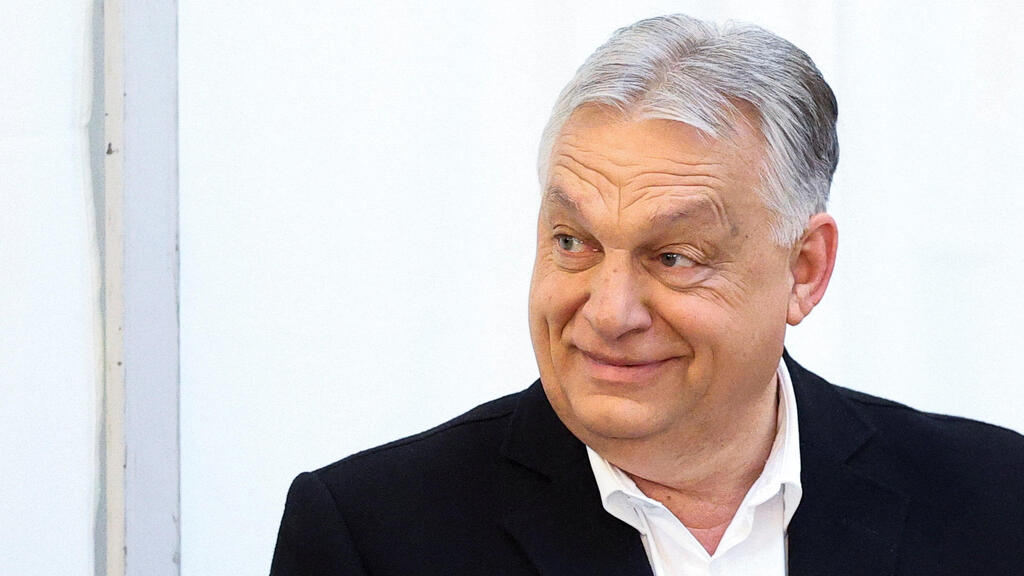
Viktor Orbán last April
(Photo: REUTERS/Lisi Niesner)
The move would mark a significant development in the race to succeed António Guterres, whose term ends Dec. 31. A State Department official acknowledged that the idea initially sounded almost far-fetched, but said previous discussions with Russian and Chinese representatives suggested that both Moscow and Beijing might support Orbán. The administration has even begun counting votes. The official estimated that he could secure eight votes on the UN Security Council relatively easily, and possibly as many as 10 of the 15. A candidate needs at least nine votes and no veto from any of the five permanent members. The question would then be whether Britain and France would agree to his appointment. Both have traditionally been cautious about exercising their veto power, but either could block the move independently.
The unusual proposal reflects Trump's search for a conservative leader capable of confronting the international establishment, prompting his aides to approach Orbán directly. U.S. officials described him as "the dream candidate for MAGA conservatives," noting that, unlike candidates whose careers have largely unfolded in diplomatic circles, Orbán has extensive experience leading a country and confronting political opponents. According to a source familiar with the discussions, a possible announcement of his candidacy has been postponed until after the U.S. midterm elections in November, in part because Orbán is unwilling to enter the race without assurances that he can win.
Orbán, 63, is one of the most prominent figures on Europe's nationalist right. During his 16 consecutive years in power in Hungary, from 2010 to 2026, he pursued hard-line policies on immigration, civil society organizations and liberal institutions, repeatedly clashing with the European Union over judicial independence, press freedom and the rule of law. Critics accused him of undermining democratic institutions and tightening his grip on the political system and media. Orbán, however, portrayed himself as a defender of national sovereignty and conservative values against what he called liberal interference from Brussels. His close relationship with Russian President Vladimir Putin, even after Russia's invasion of Ukraine, drew fierce criticism across Europe, while he was also regarded as one of China's most prominent allies on the continent.
Orbán's time in power ended in a crushing defeat in April. His Fidesz party lost to Péter Magyar's Tisza party, which secured a two-thirds majority in parliament. Trump, who publicly endorsed Orbán during the election campaign, also sent Vice President JD Vance to Hungary to support his reelection bid. The effort failed, and Magyar was sworn in as prime minister in May. Orbán remained leader of Fidesz but found himself in opposition.
Orbán is well known in Israel. Throughout his years in power in Budapest, he cultivated close personal and political ties with Prime Minister Benjamin Netanyahu and supported Israel during sensitive discussions within the European Union. He was among Netanyahu's closest European allies and, during the war in Gaza, backed him in his confrontation with the International Criminal Court. In April 2025, Orbán hosted Netanyahu in Budapest despite an arrest warrant issued against him by the court and announced that Hungary would withdraw from the institution. The court later ruled that Hungary had violated its obligations by failing to arrest Netanyahu, while Magyar's new government reversed the withdrawal plan. Orbán also blocked European sanctions for months against settlers and Israeli organizations accused of violence against Palestinians. Those sanctions were approved following the change of government. His appointment, if it materializes, would therefore carry particular significance for Israel, whose relationship with Guterres deteriorated sharply during the war.
The idea is not entirely new. In May, Hungarian media reported that figures in the MAGA movement were considering securing a senior UN position for Orbán, partly because of the possibility of diplomatic immunity amid threats of corruption investigations by the new government. In September, The Guardian reported that his name was being mentioned as a possible candidate for secretary-general, although there was no public indication that he intended to run. What is new now is the claim that the U.S. administration has approached him directly and is holding discussions based on the support it believes it can secure.
Meanwhile, the race itself remains deadlocked. None of the candidates has secured sufficient support in six rounds of secret, informal straw polls held by the Security Council. In the latest round, on Oct. 16, Costa Rica's Rebeca Grynspan received nine votes in favor but also six against, including two from permanent members with veto power. Grynspan, who is Jewish and the daughter of Holocaust survivors, is still considered the frontrunner. She serves as secretary-general of the United Nations Conference on Trade and Development and previously served as Costa Rica's vice president. She has close family ties to Israel, including a sister who lives in Mevaseret Zion and nephews who served in the IDF. Nevertheless, Republican officials in the United States have expressed reservations about her candidacy, arguing that she is too critical of Israel and too accommodating toward China. Other prominent candidates include Rafael Grossi of Argentina, director general of the International Atomic Energy Agency, and Carolyn Rodrigues Birkett of Guyana.
The lack of a clear outcome prompted the White House to seek new names beyond the existing field of candidates. According to a Politico report, the Trump administration does not want another veteran diplomat who would continue running the UN as it has been managed until now, but rather someone who would lead a sweeping transformation of an organization facing both budgetary and political crises. Among the names considered was Feridun Sinirlioğlu, Turkey's former foreign minister and secretary-general of the Organization for Security and Cooperation in Europe. He previously served as Turkey's ambassador to the UN and accused Israel of war crimes. Yet he was also the official who signed the 2016 reconciliation agreement with Israel on Turkey's behalf following the Mavi Marmara crisis.
Last week, a new official candidate entered the race: Lana Nusseibeh of the United Arab Emirates, the country's former ambassador to the UN. Nusseibeh, 48, comes from a longstanding Palestinian family in Jerusalem, speaks Hebrew and holds a master's degree in Israeli and Jewish Diaspora studies. Her grandfather, Anwar Nusseibeh, held talks with Moshe Dayan after the 1967 Six-Day War, while her uncle, Sari Nusseibeh, partnered with Ami Ayalon on an Israeli-Palestinian peace initiative. She condemned the Oct. 7 massacre and the abduction of Israelis by Hamas, but later criticized IDF operations in Gaza and opposed the annexation of territory in the West Bank. As ambassador, she played a central role in advancing a resolution to expand humanitarian aid to Gaza. Her candidacy has the backing of Gulf states but has drawn criticism over allegations that the UAE provided support to a militia implicated in atrocities in Sudan, allegations that Abu Dhabi denies. On Tuesday, Nusseibeh is scheduled to formally present her candidacy at a public UN hearing and answer questions from representatives of member states. The Security Council is expected to hold another round of straw polls afterward.