

American journalist Shelly Kittleson, who was released from captivity in Iraq earlier this month, said she was brutally beaten, blindfolded and shackled during her abduction and imprisonment.
“I have multiple rib fractures that happened on the first day... I was forced into the vehicle, [and] the rib fractures happened in the following hours. They beat me quite viciously in the vehicle. I actually blacked out a few times,” Kittleson said in her first interview since her release, speaking to CNN overnight Saturday.
“I was moved between at least two, possibly three vehicles before ending up in my first place of detention, which was a cell with no windows and a very heavy door.”
Kittleson said she received no medical treatment. She said she later understood that she had been transferred between factions of groups in Iraq. The second group, she said, treated her better. At first, guards claimed they were part of local security forces and told her that if she was innocent, she would be released “within a few days.”
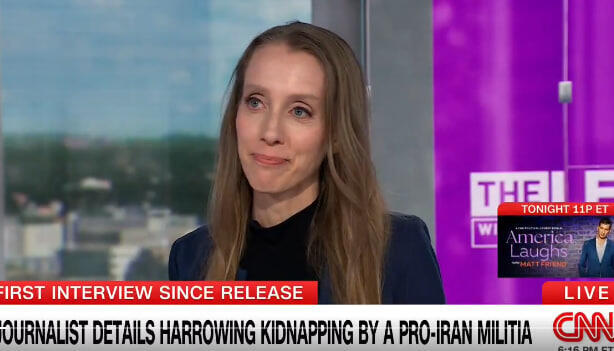
She said her captors told her that her American passport was the reason she had been abducted. “They told me, ‘We know that the American public is not at fault, but this is a war, and you are in Iraq. You made a mistake to come here,’” she said.
Kittleson said she had been warned in advance about a possible kidnapping, but had received similar warnings in the past and did not take it seriously. Asked whether she would return to report from Iraq, she said not for now.
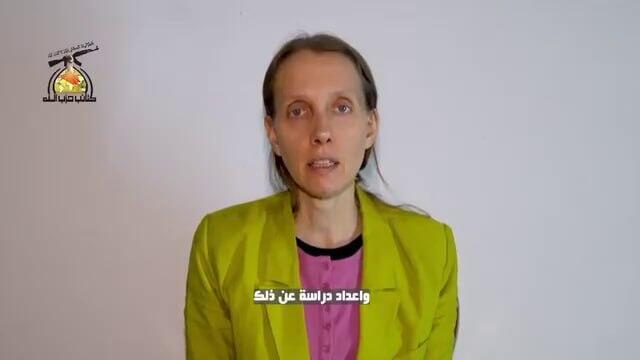
Kittleson in captivity
“In the first couple of days... I had no idea what time of day it was,” she said, describing the initial cell as very narrow and under constant camera surveillance. “As soon as they pushed me into the car, they zip-tied my, blindfolded me, both ankles and wrists. Later, they removed the zip ties and put handcuffs on, and I was in handcuffs until I was handed over.”
Despite the experience, Kittleson was adamant about going back to Iraq. “I need to understand who was behind this and why,” she said. “I have so many Iraqi friends; I have been reporting from there for so long... It is important for journalists to be there.”
American journalist Shelly Kittleson abducted by armed men in central Baghdad in broad daylight


Kittleson was abducted by armed men in central Baghdad in broad daylight in late March. Just over a week later, Kataib Hezbollah, a powerful Iraqi armed group, announced it would release her. The announcement came as the world was watching for the expiration of an ultimatum U.S. President Donald Trump had given Iran to strike a deal to end the war, raising the possibility that the group’s statement was a signal from the Iranian axis to Washington.
Kittleson is a freelance journalist who writes for Al-Monitor and covers the region. She has also written for the BBC and Politico. She first visited Syria in 2012, after beginning her journalism career reporting from Afghanistan.