

Egypt marked Monday the 52nd anniversary of the surprise attack that launched the 1973 Yom Kippur War, as negotiations to end the fighting in the Gaza Strip began in the Egyptian resort town of Sharm el-Sheikh. The timing — coinciding with Egypt’s commemoration of what it calls the “October 6 Victory” — stirred debate across Arab social media, where some commentators described it as an Egyptian “insult” to Israel. Others suggested the meeting begin at the exact “zero hour” of the 1973 attack or that the Israeli delegation be taken on a tour of Sinai “as part of the celebrations.”
The Israeli negotiating team was set to depart for Egypt around 2 p.m., with talks expected to start about two hours later. Later this week, Jared Kushner, former U.S. President Donald Trump’s son-in-law and adviser, and Trump’s special envoy Steve Witkoff are expected to join the discussions. Strategic Affairs Minister Ron Dermer is also due to take part, depending on developments. The talks are being mediated by Egypt and Qatar. A Hamas delegation led by senior official Khalil al-Hayya arrived in Egypt on Sunday night.
Celebrations in Egypt mark 52 years since the 'October War' victory


The Lebanese newspaper Al-Akhbar quoted Egyptian officials as saying the release of Israeli hostages held in Gaza would not happen within 72 hours, as proposed in Trump’s plan, but in longer stages to ensure their safe transfer. The officials said living hostages would be released “as quickly as possible,” depending on conditions, their locations and safety. Hamas, they added, will not hold celebrations during the handover to the International Committee of the Red Cross.
Recovering the remains of fallen hostages is expected to be complicated by the extensive destruction in Gaza. Hamas is expected to request permission to bring in heavy equipment to clear rubble, claiming that some hostages and the terrorists who held them remain trapped beneath collapsed buildings.
Monday’s negotiations are also expected to address the timetable for an initial Israeli withdrawal from Gaza, based on a January framework, to be followed by a full withdrawal once progress is made on the hostage and prisoner releases. Cairo reportedly fears “Israeli surprises” concerning both the withdrawal schedule and Hamas’ weapons.
Egypt is working to advance Palestinian reconciliation and hopes to soon host a summit of Palestinian factions. But Egyptian officials told Al-Akhbar they have encountered “Arab reservations that could delay progress,” with the United Arab Emirates and Saudi Arabia accusing Cairo of “supporting Hamas more than necessary.” The officials said completely removing Hamas is unrealistic, given its broad public support among Palestinians.
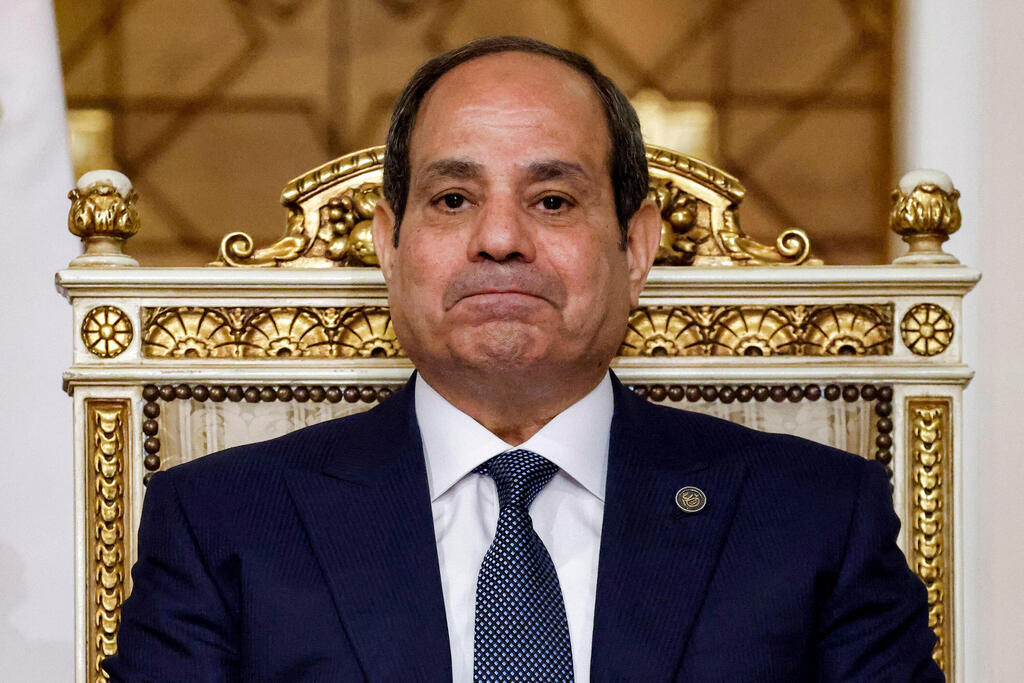
Egyptian Foreign Minister Badr Abdelatty said in an interview with Asharq al-Awsat that “many details must be handled through negotiations.” He described the meetings as “technical and security discussions” focused on the first phase, which includes releasing hostages and Palestinian prisoners.
Abdelatty said the planned multinational force in Gaza would act as “a liaison with Israel to resolve any issues that arise and to provide training, technical assistance and capacity-building for the Palestinian police.” He emphasized that any international presence in Gaza would be temporary, allowing the Palestinian Authority to assume control. On the question of Hamas disarmament, he said it is “a Palestinian issue to be handled by the Palestinians.”
Egypt’s October 6 commemoration and strategic goals
The anniversary remains one of the most significant dates on Egypt’s national calendar. Commemorations began Sunday morning, with President Abdel-Fattah el-Sissi visiting the Tomb of the Unknown Soldier in Cairo’s Nasr City, the graves of former presidents Anwar Sadat and Gamal Abdel Nasser, and meeting with the Supreme Council of the Armed Forces.
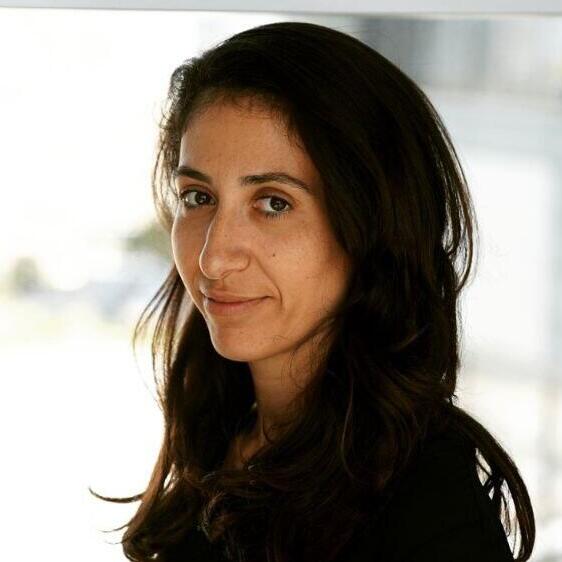
This year, the government moved the national holiday from October 6 to October 9 to link it with the weekend. While not unprecedented, Dr. Bashmet Yifat, a lecturer in Middle Eastern Studies and Political Science at Ariel University, said the change reflects an ongoing effort to separate the memory of October 6, 1973, from that of October 7, 2023 — the day of Hamas’ attack on Israel.
Yifat told Ynet that although Hamas did not plan its assault to coincide with Egypt’s anniversary, the timing prompted comparisons within Egypt. Some Egyptians viewed Hamas’ attack as part of the “October legacy.”
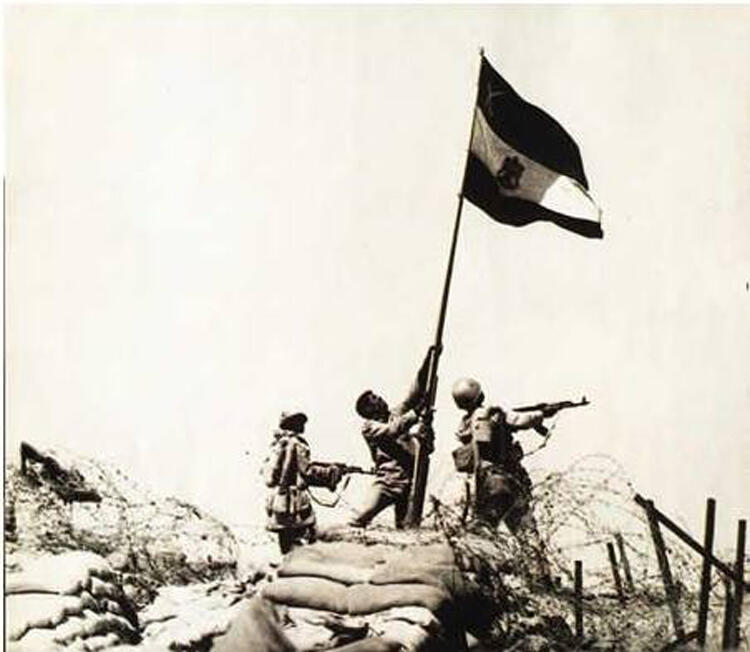
Egyptian forces raising a flag over an Israeli outpost in Sinai
“But from the earliest stages of the war, Egyptian officials made clear distinctions,” she said. “They emphasized that while Hamas launched a surprise attack that caught Israel off guard — similar to 1973 — it lacked the strategic rationale of President Sadat’s campaign, which was aimed at advancing diplomacy.”
“As the war continued and Egypt favored Palestinian Authority-led governance or other arrangements excluding Hamas, Cairo’s criticism of the October 7 attack became sharper,” she said.
Yifat noted that Egypt’s official narrative surrounding the anniversary, as reflected in state media, serves the regime’s interests. “Since coming to power, el-Sissi has reshaped the legacy of October 6 to reinforce his political message — highlighting the military’s central role while recasting the war as a distant, civilianized memory for most Egyptians.”
“El-Sissi uses that legacy to legitimize Egypt’s foreign policy, portraying the country as a force for peace that avoids violent conflict resolution,” she said. “Egypt’s role as mediator is a strategic asset. The recent tensions between Qatar and Israel, following the Israeli strike in Doha, have in some ways bolstered Cairo’s standing.”
“Any weakening of Qatar’s influence strengthens Egypt’s,” she added. “Cairo wants to remain in control of the diplomatic process because it is the actor most affected by the conflict after Israel and the Palestinians. Unlike Qatar, Egypt is a directly involved mediator. While Qatar’s leverage over Hamas remains, the fact that the talks are being held in Egypt underscores its pivotal role.”