


The killing of Raad Saad, head of operations in Hamas’ military wing and one of the figures responsible for planning the Oct. 7 attack and weapons production, is another tactically impressive achievement by the IDF and the Shin Bet.
Saad, like senior Hamas figures before him — including Yahya and Mohammed Sinwar, Mohammed Deif and Marwan Issa — played a central role in planning the massacre more than two years ago and was a legitimate target. But as significant as such assassinations are, they have not altered the broader strategic picture taking shape: By avoiding political decisions on Gaza’s future, Israel is effectively paving the way for Hamas’ survival, recovery and continued entrenchment.
The strike that killed Raad Saad
(Video: IDF)


In that sense, Israel is still fighting the war of two years ago — focusing on eliminating senior Hamas terrorists — while refraining from advancing a complementary political move or a realistic alternative to Hamas rule in Gaza. However important a targeted killing may be, every commander killed in Hamas’ military wing, senior or junior, is eventually replaced.
Hamas, by contrast — much like Hezbollah in Lebanon — is focused on the future war, meaning survival. It has avoided, at least for now, public threats to collapse the ceasefire or resume rocket fire. For Hamas’ current military chief, Izz al-Din Haddad, restraint is a source of strength. He does not seek a renewed full-scale war and understands that the White House is limiting Israel’s freedom of military action
That calculation may eventually cost him his life, or the lives of other senior figures, but Hamas’ overarching goal remains unchanged: continued consolidation of its power in Gaza, even after the devastation inflicted on the enclave.
Haddad does not aim to defeat the IDF in another confrontation like the one that followed Oct. 7. Rather, he seeks to retain Hamas’ weapons and fighting capacity even after the United States likely brokers an arrangement for an alternative governing body in Gaza. In the meantime, Hamas is exploiting the flow of humanitarian aid into Gaza — facilitated by Israel — to divert resources toward rebuilding its military capabilities and recruiting new terrorists to replace those killed.
There is no shortage of young Palestinians in Gaza willing to join Hamas, drawn both by the economic opportunities the organization offers and by deepening hostility toward Israel after two years of war.
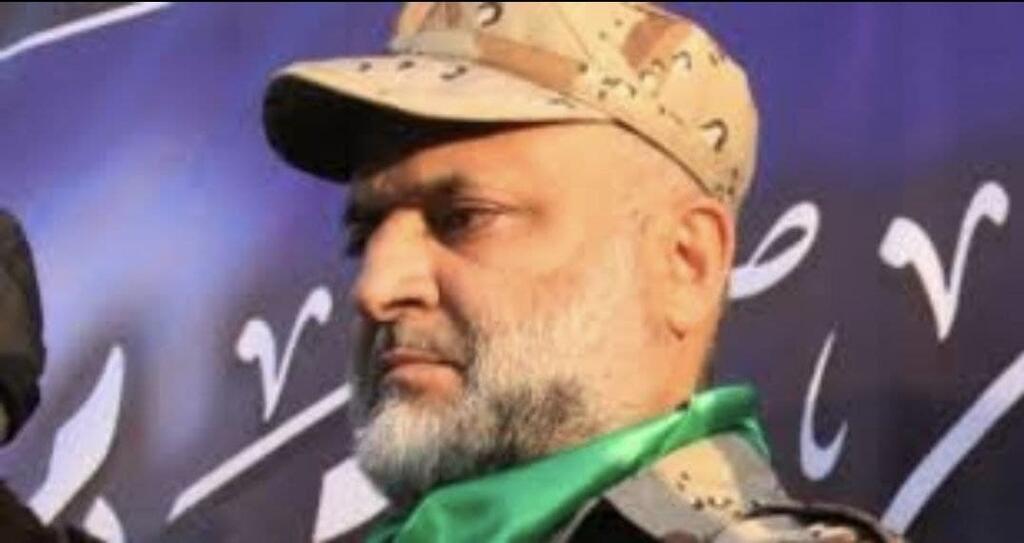
Raad Saad
It remains doubtful whether even a second phase of President Donald Trump’s proposed framework would result in the creation of a stable, effective governing alternative capable of fully disarming Hamas. Any governing body established in Gaza that is not rooted in Palestinian forces is unlikely to confront Hamas terrorists in any meaningful way.
That reality brings political considerations to the forefront. A viable alternative to Hamas rule would almost certainly require Palestinian forces affiliated with, or coordinated with, the Palestinian Authority. Yet Prime Minister Benjamin Netanyahu’s government has avoided any plan that would give the Palestinian Authority a foothold in Gaza, partly out of concern for the stability of his coalition with far-right partners Itamar Ben-Gvir and Bezalel Smotrich.
That avoidance, however, only strengthens Hamas on the ground. As long as Israel blocks the emergence of a sustainable Palestinian governing alternative, Hamas is not required to relinquish power. Instead, it continues to benefit from the ceasefire framework — including large-scale humanitarian aid entering Gaza — while quietly rebuilding its military strength in preparation for another round of fighting.
Hamas is also seeking to present itself to Washington as a party that has upheld its ceasefire commitments, relying on Turkey and Qatar to press Trump to advance a second phase of any agreement that would stop short of fully disarming the group. For now, that is Hamas’ preferred reality — and Israel, by default rather than design, appears to be playing into it.