


Amid Trump’s announcement of a temporary halt to the operation in the Strait of Hormuz and Washington’s decision not to respond for now to recent Iranian launches, Gulf countries fear the Islamic Republic may exploit the situation. Officials worry the latest developments could convince Tehran that further escalation would pay off, given Trump’s apparent desire to end the war even if U.S. allies are attacked again. European countries are also closely monitoring the situation.
Diplomats and analysts told the Wall Street Journal that after this week’s Iranian strikes, a sentiment has re-emerged in the region echoing former Egyptian President Hosni Mubarak’s remark: “Those who wrap themselves in the U.S. are naked.” Iranian officials have repeated similar claims since the start of the war, and now, following the lack of an American response to renewed fire, the idea is gaining renewed attention.
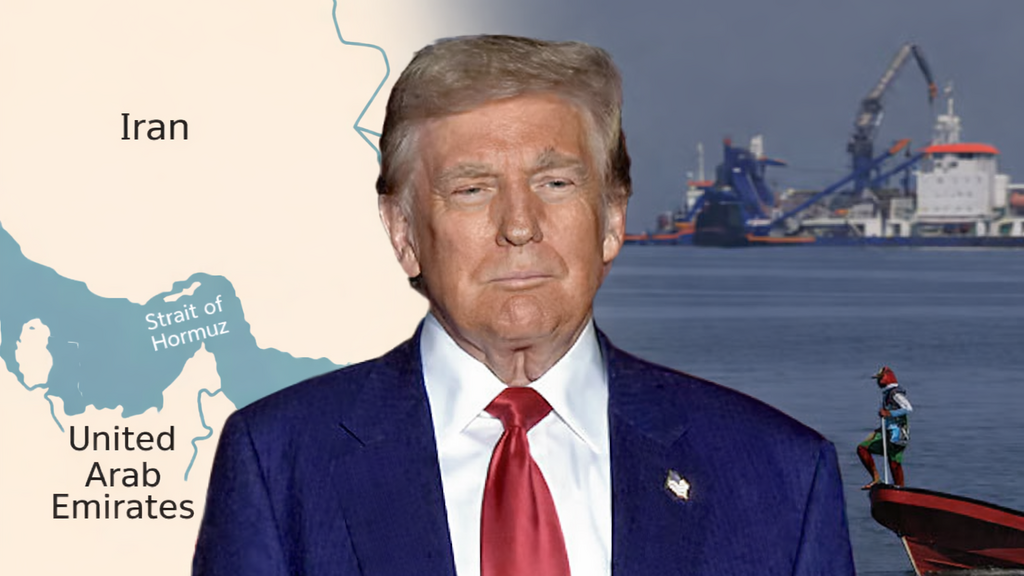
Strait of Hormuz, Donald Trump
(Photo: REUTERS/Stelios Misinas/Jonathan Ernst)
Mahdi Ghuloom, a research fellow at a Dubai-based think tank, said: “Iran seems ready for the cease-fire to be broken down, and the U.S. is not, so it is a unilateral cease-fire at this point.” Dania Thafer, director of the Gulf International Forum, added that from the Gulf states’ perspective, “it looks like the U.S. is not prioritizing their security and basically threw the Gulf states under the bus,” said Thafer. “If the U.S. doesn’t respond, then the Iranians will conclude that the U.S. doesn’t want to go back to war—and this affects deterrence.”
However, Jason Greenblatt, who served as Trump’s Middle East envoy during his first term, said “Iran’s attacks show they are testing the limits. The question is how far they will push before triggering a U.S. response. That is a risky game with a president who has clear expectations and enforces them.”
Overnight, Trump announced that he is temporarily suspending Operation "Freedom Project,” aimed at restoring shipping traffic through the Strait of Hormuz. The operation, announced on Sunday, was intended to break Iran’s blockade of the strait. Trump wrote on his social media platform Truth Social that the decision was made “based on the request of Pakistan and other countries and the fact that great progress has been made toward a complete and final agreement with representatives of Iran.”
Following the announcement, Iranian media outlets aligned with the regime portrayed Trump as retreating. The IRNA news agency boasted about the “failure of the U.S. “to achieve its objectives in the so-called 'Freedom Project',” claiming Trump canceled the operation “following "a firm and rapid warning from Iran.” Tasnim also welcomed the move in a post on its Persian-language X account: “Trump has retreated.”
At a Pentagon press briefing on Thursday afternoon, U.S. Defense Secretary Pete Hegseth said the “Freedom Project” is separate from “Operation Epic Fury,” the U.S. designation for the broader war against Iran. “This is a temporary mission,” Hegseth said, adding that its purpose is to protect maritime traffic from Iranian aggression. “We are not seeking confrontation,” he said, but warned that if Iran continues targeting ships it will face “overwhelming firepower.”