


The United States is pushing ahead with its post‑war plan for Gaza, and Israel appears to be falling in line with President Donald Trump’s vision. The U.N. Security Council is scheduled for Monday at 10 p.m. Israel time to debate a U.S. resolution to establish an International Stabilization Force (ISF) in Gaza. Washington faces diplomatic hurdles in advancing the plan, and there are allegations the Palestinians are trying to undermine its passage — even though the proposal includes a pathway to a Palestinian state.
An Israeli official told reporters that the U.S. draft “weakens the position of the Palestinians and includes extremely harsh conditions for creating a corridor that might lead to a Palestinian state. It puts them farther away than they already are. They’re required to undergo so many dramatic changes, their chances of success are minimal. They’d have to become something like Sweden to earn a state.”

According to reports, Indonesia and Azerbaijan have been identified as potential lead contributors to the ISF. The Israeli official said Israel retains a “very significant input” regarding the force’s composition, and that it is working in full coordination with the United States. “Here too there are clear rules within the 20 articles of the Trump plan for Gaza,” he added.
The official also addressed a New York Times report that U.S. special envoy Steve Witkoff will meet with Hamas leader Khalil al‑Hayya. “The notion that Hamas remains a key player and isn’t going anywhere is incorrect,” the Israeli source said. “The fate of Hamas as an organization is fixed under the plan. Hamas will not be part of Gaza leadership in the ‘day after.’”
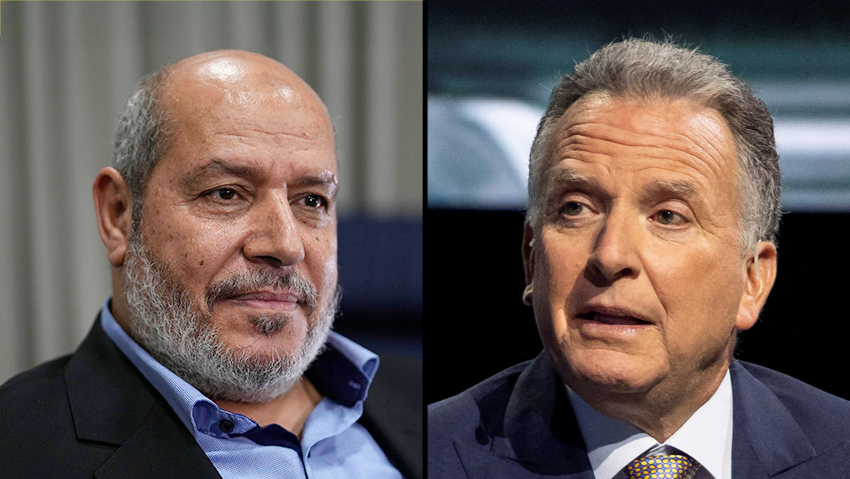
Steve Witkoff and Khalil al‑Hayya
(Photo: REUTERS/Marco Bello, Khalil Hamra/AP)
However, some in Jerusalem view the U.S. initiative at the U.N. as proof that Israel has become a U.S. client state and is entering an irreversible path toward a Palestinian state. On Friday, the United States and eight Arab and Muslim countries — including Qatar, Egypt, the United Arab Emirates, Saudi Arabia, Indonesia, Pakistan, Jordan and Turkey — jointly issued a statement pledging support for the U.S. draft resolution. “This process offers a genuine effort for a credible pathway to Palestinian self-determination and statehood,” the statement said. “We look forward to swift approval of this resolution.”
Among the Israeli concerns: one clause in the draft resolution states Israel will not have a veto over which nations participate in the ISF. While it says the ISF’s composition will be determined in “close consultation” with Israel, it does not require Israel’s approval. That opens the possibility that Qatar or Turkey could join the force — despite Israeli opposition. If adopted, it would mark the first time since the Oslo Accords that Israel transfers security responsibility in parts of Gaza to external parties.
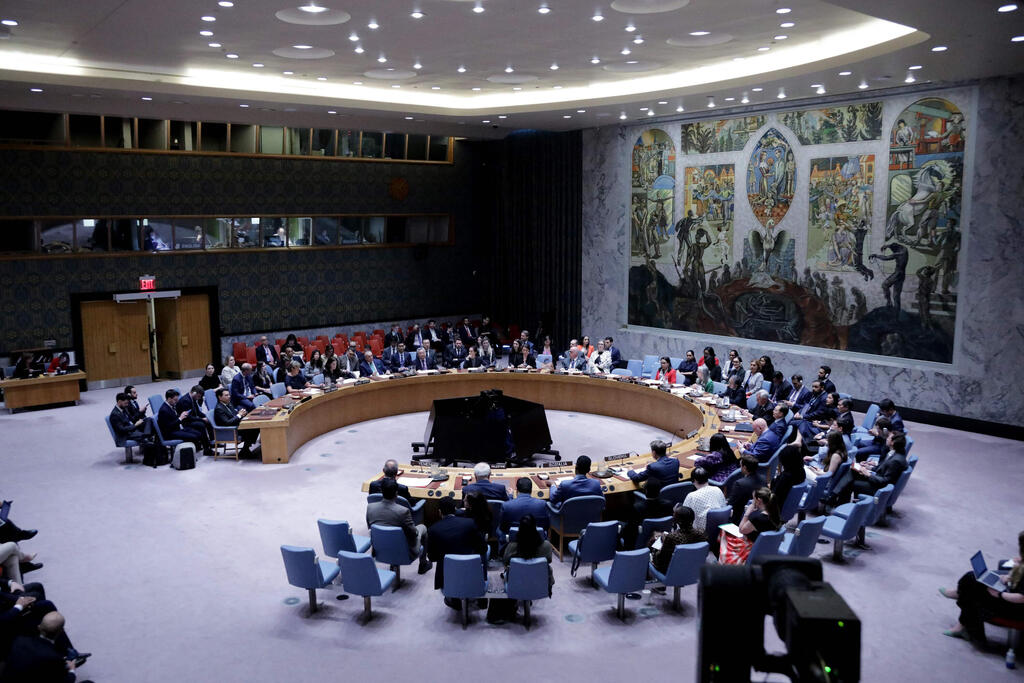
UN Security Council
(Photo: Leonardo Munoz / AFP)
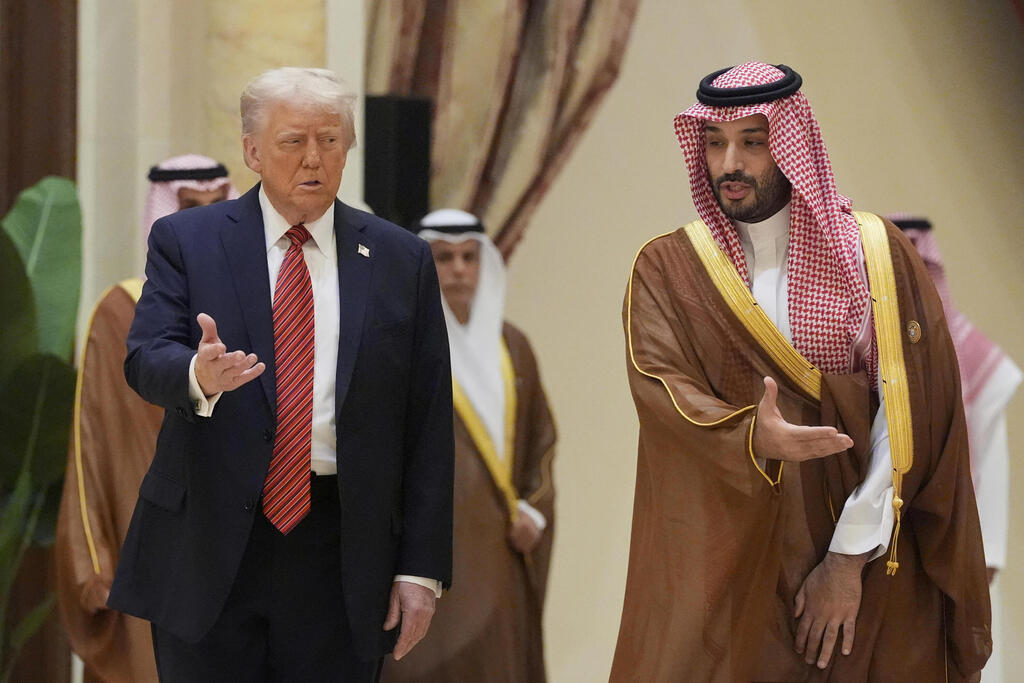
Trump and Mohammed bin Salman, Prime Minister of Saudi Arabia
(Photo: AP Photo/Alex Brandon)
While past resolutions like this might have triggered immediate political upheaval in Israel, this time the silence from ministers such as Itamar Ben‑Gvir and Bezalel Smotrich is striking. They have neither threatened to leave the government nor taken action. Some political analysts suggest Prime Minister Benjamin Netanyahu may have reassured them that the Palestinians are unlikely to meet the draft’s conditions. But Netanyahu will still face the reality of a U.N. decision supporting a Palestinian state.
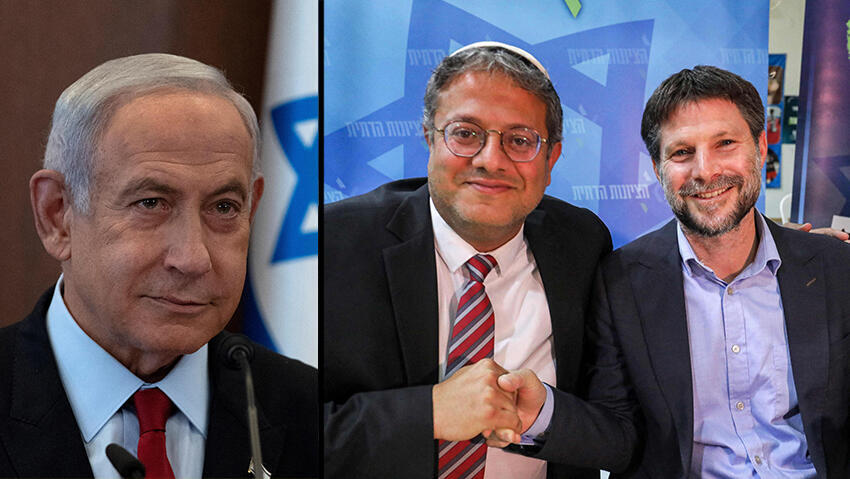
Itamar Ben‑Gvir, Bezalel Smotrich and Prime Minister Benjamin Netanyahu
(Photo: AFP, Reuters)
Trump's remarks about Saudi Arabia
(Video: from X)


The Washington‑based U.S. Central Command unit in Israel’s Kiryat Gat, known as CMCC, is reportedly ramping up preparations for the plan’s next phase. Five working groups — tasked with security, humanitarian aid, intelligence, infrastructure and ISF deployment — are already operational. Once the U.N. decision is made, the United States will finalize which countries will contribute forces, then begin training together with Israel — likely outside Israel — ahead of deployment.
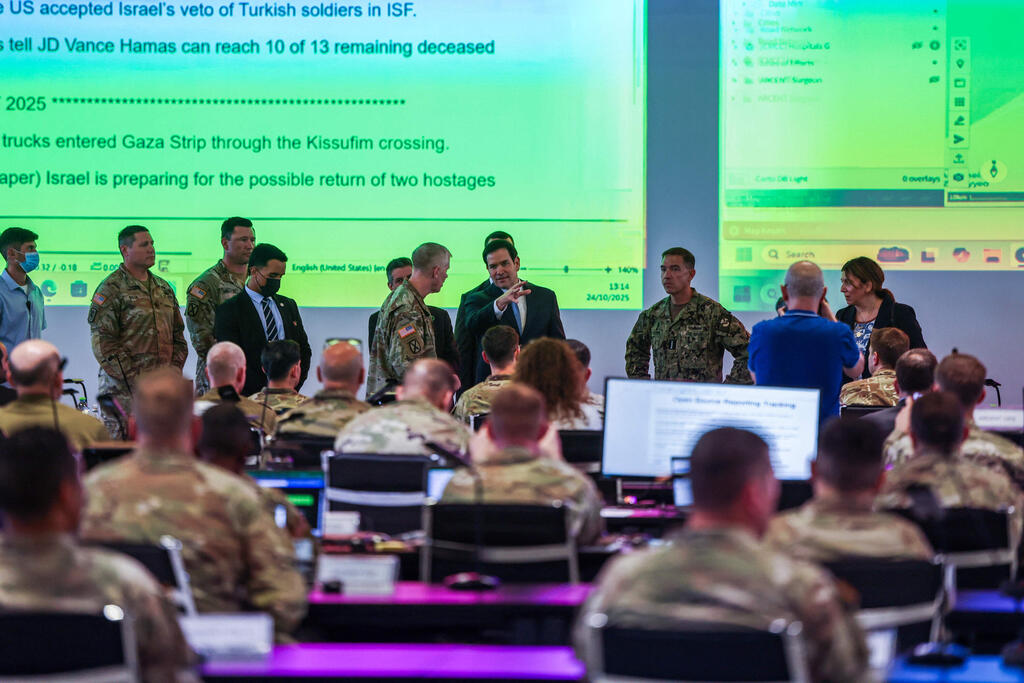
US headquarters in Israel, visited by Marco Rubio
(Photo: Fadel SENNA/ POOL/AFP)
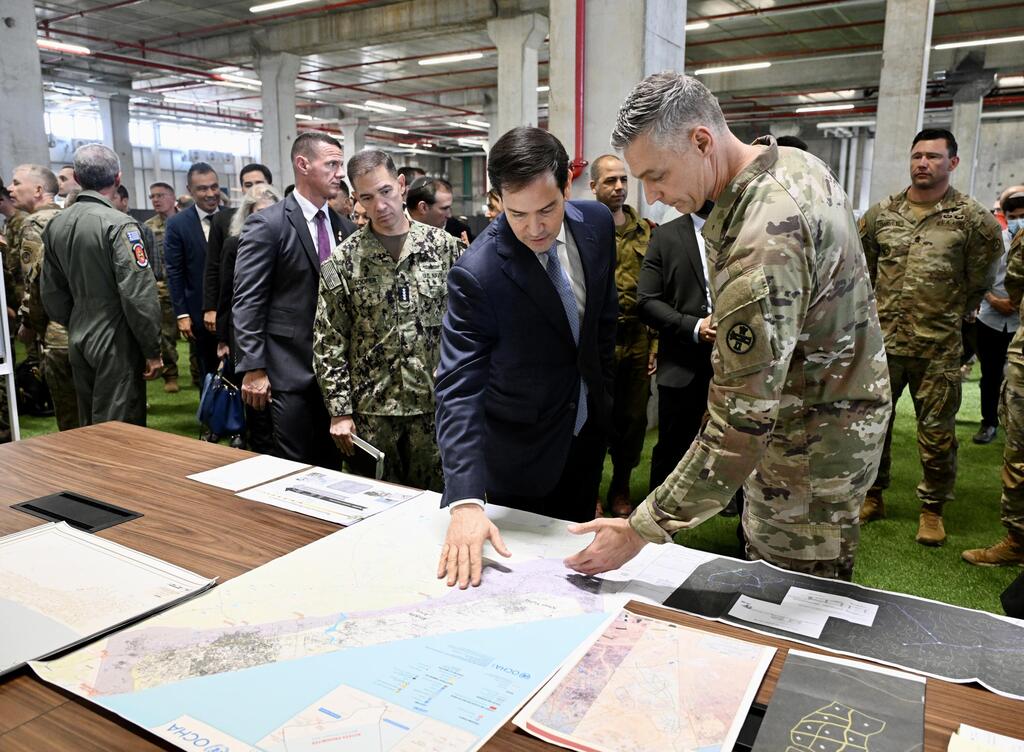
(Photo: David Azagury, U.S. Embassy Jerusalem)
Initial forces are expected to deploy first in southern Gaza near Rafah, with further expansion afterward. The process is expected to take weeks if not months, as infrastructure must be cleared, ordnance removed, and territory prepared. Israeli forces will maintain control up to the “yellow line” — a designated zone — until all operational conditions are met to prevent the Hamas from re‑seizing cleared areas. The aim is for Israel to hold the territory until it can ensure Hamas has been removed, infrastructure replaced and a civilian framework established.