


Prime Minister Benjamin Netanyahu's political bloc, which won 64 seats in Israel's previous election, lost 11 seats in Tuesday's vote, despite receiving approximately 83,000 more votes than four years ago, an increase of 3.6%. The figure does not include supporters of Gideon Sa'ar, whose faction left the National Unity party and eventually joined Netanyahu's political camp.
By contrast, the bloc of parties seeking to replace Netanyahu and the Arab parties increased their support significantly. Unlike in 2022, no major party associated with the opposition bloc or the Arab parties failed to cross the electoral threshold. Another decisive factor was the sharp rise in voter turnout compared with 2022, particularly among Arab Israelis.
Gallery
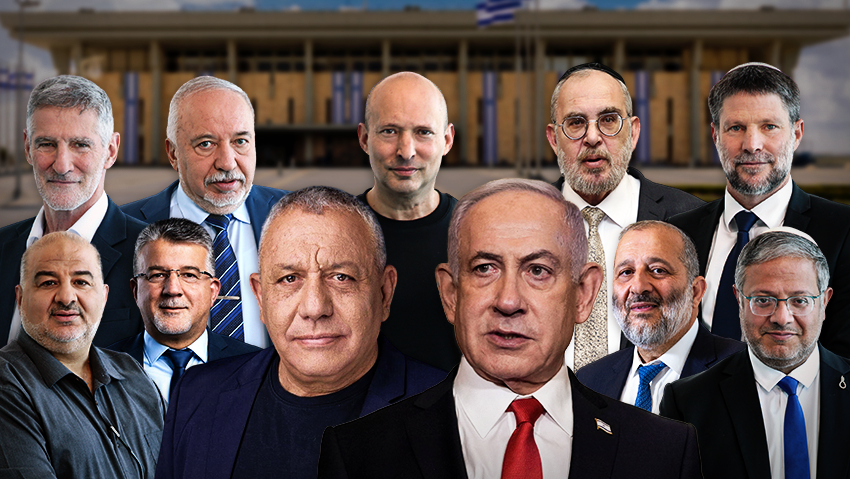
Israeli political party leaders
(Photo: Shutterstock, Shalev Shalom, Elad Malka, Joint List spokesperson, Ryan Frois, Alex Kolomoisky, Oliver Contreras/AFP)
From 64 seats to 53
Likud increased its vote total to approximately 1,163,400, about 48,000 more than in the previous election. However, its share of the overall vote fell sharply, from 23.41% in 2022 to 20.51% this week. In other words, Likud gained votes, but only marginally, while the total number of ballots cast in the election for Israel's 26th Knesset jumped by nearly 20%.
Even when examining Likud's performance independently of its coalition partners, the numbers point to a relative decline. Its vote total increased by 4.3% over four years, compared with a 5.4% expansion of the electorate and a 19% increase in the number of people who voted. In both comparisons, the party lost ground relative to the broader voting population.
Netanyahu's bloc, which includes Likud, Religious Zionism, Otzma Yehudit, United Torah Judaism and Shas, received a combined 48.38% of the vote in the previous election. That share fell to 42.1% in Tuesday's election.
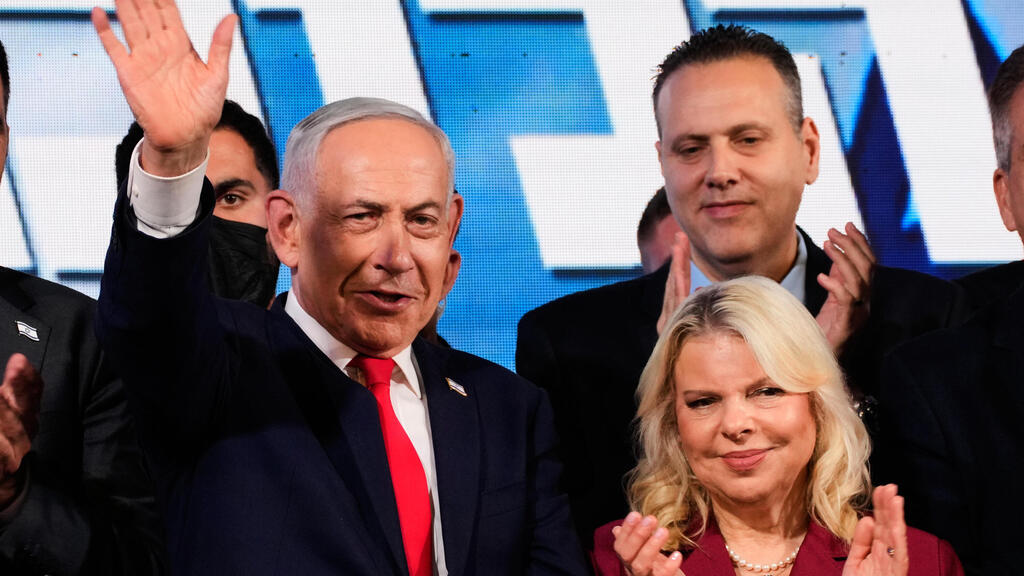
Benjamin Netanyahu addresses supporters after the election results. His bloc gained votes, but at a far slower pace than the opposition and Arab parties
(Photo: AP Photo/Ohad Zwigenberg)
The most striking decline within the bloc was recorded by Shas, whose share of the vote dropped from 8.25% in 2022 to 5.26% in the election for the 26th Knesset. The party received approximately 95,000 fewer votes than four years ago, sending its representation plunging from 11 seats to just six.
Shas, which adopted an unequivocal position against drafting ultra-Orthodox men into the IDF, likely lost religious and traditional voters who shifted their support to other parties, including some within Netanyahu's bloc.
Rabbi Yitzhak Yosef, the party's spiritual leader, explicitly characterized Shas as an ultra-Orthodox party. In a message of encouragement to activists published Thursday afternoon, he wrote: "The community of those who revere God's word has always been the very finest."
United Torah Judaism, meanwhile, increased its vote total by approximately 31,700. Otzma Yehudit and Religious Zionism, which ran together in the election for the 25th Knesset, collectively gained nearly 100,000 votes compared with their previous joint showing. Some of those additional votes may have come from former Shas supporters.
Overall, Netanyahu's bloc gained approximately 83,000 votes, a relatively small increase compared with the growth recorded by the opposition bloc and Arab parties.
This time, no votes lost below the threshold
In the 2022 election, Meretz and Balad both failed to enter the Knesset. Meretz fell approximately 5,000 votes short of the electoral threshold, while Balad was about 17,000 votes away. Meretz received some 150,800 votes and Balad approximately 138,600, meaning nearly 290,000 votes cast for the two parties did not translate into parliamentary representation.
The parties associated with the bloc seeking to replace Netanyahu that crossed the threshold in 2022 received a combined 1,669,596 votes, excluding Meretz. That represented approximately 35% of all votes cast. Including Meretz, the center-left bloc's share reached about 38.2%.

Yair Lapid and Gadi Eisenkot at a Tel Aviv rally marking the 30th anniversary of Yitzhak Rabin's assassination. The opposition bloc gained two seats compared with 2022
(Photo: Motti Kimchi)
In Tuesday's election, the four parties making up the opposition bloc received 37.76% of the vote, slightly below the comparable figure from 2022. However, unlike four years ago, every party in the bloc crossed the electoral threshold.
In absolute numbers, the bloc received approximately 2,141,700 valid votes, compared with around 1,820,000 in 2022 when Meretz is included. That represents an increase of more than 17%, helping lift the bloc's representation from 46 seats four years ago to 48 today.
Arab parties gain nine additional seats
The most dramatic gains, however, were recorded by the Arab parties. In cities such as Umm al-Fahm, where only about half of eligible voters participated in the previous election, turnout rose substantially. Sakhnin recorded the highest turnout of any city in Israel, reaching 86.4%.
These figures help explain why the Arab parties increased their combined representation from 10 seats in 2022 to 19 in Tuesday's election. In the previous election, Balad failed to cross the threshold, effectively leaving votes equivalent to approximately four Knesset seats without representation. The additional five-seat gain can largely be attributed to the dramatic rise in turnout among Arab voters.
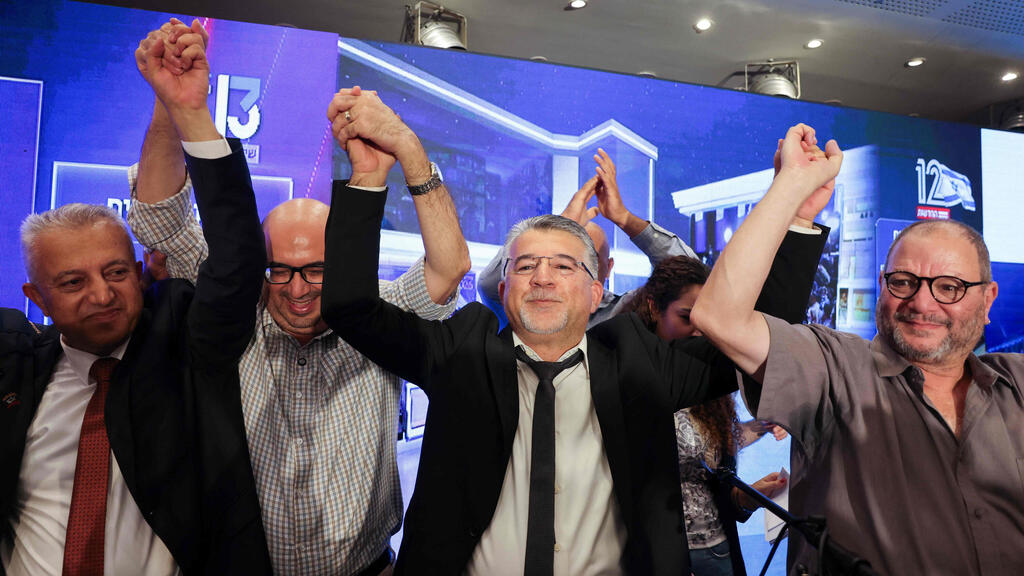
Joint List supporters celebrate in Nazareth. Higher Arab voter turnout and fewer votes lost below the electoral threshold helped produce historic representation in the Knesset
(Photo: AHMAD GHARABLI / AFP)
In the previous election, the three Arab parties received approximately 511,000 votes. This time, the Joint List and Ra'am together won around 835,000 votes, an increase of more than 63%.
The bottom line is that Netanyahu's bloc increased its absolute vote total, but its growth was too modest compared with the expanding electorate and the gains recorded by rival parties. As a result, its parliamentary representation declined substantially.
The opposition bloc increased its vote total by more than 17%, and because none of its constituent parties failed to cross the electoral threshold this time, its representation edged upward.
The biggest winners in terms of increased representation were the Arab parties. With no major Arab party falling below the threshold and voter turnout rising sharply, their combined 19 seats in the 26th Knesset represent the highest number of lawmakers elected on Arab party lists since Israel's establishment.