


Prime Minister Benjamin Netanyahu said Sunday that Israel is close to completing the first phase of the Gaza ceasefire agreement and expects to move soon to the second phase, speaking at a joint press conference in Jerusalem with German Chancellor Friedrich Merz.
It was Netanyahu’s first time answering questions from Israeli reporters in nearly three months, amid ongoing scrutiny over his request for a presidential pardon.
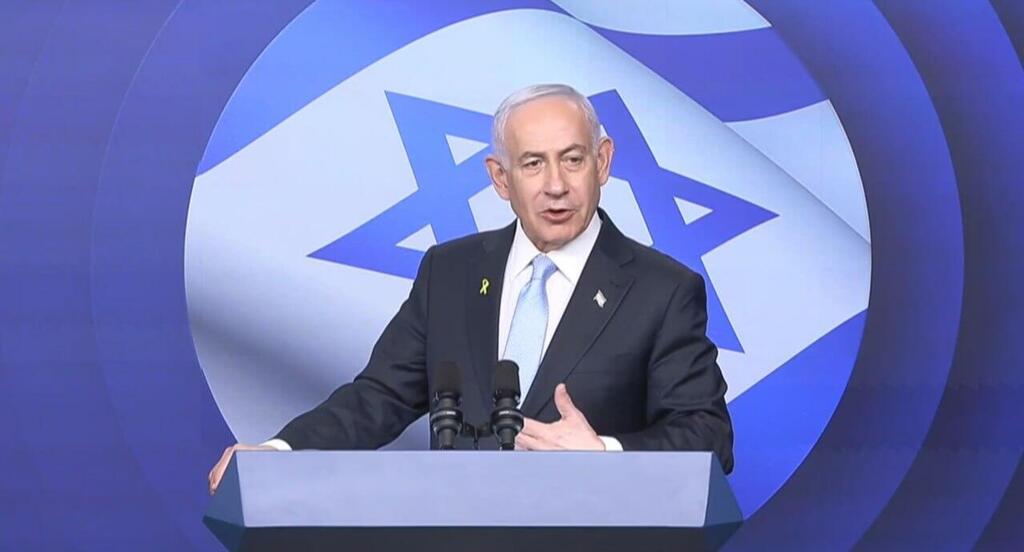
“We finished the first part, as you know, phase one. We’re almost there,” Netanyahu said. Israel is awaiting the return of the body of the final hostage, Sgt. First Class Rani Gvili, before advancing. “Then we very shortly expect to move into the second phase, which is more difficult.”
Netanyahu said he will meet U.S. President Donald Trump later this month. “I’m going to discuss them with President Trump when I meet him later on this month,” he said, pointing to what he called “peace opportunities” created by Israel’s military operations against Iran-backed groups. He said the talks will include “how to bring an end to the Hamas rule in Gaza.”
He added that a third stage would focus on ideological reform. “There’s a stage three — to de-radicalize Gaza… it was done in Germany, it was done in Japan, it’s done in the Gulf states. It can be done in Gaza too.”
Germany stresses responsibility for Israel’s security
Chancellor Merz emphasized Germany’s historical obligation to Israel. “Germany will therefore always stand for the existence and security of Israel… today, tomorrow and forever,” he said. He reiterated support for Israel’s right to defend itself after the October 7 terror attack and said Berlin is contributing personnel to the coordination center in Kiryat Gat, providing humanitarian aid to Gaza and preparing to support reconstruction.
Merz also said a Palestinian state must emerge through negotiations and not be recognized prematurely.
Netanyahu dismissed the idea. “We have a different point of view, obviously, because the purpose of a Palestinian state is to destroy the one and only Jewish state,” he said. “They already had a state in Gaza… and it was used to try to destroy [Israel]. We’re not going to create a state that will be committed to our destruction at our doorstep.”
He said Israel will retain security control “from the Jordan River… to the Mediterranean Sea,” adding that annexation of the West Bank “remains a subject of discussion,” but the status quo on security will continue.
Netanyahu declined to say whether Washington and Jerusalem disagree on the timeline for disarming Hamas. “I haven’t seen yet a clear delineation of what you say is the American position,” he said. “That’s exactly what I’m going to talk to President Trump about.”
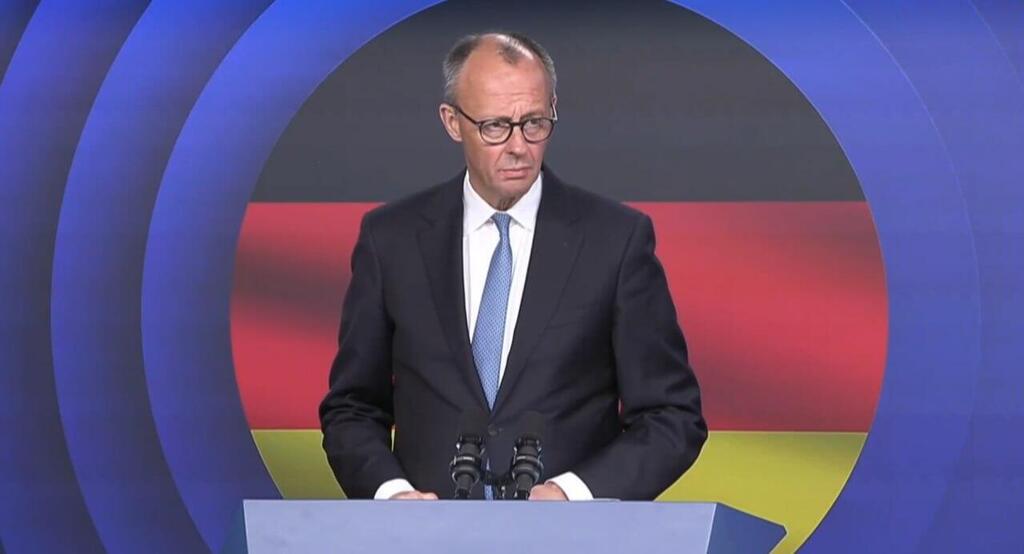
(Photo: GPO)
He said Hamas must comply with its commitments under the ceasefire, including demilitarization.
Merz said his government’s earlier decision to halt a specific weapons transfer reflected “special circumstances” that no longer apply. “This decision does not continue… our fundamental attitude toward the security of Israel has not changed,” he said.
Asked why he has not visited Germany recently, Netanyahu pointed to the ICC prosecutor’s request for arrest warrants against Israeli officials. He accused ICC prosecutor Karim Khan of targeting Israel to deflect from internal sexual misconduct allegations. “This is a corrupt prosecutor that is destroying the reputation of the ICC,” he said.
Merz said Germany does not support an EU proposal to suspend portions of its trade agreement with Israel and is instead focused on “deepening and intensifying” economic and scientific cooperation.
Netanyahu rejects notion he would leave politics for a plea bargain
Pressed by a German reporter on whether he might retire from political life in exchange for a plea deal in his corruption cases, Netanyahu dismissed the idea and responded with humor.
“They’re very concerned with my future. They want to make sure that—how shall I say this?—they’re concerned with my future,” he joked, standing beside Merz.
“Well, so are the voters, and they’ll decide, obviously,” he continued. Netanyahu added that he has “big tasks to do,” including expanding Israel–Germany cooperation, before turning to Merz and saying the partnership “will, in many ways, tower over our previous cooperation… not surprising, because, as you can see, Chancellor Merz is a towering figure.”