

Last year it looked like a modern-day clandestine immigration operation: phones ringing nonstop, hundreds of inquiries a day, and yachts packed with Israelis trying to return home and tourists trying to flee. But as the second Iran war enters its fifth day, the maritime rescue scene is relatively calm.
Shalev Zomer, 42, owner of Derech Hayam Haifa, a sailing school and maritime adventure company, has already launched three rescue sailings to Cyprus since the current fighting began. A fourth vessel is expected to depart in the coming days. But the pace is very different.
Gallery
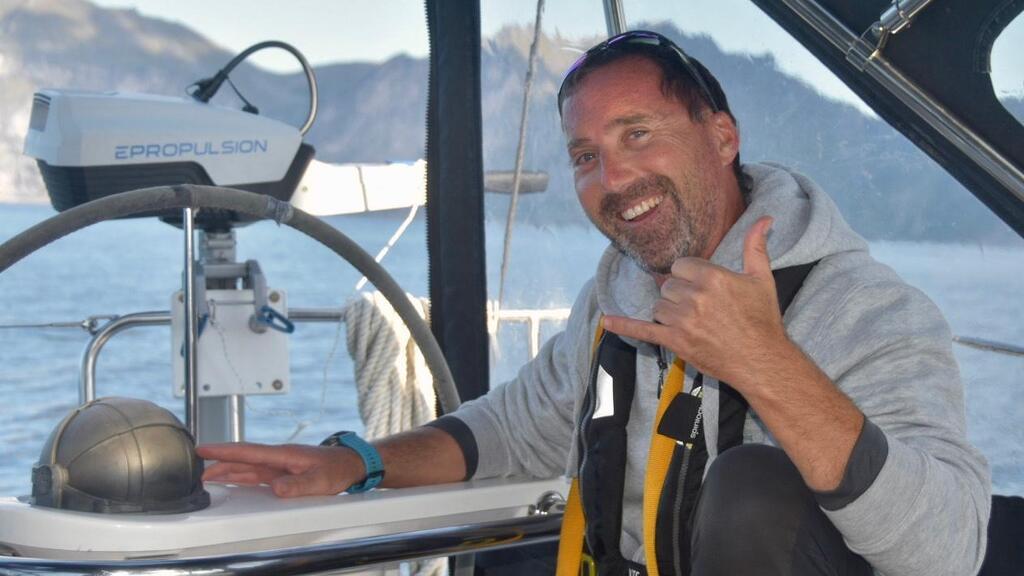
Shalev Zomer has already launched three rescue sailings to Cyprus since the current fighting began
“There’s no panic — people are waiting three to four days for a flight,” he told Ynet, comparing the rounds of fighting. “In the previous war, after two days of fighting I had already sent out five boats. Today I’ve sent only three, and tomorrow probably a fourth. So it’s a bit slower.”
And why isn’t there a line of Israelis at the Larnaca marina?
“Unlike last time, now everyone knew this was going to happen. Anyone who flew abroad knew there was a possibility of getting stuck overseas. We’ve been living on alert for some time, and they understand what that means.” He adds another factor: “It’s February, not June. Then a lot of people were on vacation. Proportionally, the numbers are much calmer now.”
Who have you rescued from Cyprus?
“Ten passengers on each sailing. Usually people who finished work or a vacation and simply want to get home to their children, or who have been called up for reserve duty. Today two more boats left Larnaca and will arrive tomorrow morning.”
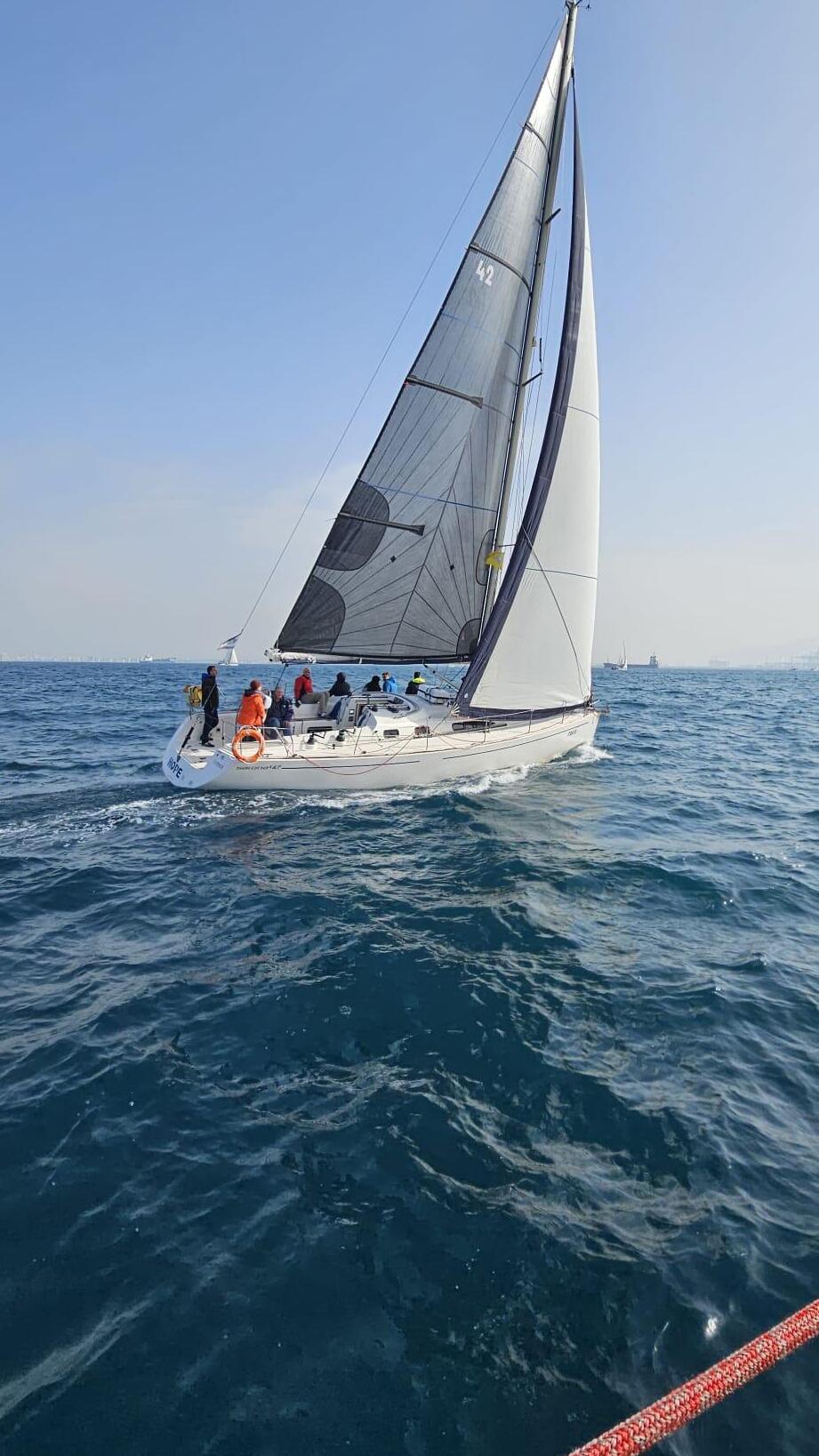
Shalev's yacht
(Photo: Shalev Zomer)
According to him, the main difference is not logistical but psychological. “Last time there was panic. People were caught off guard — and panic created more panic. People started saying, ‘I have to get back at any cost.’” And today? “Those who are stuck say: ‘So I’ll wait another three or four days, they’ll put on flights and I’ll return by plane.’”
Financially, too, it is simpler. “We see it clearly in the market — there’s no panic in the sector at all. People are simply calculating their route, extending their vacation a bit, planning other directions. And because there are alternatives like flights to Taba (on the Israel-Egypt border), one plane can replace 20 yachts. So it’s much more worthwhile for people to look for flights.”
How much does this rescue cost each way?
“The price for a sailing is 3,500 shekels per person. Our boats have four double cabins, a bathroom, a kitchen and a lounge. Each person shares a cabin with someone else — if they come as a couple or with people they know and so on. There are beds and linens. The voyage takes about 24 hours, depending on the time of year.”
And it turns out that food is the passengers’ responsibility. “People need to bring their own, because I don’t deal with catering. They have water and what they need and basic food. I give them the option to make sandwiches, some fruit and vegetables.”

Yossi Sokolov, a veteran sailing instructor at Derech Hayam
There is also an important reminder because of the winter season. Zomer said: “When you go out to sea at this time of year, it’s colder. So I brief everyone to bring warm clothes, coats or something comfortable to wrap up in when sailing at night.”
Yossi Sokolov, 55, a veteran sailing instructor at Derech Hayam, was also surprised by the change in demand despite early preparations. “This time we did our homework to make the process seamless, but it turns out the public and the airlines were also better prepared,” he explained.
According to him, even if February nights are chilly, the sea itself has cooperated: “Specifically, at the start of the fighting the sea was a ‘sweetheart’ — excellent in terms of managing the voyage and safety, even if it was less inviting for jumping into the water like in summer.”