

The demilitarization of Gaza will include decommissioning weapons through an agreed process supported by an internationally funded buyback program, the United States told the U.N. Security Council on Wednesday.
Hamas retains control of just under half of Gaza following an October ceasefire deal brokered by U.S. President Donald Trump. The agreement links further Israeli troop withdrawals to Hamas giving up its weapons.
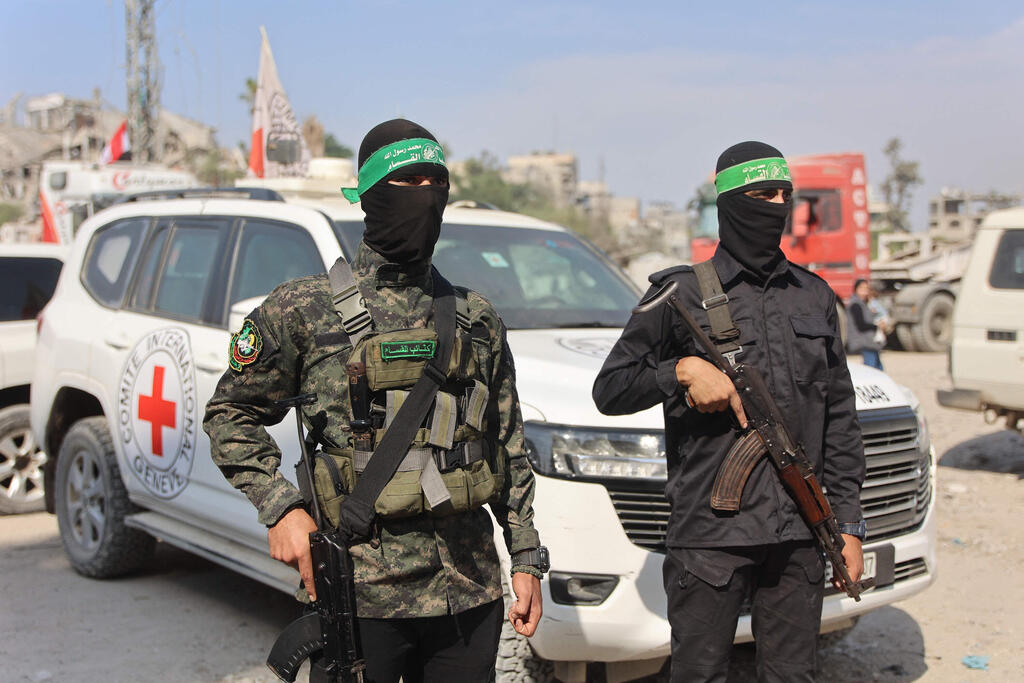
The United States — along with 26 countries that have so far joined Trump’s so-called Board of Peace, and in consultation with the Palestinian National Committee it oversees — will apply pressure on Hamas to disarm, U.S. Ambassador to the United Nations Mike Waltz said.
“Hamas must not have any role in the governance of Gaza, directly or indirectly, in any form, period,” Waltz told the 15-member council. “All military, terror and offensive infrastructure, including tunnels and weapons production facilities, will be destroyed and not rebuilt.
“International, independent monitors will supervise a process of demilitarization of Gaza, including placing weapons permanently beyond use through an agreed decommissioning process supported by an internationally funded buyback and reintegration program,” he added.
Waltz did not elaborate on the proposal, and the U.S. mission to the United Nations did not immediately respond to a request for more details on the independent monitoring mechanism or the buyback program.
Hamas recently agreed to discuss disarmament with other Palestinian factions and with mediators, according to sources. However, two Hamas officials told Reuters that neither Washington nor the mediators had presented the group with any detailed or concrete disarmament proposal.

(Photo: REUTERS/Ramadan Abed)
A U.S. official, speaking on condition of anonymity, said Monday that Washington believes disarmament by Hamas fighters would likely include some form of amnesty for the group.
Israel’s U.N. Ambassador Danny Danon told the Security Council that Hamas remains heavily armed.
“It still holds thousands of rockets, anti-tank missiles and tens of thousands of Kalashnikov rifles. In total, Hamas still possesses roughly 60,000 assault rifles,” Danon said. “These weapons are used not only against Israel but also against Gazans who oppose Hamas rule.”
International Stabilization Force for Gaza
In November, the Security Council mandated Trump’s Board of Peace through 2027, with its mission focused solely on Gaza. Russia and China abstained, arguing that the U.S.-drafted resolution did not give the United Nations a clear role in Gaza’s future.
The resolution described the board as a transitional administration that will set the framework and coordinate funding for Gaza’s redevelopment under Trump’s peace plan until the Palestinian Authority is deemed sufficiently reformed. It also authorized the board to deploy a temporary International Stabilization Force in Gaza.
“We salute and thank our friends who have agreed to contribute to the international stabilization force,” Waltz said. The United States has not yet announced which countries have committed troops.
“The ISF will begin to establish control and stability so that the Israeli Defense Forces can withdraw from Gaza based on standards, milestones and time frames linked to demilitarization,” Waltz said.
He added that those benchmarks would be agreed upon by the Israeli military, the International Stabilization Force and the guarantors of the ceasefire agreement — the United States, Egypt and Qatar.