

At least 45 soldiers belonging to Yemeni government forces were killed Thursday, and at least 50 others were wounded, in a large-scale attack by the Iran-backed Houthis on military camps in the center and east of the country. Government officials said the death toll could still rise.
The attacks targeted bases in the provinces of Marib and Hadramawt, which are controlled by the internationally recognized government. Yemen’s military confirmed that there were dead and wounded among its ranks, but did not provide official figures. The government’s health minister ordered hospitals and medical facilities in the two provinces to raise their level of alert and prepare to receive additional casualties.
Gallery
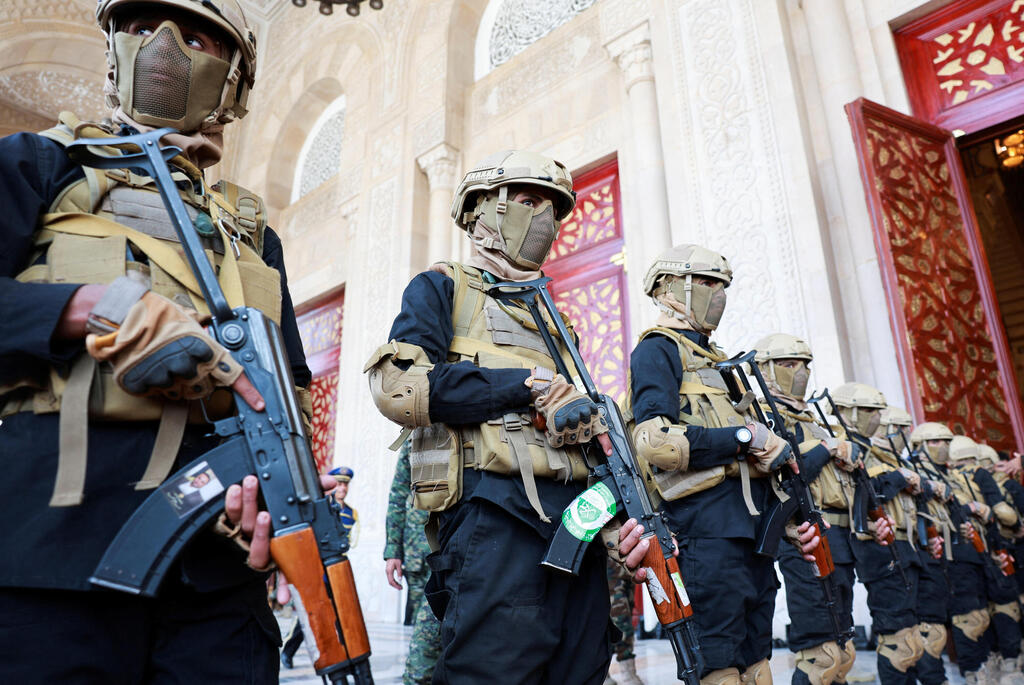
Funeral in Sanaa, Yemen, of senior Houthi government officials killed in Israeli strike
(Photo: Khaled Abdullah/Reuters)
Marib is not just another front-line province: It is considered one of the main strongholds still held by the camp opposing the Houthis in northern Yemen, and it is home to the country’s only gas field and one of its largest oil fields. Its fall, or a weakening of the forces in the area, could give the Houthis a significant economic and military advantage. Hadramawt, by contrast, is Yemen’s largest province and a central arena in the power struggles between the Saudi-backed government and the UAE-backed southern separatists.
The Houthis later claimed responsibility for the attack, saying they had launched ballistic missiles and drones at what they described as concentrations of Saudi forces in the areas of Ar-Ruwayk, Al-Abr and Ath-Thaniyah. The terrorist organization claimed that “hundreds of fighters” affiliated with Saudi Arabia were killed or wounded, and that damage was caused to camps, weapons depots and military vehicles.
The Houthis said the operation was carried out after their personnel identified “a large Saudi military buildup,” which they said was intended to prepare an attack on areas under Houthi control. The Houthis’ military spokesman, Yahya Saree, said: “We are ready to confront any escalation.”

Houthi military spokesman claims 'hundreds of dead and wounded'
(Photo: Mohammed Huwais / AFP)
The attack is considered one of the deadliest escalations inside Yemen since an unofficial ceasefire took effect in April 2022. The arrangement did not lead to a formal end to the civil war, but it largely froze the front lines and reduced major fighting between the Houthis and the Saudi-backed government. The U.S. condemned the attack, saying it was another example of terrorism carried out by the Houthis against the Yemeni people.
The siege at sea — and the attack on land
Yemen’s civil war erupted in 2014, after the Houthis seized the capital, Sanaa, and large parts of the country’s north, forcing the government into exile. Saudi Arabia formed a military coalition the following year aimed at restoring the government to power. Over the years, the war has taken a heavy toll and left Yemen in a prolonged humanitarian and economic crisis.
Thursday’s attack came after weeks of renewed deterioration in relations between the Houthis and Saudi Arabia. Last month, the Houthis declared a “naval siege” against the kingdom in the Red Sea, in response to what they call the Saudi blockade of Yemen. Riyadh rejects the claim and accuses the Houthis of trying to disrupt international shipping and its oil exports.
The Houthis are also considering, according to a Reuters report, charging most ships that pass through the southern Red Sea, while possibly exempting Chinese vessels. According to sources who spoke with the news agency, the matter was discussed with Iranian representatives, and advisers from Tehran arrived in Yemen to help establish a mechanism that would regulate the collection of fees. A U.N. experts report claimed that in 2024, transit fees allegedly collected reached up to $180 million a month, but stressed that it could not verify the figure.
Saudi attack on Saana in Yemen last month


On Wednesday, the Houthis claimed they had launched missiles at two Saudi oil tankers — one near the Red Sea port city of Yanbu and the other in the Gulf of Aden. Saudi Arabia did not confirm their claims. At the same time, data from the company Kpler pointed to an unusual drop in vessel traffic through the Bab el-Mandeb Strait: Only one merchant ship passed through it Wednesday, compared with 20 the previous day.
Bab el-Mandeb, which connects the Red Sea to the Gulf of Aden, is one of the world’s most important trade routes. About 12% of global trade and about a quarter of container traffic usually pass through the strait. Disruption to shipping in the area could force shipping companies to sail around Africa via the Cape of Good Hope, a route that adds one to two weeks to a voyage and significantly raises transport costs.
The route’s importance to Saudi Arabia has grown because of disruptions in the Strait of Hormuz, which have complicated oil exports from the Persian Gulf. During the war in Gaza, the Houthis already proved that even a relatively small number of attacks can drive shipping companies away from an entire route because of risks to crews, cargo and insurance costs.
Since the closure of the Strait of Hormuz, a large share of Saudi energy exports has been shifted westward through pipelines leading to the port of Yanbu on the Red Sea. According to regional sources, about 70% of Saudi energy exports are already being transferred through Yanbu, and the Red Sea now serves as a route for about 7% of global energy supply. For that reason, a Houthi threat to Bab el-Mandeb is not only a threat to shipping, but also to the main remaining alternative route for Saudi Arabia.
The Yemeni arm expands to Iraq
Against the backdrop of the escalation, it was reported last week that Saudi Arabia was concentrating forces ahead of the possibility of a naval, and perhaps also ground, operation against the Houthis in central Yemen. According to a report in The Guardian, one possible target is Al-Bayda province, which was captured by the Houthis in 2020 and 2021. Riyadh has also been working to establish a naval coalition to protect shipping in the Red Sea and Bab el-Mandeb.
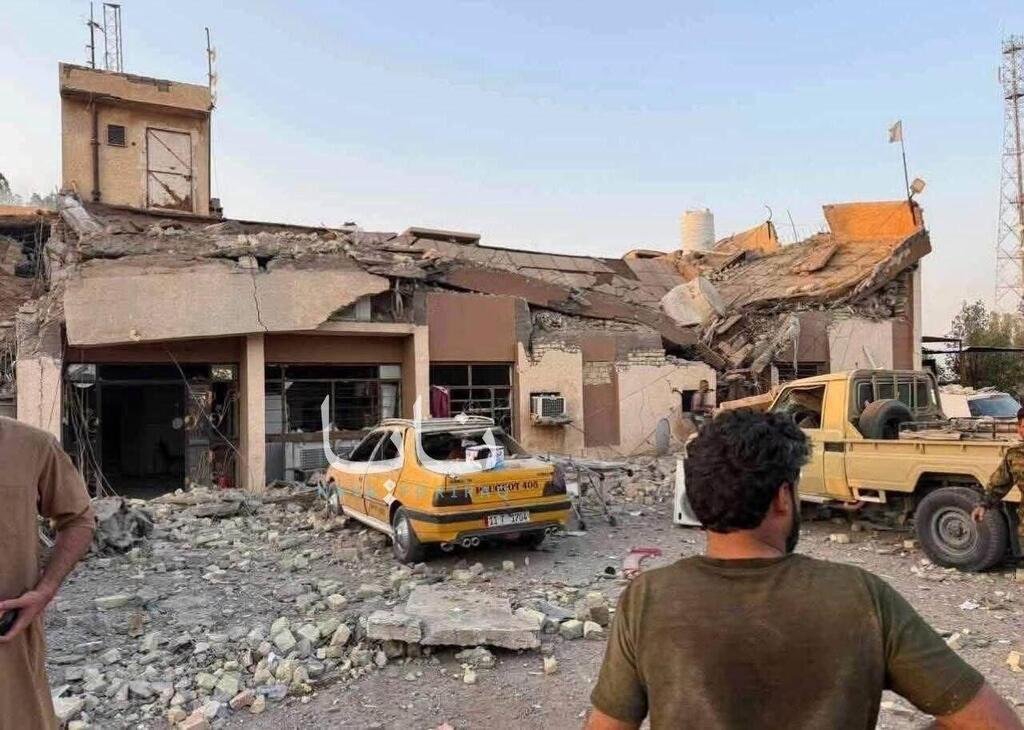
Damage from last week's US-Saudi attacks in Iraq
The escalation is no longer limited to Yemeni territory. According to Saudi and regional assessments published last week, the Houthis took part in attacks against Saudi Arabia launched from Iraqi territory, in cooperation with pro-Iranian militias and under the supervision of the Revolutionary Guards. A week ago, as a reminder, the U.S. and Saudi Arabia jointly attacked pro-Iranian militias in Iraq.
The Houthis have a permanent presence in Iraq, and in 2024 they even announced the establishment of a joint operations room with armed factions in the country. The coordination indicates that the organization is gradually turning from a local Yemeni force into a more active part of a regional network capable of attacking from several fronts.