

As criticism grows over the agreement reached between the United States and Iran, dissenting voices have begun emerging within President Donald Trump's own party. In recent days, the hawkish wing of the Republican Party has questioned whether Trump conceded too much "in the name of trying to end the war."
CNN reported that Republicans are concerned the deal could resemble the nuclear agreement reached by the Obama administration in 2015. "As to any potential deal, it must be compared to the JCPOA, and I am hopeful that it will be vastly different," pro-Israel Sen. Lindsey Graham wrote over the weekend.
President Trump meets with the Emir of Qatar
(Video: THE WHITE HOUSE)


Trump, responding to requests from Republican lawmakers, said that he will bring the agreement to Congress.
Graham added that "the idea of a $300 billion reconstruction fund, given who is in charge of Iran, seems to be tone deaf. It would be akin to a Marshall Plan for Germany with the Nazis still in charge. That wouldn’t have been a good idea then, and any reconstruction fund that benefits this terrorist regime wouldn’t be a good idea now."
He stressed that "any deal with Iran must come to Congress for scrutiny and approval."
Fox News host Mark Levin also appeared skeptical of the administration's move. "I have asked for days, why can't we, the people, see the damn MoU?" he said this week. "Honestly, I've never seen anything like this. If it is a great outcome for peace, then release it."
Former Secretary of State Mike Pompeo, who served during Trump's previous term, also voiced concerns, writing that he hopes the arrangement "will secure the interests of the American people."
Conservative commentator Erick Erickson accused Trump of surrendering to Iran, adding: "Those who kill Americans love this deal."
Gallery
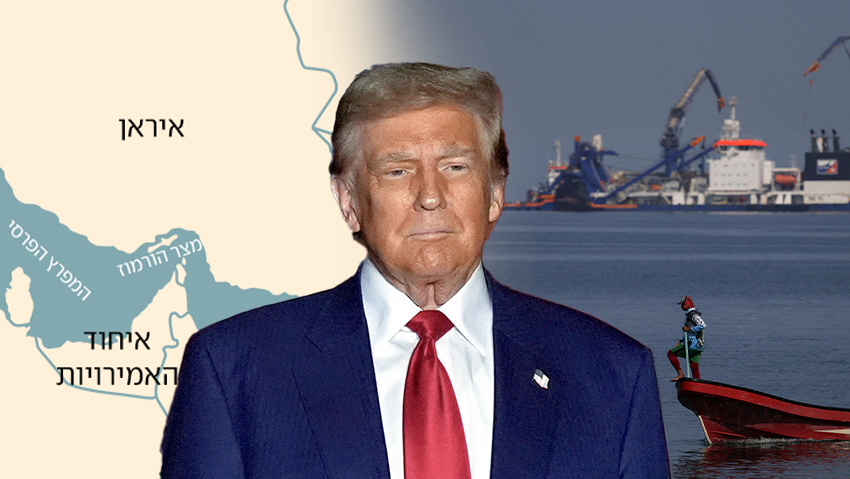
Trump, responding to requests from Republican lawmakers, said that he will bring the agreement to Congress
(Photo: REUTERS/Stelios Misinas/Jonathan Ernst)
At the same time, a growing number of Republican senators have said they have not been given access to the memorandum of understanding between the parties. Some also expressed concern about potentially contentious provisions, including the release of frozen Iranian assets and issues related to Iran's nuclear program.
In the face of mounting criticism, Vice President JD Vance has continued a round of media appearances and was interviewed Sunday on the podcast of conservative commentator Megyn Kelly. Kelly, who has recently become increasingly critical of Trump — as well as of Israel, alongside other figures in the MAGA movement — asked Vance about criticism from Republican hawks.
She also raised comments made by Israeli Channel 14 host Yinon Magal, who called Vance a "lowlife," described Trump as a "loser" and referred to envoys Jared Kushner and Steve Witkoff using a derogatory term for Jews.
"There's a guy named Yinon Magal, who is an Israeli journalist who's very close with Netanyahu, who is basically his mouthpiece, who called you a lowlife, called Donald Trump a loser. The Israeli ambassador to the United States called this so disappointing," Kelly told Vance, before also mentioning criticism from Mark Levin.
Vance smiled and shook his head as Kelly referenced Magal's remarks but did not address them directly. Instead, he attacked critics of the agreement, arguing that they were effectively "believe Iranian propaganda," which he said was presenting the deal inaccurately for domestic political purposes in Iran.
"What's their alternative?" Vance asked. "And I think that fundamentally, if you look at what they're proposing, they're proposing an endless conflict. They want this to go on until every bomb has been dropped or until every Iranian is dead. That is not what the president of the United States wants.
"What he said is, I set about this to end their nuclear program, to eliminate their ability to threaten their neighbors and project power, and to fundamentally make sure that no future child would have to deal with a terrorist regime with an atomic bomb."
Vance added: "That's why the president set out to do this. He feels, and he's right, that he's accomplished that goal, and now we can get to the negotiation to see what are the other benefits that we can get from this, and frankly, what are the benefits the Iranians could get from this if they behave?
"I just don't think that the people who are criticizing this, one, they're not actually dealing with the reality of what's in it. And number two, they don't have an alternative."
Trump himself addressed calls from some Republican lawmakers to submit the agreement to Congress for approval, saying: "I never even thought about but I will, I will send it to Congress."
Earlier, Trump held a joint press conference with Qatar's emir, Sheikh Tamim bin Hamad Al Thani, in Évian, France, on the sidelines of the G7 summit, and declared that "our agreement with Iran is completed, and it should work."
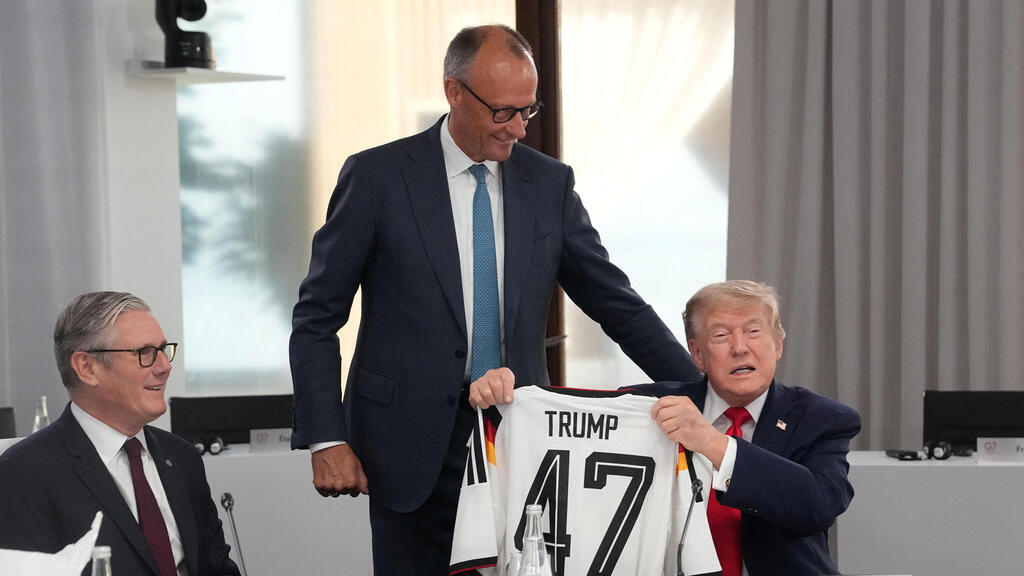
Trump receives a soccer jersey with the number 47 - his number as US president - from German Chancellor Friedrich Merz at the G7 summit
(Photo: Camus/Pool via REUTERS)
He stressed: "“The only thing that really matters to me is Iran will never have a nuclear weapon. They’re not going to develop it. They’re not gonna buy it. They’re not going to do anything with it. And if they do, they suffer unbelievable consequences."
Trump also offered praise for Iran's leadership: "I never cared about regime changes, I never participated in that. But I suppose you could say there was a regime change because the first group died, the second group died too, and part of the third group disappeared," he said about the Iranian leaders, emphasizing that Washington is now dealing with very rational people."
Asked whether the United States would continue to honor the agreement even if the regime resumed executions, Trump did not rule it out.
Trump added that the issue had been raised with Iranian officials and remained under review, adding that such actions were far more common under the first and second generations of the regime's leadership than they are now.He then argued that without his intervention, Israel would have been destroyed.
"If they had a nuclear weapon, they would have blown up Israel. “They would have blown up the Middle East, and they probably would have taken a shot at us."
"Without me, there’d be no Israel,” he stresses, “because no other president was willing to do what I did."