


Prime Minister Benjamin Netanyahu was right last week to define the objectives of the war against Iran in the following order: destroying the nuclear program and the ballistic missile arsenal, and alongside them — in third place — creating conditions that would allow the Iranian people to free themselves from the Islamic regime. However, while the first two goals are relatively clear and largely measurable, the third is vague, particularly regarding the required outcome and the timeline for achieving it.
The gap between the objectives reflects a fundamental problem that was fully exposed on October 7 and persists today: on one hand, Israel enjoys military superiority based on technological and intelligence advantages, along with boldness and ingenuity, which yield dramatic achievements. On the other, there is a persistent weakness in deciphering the intentions and logic of the enemy, accompanied by a tendency to shape reality based on that same lack of understanding of the “other,” often replacing sober strategy with fantasies.
Prominent among these is the belief in the ability to reshape states in the region by installing rulers, creating alternative elites and engineering consciousness. These adventures invariably end badly, are not properly learned from and pave the way for new failed ventures.
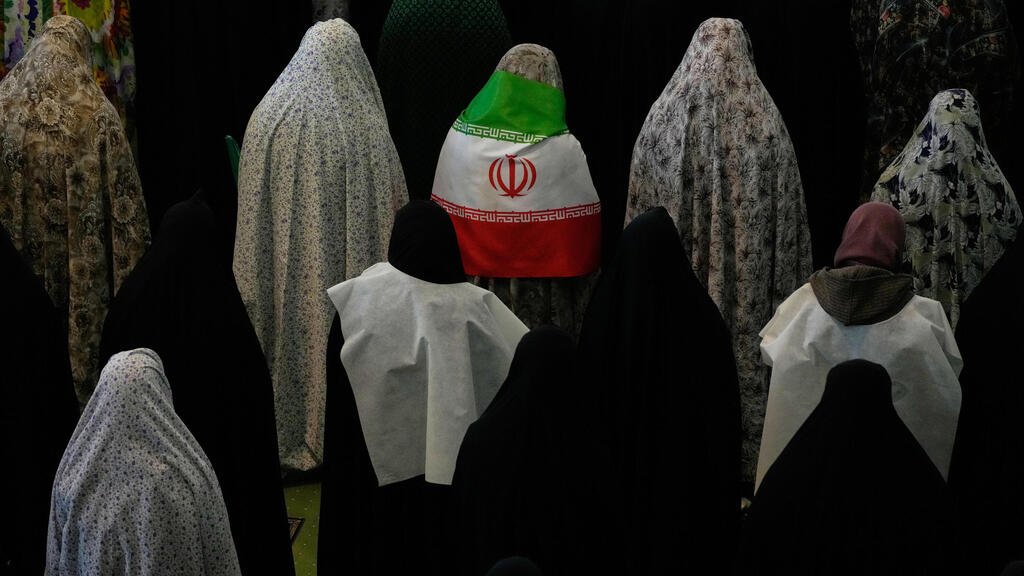
Iranian regime supporters at Eid al-Fitr prayers in Tehran
(Photo: Vahid Salemi/AP)
The ongoing danger stemming from this flaw is becoming entangled in longer campaigns than planned — and escalating complications. This is especially true when a swift and decisive outcome does not materialize, leading to promises without a clear timeline that justify continued waiting, such as being “on the verge of victory,” seeing “growing signs of collapse,” or standing “on the brink of a dramatic turning point,” as was claimed in the context of the Gaza Humanitarian Foundation project or when Trump’s vision of relocating Palestinians from Gaza emerged.
Despite the heavy blows suffered by the Iranian regime, there are, so far at least, no clear signs of internal destabilization. The “beheading” of its leadership is traumatic but does not cause the system itself to collapse — a lesson that could also have been learned from Hamas and Hezbollah — nor is there evidence that the barrier of fear among civilians has been broken.
This raises the question of how long strikes on regime targets should continue before it can be said that suitable conditions for a revolution have been created, and whether such a development is expected during the war, in the near future or in the distant future — or whether its chances are low to begin with.
In this context, questions also arise regarding the allocation of effort among the three objectives. Images of strikes on Basij guard posts or checkpoints raise doubts as to whether, given the historic window of opportunity, it would have been preferable to focus on ensuring or deepening the damage to nuclear facilities, missiles and military industries.
Despite the heavy blows suffered by the Iranian regime, there are, so far at least, no clear signs of internal destabilization
In between, a gap is emerging that is tied to the roots of the October 7 failure and the fact that it has never been properly investigated. The dramatic achievements of operations such as Rising Lion and Roaring Lion, alongside the severe blow to Hezbollah, were largely made possible by technological advantages — the same ones whose overreliance, at the expense of understanding the enemy’s logic, was a root cause of that failure.
These military successes have led to framing past failures as the responsibility of those in office on October 7 (mainly within the security establishment, less so in the political leadership, which has not investigated itself), while downplaying mistakes that continue to emerge and highlight an ongoing gap in assessing enemy intentions — for example, Iran’s harsh response following the killing of Mohammad Reza Zahedi, a senior Revolutionary Guards official, in April 2024 (contrary to Israeli assessments), as well as Hezbollah’s faster-than-expected recovery and its deep involvement in the current campaign instead of being deterred or “fading away.”
The ongoing confrontation is not without a timeframe. It is important to take advantage of the rare opportunity — which has largely taken shape because Donald Trump is currently U.S. president — and concentrate efforts on the nuclear and missile fronts, while reducing the effort devoted to undermining the regime, a goal for which there is no way of knowing whether it will bear fruit, when or how. This approach is particularly necessary in light of the severe scenario that must be prevented: that the Islamic regime survives the campaign and then seeks to rapidly advance toward nuclear weapons development.
The Israeli public has demonstrated deep resilience since October 7, including during the current campaign, and has given the leadership credit to pursue military actions. At the same time, it rightly expects a candid and mature discourse and to ensure that the leadership is acting soberly. Therefore, senior officials would be well advised to avoid hollow slogans or messianic descriptions such as “a miraculous hour” or “a time of redemption,” which raise concerns about an inaccurate reading of reality.
It should also be clarified that, given the nature of today’s conflicts and adversaries — fanatical ideological entities that are not defeated even after severe blows — there is little likelihood of their complete elimination or of a total victory. Transformations in the Middle East are not achieved through external enforcement and engineering, but through internal revolutions, and even then they do not necessarily produce actors friendly to Israel, as demonstrated by Syria under al-Sharaa.
A final and necessary word about the difficulty of conducting a substantive public discourse on policy issues, on which the public has the right to express a view and not merely serve as a “cheerleading squad.” Anyone who claims that demanding answers from the leadership regarding strategy reflects pessimism, a lack of assertiveness or a failure to grasp the magnitude of the historical moment would do well to recall what was said — or what they themselves said — on the eve of October 7 regarding the policy toward Hamas. Then, too, criticism and questions were dismissed as “sourness,” while ideas such as “economic arrangements in Gaza” were described as creative initiatives.
The complacency that preceded October 7 turned into euphoria, and both are the real domestic threats — not the demand for a sober strategy, for investigating failures and for learning from the past.
Dr. Michael Milshtein is head of the Palestinian Studies Forum at the Dayan Center at Tel Aviv University.