


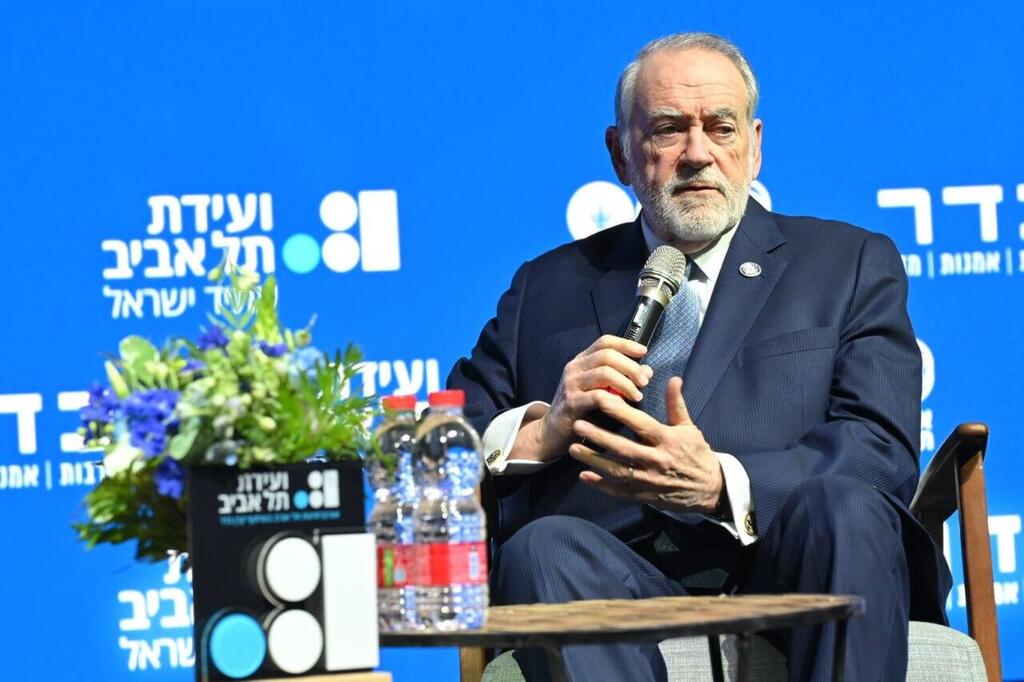
U.S. Ambassador to Israel Mike Huckabee publicly acknowledged for the first time that the next security memorandum of understanding between Washington and Jerusalem will end direct financial assistance to Israel.
In a post Monday night on X, Huckabee said the planned agreement would prioritize trade and economic ties over traditional security grants, marking the first official confirmation by such a senior U.S. administration official of the expected shift.
Huckabee on the defense cooperation between Israel and the UAE
(Video: Mickey Schmidt)


His remarks came in response to public criticism from Joe Kent, the former director of the National Counterterrorism Center, who recently argued that U.S. military aid to Israel no longer serves American interests or provides tangible benefits to the United States.
Huckabee rejected the criticism, saying the economic and security return on the U.S. investment in Israel far exceeds the annual aid package.
“Israel receives $3.8 billion but spends far more than that buying US military goods,” Huckabee wrote.
He added that the United States also receives intelligence and technological innovation from Israel, saying the return on investment is “many times more.” Huckabee then said the new memorandum of understanding with Israel “ends aid & will be based on trade.”
The current U.S.-Israel security memorandum of understanding is set to expire in 2028. Analysts have long expected the next agreement to look significantly different, focusing mainly on jointly funded partnership programs. Such joint projects already exist in part under the current U.S. aid framework.
Huckabee’s statement did not make clear whether the emerging agreement would phase out aid over several years or end funding immediately once the current memorandum expires.
His comments align with recent statements by Prime Minister Benjamin Netanyahu, who has said he wants Israel to end its dependence on U.S. financial aid by the end of the decade.
Several prominent pro-Israel Republican lawmakers on Capitol Hill have already expressed support for Netanyahu’s effort to find a framework that would reduce U.S. funding.

Iron Dome missile defense system
(Photo: IDF/Nir Ben Yosef)
Since the start of the Gaza war, and amid rising antisemitism and anti-Israel sentiment in the West, some members of the American public and lawmakers in both parties have questioned whether the current military aid model remains necessary.
Critics of the agreement, however, are unlikely to be satisfied by a shift to a trade-based partnership. For progressive lawmakers such as Bernie Sanders and members of the Squad, any arrangement in which the United States continues to allocate funds for Israel is still viewed as cooperation with what they describe as "genocide."