


Prime Minister Benjamin Netanyahu said in a wide‑ranging interview with "The Economist," published Friday, that he intends to completely end Israel’s reliance on U.S. security assistance within the next 10 years — and that “the move is already underway.”
In the interview, conducted during Netanyahu’s visit to Mar‑a‑Lago about two weeks ago, the prime minister publicly revealed for the first time that he will not seek a full renewal of the annual $3.8 billion security aid package set to expire in 2028. “I want to reduce military aid within the next 10 years,” he said, answering “yes” when asked if his intention was to zero out dependence. In discussions between Netanyahu and Trump at Mar‑a‑Lago, teams were agreed on to negotiate future aid.
Netanyahu: 'I want to stop American military aid to Israel in 10 years'
(Video: The Economist)


Netanyahu explained that Israel has “matured” and developed impressive economic capabilities, with the economy expected to reach $1 trillion within the coming decade. “We want to be as independent as possible,” Netanyahu stressed, adding that he will continue “to fight for the loyalty and support of the American people” — but greater independence could also help in the battle against the “propaganda war” against Israel.
Senator Lindsey Graham, chairman of the U.S. Senate subcommittee responsible for military assistance, welcomed Netanyahu’s remarks and said he will introduce a proposal to dramatically accelerate the timeline for ending the aid. “The aid we have provided to Israel was an excellent investment that strengthened the IDF, shared technology, and made their military more effective — to the benefit of the United States,” Graham wrote on X.
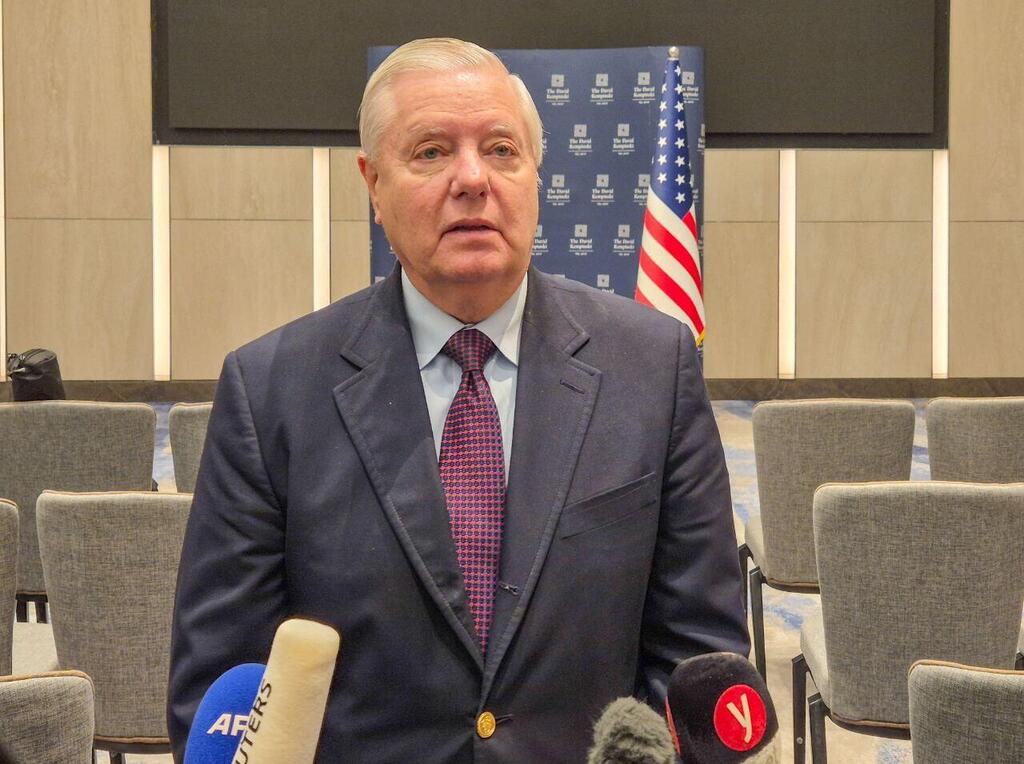
He added: “It appears Israel wants to change this dynamic because it has a thriving economy. I appreciate allies who aspire to greater independence, so there is no need to wait 10 years.” Graham also said that ending the aid would save American taxpayers billions and allow those funds to be reinvested in the U.S. military.
What’s behind Netanyahu’s statement?
Netanyahu did not make these comments in a vacuum, but against the backdrop of concern in Israel that, in the current U.S. political climate, Trump may not — and perhaps may not want to — pass another broad security assistance agreement like the one signed under President Barack Obama in 2016, which took effect in 2018 and is due to expire in 2028.
It appears Netanyahu wanted to get ahead of the issue, as there are two opposing blocs within American public opinion and society regarding continued U.S. security aid to Israel. One is the radical left, including figures such as Bernie Sanders and Alexandria Ocasio‑Cortez, who oppose aid on ideological grounds, arguing against American weapons being used in attacks on civilians and occupation.
The other is the “America First” faction within the MAGA movement of Trump supporters, a isolationist strain that argues: we shouldn’t be financing anyone’s security and we want returns. This is how it plays out with Ukraine and minerals agreements, and with Europe, which the U.S. is unwilling to fund militarily while it invests little in its own defense and relies on Washington to protect it. Accordingly, the U.S. is demanding that all NATO members increase their defense spending.
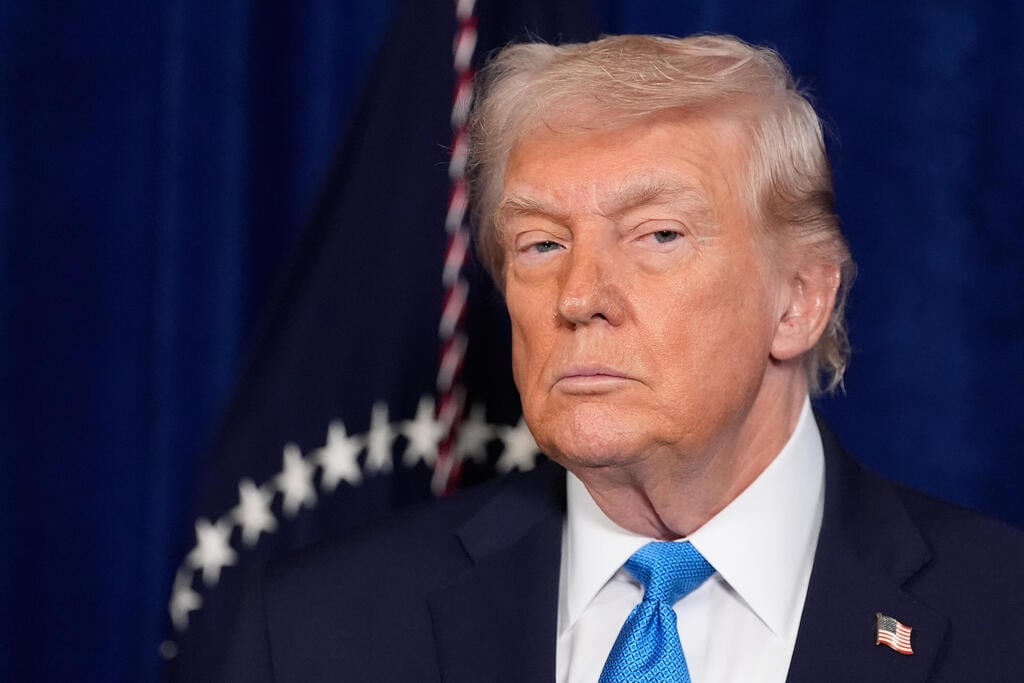
Trump at the press conference on the attack in Venezuela
(Photo: Alex Brandon/AP)
Since 2018, Israel has received U.S. military aid of $3.8 billion per year, with nearly all of that money spent on purchases inside the United States in recent years, also benefiting the American economy. The U.S. view is that military aid to Israel indirectly and directly strengthens the United States as well.
The background to Netanyahu’s comments to The Economist is that within the Republican Party there are elements who believe the U.S. should not “save the world.” Leading this viewpoint is Vice President J.D. Vance, who says that if countries want aid it should be tied to joint projects.
This is essentially what Netanyahu is proposing: Israel does not want charity or handouts, but rather more cooperation. Such cooperation has already taken place under the current agreement, for example with the Arrow and Iron Dome systems, from which the U.S. has benefited greatly. This is the direction Netanyahu is promoting: a gradual reduction in military aid and a shift toward security projects and cooperation that benefit both Israel and the United States.
This aligns well with the U.S. National Security Doctrine published in December, which states that “the U.S. must first do what is good for the United States.” Israel argues that what is good for the U.S. is Israel’s security and cooperation with Israel. Netanyahu is essentially aligning himself with that doctrine, taking into account changes within the Republican Party. The comments were also made amid concerns that it will be very difficult to pass another large aid agreement in Congress in the current climate, as there is opposition within both the Republican and Democratic parties. There have always been isolationist elements in the Republican Party, but their influence is growing.
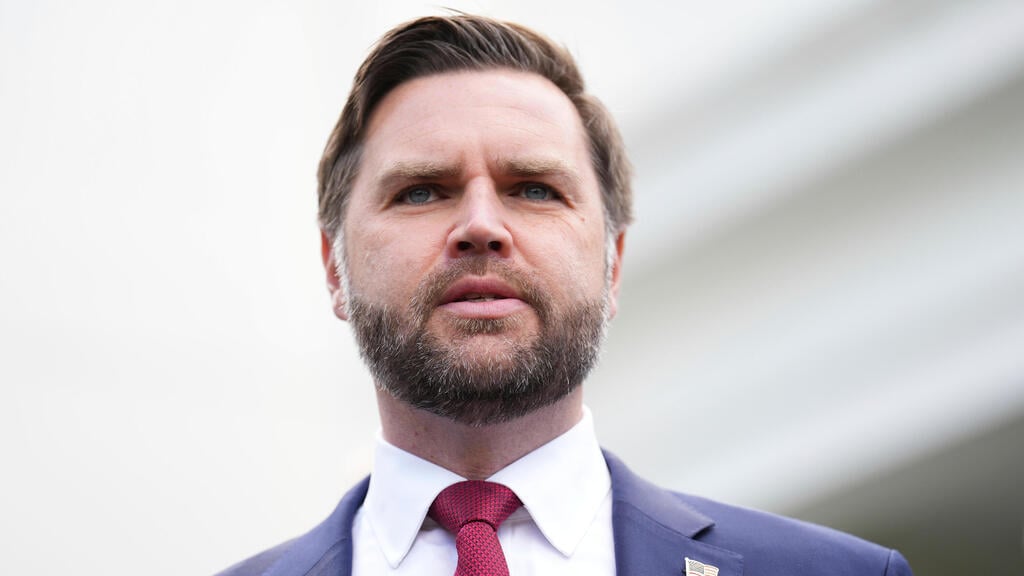
US Vice President JD Vance
(Photo: Jacquelyn Martin/AP)
It is important to note that aid is not expected to immediately drop to zero, but will gradually shrink on the one hand and shift toward specific projects and long‑term cooperation on the other. Netanyahu speaks of gradualism because Israel still depends on American aid. The IDF needs those dollars and cannot immediately wean itself off them — it requires time to adapt. The faster the reduction, the greater the potential burden on Israeli citizens.
A noteworthy point is that Netanyahu — who says Trump is the best friend Israel has had in the White House — is declaring his intention to reduce U.S. security aid to zero. The question arises: why did Israel receive its most generous deal under a less friendly administration like Obama’s, and why is Israel now offering to reduce security aid after October 7 and the multi‑front war?
In fact, facing these threats it would be reasonable for Israel to seek additional aid — as it has increased its own defense budget — but Netanyahu apparently concluded that the chances of receiving an increase, or at least the same amount, are not high, and chose instead to move toward Trump. This may also relate to Israel’s bitter experience in efforts to reduce tariffs that Trump imposed on it.
Yoram Ettinger, an expert on U.S.–Israel relations and former counselor at the Israeli Embassy in Washington, emphasized that the $3.8 billion in American aid generates an unusually high return for Americans — multiplying export and employment in the U.S. According to Ettinger, in 2018 Israel was the first country to use the F‑35 in operational missions at a time when U.S. experts said the F‑35 was destined to fail.
However, “the Israeli combat laboratory” (along with manufacturer Lockheed Martin) overcame critical faults, improved performance, and in 2025 contributed approximately $40 billion in exports, $72 billion in annual economic output, and $173 billion in pending orders, in addition to 290,000 jobs in the F‑35 production process. This economic output contributes billions of dollars in corporate and employee tax revenues to the U.S. Treasury.
American aid also saves the U.S. billions in research and development. “Every day Israel transfers to aircraft manufacturers and a dozen other weapons producers in the U.S. operational lessons, maintenance and repairs — saving the U.S. defense industries between 10 and 20 years of R&D that would otherwise cost billions of dollars,” Ettinger explained. “For example, the R&D cost of the F‑35 is $55 billion. Israel’s contribution to upgrading U.S. weapons systems enhances U.S. competitiveness in the global market and increases U.S. exports and employment.”
How the U.S. benefits from security cooperation with Israel
Showcase for U.S. Weapons Systems: Israel’s wars and counter‑terror operations demonstrate the superiority of U.S. weaponry in global competition. Israel’s opening strike on Iran in the 12‑Day War in June, involving 200 F‑35s, F‑16s and F‑15s, highlighted the relative advantage of American fighter aircraft and boosted exports. These strikes also exposed vulnerabilities in Russian and Chinese air defense systems deployed worldwide, shifting the global balance of power in favor of the U.S.
Innovation Center for U.S. Military Doctrine: The development of U.S. Army air, land and sea tactics systematically leverages Israeli experience in wars and counter‑terror operations. For instance, U.S. special forces benefiting from Israel’s handling of suicide bombs and IEDs in Afghanistan, Iraq and Syria. The U.S. Air Force gains significantly from joint exercises with the Israeli Air Force.
Critical Intelligence: Former U.S. Air Force intelligence commander Gen. George Keegan said the scope and value of intelligence provided by Israel is “equivalent to five CIAs.” The annual budget of one CIA is about $15 billion (a 400% return on the $3.8 billion investment).
Geo‑Strategic Location of Israel: Admiral Elmo Zumwalt, former U.S. naval operations commander, and Gen. Alexander Haig, former NATO commander and U.S. Secretary of State, argued that Israeli military activity is equivalent to several U.S. aircraft carriers and army divisions in a region critical to U.S. security and economy — from the Mediterranean to the Red Sea, Indian Ocean and Persian Gulf, and between Europe, Asia and Africa.
This region holds 48% of the world’s oil reserves and is a hub of anti‑American Islamic terrorist activity and critical shipping routes between Asia and the West. Building one aircraft carrier costs $10–$13 billion (a 340% return on investment), and deploying one ground division to the Middle East costs about $1 billion.
U.S. Strategic Military Base Without U.S. Troops: Israel is the largest U.S. military base in the world without American soldiers, supported by an annual investment of $3.8 billion — compared with $35 billion and 80,000 U.S. troops in Western Europe, which has lost the will to act against Islamic terrorism.
Unique Force Multiplier for U.S. Deterrence: In June 2025 Israel disabled Iranian air defenses, paving the way for potential U.S. airstrikes on Iran’s nuclear facilities without resistance. In 2024, Israel struck Hezbollah, contributed to the downfall of the Assad regime and enabled the U.S. to become a central actor in Syria. In 2007, Israel destroyed Syria’s nuclear reactor, sparing the world a catastrophic nuclear civil war. In 1981, Israel destroyed Iraq’s nuclear reactor, saving Washington’s Arab allies from Saddam Hussein’s grasp and preventing a possible nuclear Gulf War in 1991.
Historical Contributions to U.S. Counterterror Doctrine: In 1976, Operation Entebbe provided momentum for establishing U.S. Delta Force. Israel’s victory in the 1973 Yom Kippur War helped convince Egypt to move from the Soviet bloc to the American fold. Israel’s 1967 Six‑Day War prevented Egypt (with Soviet backing) from dominating the Arab world and toppling pro‑American oil‑producing regimes at a time when the U.S. depended on Persian Gulf oil.
Unlike other U.S. allies — whose alignment with Washington shifts depending on their government — Israel’s reliability as a U.S. ally is based on solid pro‑American consensus across both left and right, secular and religious communities. “U.S.–Israel cooperation is a two‑way street of mutual benefit, yielding the highest return on American investment ever,” Ettinger concluded.