


Israel, Greece and Cyprus are working to build a strategic security “wall” aimed at deterring Turkey and preventing it from shifting into an openly hostile posture, Israeli sources told ynet ahead of a trilateral summit set for Monday in Jerusalem.
The high-level meeting, which will include Prime Minister Benjamin Netanyahu, Greek Prime Minister Kyriakos Mitsotakis and Cypriot President Nikos Christodoulides, comes amid escalating tensions between Turkey and all three countries. These include Turkish violations of Greece’s airspace that recently prompted Greek fighter jets to scramble, an incident that brought tensions to a peak.
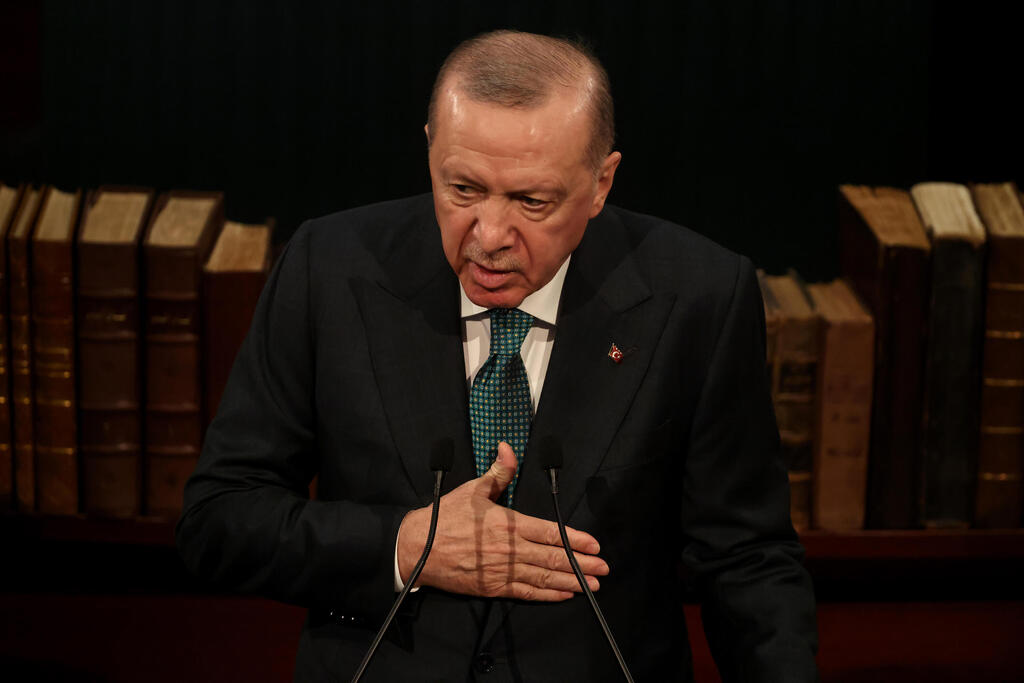
The summit will cover a range of issues, with security cooperation topping the agenda. Israeli officials view Turkey as a regional rival, but not yet an enemy, and say the aim is to prevent further deterioration. The discussions are expected to focus on how the three countries can form a strategic triangle to signal resolve and restrain Ankara, including joint military exercises, increased coordination and a unified deterrent message.
In addition to defense, the summit will emphasize energy cooperation. One major initiative involves connecting Israel, Greece and Cyprus to a shared electricity grid through an undersea power cable. Greece is currently constructing a power line between Crete and Cyprus, and once Cyprus connects to Israel, it will mark a significant shift, linking Israel to the European energy network for the first time.
The leaders will also discuss natural gas development, particularly the massive Aphrodite gas field, of which 85 percent belongs to Cyprus and 15 percent to Israel. Cyprus is weighing the possibility of building its own gas processing facility, potentially competing with Egypt in the region.
The summit is also expected to address the U.S.-backed India–Middle East–Europe Economic Corridor (IMEC), a proposed initiative linking India, the Middle East, Israel and Europe via advanced transport and energy infrastructure. This includes plans for rail networks, energy cables and expanded trade and security cooperation among the partner nations.
Israel has denied Greek media reports suggesting that it, Greece and Cyprus are forming a joint military intervention force, an arrangement that would resemble a defense pact. Senior Israeli officials said such a plan is not on the table and will not be discussed at Monday’s trilateral summit in Jerusalem. However, all three countries are eager to deepen military coordination to ensure they are prepared in the event of a future crisis. The main objective, they said, is deterrence.
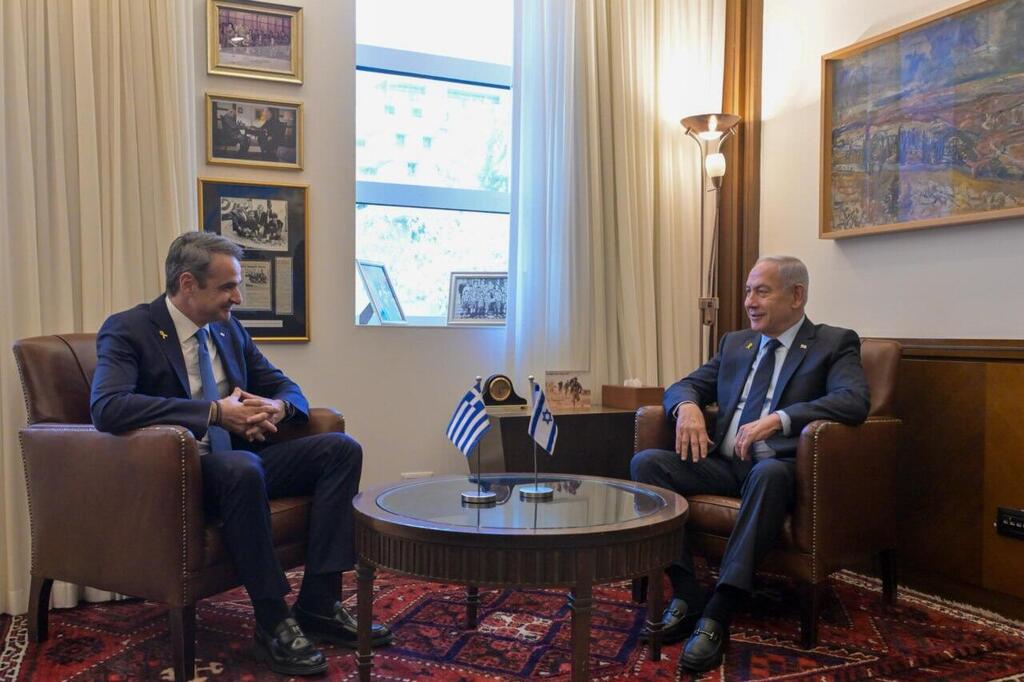
Greek Prime Minister Kyriakos Mitsotakis and Netanyahu meet in Jerusalem in March
(Photo: GPO)
As part of this growing defense cooperation, Israel is reportedly in advanced talks to sell a significant volume of weaponry to Greece. The three countries are also planning additional joint military exercises. Beyond the security dimension, the partnership includes civil coordination: Israel, Greece and Cyprus are exploring the establishment of a regional emergency response center to handle civilian crises such as wildfires, maritime search-and-rescue operations and earthquake preparedness.
On Monday, during Netanyahu’s meeting with U.S. Ambassador to Turkey and President Donald Trump’s envoy to Syria Tom Barrack, Israeli officials took the opportunity to send sharp messages regarding Turkish President Recep Tayyip Erdoğan’s conduct.
According to one official present, the Israeli side warned that continued escalation in Turkish-Israeli relations must be avoided for the benefit of both countries. One Israeli official reportedly quipped to Barrack that Erdoğan, who “had previously compared Netanyahu to Hitler twice a day, and now does it three times a day.”
In response, U.S. representatives suggested Erdoğan’s rhetoric was aimed at a domestic audience and tailored to appeal to rural voters in Turkey. Israeli officials, however, warned that verbal aggression in “Act I” of a crisis can become “the gun fired in Act II,” a reference to how unchecked incitement can escalate into action, particularly in the post–October 7 reality.
A senior Israeli official familiar with the Israel-Greece relationship emphasized the depth of their security cooperation: “The level of coordination between Israel and Greece has been extremely high for years. There’s an ongoing dialogue, intimate exchanges, joint exercises. Every year we hold around 40 joint drills, trainings and intelligence exchanges.”
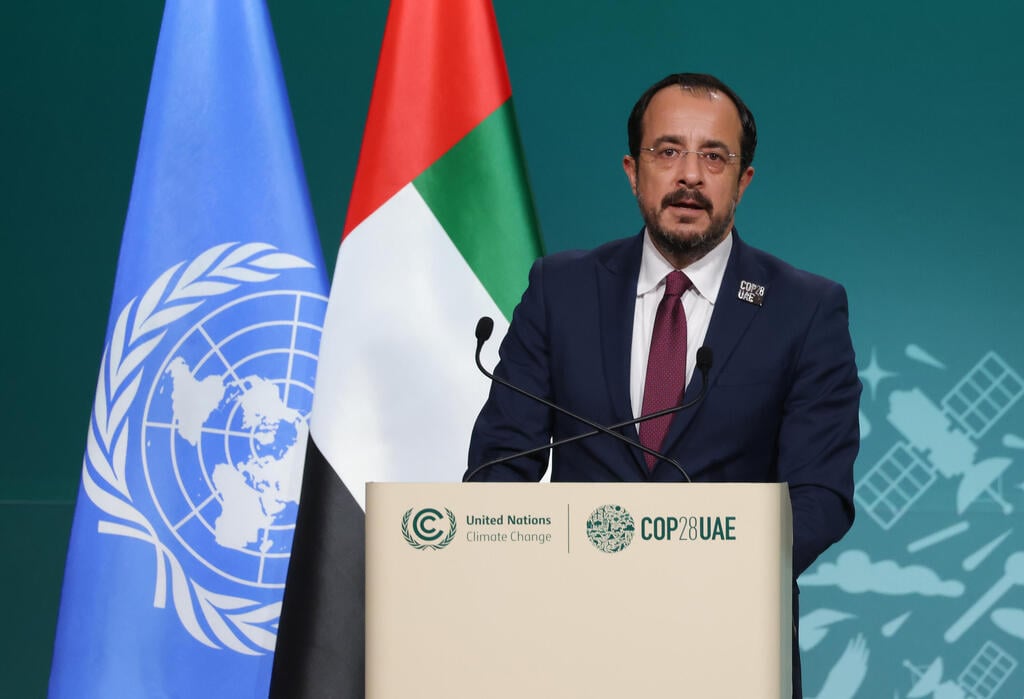
Cypriot President Nikos Christodoulides
(Photo: Sean Gallup/Getty Images)
The official dismissed the Greek media reports, saying the idea of a joint rapid-response force “does not exist, and the likelihood of such a force being established is not realistic.”
Israel continues to supply Greece with advanced weapons systems, with a recently approved deal for precision-guided munitions and talks underway for a larger agreement involving the sale of the David’s Sling missile defense system, Barak and Spyder missiles, and other systems. The deal is not yet finalized, as other international competitors are in the running, but Israeli officials expect the matter to be discussed during the bilateral meetings between Netanyahu and Mitsotakis.
Greece is seeking to maintain its defensive edge amid Turkey’s accelerated military buildup, which has raised concerns in Athens. While no one expects a full-scale war with Turkey, Greek officials fear the possibility of a limited military clash, particularly in the Aegean Sea. That scenario represents one of Greece’s primary defense challenges.
Israel views its partnership with Greece and Cyprus as a strategic alliance that contributes to regional stability and strengthens the security of each country through close ties. “I don’t expect Greek soldiers to defend Israel or Israeli soldiers to defend Greece,” said a senior Israeli official. “What we do have is cooperation that provides each side with advantages. They assist us in various ways, and the relationship between our defense establishments is strong. But a joint military unit? That’s not happening.”
In November, Acting National Security Adviser Gil Reich and Prime Minister Netanyahu’s military secretary, Maj. Gen. Roman Gofman—named the next Mossad chief earlier this month—visited Athens for political and regional consultations. Israel Air Force Commander Maj. Gen. Tomer Bar also held a strategic meeting with senior air force officials from Greece and Cyprus to deepen military cooperation. This week, Defense Minister Israel Katz met with his Cypriot counterpart, further underscoring the expanding ties.
Another topic expected to come up at the trilateral summit is the potential role of Greece and Cyprus in post-war Gaza. Greece has expressed interest in participating in future reconstruction efforts in the enclave.