


Senior European diplomats say Israel’s refusal to allow Palestinian Authority elements into the Gaza Strip is preventing progress to the second stage of U.S. President Donald Trump’s peace plan.
“There is no progress at all on the critical question of disarming Hamas, who will do it and when it will be done,” a senior European diplomat familiar with the issue said. He said determining how Hamas will be disarmed appears to be a “precondition” for countries willing to send forces to Gaza as part of what is known as the International Stabilization Force, or ISF. The force has received a green light from the U.N. Security Council, but has not yet been established in practice.
Gallery
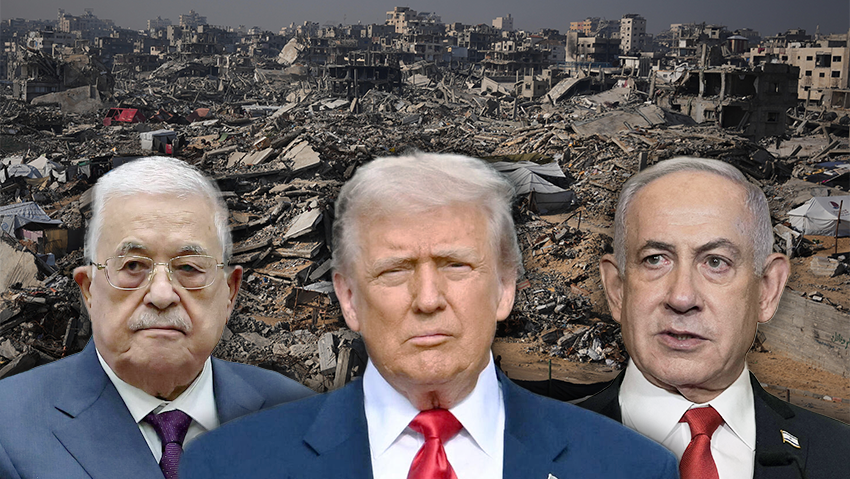
Netanyahu, Trump, Abbas and the destruction in Gaza
(Photo: Abdel Kareem Hana/AP, Oliver Contreras/AFP,Alex Brandon/ AP,)
According to the European source, Hamas is exploiting the lack of agreement on the issue to strengthen itself in the large areas that remain under its control in the Strip. He said Hamas had agreed “in principle” to disarm, though in practice the terrorist group has opposed handing over its weapons. “It is taking advantage of the fact that this is stuck and that nothing is happening in order to reestablish itself,” he said.
The source added that this is causing deep concern in the international community. “This brings us to the question of the Palestinian fingerprint on the day after, and the Palestinian Authority’s role in all this. All European countries think the PA should play a role. Yes, the PA needs to continue reforms. But we think Palestinians can play a role in the demilitarization of Gaza. This is stuck. Basically, Israel’s refusal to give the PA any role is a big problem. There is no other way to say it.”
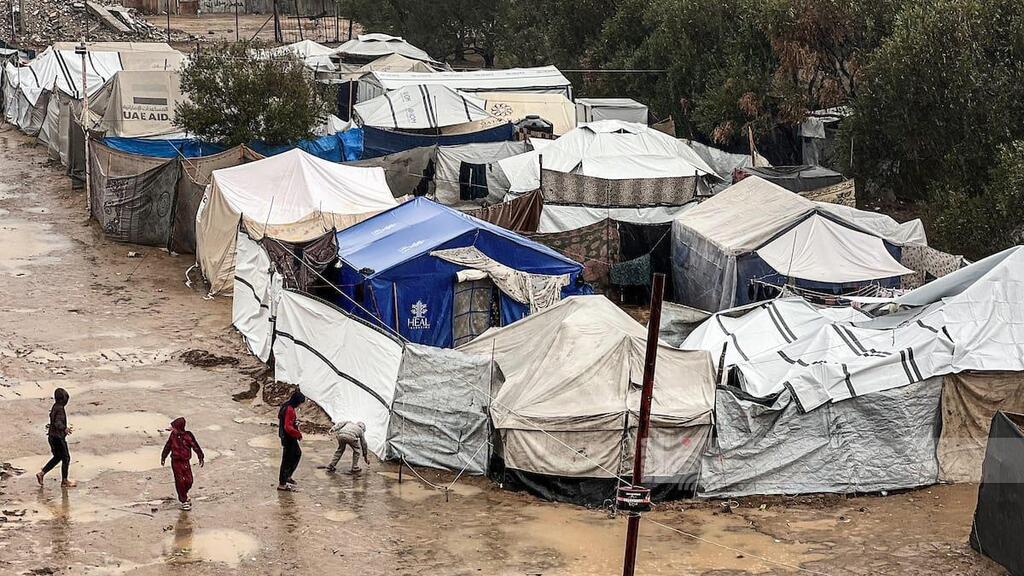
Flooded tents in Gaza this month
Winter flood fears: “Good tents must get in”
The European diplomat stressed that the sense of paralysis is real. “But on the other hand, a lot of progress has been made on the humanitarian front. Not only has the number of trucks entering Gaza increased, but also the types of items going in. It has improved. It is not where we want to be, but there is a lot of progress. The more that comes in, the more looting will drop significantly.”
Still, he voiced alarm over a lack of preparedness for winter rains. In the few storm systems over the past month, flooding has already been reported in tent camps for Palestinian refugees. “We are very worried about winter preparations. You have seen what happens when the rain comes down and how catastrophic conditions become in tents. It is important to bring in good tents,” he said.
He said one central problem in humanitarian aid is the list of dual-use items, goods meant for civilian needs but suspected of being diverted for terrorism. “Strangely, there is a less strict list for commercial imports than for humanitarian organizations,” he said. “This is one of the topics being worked on, and there has not been much progress. Israel blocks the entry of many products. But overall the humanitarian progress is tangible and that is good. You can see a shift from immediate aid to medium- and long-term assistance.”
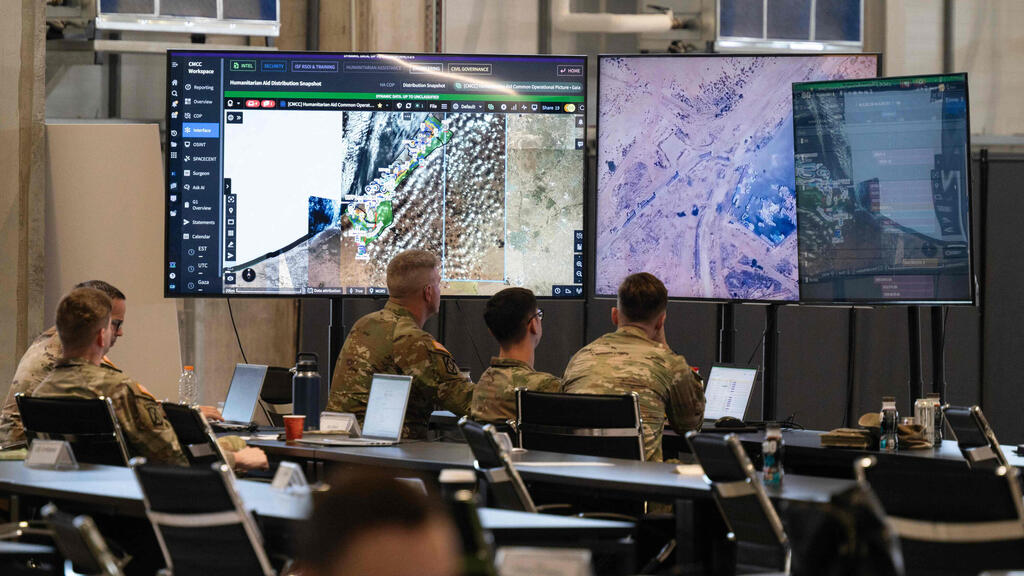
The American troops at the headquarters in Kiryat Gat. Who is really in charge?
(Photo: Ahikam Seri / AFP)
Strains inside the U.S. headquarters: “Now the hard things begin”
Aid to Gaza is overseen by the American international headquarters established in Kiryat Gat. But senior European diplomats with knowledge of its work describe tensions over how it operates.
“Sometimes we wonder whether the Americans stationed at the headquarters are the Americans who make the decisions,” the diplomats said. “Everyone tells us we need to speak with whoever decides and whoever speaks with the Oval Office at the White House, not with Gen. Patrick Frank, who heads the American headquarters.”
They said Frank is “under heavy pressure to deliver results.” While working with the Americans is good, they described it as “a dangerous area with very little fruit.” They noted that the easier steps have been taken, including more trucks entering Gaza and additional crossings opening. “Now the hard things begin. For that, the Palestinian Authority needs a role. There has to be an idea for how to organize disarmament. And there has to be a start to alternative security arrangements.”
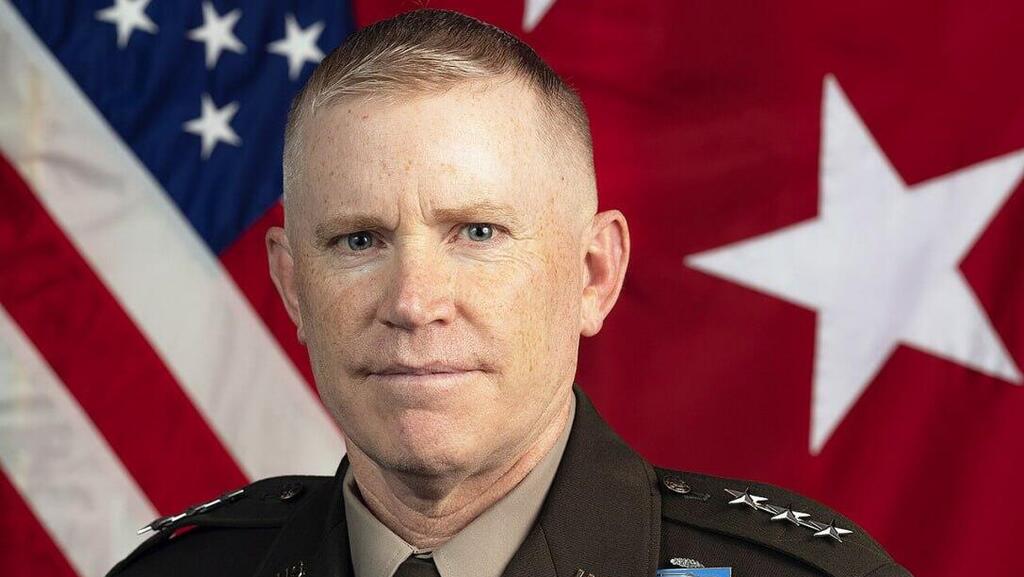
Gen. Patrick Frank, who heads the headquarters
(Photo: US Army)
They said they are prepared to train new Palestinian security forces and can work with Jordan and Egypt. They pointed to an existing European police force that could help. “But there must be a will to do it. From the Israeli side, we do not see that will,” one diplomat said.
On Turkey’s role, the diplomats said Washington wants to give Ankara a part in rebuilding Gaza, but not necessarily a military one. “It is very hard to believe Israel will agree to Turkish military forces entering Gaza, and I understand that. Turkey is a country that provides shelter to Hamas terrorists and leaders, and it is in a strange position to be part of the ISF,” one source said.
Meanwhile, U.S. Central Command, or CENTCOM, reported that the American international headquarters, formally called the Civilian-Military Coordination Center, has expanded and now includes representatives from 50 partner countries and international organizations. “This is a historic opportunity to achieve sustainable peace in the Middle East,” Adm. Brad Cooper, CENTCOM’s commander, said at the opening of the center. “We appreciate our partners’ efforts. Successful implementation of the peace plan requires unprecedented cooperation, and we are moving forward.”
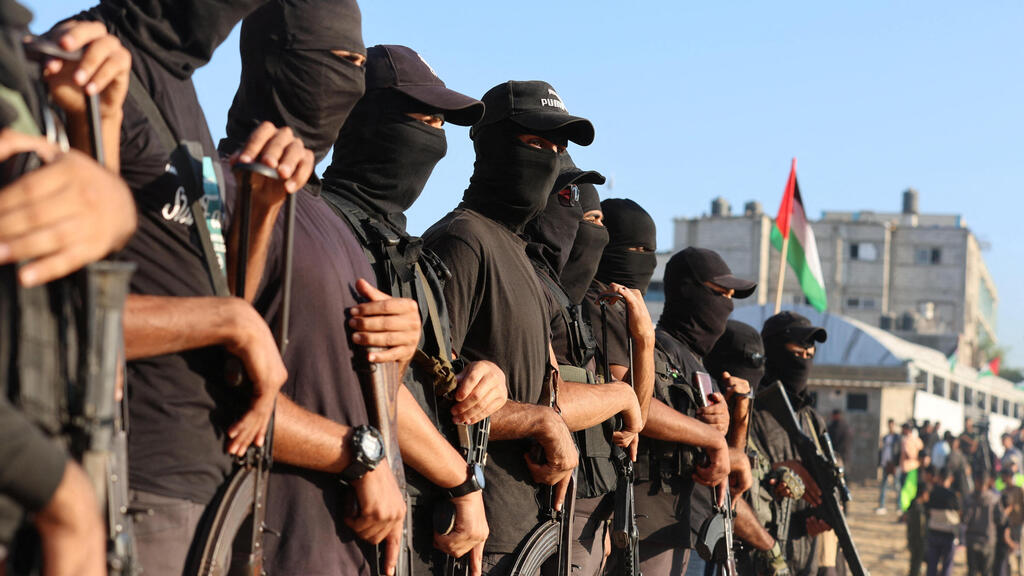
Hamas terrorists in Gaza after the ceasefire began in October
(Photo: Ramadan Abed/Reuters)
Internet restored in Gaza
In its statement, the U.S. military said that last week, in coordination with Israel’s Coordinator of Government Activities in the Territories, the headquarters helped technicians enter Gaza and repair a main fiber-optic cable, “fully restoring” internet connectivity across the Strip.
The statement added that the headquarters has assisted in the entry of more than 24,000 trucks carrying humanitarian aid and commercial goods into Gaza over the past five weeks, while working to open additional routes for supply and distribution. It also helped evacuate more than 1,500 Gaza civilians holding dual citizenship or in need of medical treatment.
According to the U.S. military, “current efforts are underway to move humanitarian supplies needed for the winter months and to clear unexploded ordnance along Gaza’s critical logistical corridors to improve safety.”
U.S. Ambassador Steven Fagin, who leads the headquarters alongside Frank, said: “By bringing together a wide range of stakeholders, including the Israel Defense Forces, COGAT, American military and civilians, partner militaries and civilians, U.N. agencies and nongovernmental organizations, the coordination center is uniquely positioned to ensure the success of humanitarian assistance efforts.”