


The storm over Nicholas Kristof’s column in The New York Times continues to reverberate a week after publication, and has created an internal rift between the newspaper’s newsroom and its opinion section.
The column, titled “The Silence That Meets the Rape of Palestinians,” includes allegations of systematic sexual abuse by Israeli prison guards and soldiers against Palestinian detainees. It cites testimony from 14 Palestinians alleging the use of batons and carrots, threats to rape family members and dogs used for sexual assault while prison staff laughed and filmed the incident.
The article drew widespread reactions around the world, including protests and calls to cancel subscriptions. On Thursday, Prime Minister Benjamin Netanyahu and Foreign Minister Gideon Sa’ar threatened to file a defamation lawsuit against the newspaper for libel against the State of Israel. Israeli officials and the Israel Prison Service have completely denied the claims, and Netanyahu called them baseless.
Gallery
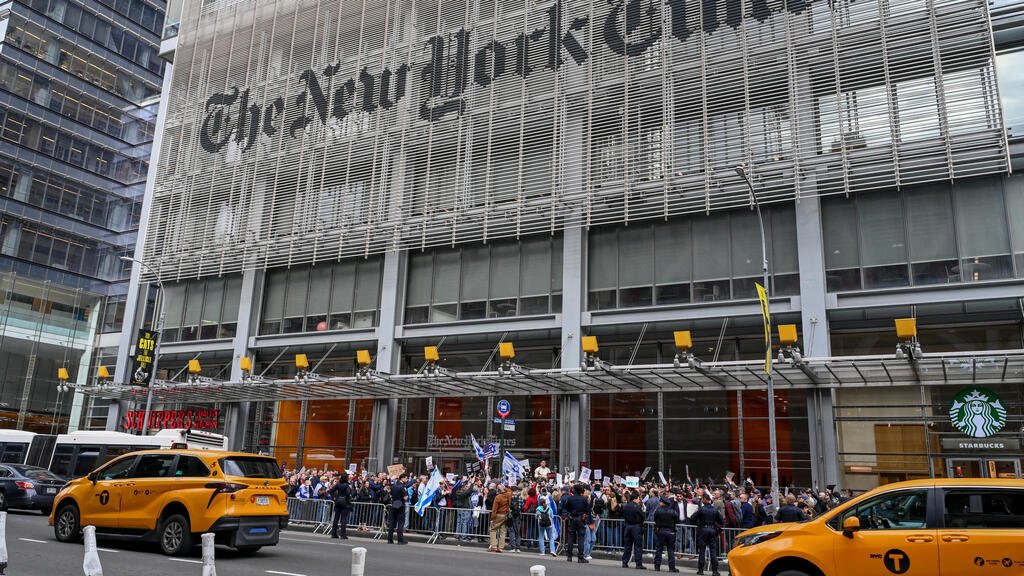
Demonstration against the Kristof column outside the offices of the New York Times
(Photo: Liri Agami)
New York Times spokeswoman Danielle Rhoades Ha said the legal threat was part of "a well-worn political playbook that aims to undermine independent reporting and stifle journalism that does not fit a specific narrative." She added that "any such legal claim would be without merit." Another Times spokesman, Charlie Stadtlander, defended the reporting, saying the testimonies were corroborated where possible with other witnesses and subjected to rigorous fact-checking against human rights research and testimony presented at the United Nations.
Despite the official backing given to the two-time Pulitzer Prize winner, many newsroom journalists have expressed significant distrust with the facts presented. According to an extensive report in Puck, later echoed by the New York Post, newsroom reporters suspect the sources behind the allegations would not have met their own professional standards.
A source at The New York Times told ynet: “We feel the opinion section is hurting the credibility of the entire brand and repeatedly lowering the professional standard for all of us.” The remarks join testimony from another journalist who told Puck, “I am sick of being embarrassed by the Opinion section.” Other reporters are frustrated by damage to the paper’s reputation from decisions by a department they say is not subject to the same strict standards, and by opinion writers “invading” their areas of coverage.
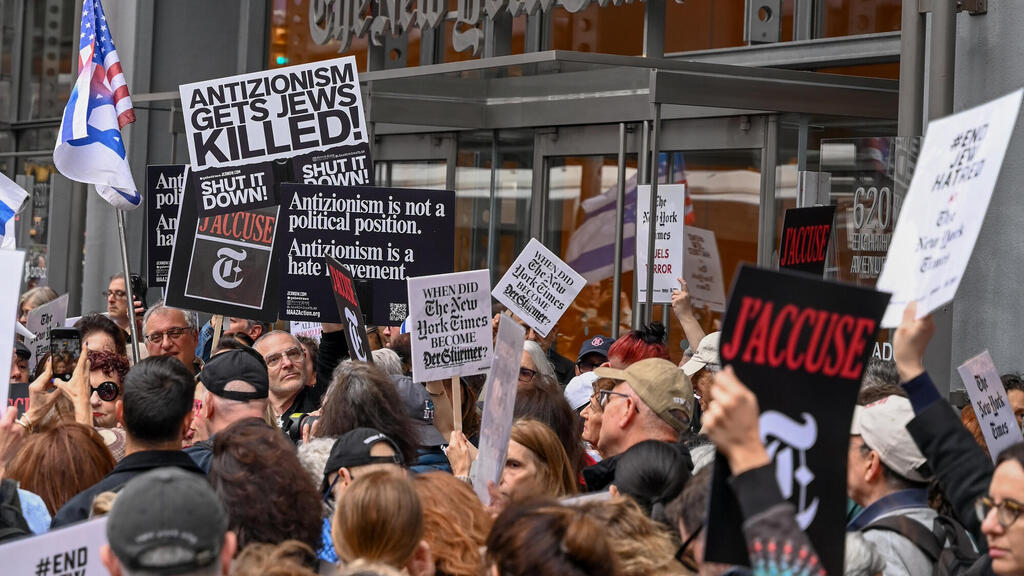
Demonstration against the New York Times
(Photo: Liri Agami)
Kristof himself addressed the issue after a user on X asked why the paper did not publish the material as a news report if it knew how shocking and controversial it was. Kristof replied that "there's obviously a different standard in that opinion pieces carry opinions" but insisted that “I deeply believe the best opinion journalism is based on new reporting, so my columns are rooted in travel and reporting.” He added: “But any piece adheres to facts and undergoes fact-checking. And opinion pieces include reporting as well as opinions, as mine have since I became a columnist in 2001.” He said the article appeared in the opinion section because that is where he regularly writes, and because his columns always “include reporting as well as opinions.”
The current confrontation appears to be one of the first major crises under Executive Editor Joseph Kahn. Kahn and Opinion Editor Kathleen Kingsbury are being forced to navigate a media institution that now operates as a sprawling brand valued at $12 billion. The newspaper’s leadership, including Jewish publisher Arthur Gregg Sulzberger and CEO Meredith Kopit Levien, wants readers to distinguish between news reporting and opinion columns. At the same time, the newsroom understands that the legal threats and public criticism are likely to fuel subscription cancellations and follow the paper for years.
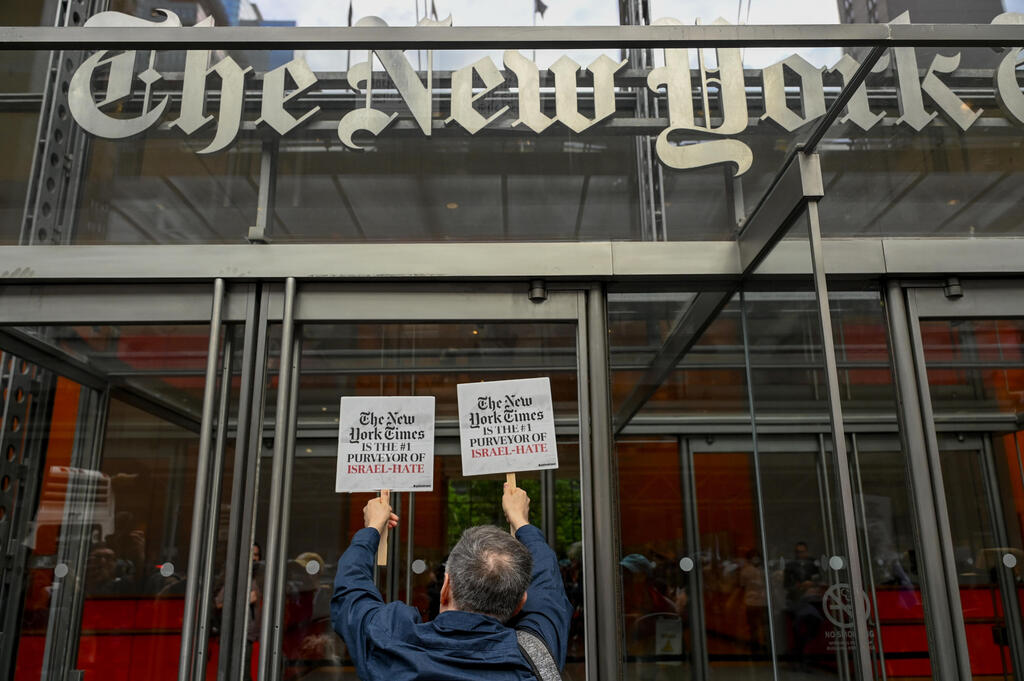
(Photo: Liri Agami)
But any legal action against The New York Times in the United States, which would most likely be heard in New York state, would face a significant hurdle that would make winning the case extremely difficult. The main obstacle is the U.S. Supreme Court precedent in New York Times v. Sullivan, which sets a high bar for lawsuits involving public figures. Under that ruling, it is not enough to prove that Kristof’s column was offensive, distorted, hostile or even wrong. To survive dismissal, plaintiffs would have to prove that the newspaper or columnist acted with "actual malice" — publishing a false factual claim while knowing it was false, or consciously disregarding serious doubts about its truth.
In addition, U.S. federal free speech laws mean that even if Israel won a defamation case in an Israeli court, enforcing the judgment on American soil would be nearly impossible.
This legal complexity was reflected in Ariel Sharon’s lawsuit against Time magazine in the 1980s. A New York jury found at the time that the article was false and defamatory, but Sharon did not receive damages because he failed to prove actual malice or reckless disregard by the magazine, as required under the Sullivan standard.