

Regional sources told CNN on Saturday that there was cautious optimism over progress in the U.S.-Iran negotiations, as a Pakistan-backed draft agreement aimed at ending the war was being reviewed by both sides.
One source told CNN that “things are moving in a positive trajectory,” while another person familiar with the talks said “the deadlock is over.” CNN said it was not clear whether the source was referring to deadlock over the central disputes or to the draft memorandum submitted by Pakistan for approval by Washington and Tehran.
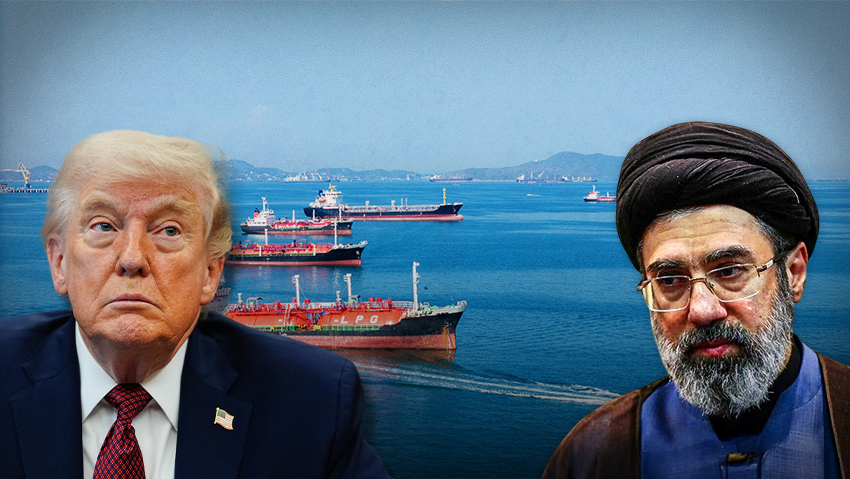
(Photo: Anna Moneymaker / AFP, CENTCOM, shutterstock)
At the same time, a Pakistani military source told Reuters that a memorandum of understanding was in its final stages. Reuters reported, citing additional sources, that the proposed framework would unfold in three stages: formally ending the war, resolving the crisis in the Strait of Hormuz and opening a 30-day window for negotiations on a broader agreement, with the possibility of an extension.
Reuters also reported that President Donald Trump was expected to speak overnight with leaders from Saudi Arabia, Qatar, the United Arab Emirates, Egypt, Turkey and Pakistan. Prime Minister Benjamin Netanyahu, who was not expected to take part in the call, was set to hold a security discussion with coalition party leaders.
Against the backdrop of reports that the sides were moving closer to an agreement, a source familiar with Iran’s negotiating team told Iran’s Fars news agency that three obstacles remained: the nuclear issue, the release of Tehran’s frozen funds and full Iranian control over movement and navigation in the Strait of Hormuz.
According to the Fars report, the source said Washington had effectively retreated from its initial threats and understood that Iran would not be forced into changing its positions. The source added that although the United States had accepted many of Iran’s positions, the three main obstacles remained, and that Tehran had prepared itself for all scenarios.
Earlier Saturday, AP reported that the United States and Iran were close to agreeing on a memorandum of understanding intended to end the war, citing two regional officials and a diplomat. According to the report, a final decision on the Pakistan-prepared draft could come within 48 hours, with the proposal now under review by both sides.
The details of the draft have not been officially published and have so far emerged only through leaks in Arab media and Iranian-linked reports.
According to AP, Vice President JD Vance and envoys Steve Witkoff and Jared Kushner played significant roles in helping bridge the gaps. Qatar also played a key role, sending a senior official to Tehran to support the mediation effort. AP also reported that another round of direct U.S.-Iran talks in Islamabad, Pakistan, was possible, though it was not yet clear whether it would take place.
Pakistan’s army chief Field Marshal Asim Munir, who has been serving as a mediator between Iran and the United States, completed a series of meetings in Tehran on Saturday aimed at preventing a return to fighting.
After landing Friday night, Munir held hours of talks into the night with Iranian Foreign Minister Abbas Araghchi. He later met Iranian parliament speaker Mohammad Bagher Ghalibaf, who has been leading the talks on the Iranian side, as well as President Masoud Pezeshkian. Munir then met Araghchi again before leaving Tehran.